Stories about the production, maintenance, and contestation of numbers / algorithms from a sociological perspective. Mention for retweet, tweets by @jeu1987.
Sensors, databases, and other technologies quantify more and more aspects of our lives. Such quantification is not without consequence. Some things just cannot be readily expressed in numbers (e.g. emotions or feelings of well-being).
Transparency & explainability in AI aren’t enough.
We make the case for responsiveness as the key to accountability in high-stakes AI systems.
Joint work with Gijs van Maanen
🚨New paper 🚨
Sure—algorithms are far from objective. But what if the real issue is how they represent? 🤔
This was a question @maanengijsvan and I kept returning to during countless discussions. These conversations evolved into a manuscript:
https://t.co/oRfyLLtwfR
🧵
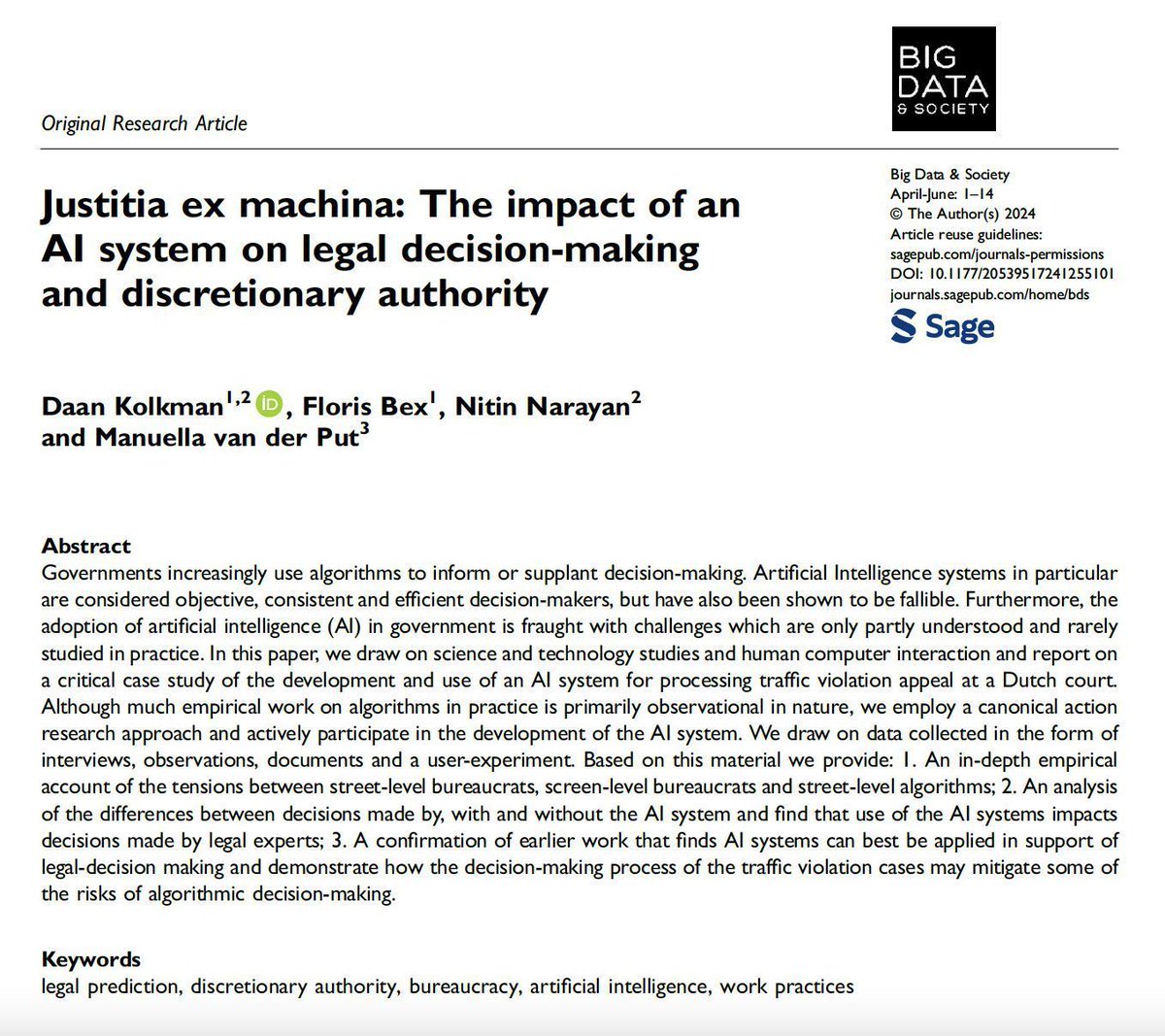
📣 New pub is out: “Justitia ex machina: The impact of an AI system on legal decision-making and discretionary authority” by Daan Kolkman (@dakolkman), Floris Bex (@florisbex), Nitin Narayan and Manuella van der Put. Read here 🔗 https://t.co/2S5v0fRW6T
#LegalPrediction AI
📢New paper in @BigDataSoc: "Justitia ex machina: The impact of an AI system on legal decision-making and discretionary authority" with @florisbex, Nitin Narayan, and Manuella van der Put.
https://t.co/rM0aptqUqm
👇 Some highlights:
📢 Are you working on a (qualitative) case study of an algorithm used in government? We would love to hear from you at our #EASST4S2024 panel. Remember to submit by 12 February 2024!🗓️16-19 July in Amsterdam.
Updated profile name; now openly looking for a #softwarestudies PhD.
Places/cohorts/communities/projects with Philosophy of technology, STS, post-phenomenology, media theory, media archeology, games studies, digital design, dataviz, anthropology maybe...
New Dutch government agreement stipulates the instatement of an algortihm watchdog. This watchdog is to uphold new (to be developed) regulation pertaining transparency, discrimination, and bias of algorithms. Promising first step towards more algorithmic accountability. (1/2)
A postdoc vacancy in @infolegproject coming soon. Interested in data-/ tech governance? Background in law & tech, STS, philosophy of tech, sociology of computing, critical infrastructure or surveillance, studies, critical data studies, or arelated field? Watch this space
Next Tuesday, 15:00-16:00 CEST (UTC +2),
I'll give a talk on ground truths, machine learning, morality and other stuff at the Digital Futures Fly-High Seminar @KTHuniversity@Stockholm_Uni https://t.co/KpWVaibR7Q
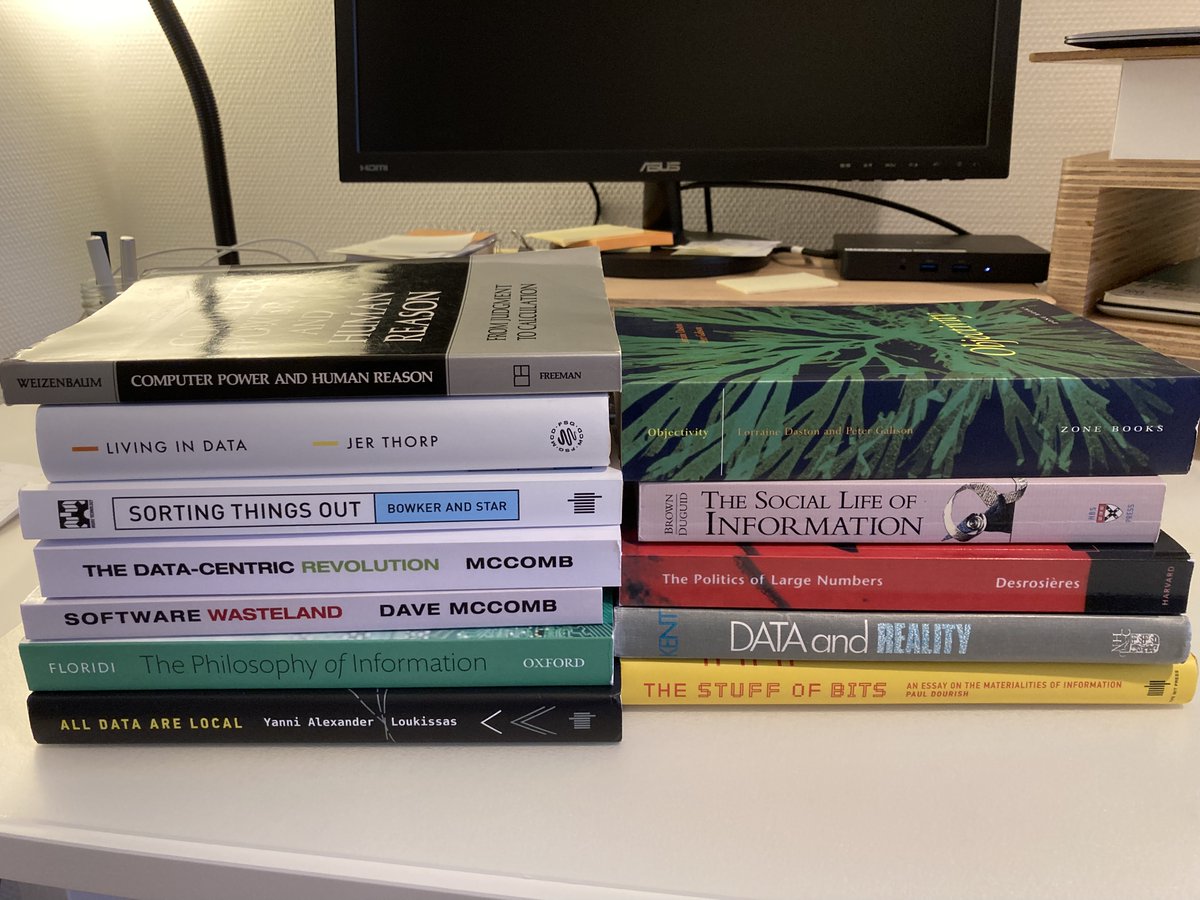
Material @DaphneMiedema and I are using for the design of our new knowledge engineering course in our new MSc Data Science & AI in Eindhoven, reflecting the knowledge science vision https://t.co/H2PG0OVKe3 with @pgroth@juansequeda . Any recommendations for further readings?
The digital society is not merely a conceptual challenge for humanities & social sciences. We are looking for contributions that address algorithmization & datafication in empirical & socially engaged ways & which provide opportunities for intervention: https://t.co/xXPdCe9vOq
Question for econometrics / quant social science folks: do you generally assume that proxy variables are monotonically related to the thing they proxy for? Is this assumption much discussed? Can it be supported empirically or theoretically without circulatory?
@__LENIA @jessRmorley @Floridi Genuine question: to what extent would conceptualizing ethics as 'service' be conducive to one of the things it wants to prevent - 'ethics shopping'?
(q by Gijs van Maanen)
The one weird study the AI companies don't want you to know!
Perhaps the most important ML paper from 2020 showing fundamental limits to prediction. 100s of the top ML researchers were unable to accurately predict 6 life outcomes using high quality data.
https://t.co/M1IPpDTdSb