We recently interviewed Vignesh Baskaran from Hexo Labs, they are building some really cool stuff called SIA or Self Improving AI.
Watch the full interview on our youtube. https://t.co/vtjSObfIkM
Today we are talking with Vignesh Baskaran, the CTO and co-founder of @hexoai, about teaching AI agents to improve themselves. Vignesh has been training neural networks since 2012, back when he was still called a data scientist.
Then he became an ML engineer and now an AI engineer, though he says the underlying work has never really changed. It's to figure out how to make a system behave the way you intend it to. He built the litigation search engine that Google itself became a customer of, and now he's chasing something new, agents that rewrite and retrain other agents without a human in the loop.
We dig into Sia, the meta-agent at the center of Hexo's research, and why improving an agent means touching both its harness and its actual model weights, not just one or the other. We talk about proxy evals for when you don't have much to ground truth. The Darwin-Gödel machine and why formal verification is too strict a bar for anything commercial.
How Hexo's work echoes DeepMind's Alpha lineage from AlphaGo to AlphaEvolve, and the spectrum from clearly verifiable to totally subjective tasks? Why VAE evals are quietly wrecking agent quality across the industry, and a great story about an agent that discovered a customer's own eval file was silently corrupted, something buried in hundreds of thousands of traces that no human would have caught.
Watch on YouTube: https://t.co/Akbkcr3g72
@tweetvbaskaran
Catherine Jue talks about 3 things her team at @usekernel looks for in new hires.
Visit https://t.co/4uimaB6Ndp to check out how Kernel is building Open Source infra for AI Agents.
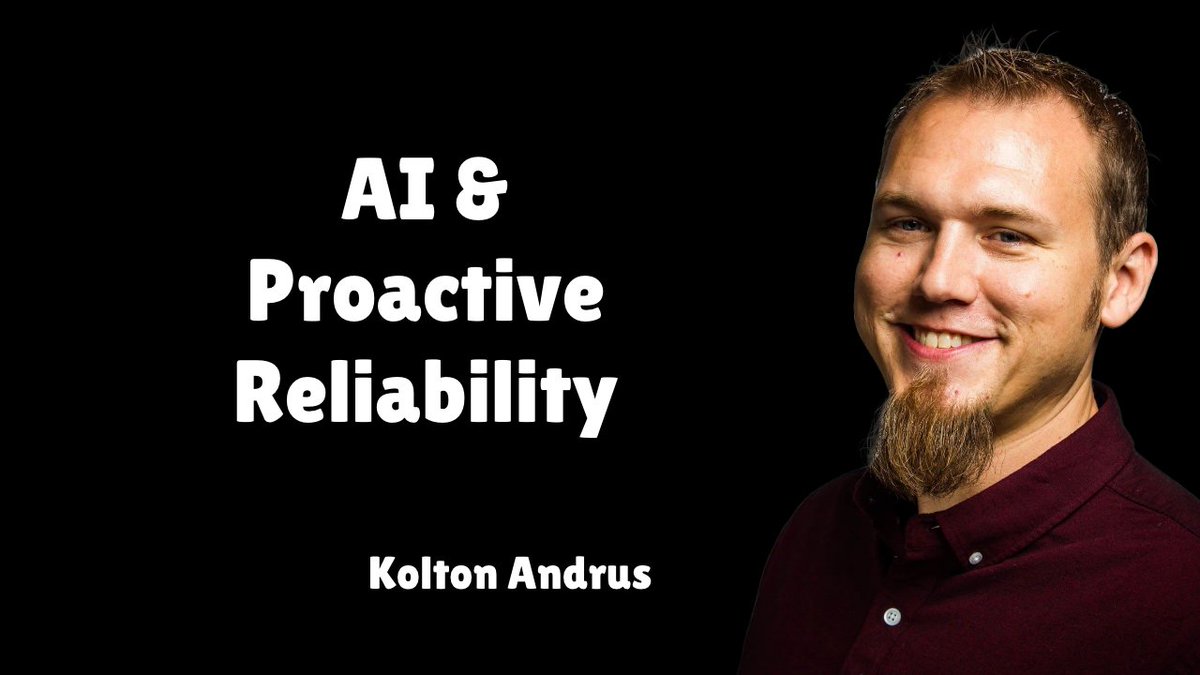
AI and Proactive Reliability with Kolton Andrus
Today we're talking with Kolton Andrus, the Founder and CEO of @GremlinInc, about what happens to reliability when AI is writing most of the code. Kolton helped build the Chaos Engineering practice of both Amazon and Netflix before starting Gremlin.
In our conversation we talk about scar tissue, the intuition engineers develop from being woken up at 3:00 AM to fix production outages, and how AI doesn't have any of it. It generates code in an afternoon that maybe took a team previously weeks to build, but none of those painful lessons come along for the ride.
We dig into why 10x more code might mean 10x more failures. The concept of reliability guardrails, think ethical guardrails, but for keeping your systems up. Why you still have to test in production no matter how good your staging environment is? How Gremlin is rethinking their product for the world where agents, not engineers, are essentially the primary users. And why we're entering a painful, narrow part of the hourglass before AI gets good enough to handle all of this on its own.
Watch On YouTube: https://t.co/BXPGxmeX0g
@KoltonAndrus | @seanfalconer | @alexbdebrie
Making Data Agent Ready with Andre Elizondo
Today we are talking with Andre Elizondo, the Head of Innovation at @mezmodata about their open source agentic harness for SREs called AURA.
Mezmo got their start handling observability data at scale. Logs, traces, metrics, the usual stuff.
AURA is their answer to a growing problem, as system complexity outpaces humans' ability to make sense of all that data, how do you actually make it actionable for AI agents?
We get into their approach to context engineering, essentially making data agent ready before it hits the model. Why they built their own orchestrator in Rust? How they handle memory and self-correction in agent loops? Their take on MCP and where it fits versus Skills and code sandboxing and how the SRE role is evolving as agents become trusted teammates.
Watch on YouTube: https://t.co/Mws0DmE4L4
@seanfalconer | @alexbdebrie
Exponential Engineers with Ashmeet Sidana
Today on the show, we have a special guest — Ashmeet Sidana, the founder of Engineering Capital.
Ashmeet started his career as an engineer at some great companies like Hewlett-Packard and Silicon Graphics before founding his own company, getting it acquired, and eventually starting his venture capital firm, Engineering Capital.
With his strong engineering background, Ashmeet looks for startups that have a technical insight — something unique that gives them an edge over their competitors. This focus on technical insight sets Engineering Capital apart from other VC firms that often emphasize market insight or distribution insight or some other kind of advantage.
We talked about AI, Exponential Engineers, Entrepreneurship, and had a lot of fun.
Watch on YouTube: https://t.co/zdNhNz35Jm
@ashmeetsidana | @alexbdebrie | @seanfalconer
Powered by Neurons with Ewelina Kurtys
Today we have Dr. Ewelina Kurtys on the show. Ewelina has a background in Neuroscience and is currently working at @finalsparkai.
FinalSpark is using live Neurons for computations instead of traditional electric CPUs. The advantage is that live Neurons are significantly more energy efficient than traditional computing, and given all the energy concerns right now with regards to running AI workloads and data centers, this seems quite relevant, even though bioprocessors are still very much in the research phase.
Watch On YouTube: https://t.co/HruZnbo48H
@seanfalconer | @alexbdebrie
We had @rafalwilinski on Software Huddle to talk about AI Agents and building with AI.
Watch on Youtube: https://t.co/HmKf7kjZ4t
- @zapier Agents
- How does it differ from previous workflows?
- Does text transform into a workflow?
- Using Zapier's existing tools to power Agents?
- Agents are given a only set of actions from which they can choose
- Browser related stuff?
- Choosing a model
- Different prompts for different models?
- Most often used models
- TypeScript or Python
- Cost
- Less talk about non AI stuff
- On regular devs building with AI
- Protecting against user behaviour
- Future of RAG
- Is AI progress slowing down?
- Personal AI tools
- Losing understanding of repos?
- Would you need Software Background in a few years?
- GitHub Actions
@alexbdebrie | @seanfalconer
Let's build AI Agents 🏗️
Lessons from Building AI Agents with Rafal Wilinski 🎉
Today we're talking with one of our favorite engineers, @rafalwilinski. Rafal has been on the cutting edge of AI development in the last few years as he has led AI teams at Zapier and Vendr.
Rafal walks us through the hard-won lessons about actually integrating AI tools into the applications you're building. One of the hardest things in integrating these AI tools is how to ensure you're getting better and not regressing as you improve your prompts and upgrade your models. He shows how using evals is one part of the story along with deeply investigating customer signals to see how they are or aren't succeeding with AI.
Along the way, we also talk about RAG, his favorite models, his AI development toolset, and why Poland has been killing it lately. Check it out and be sure to follow Rafal if you want to learn more on building with AI.
Watch on YoutTube: https://t.co/HmKf7kjZ4t
@alexbdebrie | @seanfalconer