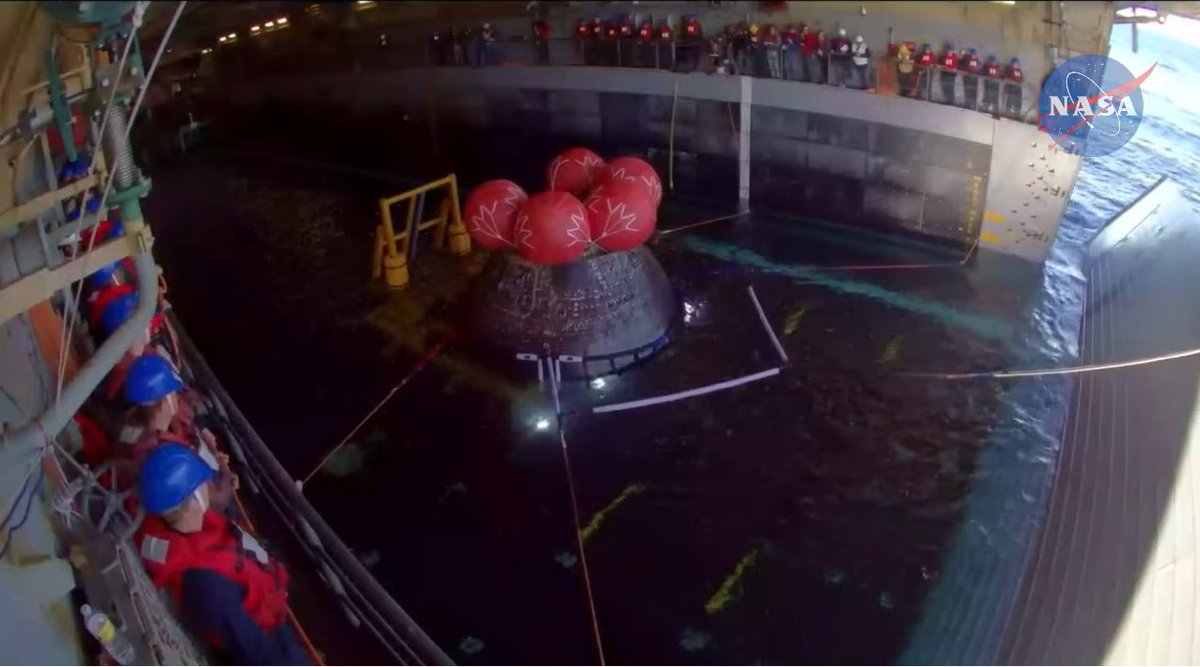
Artemis I recovery update: @NASA_Orion is now in the well deck of the USS Portland. Teams with EGS and the DoD continue to make progress to safely secure the spacecraft.
Splashdown.
After traveling 1.4 million miles through space, orbiting the Moon, and collecting data that will prepare us to send astronauts on future #Artemis missions, the @NASA_Orion spacecraft is home.
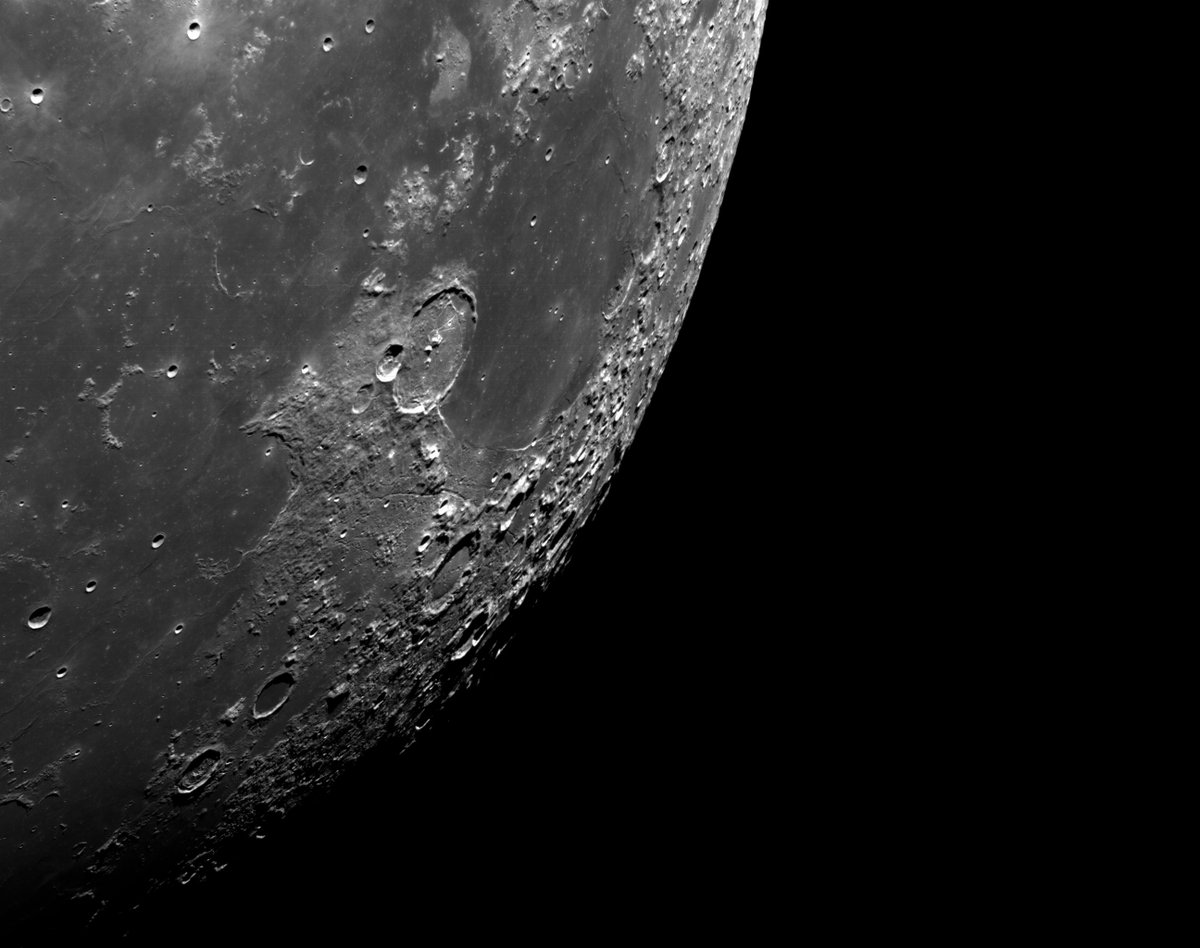
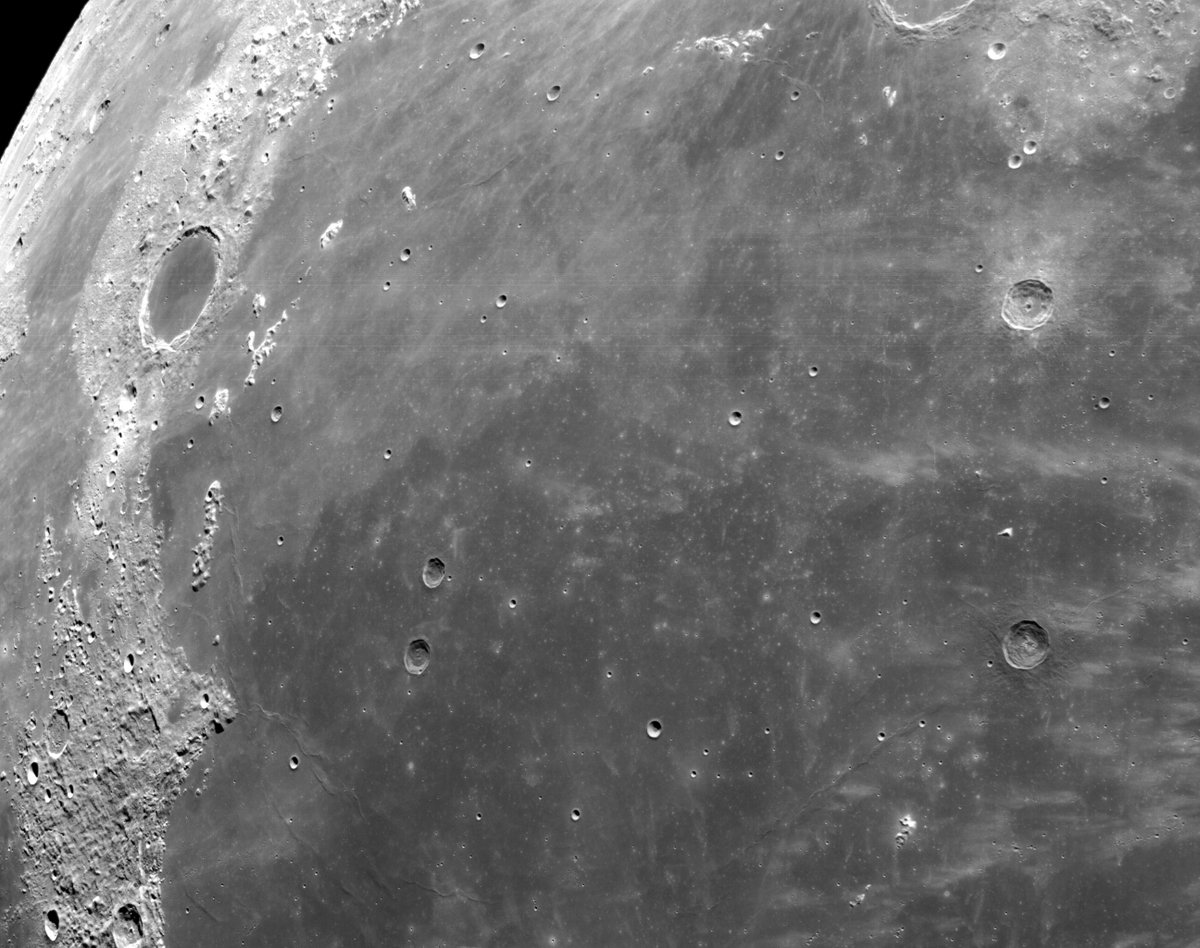
Presenting: The Moon 🌕
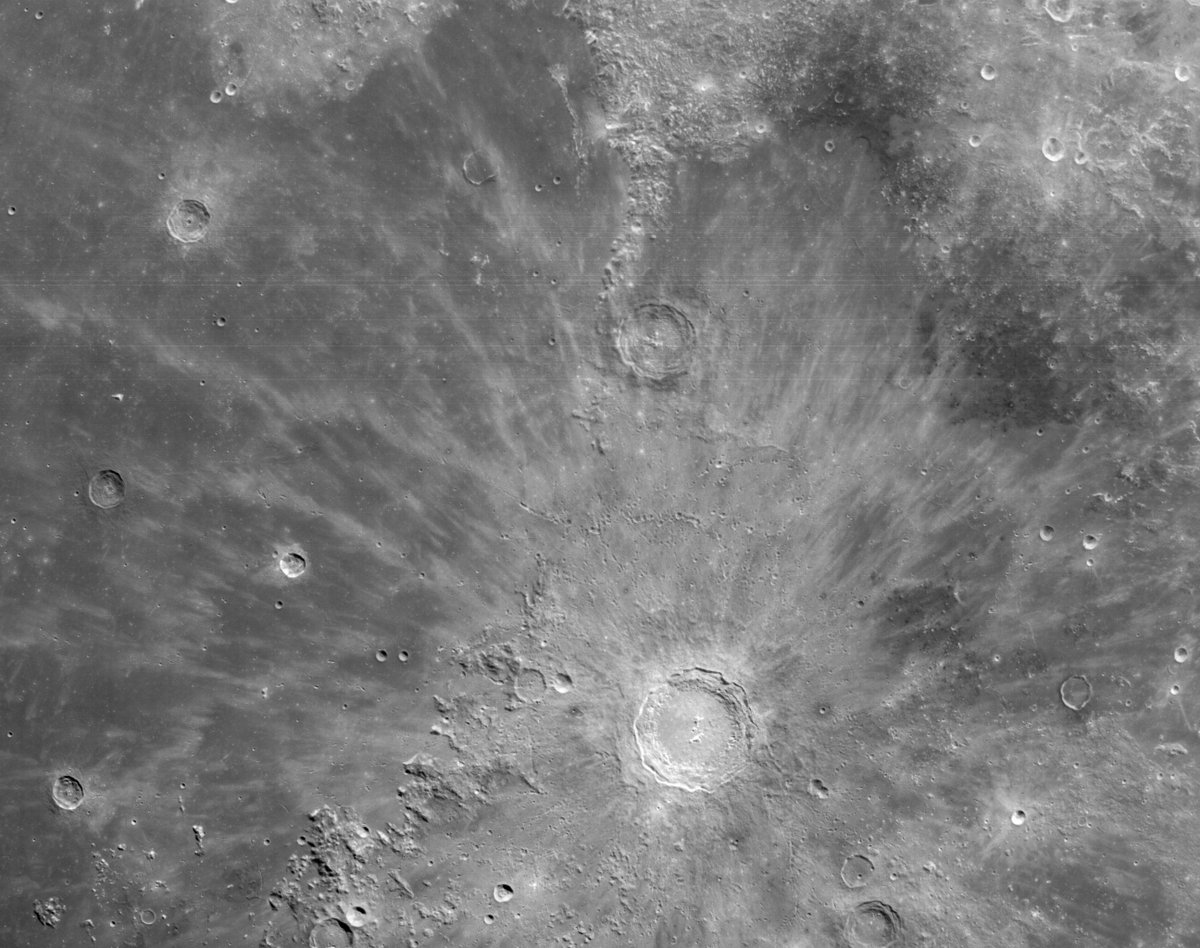
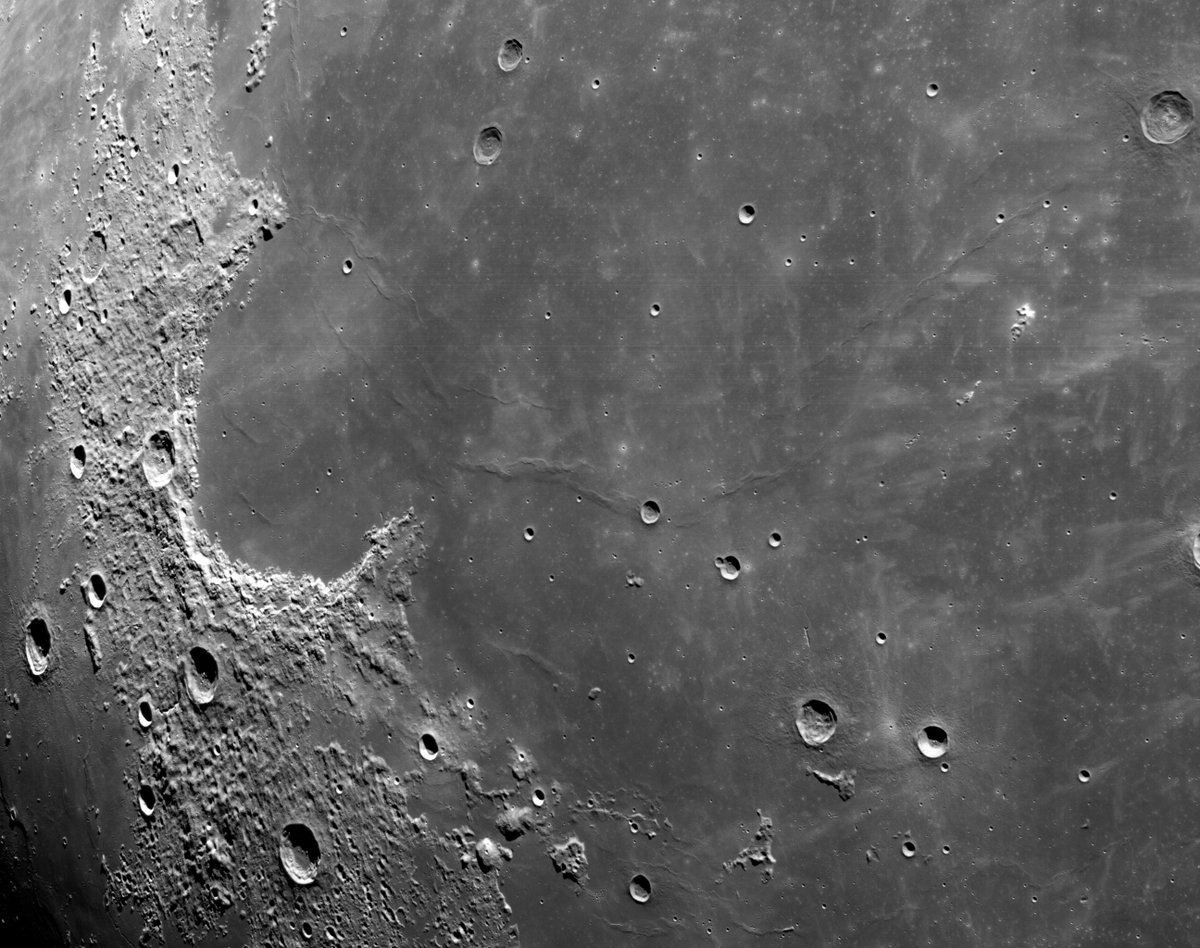
Cameras mounted on the crew module of @NASA_Orion captured these views of the Moon’s surface during its second and final close approach of the lunar surface.
More great photos from Orion are posted daily to Flickr >> https://t.co/74Vn1EhmIr
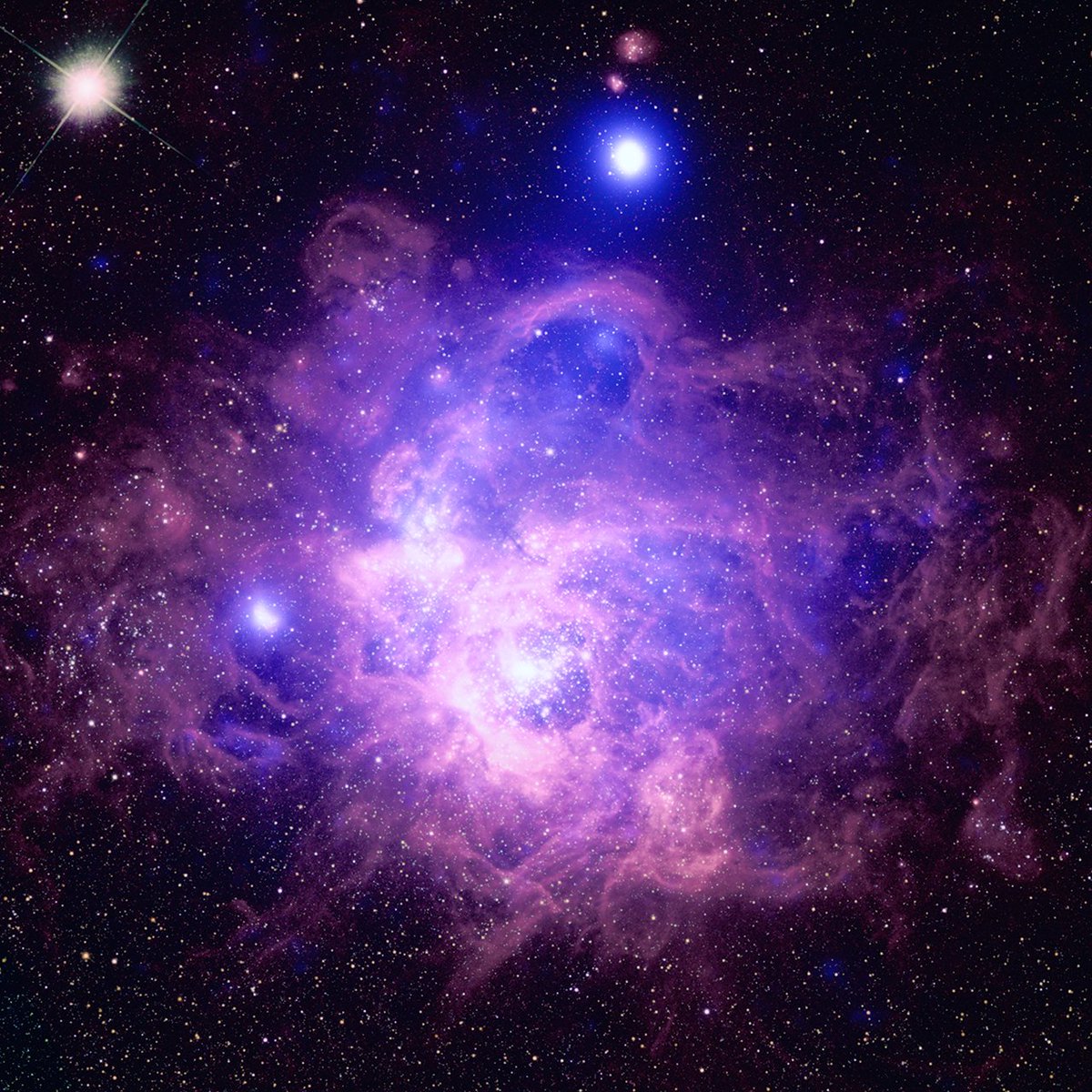
A #StarrySights stunner! 😍
Welcome to NGC 1850, a star cluster about 160,000 light-years away in a satellite galaxy to our own Milky Way, known as the Large Magellanic Cloud.
Read more: https://t.co/mRpE1BNRbP
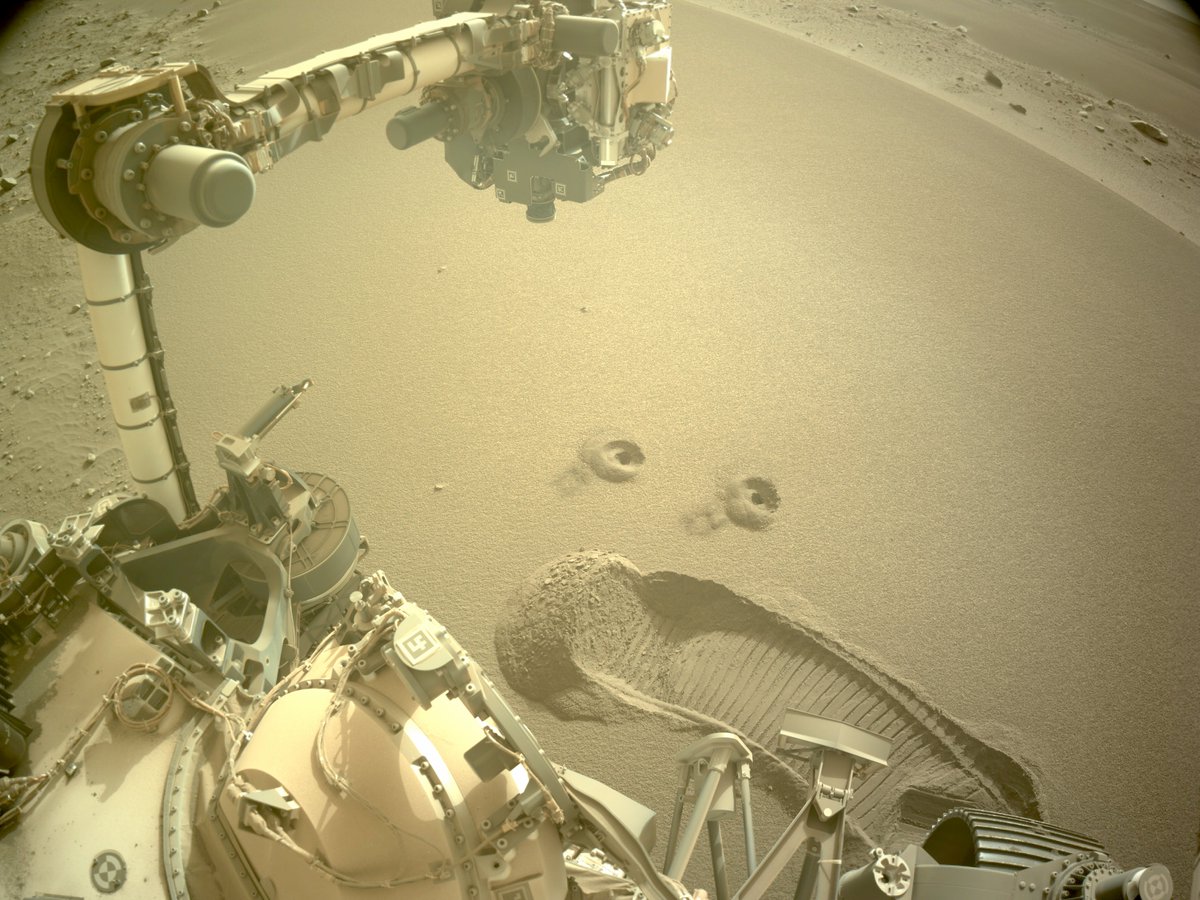
Doubling up! I’ve taken a second sample of loose material from this sandy ripple. #SamplingMars this way adds a new dimension to my other rock cores. See why both engineers and scientists could learn a lot from this material: https://t.co/rEAPXwoejj
The launch was also to include the Lunar Flashlight CubeSat orbiter which looks for water ice in the Moon's southern craters, assisting the Artemis program in locating resources to generate fuel, water, and oxygen for future explorations of the lunar surface.
Better safe than sorry! SpaceX postpones the launch of @ispace_inc’s HAKUTO-R Mission.
The Falcon 9 rocket that was due to launch last night is also set to carry the Rashid rover of UAE.
After further inspections of the launch vehicle and data review, we're standing down from tomorrow's launch of @ispace_inc's HAKUTO-R Mission 1; a new target launch date will be shared once confirmed
If successful, UAE will become the fourth country only after US, Russia and China to operate a rover on the Moon and @ispace_inc will become the first private company to land a lunar lander.
My collection is growing! 🪨 I’ve now got my 15th rock core: a nice piece of sandstone.
Up next, I’m heading back to a nearby dune to break out a new tool – my regolith collection bit – for gathering loose, sandy material. #SamplingMars continues…
#Artemis I, Flight Day 5. Orion spacecraft takes a selfie while approaching the Moon ahead of the outbound powered flyby - a burn of Orion's main engine on the @ESA service module. During this maneuver Orion came within 81 miles of the lunar surface.
Pandora’s Cluster ✨
This #HubbleClassic image depicts a giant galaxy cluster located in the constellation Sculptor. Scientists believe that this cluster resulted from a pile-up of at least four smaller galaxy clusters over 350 million years!
More: https://t.co/074vfqnzEk
Earthset. 🌎
@NASA_Orion captured this shot of Earth “setting” while the spacecraft passed close to the Moon. Nearly 270,000 miles (430,000 km) away, #Artemis I will soon surpass Apollo 13’s record-setting distance from Earth in a spacecraft designed to carry astronauts.
NGC 604 is a star-forming region tucked away in one of our neighboring galaxies, M33. Home to approximately 200 hot, young, massive stars, NGC 604 is located about 2.7 million light-years from Earth. This image spans about 2,700 light-years from side to side.✨
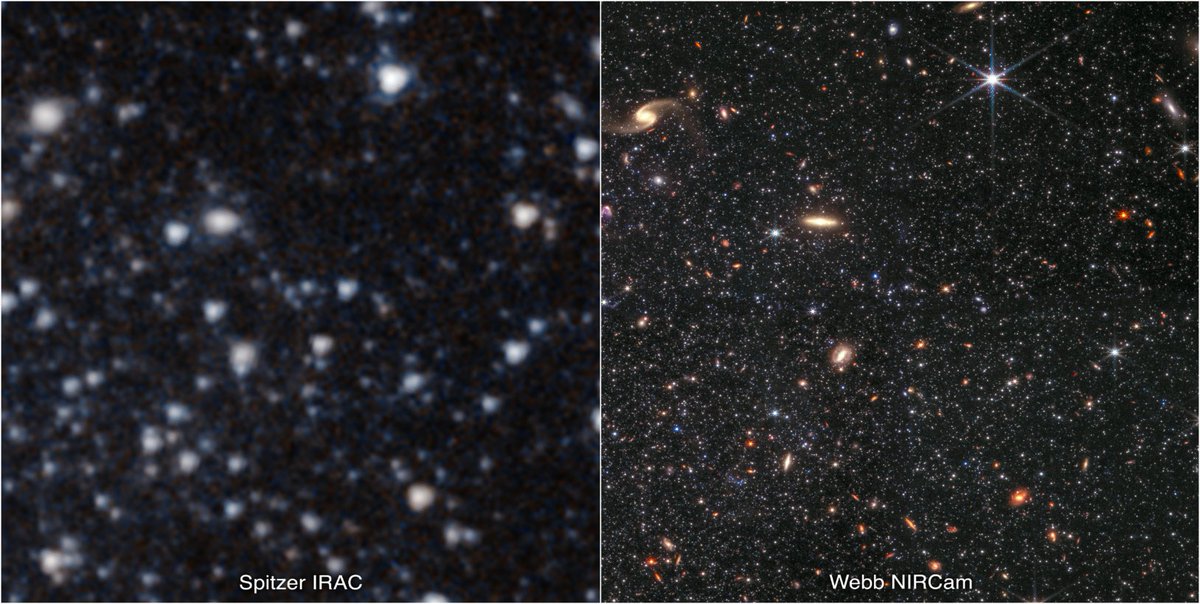
How it started ➡️ How it’s going
These images demonstrate Webb’s remarkable ability to resolve faint stars in nearby dwarf galaxy Wolf-Lundmark-Melotte (WLM). On the right is Webb’s brand new image, and on the left is Spitzer’s view: https://t.co/ha4Wv7cBJK
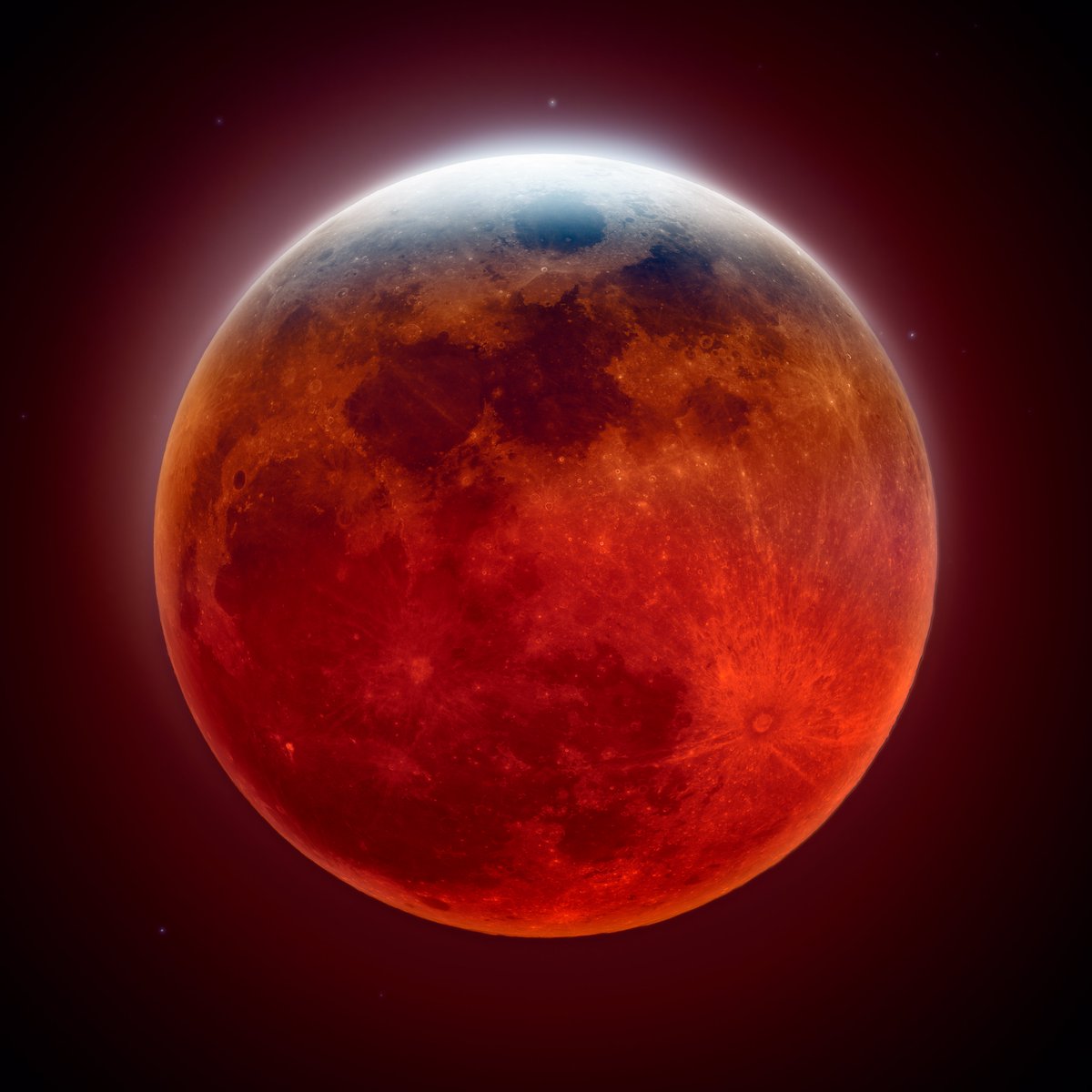
My finished shot from this morning's total lunar eclipse. This image was captured by using two telescopes, one to capture intricate detail on the lunar surface, and one to capture the rich tones cast by Earth's shadow across the disc. Go ahead, zoom in on it!