I am done with this shit. It is over. The state of engineering right now is horrible. It has been half a month since I started a new role at a big company. Nobody knows anything here. The specs, code, tests, PRDs, tickets, resolution of those tickets, reports, etc., everything is made by Claude Code. Nobody on my team likes this. They are being forced to ship as much as they can. I have heard multiple times from higher management that pushing code is not a bottleneck, so why are we slow? People are working 12 to 13 hours a day just to press enter. Nobody is reading anything. Humans in corporate are doing nothing on their own. Everyone, literally everyone, from an L1 to an L7 engineer here is doing the same thing. Talk to Claude. There is no sense of victory. Nobody is resolving bugs. In reality, nobody is thinking anymore. Everything is done by LLMs. It is so soul-sucking. I would not mind it, to be honest, if we were at least given the time to check out the code and see what is going where. But no, the goal is to just ship. No matter what happens.
With all the conversation about AI and bio right now, you need to go read Biohazard by Ken Alibek. Absolutely insane stories about monkeys, lab leaks, and national paranoia.
The Soviet biological weapons program employed ~60,000 people. A single facility was built with the capacity to produce ~300 metric tons of weapons-grade anthrax in 10 months.
For all the attention we give nuclear weapons, biological weapons feel strangely under-discussed. This is one of the scariest things I’ve ever read about. It still blows my mind that this actually happened.
https://t.co/zClMCECv2f
@chris_j_paxton I'm currently working thru my doubts about the score.
"Fitting" is nicer than "cheating" but the numbers imply a LOT of optimal action steps for early levels (at least easier to spot, could be more) and that shouldn't happen for a true first run.
The developers behind turn-based tactical roguelite Tile Crawl shared how they built a sphere out of hexes using an approach inspired by Animal Crossing.
Read: https://t.co/coldIdPqQI
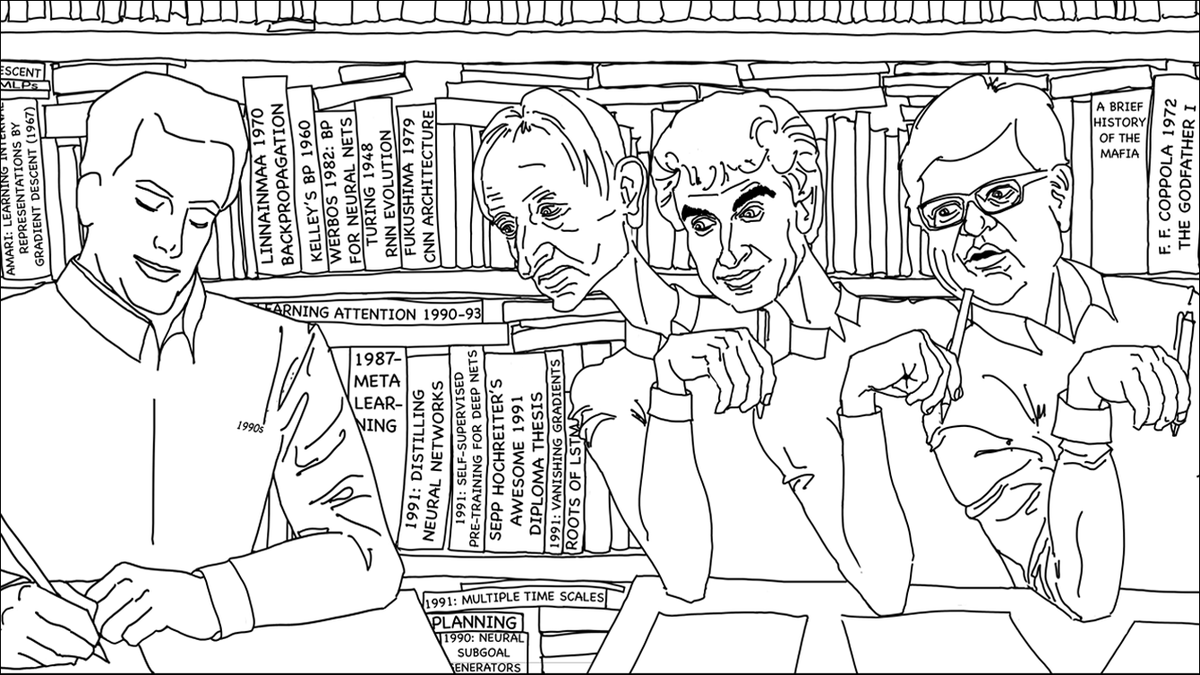
Many people make fun of this because graph search algorithms are presented as AI.
Well, these were taught in AI course at some point. For instance, the book "Principle Of Artificial Intelligence" by Nilsson devotes a chapter on these algorithms. It was published in 1980.
AI as we know it (LLMs) is not what AI used to be. AI history did not start with BERT and GPT2 my friends.
"TTPO: Test-Time Policy Optimization"
This paper shows how an LLM can keep improving while solving problems, even when there's no ground truth.
The idea is that the model samples many solutions and uses the majority answer as a rough signal. But instead of fully trusting that majority, TTPO learns from it carefully by strengthening solutions that agree, penalizing likely-wrong solutions that disagree, and only updating the tokens that actually look uncertain or wrong.
https://t.co/Nqs94DIoYe
How do you turn happiness into a game mechanic?
For Mono, it changes how everyone moves. Mono can leap higher, make nearby spirits lighter with a song, and unlock another ability with Moro.
Wishlist MONOWAVE on Steam
https://t.co/EiWNYZUni0
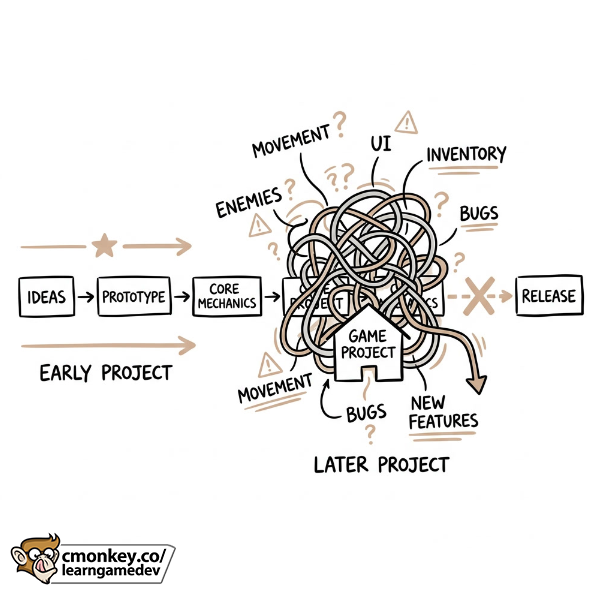
I don't think most projects fail because the idea was bad. I think many projects fail because the code becomes too difficult to work with.
At the start everything is easy.
- You add movement
- You add enemies
- You add UI
- You add inventory
Everything works.
But then suddenly every new feature takes twice as long as it should. You fix one bug and create three more. Changing one thing breaks something completely unrelated.
The project just becomes heavier and heavier until eventually you stop wanting to work on it and give up.
That's the point where many projects die and end up in your giant pile of unfinished projects.
Clean code isn't about making code look pretty, it's about keeping complexity under control!
It's about making sure the project remains enjoyable to work on even after months of development.
Because if your project becomes painful to work on, finishing it becomes much harder, and finished games are worth a lot more than abandoned prototypes.
So if you want to take your games to the finish line then I encourage you to think about the quality of the code that you're writing.
I have an entire 1hr talk on YouTube all about this topic titled: "How to Write High Quality Code that doesn't fall apart."
If you're trying to be a professional game dev as opposed to just a hobbyist building throwaway prototypes, then I highly recommend you learn how to write proper high quality clean code. Best of luck!