Claude built a native iOS flight booking app in 7 minutes from 1 prompt and a few screenshots.
The owner never touched the keyboard. He was on the couch, watching a Brazil World Cup documentary on the projector.
Below the screen, Fable 5 was driving Xcode on its own. Search page. Payment page. Then the booking confirmation: 2 Ryanair legs, MAN → ACE, seat 3A, 20kg bag, $245.08 total rendering live in an iPhone 17 Pro simulator while Xcode sat in the background.
The model opened the simulator itself. Clicked through its own build. Fixed what it saw. No typing. No review. No second prompt.
An agency quotes $30,000 and 3 months for an app like this. A junior iOS dev costs $90,000 a year.
This cost 1 prompt and 7 minutes of soccer.
The documentary is still playing. The app is done. The keyboard is cold.
250,000 miles is honestly light work for Tesla motors.
@Drive_Protected’s rear motor in his Model 3 is still going strong after almost 400,000 miles. The crazy part is it needed next to no maintenance, unlike all the things a gas car would have needed.
PALO ALTO NETWORKS on MYTHOS: "In our testing, three weeks of model-assisted analysis matched a full year of manual penetration testing, with broader coverage."
Tesla vehicles get safer even after you buy them with over-the-air updates.
Tesla utilizes camera vision to deploy airbags up to 70ms quicker in the event of a collision.
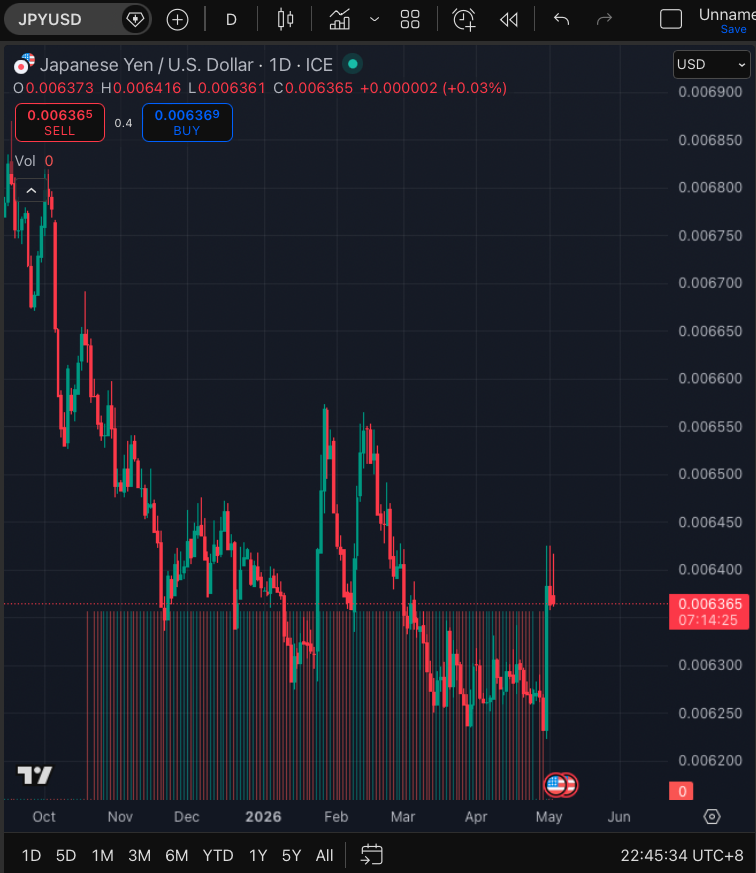
Market topping signals
Today, US2Y spiked + Yen spiked
Government intervened
BUT NOBODY TALKING ABOUT THIS. WE MOON FOREVER. UP ONLY.
Higher yields = bad for growth stocks due to discount rate
Yen spike = Carry Trade Unwind Catalyst
Combination of these two is a liquidity squeeze.
Don’t be that monkey.
Too many agents, too many test suites, one very tired Mac. Run them remote:
Crabbox 0.1.0 🦀
⚡ Remote Linux test boxes (AWS, Hetzner)
🔁 Dirty checkout sync
🦀 Warm boxes with friendly slugs
⏱️ Idle auto-free
brew install openclaw/tap/crabbox
https://t.co/SEj2XRpaD1
I have been testing DeepSeek-V4-Pro with the Pi coding agent.
I am mindblown by how well it works out of the box.
A few notes:
I spent a few hours building an LLM wiki with an agent powered entirely by DeepSeek-V4-Pro on @FireworksAI_HQ inference.
This is the first time I feel like there is an open-weight model that can reason at the level of Claude and Codex. And it does this in a cost-effective way with support for 1M context length.
To be clear, I am using DeepSeek-V4-Pro inside of Pi without any special configuration. It works out of the box. It's exciting that there is a model that can just be plugged into a basic harness like Pi, and it just works. I've never seen that before. Most models require lots of configuration and setup.
@deepseek_ai's DeepSeek-V4-Pro is clearly good at agentic coding (probably the best from the open-weight models), but the model is also great on knowledge-intensive tasks where reasoning matters. The agent pulled agentic engineering best practices from different company docs (Anthropic, OpenAI, Google, Stripe, Meta, Modal, DeepSeek, Mistral, Cohere), searched and digested Reddit and HN threads, summarized arxiv papers, and surfaced trending GitHub repos. Then it distilled everything into actionable tips across categories. I love the Wiki it built. The quality is really good. Here is a snapshot of what the wiki looks like: https://t.co/1Iy7rNTOGJ
DeepSeek-V4-Pro handled the task without breaking stride. Multi-step research queries, code generation for scaffolding, context-heavy reasoning across disparate sources. For coding specifically, this is the first open-weight model that genuinely feels like a Codex or Claude Code experience. It compares in capability and actual multi-turn agentic work.
What made the loop feel so responsive was Fireworks' inference speed (the fastest in the market) and the fact that they actually validate models at the systems level before shipping. No corrupted reasoning traces. Just fast, reliable iteration. The hybrid CSA and HCA attention design cuts KV cache to just 10% and inference FLOPs by nearly 4x at 1M-token context. This is what makes the agent loop actually fast and cheap enough to run in practice.
For devs who've been watching open-weight models close the gap but haven't found one that actually delivers in practice, this is the closest I've seen.
Try it here: https://t.co/DmRmy18MHj
Cash App now gives you 5% back in bitcoin when you pay over Lightning at eligible Square merchants.
Find nearby sellers on the Bitcoin Map.
Earn up to $30/month.
You can now ask Gemini to create Docs, Sheets, Slides, PDFs, and more directly in your chat. No more copying, pasting, or reformatting, just prompt and download.
Available globally for all @GeminiApp users.
OpenClaw - the agentic software spreading like wildfire - was built on top of Pi, a minimalist, self-modifying agent. I sat down with Pi's creator, @badlogicgames and longtime Pi user (+ the creator of Flask) @mitsuhiko to talk Pi, and their (very grounded!) takes on building with AI.
Timestamps:
00:00 Intro
07:30 How Mario, Armin, and Peter Steinberger met
15:15 How 30 dev teams use AI agents: learnings
21:50 The importance of judgment
24:26 Challenges when non-engineers write code
28:30 Downsides of over-automation
32:18 Pi
48:09 OpenClaw + Pi
50:54 “Clankers”
57:32 Open source and AI
1:00:22 Complexity as the enemy
1:02:50 Building an AI-native startup
1:11:52 “Slow the F down”
1:16:40 MCPs vs. CLI
1:25:03 Predictions and staying up to date
• YouTube: https://t.co/u9n7ePTaAO
• Spotify: https://t.co/TvbqPnbfNz
• Apple: https://t.co/4ACETLJ1Zm
Brought to you by:
• @statsig – The unified platform for flags, analytics, experiments, and more. https://t.co/ZCSOIcWv31
• @SonarSource — The makers of SonarQube, the industry standard for code verification and automated code review. Try it out for yourself. https://t.co/QtBhYDH9UX
• @WorkOS – WorkOS gives you APIs to ship enterprise features – SSO, directory sync, RBAC, audit logs – in days, not months. Visit https://t.co/jhFNq3a7n7 to learn more.
---
Three parts I found especially interesting in this discussion:
1. New trend: AI makes it harder for senior engineers to reject pointless complexity.
Historically, senior engineers kept software complexity at bay simply by saying “no” a lot. But Armin observes that these days, more junior engineers and product managers deploy agent-scripted counterarguments when a senior colleague kicks an idea to the curb. This makes decision-making exhausting, and more bad ideas make it into production as a result.
2. It should be MUCH easier to build specialized tools for specific tasks.
Different projects need different harness types because, as Mario points out, the same hammer is not ideal for every single construction job. As such, Pi is built with the goal of allowing the creation of specialized harnesses. It can modify itself so that a user can create the bespoke harness needed for any task. Mario believes it’s a preview of how self-modifiable software might look in the future.
3. Automation bias is one of the biggest risks of working with AI agents.
Once devs confirm that an AI agent can produce acceptable code, they start to review its output less often, even though agents can – and do! – produce slop. Mario advises being far more sceptical with agents, and cautions that the quality of their output isn’t guaranteed, however well they performed previously.
Milestone in Humanoid Robotics: A Thousand Humanoid Sorters Entering Logistics Centers
Beijing-based RobotEra is deploying its L7 humanoid robot across more than 10 logistics centers operated by China Post, SF Express Group, and other major players.
In several of these centers, the embodied AI robots have already reached over 85% of human-level efficiency while operating stably 24/7.
The company is set to begin batch deliveries of robots at the thousand-unit scale in Q2 this year.
RobotEra recently raised $200 million in funding. By combining external capital with self-generated revenue, it is accelerating the real-world deployment of humanoid robots.
I wonder what UPS would think if they saw this solution? Rumors have been circulating recently that they intend to deploy Figure's humanoid robots in their logistics centers.