We're a coalition of scientists studying the most abundant and diverse clade of animals alive, the Spiralia:molluscs, annelids, flatworms, & their kin. Join us!
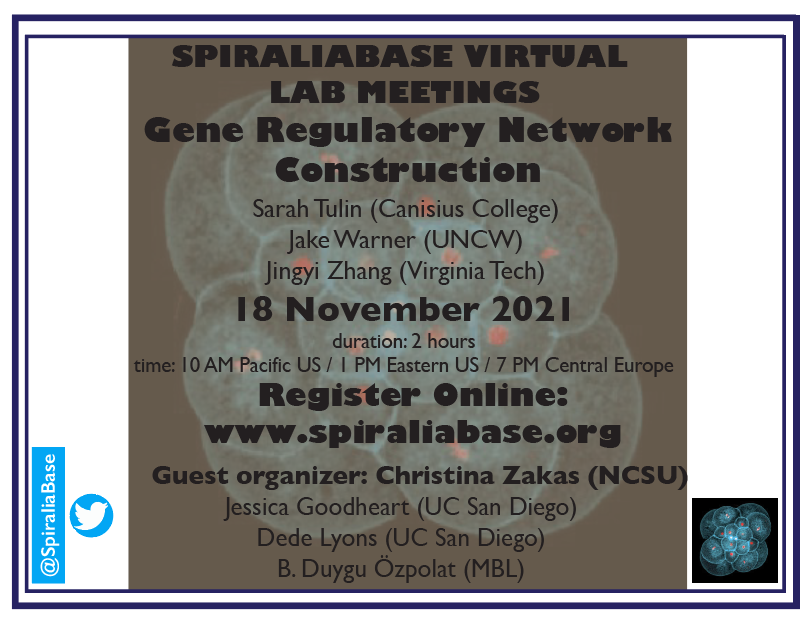
Its time to register for our next Virtual Lab Meeting! Join guest organizer @StrebLab and presenters @tallsarah1224, Jingyi Zhang, and @ScientistJake on Nov 18 to learn about gene regulatory network construction. Register here: https://t.co/eEpboE0aD9
Today's #MolluscMonday is the bivalve shell Goodallia triangularis. Occurs all around Britain and Ireland from the near sublittoral towards the shelf edge, with a depth range of 5-150m+. Characteristically lives in clean sand, gravel and shell gravel
https://t.co/6nRQcWybXp
Interested in US #FreshwaterMussel distribution? Check out the new and improved (but still beta) MusselMapR!
https://t.co/CVM6dYJ5qX
Please let @thepopenjay, @PhishBiologist, and I know if you run into any problems or have feedback 💕
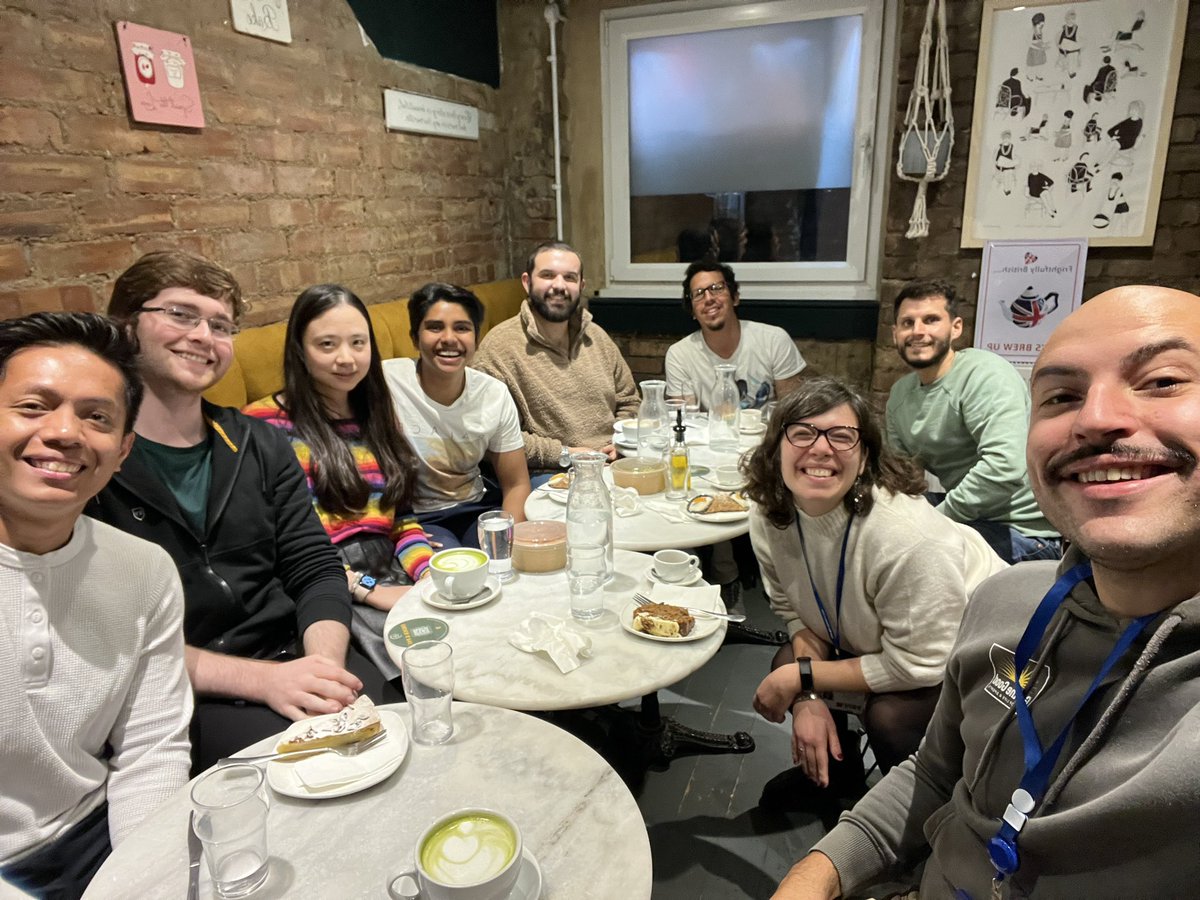
Finally managed to sit down for a group lunch after the summer season and lots of conferences and holidays ☀️🏖
Perfect opportunity to say goodbye to Imram, a very talented MSc student, and to spend some quality time with @MuccioloSerena during her visit to our lab 😁
This glass squid was seen off coast of San Diego during #BiodiverseBorderlands. Also known as cockatoo squid, they live in surface+midwater depths of open oceans around the world. As they spend much of lives in partially sunlit shallow waters, transparency provides camouflage.
Today, @EldritchNeutral will be presenting his poster on the incredible anterior regenerative potential of our most loved 🪱, Owenia at #EMBORegeneration2022. Don’t miss poster 38 and talk to Rory. Early steps of a promising new system (and researcher!) #WormWednesday
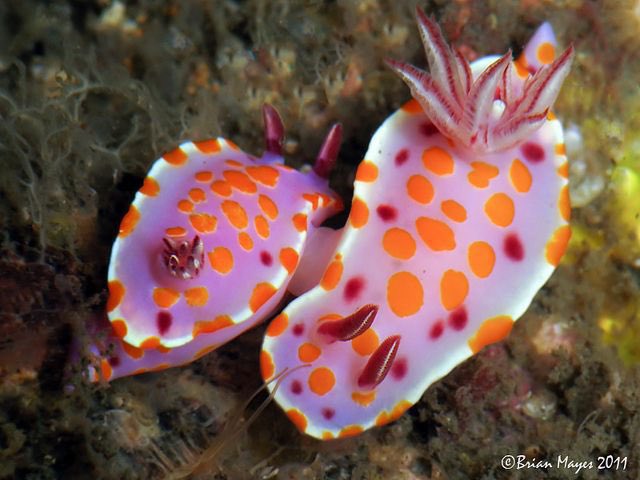
☆ our lovely aquatic of the day is the clown nudibranch (ceratosoma amoena) !
☆ they say that it’s okay to be eccentric ! being weird and unusual is fun, why not indulge yourself sometimes ?
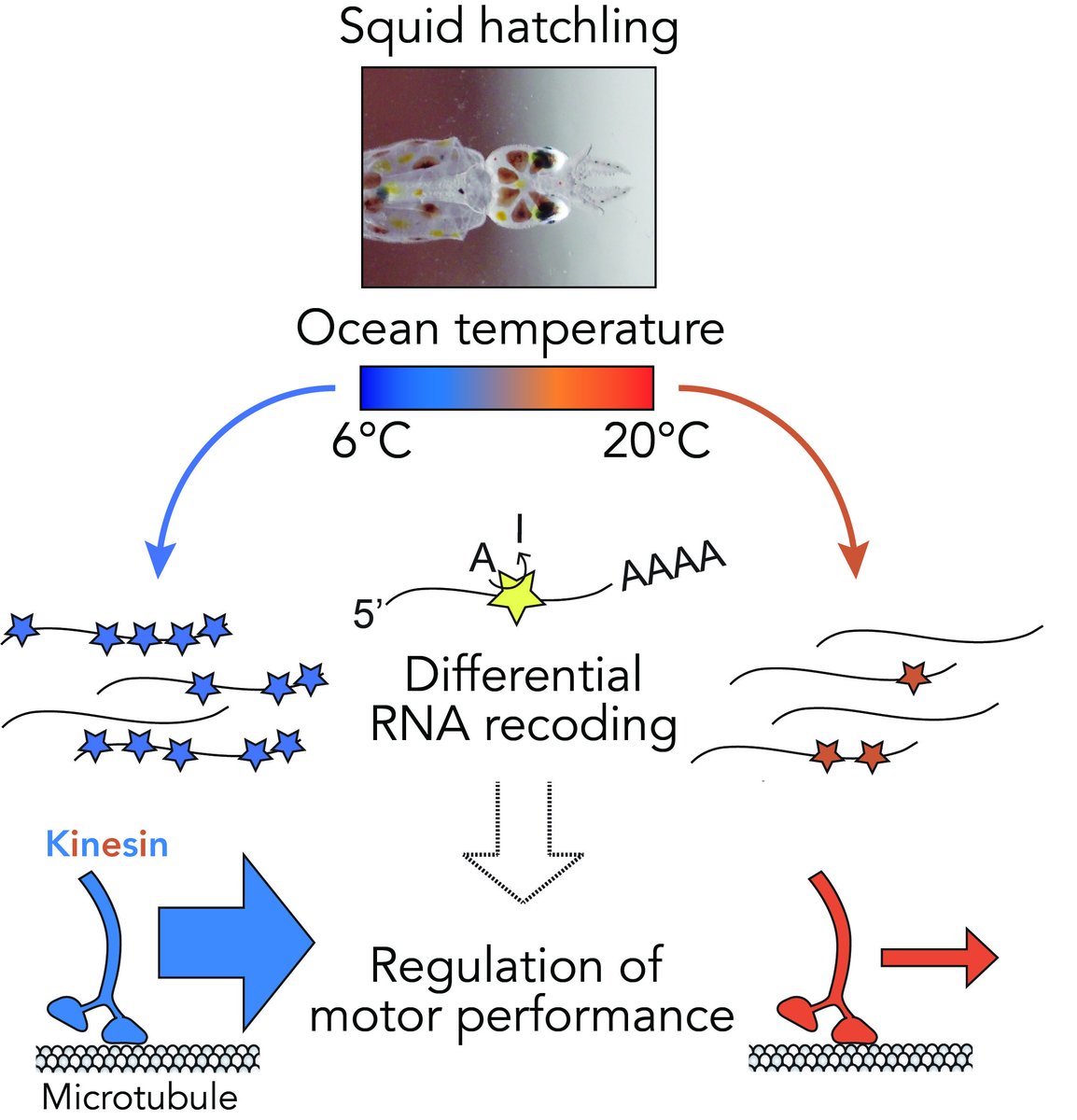
Check out Kavita Rangan’s work in this new preprint from our lab! We show that wild squid rapidly employ RNA recoding to generate unique kinesin motor variants in different ocean temperatures. https://t.co/Qg4zMhA2pO 1/
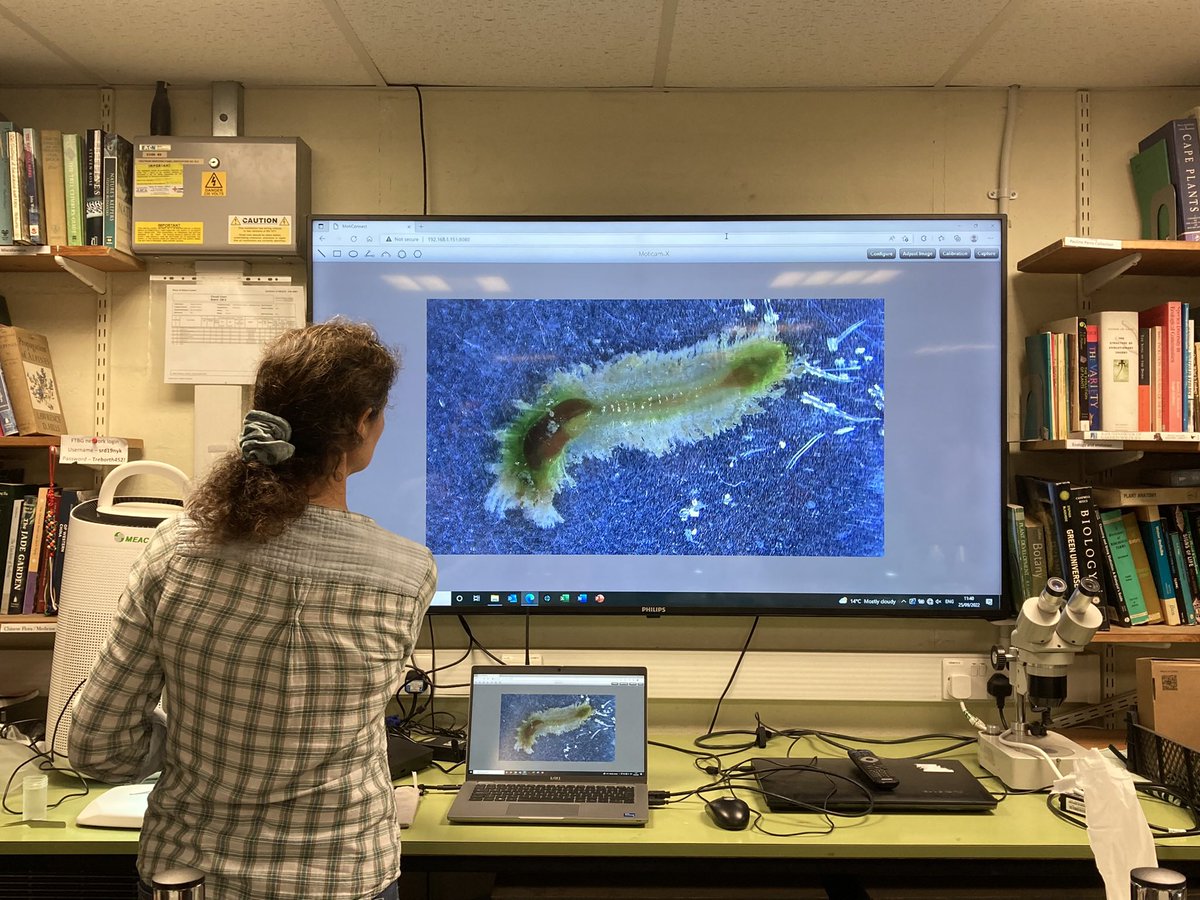
… Well that’s a wrap for this weekend’s ‘an introduction to intertidal polychaete identification’ @TreborthBG for @North_Wales_WT. We’ve seen some lovely marine bristleworms and taken delegates through the identification of species which they may come across on shore
What on earth did the ancestor of these two animal phyla look like? A new fossil we have just described in @CurrentBiology from the early Cambrian of China might have the answer! https://t.co/vAULHTWCsX 🧵
We’re delighted to host @MuccioloSerena, from University of Lodz, in the lab! She’ll be learning in situs, immunostainings and microscopy in 🪱 for the next few weeks to study the genetics of salinity tolerance and invasiveness in polychaetes. Welcome Serena!
This is the head of Echinocephalus, a genus of parasitic roundworm.
This study indicates that this nematode has coevolved with their freshwater stingray hosts since at least the late Oligocene period, approximately 26 million years ago.
#WormWednesday
https://t.co/chqnRwZzrs
I read this interesting article on cephalopod mating dynamics based on genotyping the sperm stored in their seminal receptacles.
https://t.co/ztjaOTj6vK
#Squidtember
Polychaete worm emitting a bioluminescent green cloud. Not too uncommon though the exact purpose seems to be unclear.
Blackwater dive off Palm Beach, Florida
This has got to be the most outrageous leech that I've seen in the field (Americobdella valdiviana). At a whopping 6 or so inches long, this is an earthworm eating species (not a parasite) native to the temperate rainforests of southern Chile.