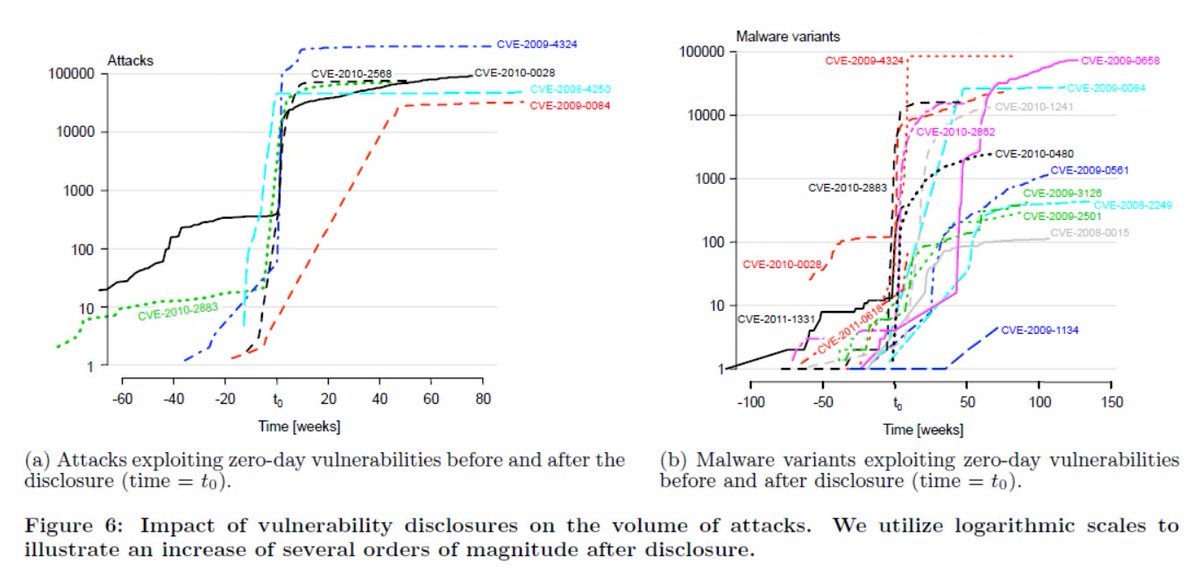
@spacerog@HockeyInJune@vyrus001@Gillis57@HushCon The math doesn't work for researchers. Here is the most glaring example I've found where disclosure increases risk. (Btw, the collision arg holds no weight either.)
Marginal Revolution / Econlog / Econtalk; Against the Gods by Peter Bernstein; Kahneman / Tversky / Thaler; Structure of Magic I & II by Bandler / Grinder; Science of Influence by Cialdini; Crossing the Chasm / Inside the Tornado by Geoffrey Moore; Moneyball, etc by Michael Lewis
My son just posed a lovely question: What piece or pieces of media -- movie, song, book, TV show, article, poem, etc -- has really changed how you think? (How you think about life, about the world, or just how you think.)
Would love to hear your answer.
@JustinWolfers Marginal Revolution / Econlog / Econtalk; Against the Gods by Peter Bernstein; Kahneman / Tversky / Thaler; Structure of Magic I & II by Bandler / Grinder; Science of Influence by Cialdini; Crossing the Chasm / Inside the Tornado by Geoffrey Moore; Moneyball, etc by Michael Lewis
I broke my own rule to never post about AI detection as it is fraught in many ways.
The problem is that if you use AI a lot, you know AI writing on sight, which makes the difficulty of objectively proving that AI use to others very frustrating
New data from @OpenAI Economic Research: at least 4 million people used ChatGPT in March 2026 to help plan, start, run, or grow a business – a conservative lower-bound estimate.
It’s an early sign of how AI can help more people access capabilities and expertise that were previously expensive, specialized, or out of reach.
This is not just a startup story.
Entrepreneurship in ChatGPT has strong activity across retail, professional services, trades, hospitality, health, and more.