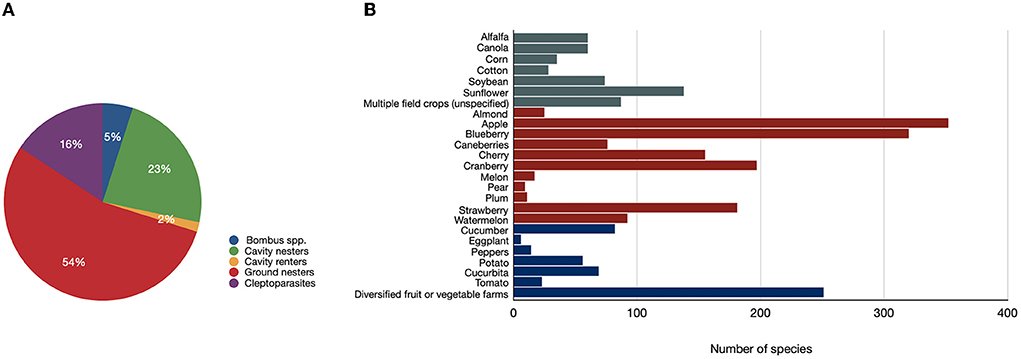
# of wild bee species found by crop with nesting guild categories...ground nesters are most common guild. Shouldn't we be paying more attention to them? https://t.co/QaLb6Pyi2L
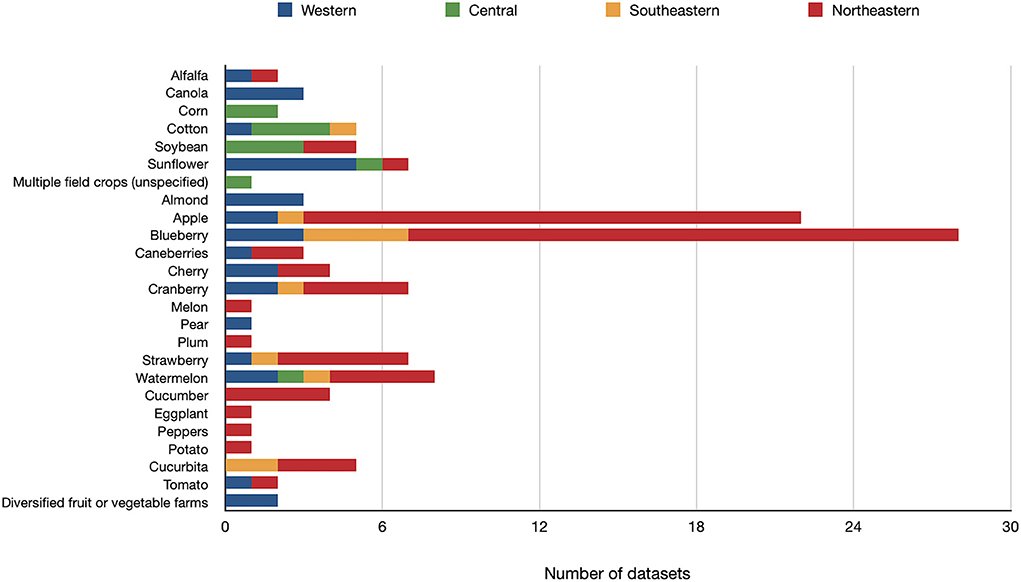
We did it! @alanapindar and @SabRondeau and I have published a compilation of the wild bee visitors to major crops in N. America in Frontiers in Sustainable Food Systems https://t.co/QaLb6Pyi2L
How do the insecticides imidacloprid and cyantraniliprole affect bumblebee movements and behaviour?
Dr. Amanda Liczner (@UofG_SES), is hoping to find out! She and her team are using radio tracker 'backpacks' to monitor the movements of bumblebee queens.
https://t.co/PckcixMcQ1
Bombus terricola nesting in an abandoned mouse nest made from leaves and feathers in an old honey bee hive at my place...and lots of B. fervidus individuals around the hive too. Has anyone ever tested if queens are attracted to the smell of mouse when looking for a nest?
So pleased to be testing an Ontario facility for overwintering honey bee nucleus colonies and banking queens--kudos to Kawartha Lakes Honey for sharing their innovative system.
"A century ago in Nova Scotia, Mabel Bell’s garden taught environmental lessons we’re still trying to learn". Great to see @AlanaPindar's heroic project to recreate Mabel Bell's garden for #pollinator research getting attention: https://t.co/S8z4JikjL3 @smckinley1@TorontoStar
Hoary squash bees knock pollen off Cucurbita anthers where it gathers in the base of the corolla...no use to bees or to the Cucurbita. BUT ants sure use it! Thks for the video Patricia Nunes Silva!