Here, Patrick explains with common sense & compelling examples that Europe has a degrowth/anti air-con mentality and is told that "these are just anecdotes". This is a type of argument often employed by so-called "moderates" that has done much damage in the past decades.
Basically, for every talking point, you have a bunch of degrowth/extreme left crazy people that are fairly well-embedded in institutions and "respectable". The polar opposite right-wing/libertarian position is almost never represented in respectable institutions.
Then, you have the moderates. They often distinguish themselves by insisting on "statistics" and hard facts and refusing to accept common sense arguments and "what is before their eyes". The "just anecdotes" dismissal treats empirical observations as epistemically worthless unless accompanied by a regression table.
But quantitative evidence itself is abundant for things that powerful intellectual institutions want to measure. It is scarce for things they would prefer not to examine too closely.
The intellectual landscape ends up looking roughly like this:
1) On one side, there is a well-funded, institutionally embedded, socially respectable body of opinion that is broadly degrowth, skeptical of markets, skeptical of air conditioning etc. These views appear in EU policy documents, in academic journals, in mainstream journalism and in NGO reports. They might not be held by most academics broadly construed (e.g. engineering profs), but they are held by the small minority that studies these topics and that is enough.
2) On the other side, the full-throated pro-growth, pro-energy and pro-development counterargument exists but is largely confined to think tanks that are routinely described as "industry-funded" or "right-wing," which in respectable discourse functions as a full rebuttal.
In the middle sit the moderates, who pride themselves on not taking sides, on demanding evidence, on resisting "populist" or "anecdotal" reasoning.
This moderate position is not symmetric in its effects and moderates do not apply equal skepticism to both sides. Overall, the lack of actually balanced perspectives leads to the polarization of those who are more right leaning and suspect something is amiss. But because they lack any institutional home, they end up becoming cranky and conspiratorial.
End result: broad erosion of public dicourse.
Also if you wonder why AC has become a right wing shaped topic, it's also because of the craziness of the discourse, caused by the above.
@nobodyknows2322 When Americans sneer and say to people, "speak English!", some are rightly horrified by that; but then some of these same people will sneer at Americans for not using the metric system.
So why does "indigenous vs. colonizer" almost always mean Europeans, and almost never Bantu, Turks, Arabs, Slavs, or Han Chinese?
A few reasons, in descending order of how much they actually explain:
1. Recency and documentation. European expansion happened in the era of the printing press, photography, census records, and treaties. The Bantu expansion left no paperwork. The Arab conquests are 1,300 years old and mythologized as religious destiny rather than conquest. When the receipts exist, the case is easier to make, and Europeans left receipts.
2. The winners wrote the framework. Modern human-rights language, postcolonial theory, and the very category of "indigenous peoples" were built in Western universities after WWII, primarily to process European guilt over European empires. The tool was designed for one job. Asking it to evaluate the Arab conquest of Egypt or the Turkic conquest of Anatolia is like asking a tax form to diagnose a disease. It wasn't built for that.
3. Christendom is critique-able; other civilizations aren't. You can write a bestseller attacking Western Christian civilization from inside a Western university and win awards for it. Try writing the equivalent book about Arab-Islamic conquest from inside Cairo or Istanbul. The asymmetry isn't about history. It's about which societies tolerate self-criticism and which punish it. So the critical literature piles up on one side and barely exists on the other.
4. The Soviet inheritance. Cold War-era anti-colonial framing was deliberately shaped by Moscow to delegitimize the West while giving its own empire and its allies' conquests, a pass. That framework outlived the USSR and still structures a lot of academic and activist vocabulary today.
5. Race makes it legible. European colonizers usually looked different from the colonized. Turkic conquerors of Anatolia, Arab conquerors of the Levant, and Bantu expansionists in Africa generally didn't look dramatically different from the populations they absorbed. The visual contrast made European empire easier to narrate as racial, and once a story has a clean visual, it travels.
6. And finally, Jews. The framework's selective application reaches its most absurd point when a people indigenous to a specific land, with continuous presence, language, religion, and archaeological record tying them to it for three thousand years, get labeled "colonial settlers", while the actual seventh-century conquerors who Arabized the region get labeled "indigenous." At that point the framework isn't describing reality. It's laundering a conclusion.
The label isn't tracking who got there first. It's tracking who it's currently fashionable to blame.
@justalexoki I maintain the right to express more clearly based on where I put it. If it's inside the quotes, I'm reporting the tacit punctuation from the other person. If it's outside the quote, that's me completing my own framing of it.
@tdietterich@arxiv As for the complaints that this policy is anti progress ... no, it's not. I read it as an attempt to require RESPONSIBLE use of AI. Those who want personal prestige by having their names on a paper need to be ready for personal accountability as well.
@tdietterich@arxiv I can appreciate a zero tolerance attitude; but I can also appreciate the risk of unintended consequences that other commenters have raised. Those unintended consequences could also push arxiv away from what it wants to be.
Had a Jane Street phone interview in 2016. "Price a 6-month forward on carrots."
There's no carrot futures market, so I build one from scratch: seasonal harvest cycles, USDA demand elasticity, cold storage decay rates.
One trader stops me. "Your storage cost function– you're modeling the carrot as dead inventory. Like grain in a silo." He asks me the metabolic respiration rate of a post-harvest carrot at 2°C. I estimate.
"Your forward is overpriced by exactly that shrinkage. The underlying is consuming its own sugars. It's alive." Good correction. I adjust the model. I think I've recovered.
Rejection email comes the next morning. Subject: "Ethical Review." My framework, they write, "relied on the severance of the root organism from its growth medium." The question about respiration was a test. The carrot was still alive and I'd built an entire derivatives structure on top of its death without questioning whether harvest was an acceptable act.
I pull up the recruiter's original email. It doesn't say Jane Street. It says Jain Street– a non-violent quantitative commodities fund.
The carrot was never supposed to be priced. It was supposed to be refused. I later learn the only candidate who passed that round was a former monk from Gujarat who sat in silence for eleven minutes and said, "I cannot put a price on life." He's now a partner.
I’m so fucking sick of snark from people on here because I talk about Jew hatred a lot.
First, those who have followed me for a while know this has been a focus of mine for more than 10 years — it’s not something I suddenly picked up post–October 7.
My focus is largely on extremism, particularly in America, not on Israel, although I fully understand there’s crossover.
Second, people who say my focus on this is cringe, annoying, or stupid either don’t understand how serious this problem is — or they’re Jew haters themselves.
This is an urgent matter.
I wouldn’t spend this much time on it if it weren’t.
And despite what some people online seem to believe, it certainly isn’t lucrative or helpful to my career.
We know from decades of research that once someone adopts a fully developed antisemitic worldview, it becomes very, very difficult to deradicalize them — though not impossible.
I don’t want to lose more people to the abyss of Jew hatred.
As far as I’m concerned, this is existential.
When hatred of Jews becomes part of someone’s identity and worldview, it shapes how they understand everything: politics, morality, and even their sense of belonging.
Antisemitism operates differently from many other forms of hatred because it is conspiratorial in nature rather than simply prejudicial.
Conspiracy beliefs are self-sealing: evidence against them is interpreted as proof of the conspiracy itself.
People who adopt strong antisemitic views often move into social ecosystems that reinforce those beliefs: online communities, ideological networks, and political movements.
Antisemites also see their hatred as morally justified.
In their minds, they are defending civilization, fighting corruption, exposing hidden evil, and, as many of you learned recently, exposing child-killing pedophiles.
Once hatred becomes framed as a moral duty, deradicalization becomes far more difficult.
Antisemitism also “explains” everything to the Jew hater.
Because Jews are falsely framed as the hidden cause behind many unrelated problems, Jews become the grand explanatory theory for the world’s failures and for the failures and challenges people have personally.
People who criticize me or mock me ultimately don’t bother me.
But it is deeply annoying and concerning — particularly because they cannot even claim that I spend my time advocating for Israel or defending the decisions of the Israeli government.
So their issue is with Jews.
Ultimately, if you have a problem with me talking about this, you can kiss my Iranian ass.
Every Christmas Eve, I think about George Bailey.
He dreamed of escaping Bedford Falls—of shaking off the dust of a small town, building skyscrapers, exploring the world. Instead, he stayed. He ran the Building & Loan his father left behind. He sacrificed his college money, his honeymoon savings, his chance to see the world, over and over, because people needed him.
By the time the crisis hits, George feels like a failure. His life looks like one long series of missed opportunities, thwarted ambitions, and quiet resentments. He stands on the bridge, convinced the world would be better without him.
Then Clarence shows him the truth: a Bedford Falls without George Bailey is a darker, meaner, hollowed-out place. The people he quietly helped, the small acts of integrity he performed without recognition, the risks he took to protect others—those weren’t detours. They were the substance of his life.
The film’s deepest insight isn’t just that “no man is a failure who has friends.” It’s that real impact is almost always invisible in the moment. The lives you steady, the small kindnesses you extend, the responsibilities you shoulder when no one else will—these things ripple outward in ways you may never see.
A strong sense of purpose doesn’t erase pain; it transforms it. It doesn’t merely explain why hard things happened. It asks: What are you now responsible for because they happened?
Faith, at its best, does the same. It doesn’t promise that everything was “meant to be” in order to make suffering palatable. It invites you to look at what has been entrusted to you in light of what you’ve endured.
George’s story reminds us that meaning is rarely found in the grand escape, but in the faithful presence. The dreams we surrender don’t always vanish—they often become the raw material for something more enduring than we imagined.
If you’re carrying the weight of roads not taken, of dreams deferred, of a life that feels smaller than you once hoped—watch It’s a Wonderful Life again tonight. Not as nostalgia, but as revelation.
You may not see the full difference you’ve made yet.
But it’s there.
And it matters more than you know.
Merry Christmas, friends.
🎄🇨🇽🎅🦌☃️⛪️✝️❤️
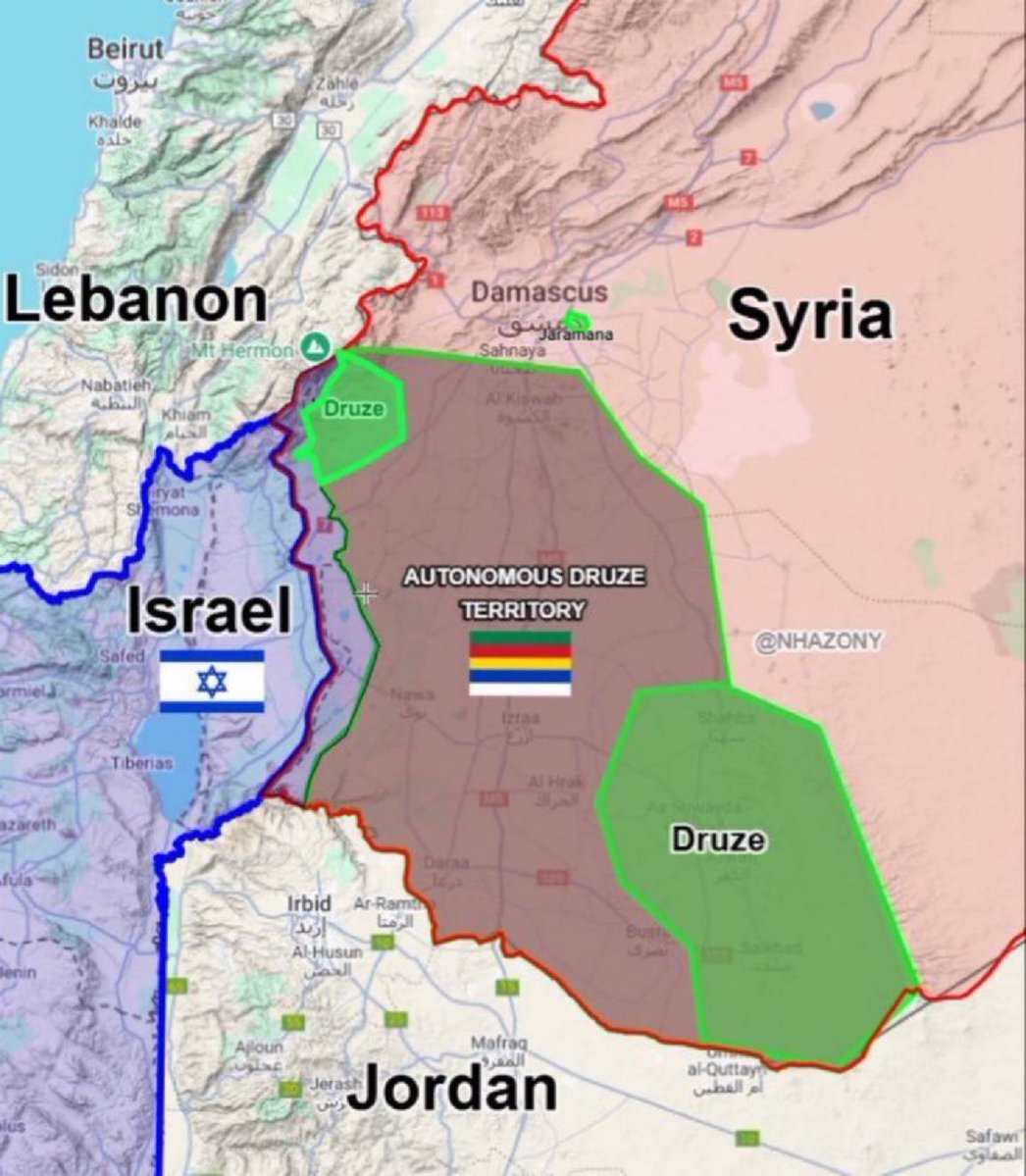
Israel is repelling Jihadists from mass-slaughtering the Druze and Christian minorities in Syria.
If it weren't for Israel, tens of thousands of Christians and Druze would be murdered. You won't see a single media outlet report this.
Honestly the entire influencer space on the right is so incestuous and toxic that they have to pretend even the most insane and obviously false claims are legit just to not risk their audiences/connections.
It’s so insanely bad for the country and the right.
If you want a picture of the future, imagine a boot stamping on a human face—forever. That’s why I’m asking for $50M in Series A funding for my new startup, BootStompr, which will revolutionize
Government-run childcare starting at 6 weeks is horrifying.
Give the parents the money, so one of them can stay home with the baby.
A six week old needs a parent, kin, a family. Not institutional care when his whole humanity is downloading. He needs love.