One of the most fun things you'll read this week:
A bunch of @iitbombay 20-somethings spent their college year building an actual semiconductor fab of sorts. They're now weeks from their first working transistor.
Technically it's a "hacker fab".
-basically a semiconductor fab you build in a college for not a lot of money (it's hard work though)
-it makes scrappy chips but who's asking state of art
-open source framework that started in the West.
-only some seven such fabs exist
-the IIT-B one is first outside West.
What @hackerfabindia have built:
-lithography machine = an old projector with the optics flipped, printing at 3–4 microns (a human hair is ~100)
-a 1,100°C furnace built by two first-years from cement, ceramic wool and 50m of resistance wire
-a sputter built in-house
-a vacuum chamber
Whole toolkit:
-Rs 15–20 lakh - roughly a campus racing team's annual budget
-First devices (a diode and a MOSCAP) came off their own tools on 12 June
-Full transistor due by end of summer
-2nd in the world to do it on the open HackerFab framework
Tagline:
Why should TSMC have all the fun? 😎 (good one @aryamman_bhatia & team)
@astrokaran's story 👇
https://t.co/EWcBnKDoPv
How well can you describe the feature selectivity of a vision neuron … with words? Interpretability has long borrowed from neuroscience — and maybe it can give back too! 🧵
Why isn't there a 3Blue1Brown for biology?
For context, 3Blue1Brown is a YouTube channel, founded by Grant Sanderson, that publishes videos about math. Sanderson built an "animation engine," called manim, to help create these videos; it's a Python library that uses code to render smooth animations.
So why is nobody making highly visual, explanatory videos for biology in the same way that 3Blue1Brown is for mathematics, where each video explains a concept using a consistent visual aesthetic? I think there are at least three plausible explanations:
1. Biology demands a larger visual palette than math. Whereas many different ideas in math can be explained using a small number of symbols (charts, equations, shapes), maybe biology just requires a larger array of symbols. Showing a kinesin protein walk on a microtubule demands a completely different set of elements compared to, say, the evolution of a species. Perhaps this makes it harder to create visuals for biology.
I'm not sure this holds up to scrutiny. Math is arguably as broad as biology. 3Blue1Brown has made videos on everything from Bayes' theorem to Hilbert's curve and how Bitcoin works, and all of them have the same visual aesthetic.
2. Biology doesn't have a rich history of visual ideas, so maybe it's harder to align on an aesthetic. Graphs and geometric shapes are many centuries old, and mathematicians consciously draw on these historical norms and conventions. A line chart looks like a line chart regardless of how it's styled. Biology, though, has no such "fixed" visual language, so it takes more effort to create each new visual.
Maybe there's merit to this idea? Everyone draws a chromosome differently, for example; some people might show all 23 pairs at once, or zoom into a single locus, or abstract the entire chromosome down to a few letters. Biology operates across so many orders of magnitude that choosing the scale at which to convey an idea is itself part of the creative act, and there's no inherited convention telling anybody which scale to pick.
3. Maybe it takes too long to build visuals in biology, or the technical bar is too high? If you want to show how an enzyme works at the molecular level, for example, you'd need to understand PyMOL, Blender, etc. Iteration speeds are low, and the skill set needed to build one type of visual — like how molecules bind — won't necessarily apply to higher-order ideas, like evolution.
This bottleneck is collapsing with AI tools, though. Claude now works directly in Blender and Adobe products, for example, so iterations will be much faster. Maybe we'll see a 3Blue1Brown-esque creator emerge for biology? I'm not sure.
I'm hoping to write about these ideas, so if you have feedback (or reject my claims entirely) please let me know! I'd be keen to hear from you.
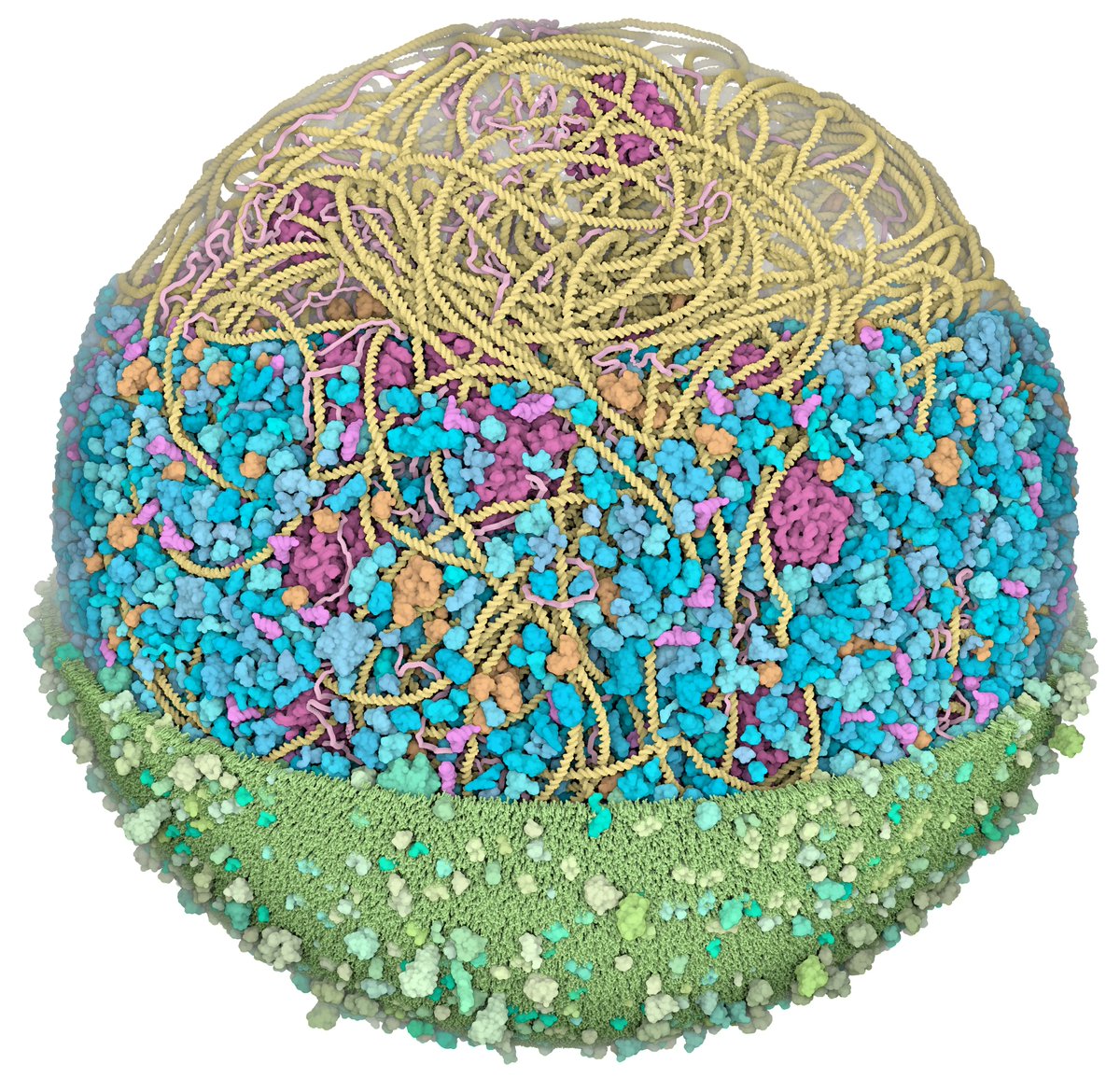
> Painting by David Goodsell, whose visual aesthetic has been extremely transformative in terms of how people think about molecular biology.
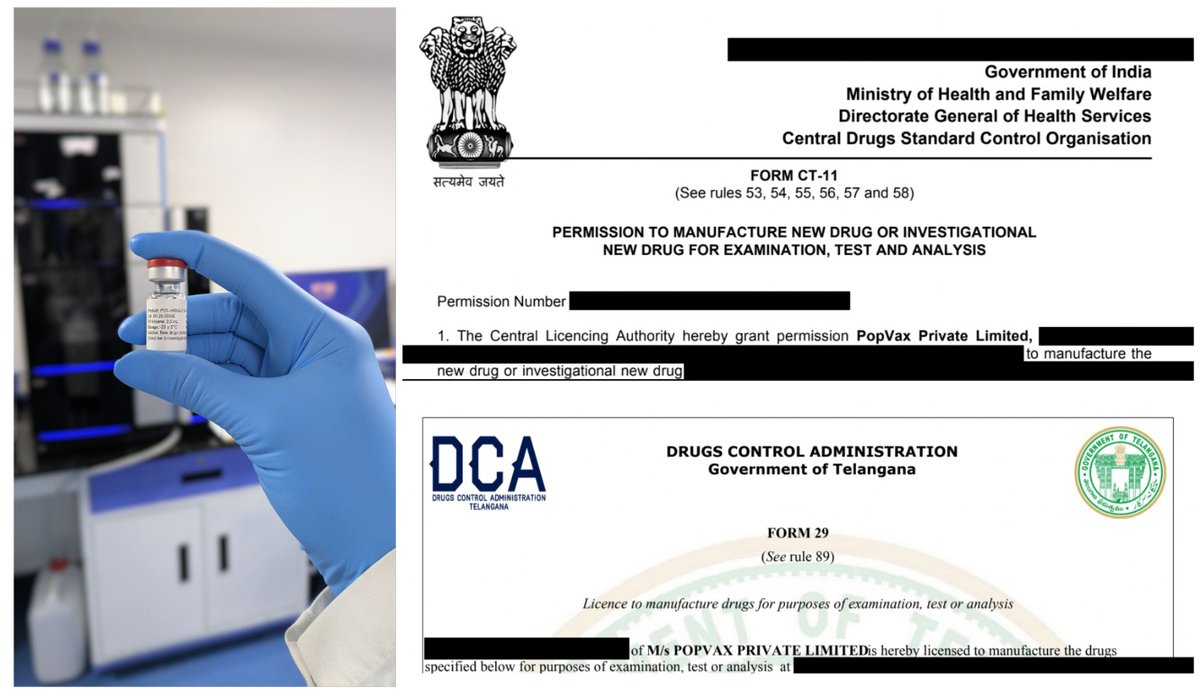
Four years ago, I started @PopVaxIndia with no real knowledge of biology and <$50k in personal funding, convinced that the combination of generative AI for design & RNA for delivery would unlock a new class of vaccines & therapeutics against diseases resistant to legacy methods.
Can biological tissues "learn"?
bioRxiv w/ @ShilaBanerji: Epithelial tissues exhibit emergent behaviors akin to unsupervised learning. Local tension remodeling allows cell networks to store long-range memory and program global elasticity properties.
https://t.co/eoJ7RtlZ3L
Francois usually has good takes. But this suggests a bit of cluelessness about what the key barrier to progress in biology is. It's not algorithms or AI. It's still a lack of the ability to measure many important things in cells ie. assay techdev. Perturb-seq is not all u need.
🧬🔬🧪 🎉 Our team at @czbiohub is thrilled to share TWO companion papers out today in @NatureMethods!
📦 Ultrack — robust, scalable nD cell tracking
🌐 inTRACKtive — a beautiful, open-source web viewer for lineage exploration
Let’s dive in! 👇 (LINKS BELOW)
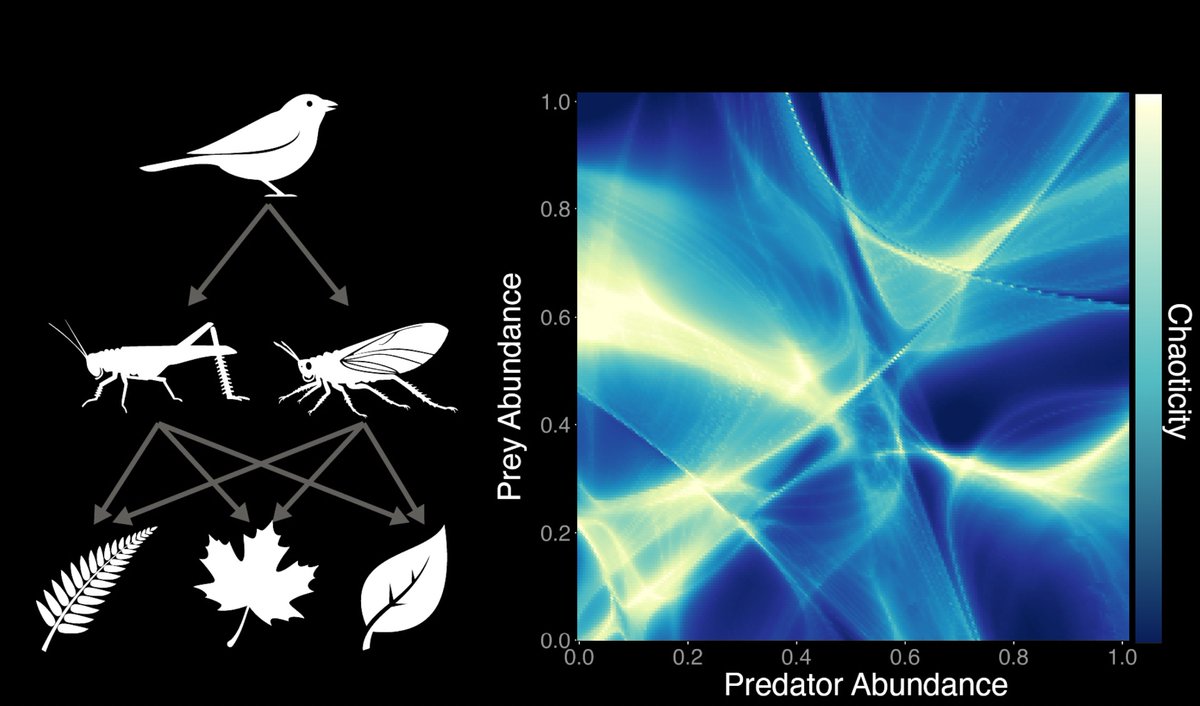
Does stability matter in biology? My article on the cover of this month’s @PLOSCompBiol explores how large ecosystems develop supertransients, a manifestation of computational hardness (1/N)
https://t.co/iqt8h2DVz0
📣 New paper out! How do thousands of cells shape the emergent geometry of the avian embryo? We identify distinct, independently controllable mechanisms that contribute to embryo size and shape. @gserranonajera@axplum@SteventonLab
https://t.co/Kakrk6Zbxc
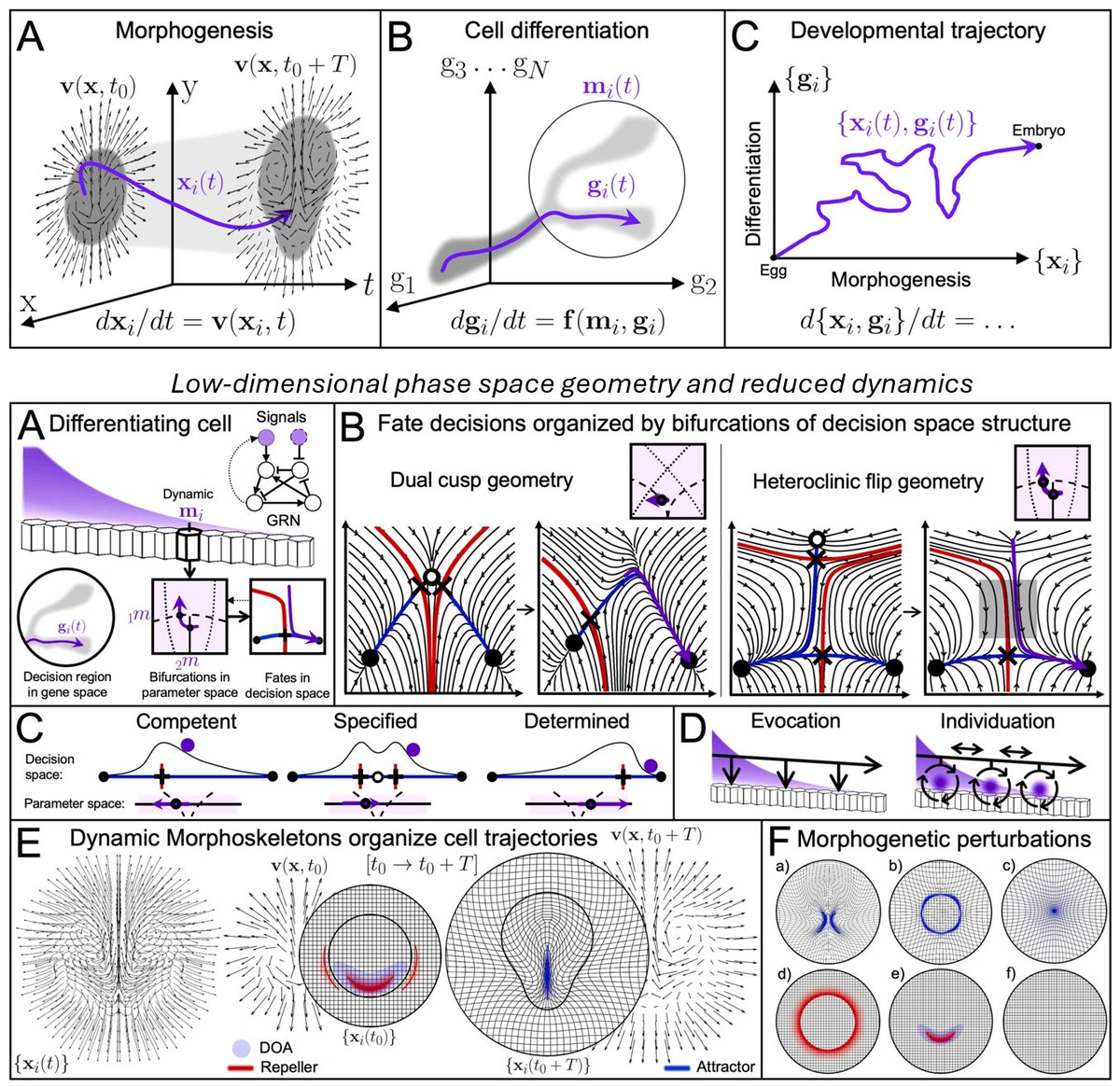
📣 New review! Dynamical systems and low-dimensional geometric structures in phase space help rationalize how embryos develop form and function, from large datasets. We focus on morphogenesis, cell differentiation, and their interconnection. @axplum
https://t.co/4TKTNMa5Eh
Check out our new work!
The code for performing coherent structure analysis, along with the documentation, is available at https://t.co/sWbbT9JS5L. Please feel free to reach out if you are interested in using this analysis for kinematic data in your system!
📣 New preprint alert! We developed a framework to uncover Coherent Structures in flows on dynamic surfaces—revealing dynamic attractors, repellers and deformation directions in active nematic vesicles, pancreatic spheroids, and beating zebrafish hearts.
https://t.co/JzoBKqVdsF
Fun new paper at #SIGGRAPH2025:
What if instead of two 6-sided dice, you could roll a single "funky-shaped" die that gives the same statistics (e.g, 7 is twice as likely as 4 or 10).
Or make fair dice in any shape—e.g., dragons rather than cubes?
That's exactly what we do! 1/n
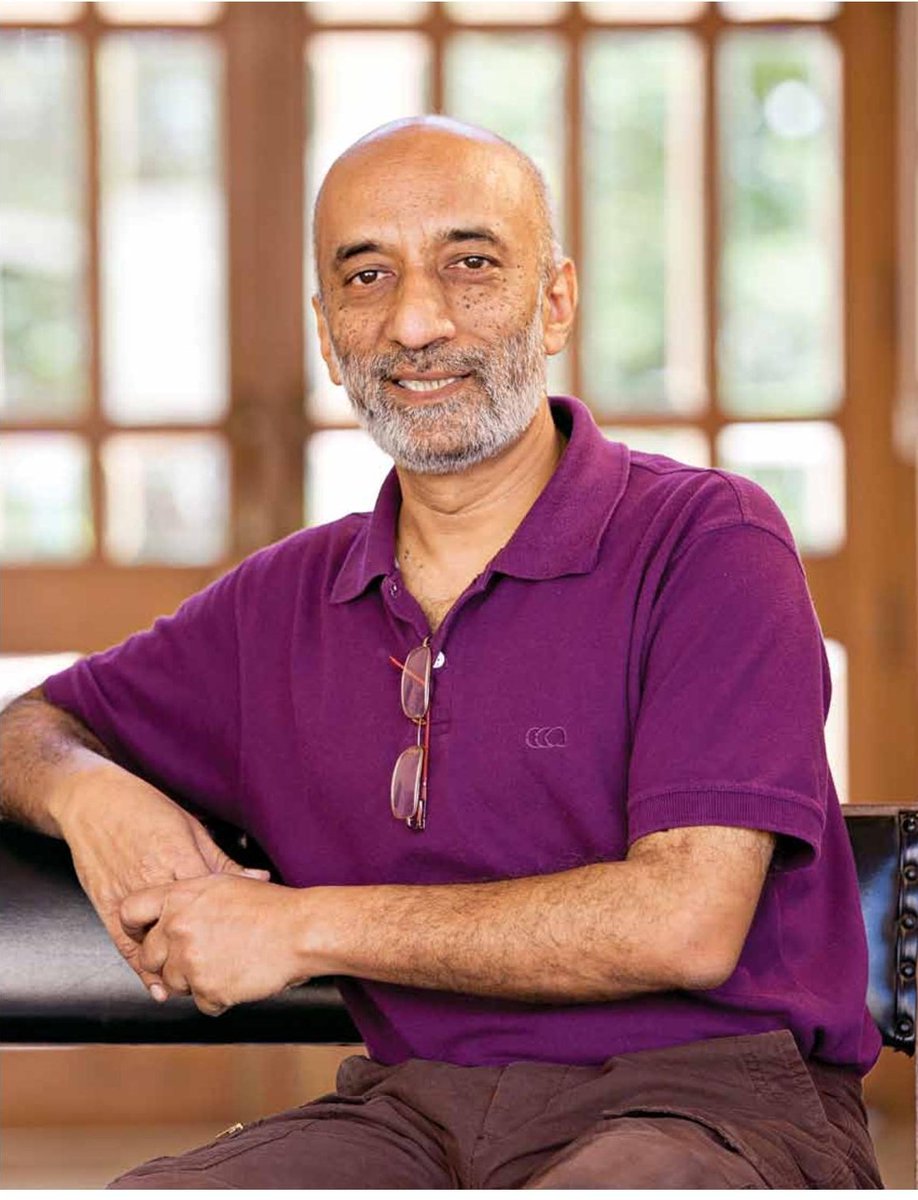
With great pride, we announce that Prof. Sriram Ramaswamy, who is also a J.C. Bose National Fellow @Physics_at_IISc, @iiscbangalore has been elected to the US National Academy of Sciences @theNASciences.
Stoked to present our latest, brilliantly led by Chris et al & Alejandro Torres-Sanchez. How tissues are patterned during development – we found that geometry-constrained ECM fractures pattern the myocardium in the vertebrate heart 1/n https://t.co/jgXSglGpAj