An engineer just spent 48 hours on reverse-engineering Kimi K3's entire codebase.
What he found is wild.
K3 has 2.8 trillion parameters. That's 22,580 GPT-2s packed into one model. 22,000x growth in seven years.
But the real insight isn't the size. It's that every architectural jump was a surgical fix for a specific failure in the previous one.
Memory too expensive → fixed. Old info interfering with new → fixed. Can't selectively forget → fixed. Signal diluting across layers → fixed.
Seven years. Not one step was wasted. Not one was just "make it bigger."
1.28 million views. 6,000 bookmarks.
One of the best technical breakdowns of modern AI architecture I've seen.
INSTEAD OF WATCHING NETFLIX TONIGHT.
Spend 1 hour with this.
Claude AI FULL COURSE that teaches you how to BUILD and AUTOMATE anything.
The people who watch this tonight will wake up tomorrow with a new skill.
Watch it and Bookmark it now
FREE PDF for 2ND EDITION OF OUR BOOK!!!
https://t.co/t4kYJmgL61
We are committed to open science and open education:
Free book: https://t.co/t4kYJmgL61
Free code (https://t.co/QZFPbAa8ab)
Free lectures (https://t.co/2q9MFD6o4u)
https://t.co/53C3gdsJg6
@ANI Not just footpath the entire infrastructure is broken in banglore.
Report civic issues at https://t.co/kttwi5EuIm for public visibility and to keep track of issues
MIT Press published a robotics textbook.
Then put it on GitHub for FREE. 📌
"Introduction to Autonomous Robots" covers everything:
kinematics, sensors, actuators, motion planning, localization, computer vision, and neural networks... from mechanisms all the way to algorithms.
It's written for undergraduates. Which means it's actually readable.
Most robotics textbooks assume you're already deep in the field. This one builds everything from the ground up, step by step, with real examples. Stanford's Mac Schwager called it "much-needed" (because it genuinely is).
Four professors at the University of Colorado Boulder spent years building it from lecture notes. MIT Press published it. Then they open-sourced the whole thing under Creative Commons.
PDF. Free. GitHub.
If you're trying to understand how autonomous robots actually work (not just the frontier research, but the foundations), this is where to start.
📌 [https://t.co/bw8zoK8MmB]
Share this with your fellow roboticist!
——
Weekly robotics and AI insights.
Subscribe free: https://t.co/9Nm01QUcw3
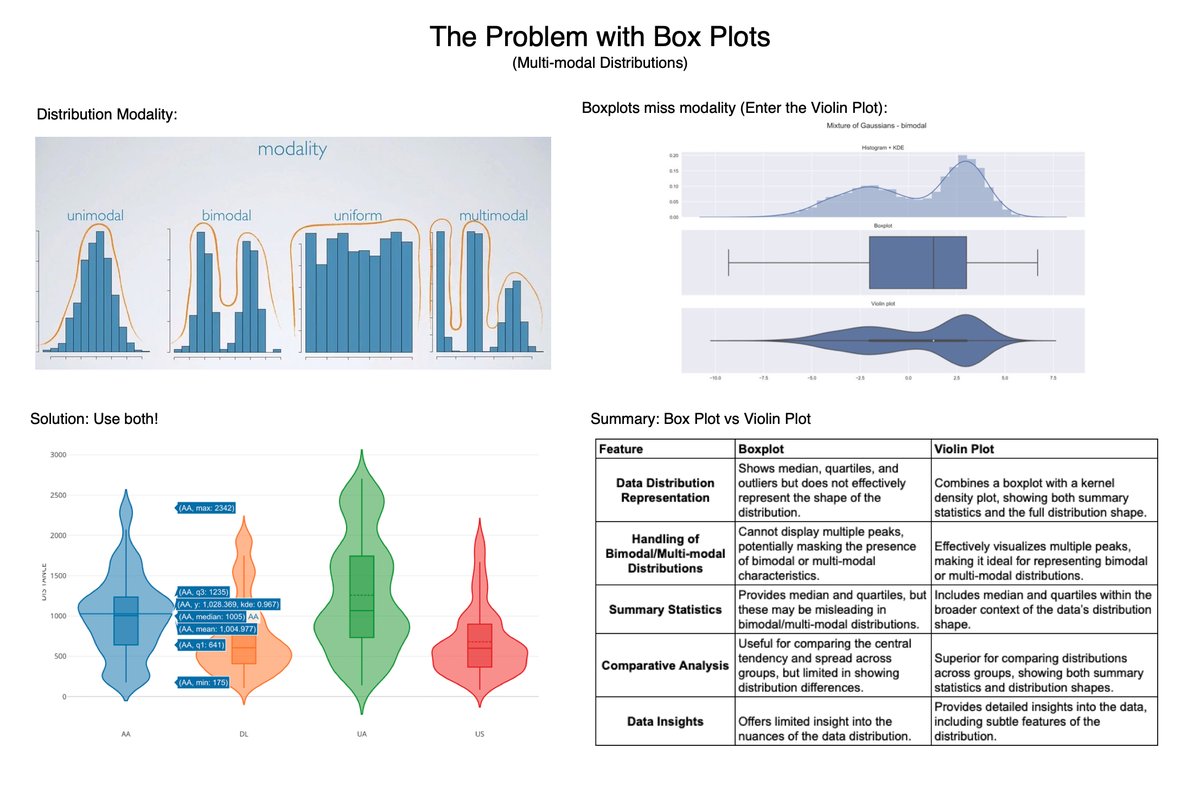
The problem with box plots. It took me at least 3 years to figure this out (and most data scientists never get this). In 3 minutes, I'll share 3 years on boxplots (business case included):
1. Box Plots: The box plot, also known as a box-and-whisker plot, was developed by John W. Tukey. Tukey was an American mathematician and statistician who introduced the box plot in 1970. This graphical representation of data became widely popular due to its simplicity and effectiveness in displaying the distribution of a dataset.
2. What are Box Plots? Box Plots are a standardized way of displaying the distribution of data based on a 5-number summary: minimum, first quartile (Q1), median, third quartile (Q3), and maximum. They are handy for showing differences between several data sets and highlighting outliers.
3. The Power of Box Plots: When I realized that I could make box plots, this was a superpower. Instantly boxplots became an 80/20 skill in my bag of data science tricks. But there were MISTAKES that I was making.
4. The PROBLEM with Box Plots: Box Plots display limited information on the data distribution. This becomes apparent when dealing with Bimodal or Multi-modal distributions.
5. Bimodal / Multimodal Distributions: Bimodal and multimodal distributions are incredibly important. Multiple peaks in a distribution indicate the presence of groups. These groups could be different clusters of customers with different buying habits. The box plot masks these because it essentially "averages" the data into quartiles and medians.
6. The Solution: Violin Plot. Violin plot uses Kernel Density Estimation (KDE) to display the distribution. By combining Box and Violin Plots, I could finally see the underlying patterns in my data and uncover better business insights. I got both aggregated "Tukey 5 summary" with my box plots and insights into the distribution with my violin plots.
7. Business Case: In 2022, my company Business Science finally broke through $2,000,000 in sales. This was a 95% increase over the previous year. We used a multi-prong strategy with better marketing, collecting better data, and lead scoring.
One of the key breakthroughs came when I began using box and violin plots. I uncovered new purchasing patterns that I never realized. This helped us expand our business through segmentation and targeting. And was critical on our path to 2X sales.
Surprising what a few exploratory data analysis tools can do for your business.
===
There’s a lot more to learning Data Science for Business. I’d like to help.
I put together a free on-demand workshop that covers the 10 skills that helped me make the transition to Data Scientist: https://t.co/LR39RJ5XKB
And if you'd like to speed it up, I have a live workshop where I'll share how to use ChatGPT for Data Science: https://t.co/EaMpKrJiqX
If you like this post, please reshare ♻️ it so others can get value.
Episode 1: Introduction to Event-Driven Architecture
I had so much fun with the arc42 series that I want to try another one. I keep the titles a little bit formal so that if you bookmark the post you can find it again in the future. The content tho is still me. I try to explain the concept and give some inside coming from my personal experience.
At this point the argument is not a secret anymore, let's start.
Event-Driven Architecture (EDA) is a powerful way of designing software systems, essential for developers looking to build scalable, flexible, and responsive applications. At its core, EDA focuses on events as the heartbeat of communication between different parts of a system. But what exactly does this mean, and how does it affect the way we build and understand software? Let's dive into the basics.
What is EDA?
Imagine a city full of activity: things are happening all the time cars moving, people walking, lights changing. In software terms, each of these actions can be considered an "event" a significant change in the state of the system. Event-Driven Architecture is a design framework that uses these events as the primary source of communication between different parts of a software system, rather than traditional methods like direct API calls. In EDA, components react to events as they occur, making the system more dynamic and adaptable.
The Main Components of EDA
To understand EDA better, it's crucial to know its three main components:
- Event Producers: These are the parts of your system that generate events. They could be anything from a user interacting with your application, a sensor detecting a change, or a scheduled task that completes.
- Event Consumers: Once an event is produced, it needs to be handled. This is where event consumers come in. They listen for specific events and take action when those events occur.
- Event Channel: This acts as the bridge between producers and consumers, facilitating the transfer of events. It ensures that events reach the appropriate consumers without the two needing to know about each other, promoting decoupled architecture.
Advantages of Using EDA
So why go for EDA? Here are a few compelling reasons:
- Scalability: EDA allows systems to easily scale up or down, handling more events without a significant redesign of the architecture.
- Flexibility: Since components communicate through events, it's easier to add, remove, or modify parts of the system without impacting the whole.
- Responsiveness: EDA systems can respond immediately to events as they happen, making them incredibly responsive to user actions or system changes.
Disadvantages of Using EDA
As we know, in software architecture everything is a trade off, so let's see some of the negative sides of EDA.
- Complexity in Design and Management: EDA increases design and management complexity, making event flow and issue diagnosis challenging.
- Event Consistency and Reliability: Maintaining event consistency and reliability is difficult, requiring sophisticated tracking and recovery mechanisms.
- Testing Difficulties: Testing EDA systems is complex due to asynchronous events, requiring advanced strategies and tools.
- Tight Coupling via Events: This can seem counter intuitive but it can happen that even if distant to entities can become tightly coupled through events making system changes cumbersome.
A Simple, Real-world Example
To bring this concept to life, consider an online shopping platform. When a customer places an order, this action generates an event. The event might trigger several responses across the system: updating the inventory database, sending a confirmation email to the customer, and initiating the shipping process. Each of these actions is handled by different parts of the system, which react to the event independently. This is EDA in action—decoupled, efficient, and responsive to changes as they happen.
This is the first post of my new series, stay tuned for more!
Bookmark and like this post if you found it useful and don't forget to repost to share the knowledge.
Follow me, If you are interested in more Software and system architecture topics. As well as Team mechanics and real life IT stories.
79 Resources to read to improve your system design:
High Scalability https://t.co/2FjQGtI7rk
System Design Newsletter https://t.co/EYNa2KP6H2
System Design Primer https://t.co/ujYfKF1EsZ
System Design Course https://t.co/E3RHntdVGZ
Engineering at Meta https://t.co/OjZjWSvF1C
AWS Architecture Blog https://t.co/6a7R85De7d
All Things Distributed https://t.co/O95RpBYN3U
The Netflix Tech Blog https://t.co/yRqJiZtivR
LinkedIn Engineering Blog https://t.co/uuyrTgjJRl
Uber Engineering Blog https://t.co/ZLzTgY81jw
Engineering at Quora https://t.co/emGzeXvYjX
Pinterest Engineering https://t.co/pAKJTBAW1J
Lyft Engineering Blog https://t.co/fTLBQouCMS
Twitter Engineering Blog https://t.co/5jSzIWKKoF
Dropbox Engineering Blog https://t.co/0YAGxIT6bf
Spotify Engineering https://t.co/Y3YBRc72Xq
Github Engineering https://t.co/wTzDAQi41E
Instagram Engineering https://t.co/EehYp4vKLv
Canva Engineering Blog https://t.co/c1H4ji71Jj
Etsy Engineering https://t.co/XIxp4qrexu
https://t.co/gBD3XsWeSa Tech Blog https://t.co/kcr7FPYOCE
Expedia Technology https://t.co/ppAbq7kUiv
The Airbnb Tech Blog https://t.co/a8q3YtZrdJ
Stripe Engineering Blog https://t.co/Cd1LVPX69U
Ebay Tech Blog https://t.co/VF8QCKYmGs
Flickr's Tech Blog https://t.co/w5VM8mq53i
Hubspot Product and Engineering Blog https://t.co/ISFCTojUDe
Zynga Engineering https://t.co/U37CVhxwTL
Yelp Engineering Blog https://t.co/BoslXXaqVq
Heroku Engineering Blog https://t.co/9RJkVlVkuE
Discord Engineering and Design https://t.co/S5dDuKaHsb
Zomato https://t.co/AOSGm5LwdH
Hotstar https://t.co/8xzDPCd344
Swiggy https://t.co/SAnsrx93xZ
Acast Tech https://t.co/xLc1Bni4cd
ASOS Tech Blog https://t.co/A5zsKCDhQT
Shopify Engineering https://t.co/Y0i25GFGy5
Microsoft Tech Blogs https://t.co/UDoOo5P5tU
Engineering at Microsoft https://t.co/reHLmNBHMy
MongoDB Engineering Blog https://t.co/RdSDAmlAnJ
Slack Engineering https://t.co/yD0TfYHx4Q
The rest don't fit in X's post length so you can find them here: https://t.co/AKzXERcA9R
📢Announcing .NET Aspire - A cloud ready stack for building observable, production ready, cloud native applications. Easy to start, easy to build, easy to deploy Opinionated yet flexible.
Open source and first preview available today!
https://t.co/xGtncVxvsk
https://t.co/dKbNtomxhj
#dotnet #dotnetconf
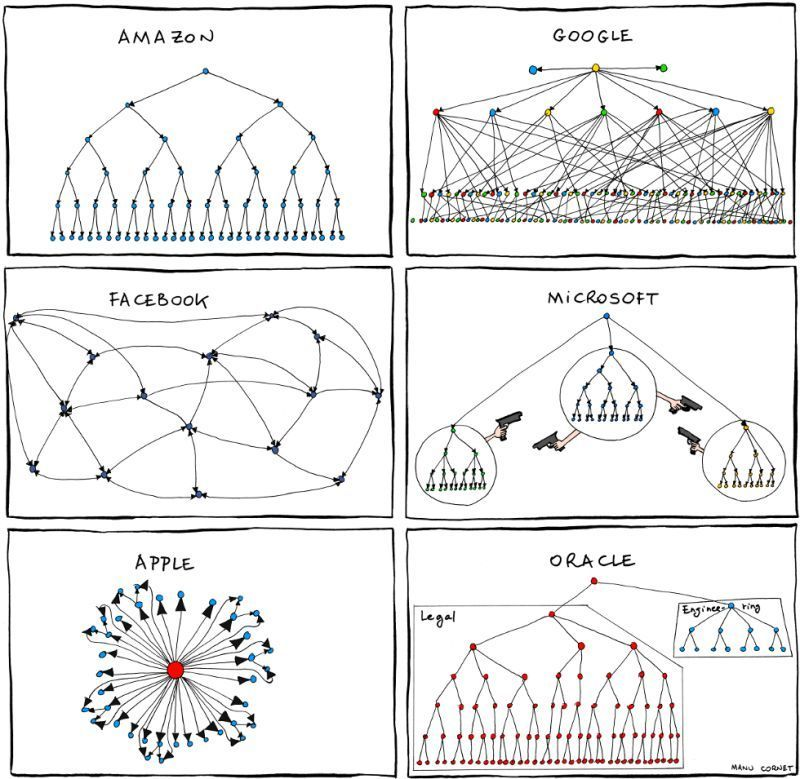
𝗬𝗼𝘂𝗿 𝗦𝗼𝗳𝘁𝘄𝗮𝗿𝗲 𝗔𝗿𝗰𝗵𝗶𝘁𝗲𝗰𝘁𝘂𝗿𝗲 𝗜𝘀 𝗔𝗹𝘄𝗮𝘆𝘀 𝗖𝗼𝗺𝗽𝗹𝗲𝘅 𝗔𝘀 𝗬𝗼𝘂𝗿 𝗢𝗿𝗴𝗮𝗻𝗶𝘇𝗮𝘁𝗶𝗼𝗻
Have you heard about 𝗖𝗼𝗻𝘄𝗮𝘆'𝘀 𝗟𝗮𝘄? It is a theory created by computer scientist Melvin Conway in 1967. which says: "𝘖𝘳𝘨𝘢𝘯𝘪𝘻𝘢𝘵𝘪𝘰𝘯����, 𝘸𝘩𝘰 𝘥𝘦𝘴𝘪𝘨𝘯 𝘴𝘺𝘴𝘵𝘦𝘮𝘴, 𝘢𝘳𝘦 𝘤𝘰𝘯𝘴𝘵𝘳𝘢𝘪𝘯𝘦𝘥 𝘵𝘰 𝘱𝘳𝘰𝘥𝘶𝘤𝘦 𝘥𝘦𝘴𝘪𝘨𝘯𝘴 𝘸𝘩𝘪𝘤𝘩 𝘢𝘳𝘦 𝘤𝘰𝘱𝘪𝘦𝘴 𝘰𝘧 𝘵𝘩𝘦 𝘤𝘰𝘮𝘮𝘶𝘯𝘪𝘤𝘢𝘵𝘪𝘰𝘯 𝘴𝘵𝘳𝘶𝘤𝘵𝘶𝘳𝘦𝘴 𝘰𝘧 𝘵𝘩𝘦𝘴𝘦 𝘰𝘳𝘨𝘢𝘯𝘪𝘻𝘢𝘵𝘪𝘰𝘯𝘴."
In other words, the 𝘀𝘁𝗿𝘂𝗰𝘁𝘂𝗿𝗲 𝗼𝗳 𝗮 𝘀𝗼𝗳𝘁𝘄𝗮𝗿𝗲 𝘀𝘆𝘀𝘁𝗲𝗺 𝗶𝘀 𝗼𝗳𝘁𝗲𝗻 𝗶𝗻𝗳𝗹𝘂𝗲𝗻𝗰𝗲𝗱 𝗯𝘆 𝘁𝗵𝗲 𝘀𝘁𝗿𝘂𝗰𝘁𝘂𝗿𝗲 𝗮𝗻𝗱 𝗰𝗼𝗺𝗺𝘂𝗻𝗶𝗰𝗮𝘁𝗶𝗼𝗻 𝗽𝗮𝘁𝘁𝗲𝗿𝗻𝘀 𝘄𝗶𝘁𝗵𝗶𝗻 𝘁𝗵𝗲 𝘁𝗲𝗮𝗺 𝗯𝘂𝗶𝗹𝗱𝗶𝗻𝗴 𝗶𝘁. This can result in software architecture that is not optimal for the problem being solved, as the team may focus on their own organizational needs over the needs of the system.
This means an organization with small distributed teams will produce a modular service architecture, while an organization with large collocated teams will produce a monolithic architecture.
In some broad sense, we could even say that 𝗛𝗥 𝘂𝘀𝘂𝗮𝗹𝗹𝘆 𝗱𝗲𝗳𝗶𝗻𝗲𝘀 𝘀𝗼𝗳𝘁𝘄𝗮𝗿𝗲 𝗮𝗿𝗰𝗵𝗶𝘁𝗲𝗰𝘁𝘂𝗿𝗲𝘀. To mitigate this, we can use the 𝗜𝗻𝘃𝗲𝗿𝘀𝗲 𝗖𝗼𝗻𝘄𝗮𝘆 𝗺𝗮𝗻𝗲𝘂𝘃𝗲𝗿. This technique means we should involve software architects, engineers, and leaders in defining organizational structures. Doing it can lead to better software.
Yet, we can see that many organizations ignore Conway's law and think that organizational structures and software architecture are detached from each other, with surprises in the end.
Image credits: Manu Cornet (bonkersworld. net).
#softwaredesign
This is what I’ve been spending time on for the last couple of months. I’m so proud of the team for working hard on this first preview release. Still lots of work to do, but it’s pretty darn cool 😎
#dotnet#CloudNative
https://t.co/znijrZ7TFv
My first e-book "𝐂# 𝐃𝐞𝐬𝐢𝐠𝐧 𝐏𝐚𝐭𝐭𝐞𝐫𝐧𝐬 𝐒𝐢𝐦𝐩𝐥𝐢𝐟𝐞𝐝" is almost ready!
With each pattern, you get a complete implementation!
As I already announced, I am releasing my first ebook about design patterns and their use with C#.
I took 10 of the most important and useful patterns in one place.
Content:
1. Adapter
2. Bridge
3. Builder
4. Command
5. Composite
6. Decorator
7. Factory Method
8. Observer
9. Singleton
10. Strategy
Also, each pattern will be accompanied by a GitHub repository with the complete implementation code.
I spent 80+ hours creating the ebook.
Members of my Newsletter list will have 𝐚 𝐬𝐩𝐞𝐜𝐢𝐚𝐥 𝐝𝐢𝐬𝐜𝐨𝐮𝐧𝐭,
so don't miss to join: https://t.co/TAPe5q6rzH
#Dotnet




![IlirAliu_'s tweet photo. MIT Press published a robotics textbook.
Then put it on GitHub for FREE. 📌
"Introduction to Autonomous Robots" covers everything:
kinematics, sensors, actuators, motion planning, localization, computer vision, and neural networks... from mechanisms all the way to algorithms.
It's written for undergraduates. Which means it's actually readable.
Most robotics textbooks assume you're already deep in the field. This one builds everything from the ground up, step by step, with real examples. Stanford's Mac Schwager called it "much-needed" (because it genuinely is).
Four professors at the University of Colorado Boulder spent years building it from lecture notes. MIT Press published it. Then they open-sourced the whole thing under Creative Commons.
PDF. Free. GitHub.
If you're trying to understand how autonomous robots actually work (not just the frontier research, but the foundations), this is where to start.
📌 [https://t.co/bw8zoK8MmB]
Share this with your fellow roboticist!
——
Weekly robotics and AI insights.
Subscribe free: https://t.co/9Nm01QUcw3](https://pbs.twimg.com/media/HKmR6oLXoAE50Fm.jpg)