A summary of my fireside chat with @VitalikButerin at the Home Staking Summit in Singapore last week if you weren't able to attend.
*Disclaimer: This also includes some of my prior understanding and interpretation.
Part 1 of 3: The importance of solo stakers
Solo stakers serve as both the first and last line of defence for the Ethereum network.
First line = Providing censorship resistance.
Last line = Quorum-blocking set by preventing 67% finalisation of the wrong chain
As a censorship resistant set, solo stakers are typically uncorrelated and unaligned with any organisations, making them a difficult target for regulatory capture or coercion.
What this means is that, certain organisations can try to impose censorship on Ethereum but will likely only go as far as delaying these transactions.
Full censorship will be extremely difficult because solo stakers exist on Ethereum (amongst other mechanisms).
IMO this is a huge part on why ETH is the credibly neutral block space that serious money wants to settle on!😎
As a quorum-blocking set: Ethereum's social layer can organise a recovery from a 51% capture where the chain splits in 2 but finalising the wrong thing (i.e., 67% capture) will be very bad as the blockchain's past & future can be changed without direct slashing risks.
One way to prevent finalisation capture is to increase the quorum threshold - e.g., from 67% to 75% or even 85%.
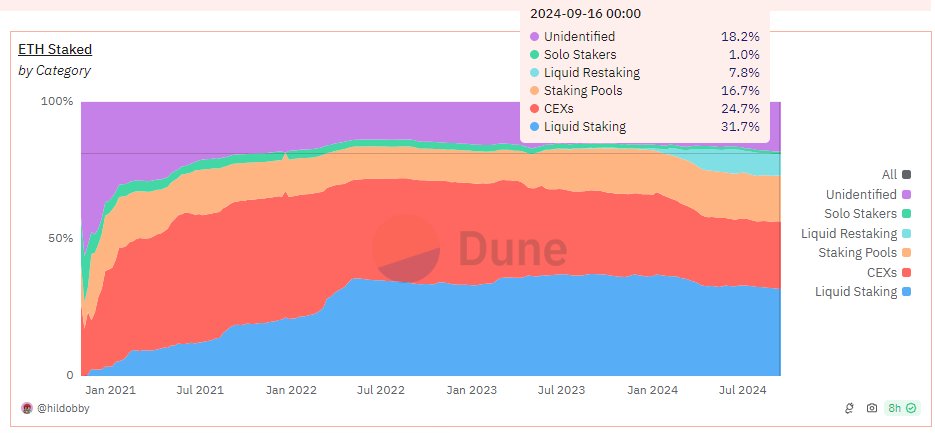
At 85%, current numbers of identified solo stakers + unidentified stakers from @hildobby_ 's dashboard will be sufficient.
But on the other hand, will this decrease the cost of attack to prevent finalisation? - e.g., from >33% to just >15% of staked ETH?
Not necessarily, as there are cheaper backdoor ways to mount this attack even today. Eg. Bribing core devs or key employees of large node operators, or even outrightly buying out the large node operators
Hence, the 33% of staked ETH here represents the highest cost of attack to hold the chain hostage.
If so, then we are currently overpaying to prevent >33% front door attack today, which means there is room to decrease the budget in favour of better security against ">66%" attacks.
The analogy Vitalik uses is that if we imagine a house with 10cm thick bulletproof glass as windows but has a crappy wooden door, then we should reallocate resources to strengthening the weakest link.
The other more ambitious but realistic method is to increase the number of solo stakers such that we become the quorum-blocking set of the current finalisation threshold.
How do we achieve this? Stay tuned for Parts 2 and 3 for my discussion with Vitalik on Orbit SSF and Rainbow Staking!
The security culture in @LidoFinance is arguably the most extreme and paranoid in crypto. Working with Lido contributors over the last years has continously baffled me in how they think about hardware, nation-state actors, supply-chain attacks, or key management and access, long before these became major talking points.
When these same people started using AI like everyone else, naturally they were super frustrated with the complete lack of privacy. But instead of complaining, they started to build an internal solution that is now the workhorse for many of Lido's top contributors, including labs CEO @_vshapovalov.
That solution is Wisp. @usewisp_io is verifiably private AI and is now opening waitlist to the first external users. If you are looking for AI you can 100.0% trust, built by the most privacy and security-paranoid people in this space, check out https://t.co/5jMEWb4jFu , follow @usewisp_io , and get on the waitlist today.
For the past 5 months several unwell people @LidoFinance have been trying to build the most private AI imaginable. Today I'm opening the waitlist.
Wisp (@usewisp_io) is the antithesis to Sam and Dario's 'trust me bro' privacy. Architected so no one - even Wisp - can read, train on or retain your data.
Waitlist: https://t.co/3xFnn3TNO8
How it works:
Institutional DeFi just leveled up 🔒
Cactus Link now integrates @LidoFinance V3 stVaults for compliant, highly controlled $ETH staking.
This solution gives institutions:
• Enhanced Control: Customize validator choice, fee terms, and geographical configurations
• On-Chain Liquidity: Retain flexibility with the option to mint or repay stETH
Adding one more high-quality access point for institutions in Asia to use/build highly customised ETH liquid staking solutions.
Especially relevant for institutions that want to use a custodian with a Hong Kong TCSP license.
Powered by stVaults.
stVaults are now supported by @CactusCustody, the digital asset custody arm of @BITofficial_EN.
Clients can create & manage stVaults via Cactus Link: Choose validators, fees & MEV routing with on-demand liquidity via stETH minting.
https://t.co/UVOUY9km68
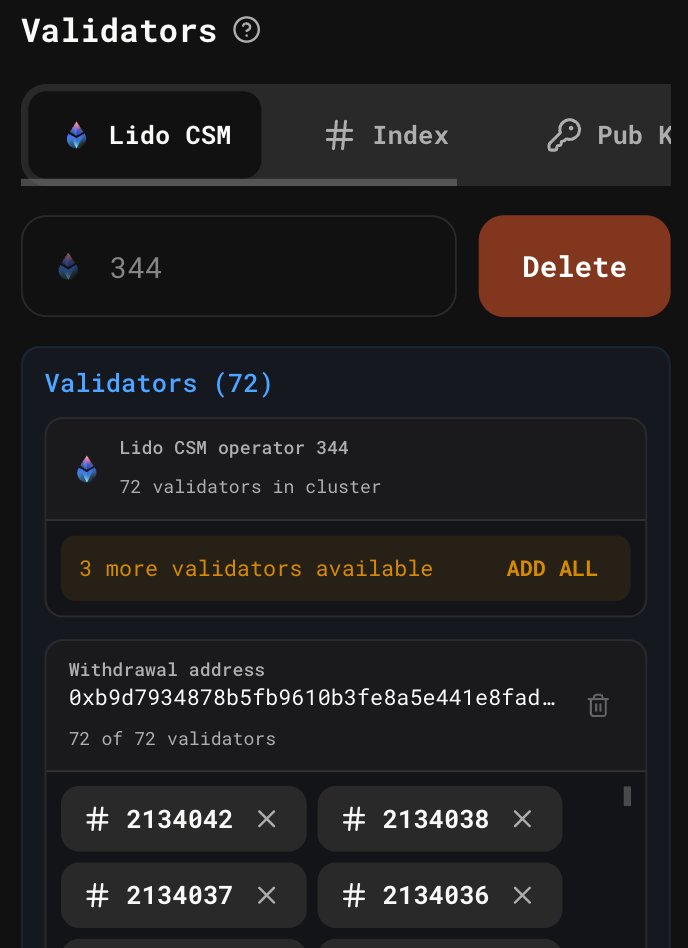
@LidoFinance CSM operators, this one is for you 👀.
NodeSentinel V2 is live, a cleaner and more powerful way to monitor your validators.
#Ethereum#Staking#Validators
A proposal for Lido DAO to contribute to @aave’s coordinated rsETH relief effort has landed on the Research Forum following this week’s Kelp's rsETH LayerZero bridge exploit.
The proposal authorizes a one-time, capped contribution of up to 2,500 stETH to a dedicated relief vehicle, solely as part of a fully funded recovery package. The proposal is designed to reduce broader ecosystem spillover and support an orderly resolution for affected users.
DeFi United. Read more below:
https://t.co/6RsmdW2R6t
What will it take to turn Ethereum’s potential into real institutional adoption?
Join us at Ethereum Applications Gathering for the panel "Institutional Adoption on Ethereum: Challenges, Gaps, and the Path Forward".
🗓️ 15:45 - 16:15, 22 April
📍 MainStage | Hall5BC, HKCEC
🚀Featuring:
QZ @not_qz, Partner of Ethereum Ecosystem Fund @ethecofund
Patrick McCorry @stonecoldpat0, Researcher at Arbitrum Foundation @arbitrum
Mo Jalil @motypes, Institutional Privacy Lead at Ethereum Foundation @ethereumfndn
Serena Wang @serena_hsk, Head of HSK Eco Labs at HashKey Group @HashKeyGroup
Samuel Chong @stakesaurus, Institutional Relations Lead APAC & MENA at Lido Ecosystem Foundation @LidoFinance
🎟️ Secure your spot: https://t.co/kqRo7frdXW
#EAG #EthereumApplications #Web3Festival
AMA alert! 🚨
Today 12:30 PM UTC we’re live with @Figment_io, @LidoFinance, @P2Pvalidator, @Player1Taco and @puffer_finance digging into ETH staking, supply squeeze and what it means for holders.
Reply with your best question — top picks share 500 $USDT.
Tune in here: https://t.co/NkZqlhq5Fu
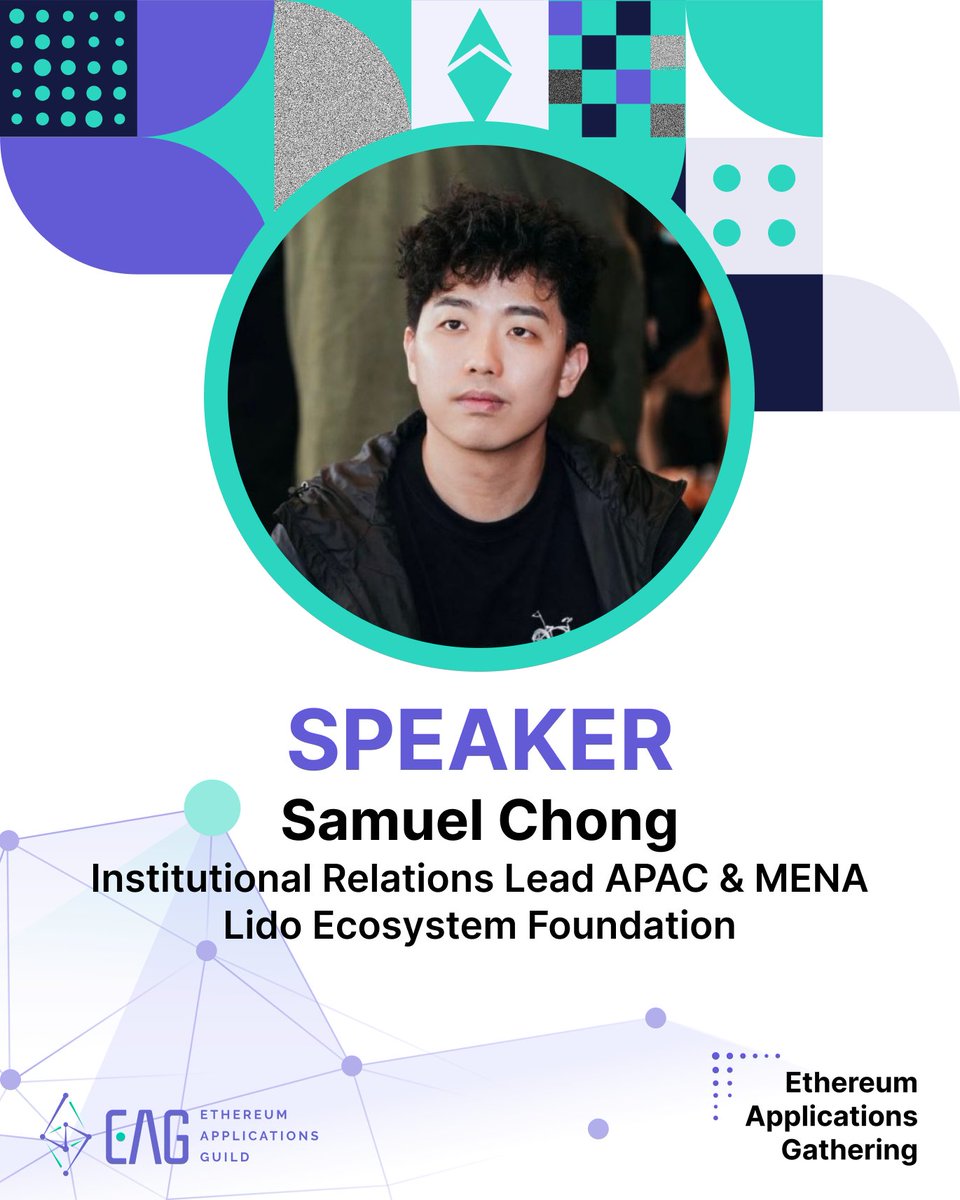
🎙️ We’re excited to announce that Samuel Chong
@stakesaurus, Institutional Relations Lead APAC & MENA at Lido Ecosystem Foundation @LidoFinance will join us as a speaker at Ethereum Applications Gathering in HongKong.
💫 Join us to explore what to build, and what actually matters.
⏰ Time: Apr. 22, 11:00 - 17:30
📍 Location: MainStage, Hall5BC, HKCEC
🎟️ Register Now: https://t.co/qRxwa8b8FD
#AppGathering #Ethereum #Web3Festival #EAG
Sharpening my Web3 Mandarin skills by tuning into this X space tonight with @LinChen91162689 covering insights from the derivatives market and @0xTodd covering institutional staking trends.
https://t.co/UBMDItwlaM
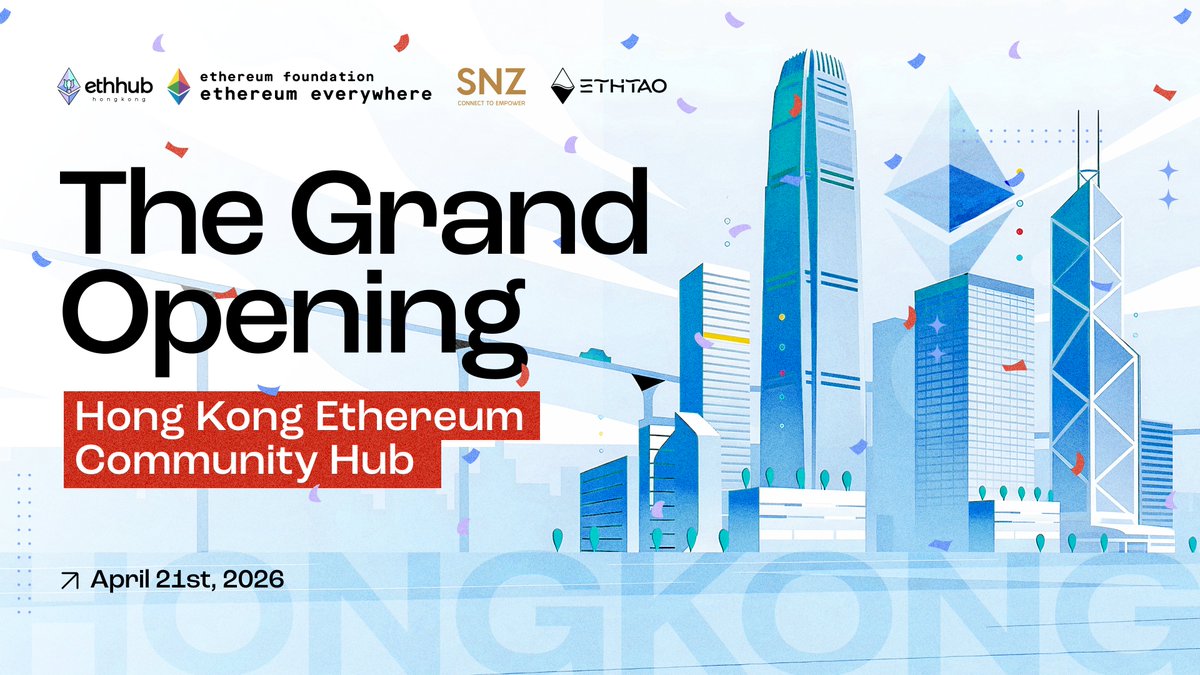
Asia’s first☝️Ethereum Community Hub is opening.
Backed by @EFetheverywhere (@ethereumfndn)
Operated by @snzholding & @Ethtao_Ethtao
A milestone for Ethereum in Asia.
Expect:
1⃣Core ecosystem voices
2⃣Leading institutions & builders
3⃣Real conversations on applications & adoption
Join us during 🇭🇰Web3 Festival.
See what’s next for Ethereum in Asia.
RSVP👉https://t.co/RsSrnvuBQa
DeFi, simplified.
Introducing two new vaults: EarnETH & EarnUSD
One vault for ETH-based capital. One for stablecoins.
Now live on https://t.co/F7JRWtm1Bq
↓