It’s International Observe the Moon night! This waxing crescent phase is a great time to view it, as it is high in the sky at dusk. It will look similar to this photo I captured using two telescopes earlier this year.
Make sure you load in 4k to see all the details!
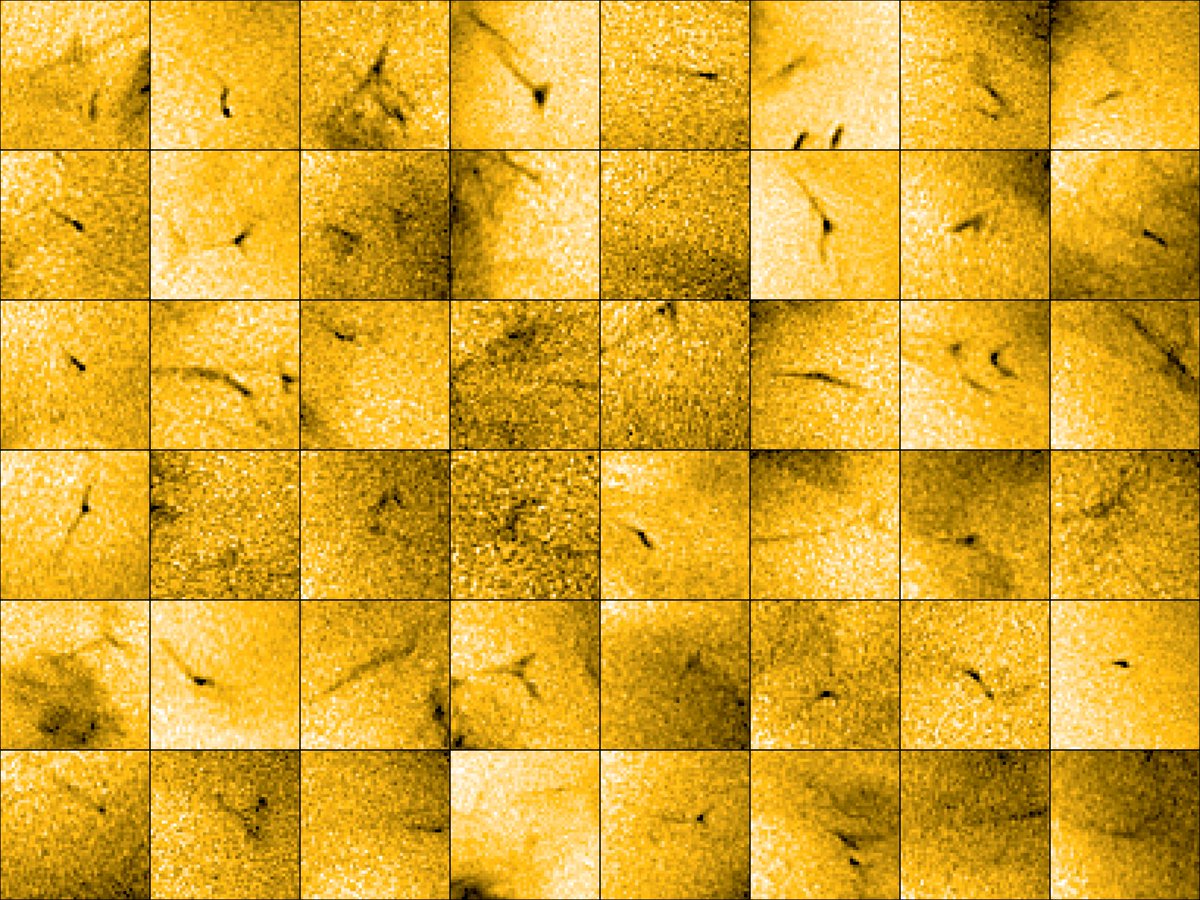
🆕 The ESA/NASA #SolarOrbiter spacecraft has discovered a multitude of tiny jets of material escaping from the Sun’s outer atmosphere - these jets could be the long-sought-after source of the solar wind 👇https://t.co/G4MFrh8d0q
A Bayesian-based analysis of 190 cosmologically distant quasars, photometrically observed over two decades, has revealed the long-expected presence of cosmic time dilation due to the expansion of space imprinted on their variability. Lewis & Brewer: https://t.co/sHFZy987p6
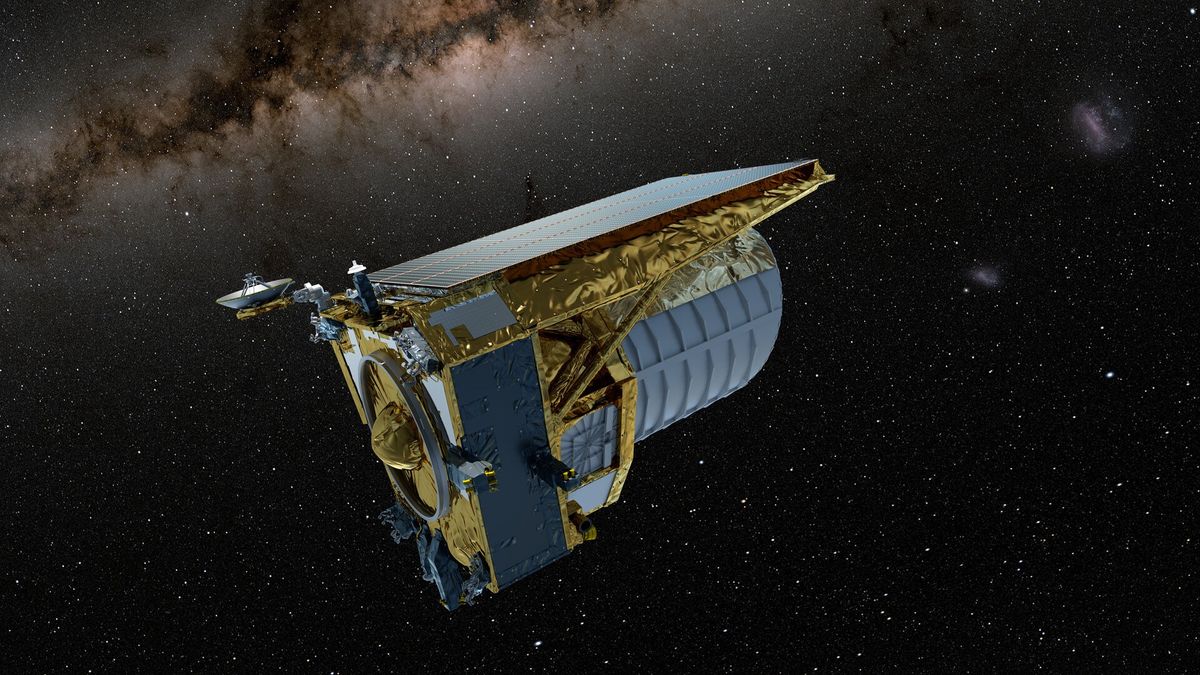
@spacex Falcon 9 launches the @esa@ESA_Euclid Euclid space telescope to map the billions of galaxies in our visible universe and investigate dark energy and dark matter.
A massive new discovery for science!
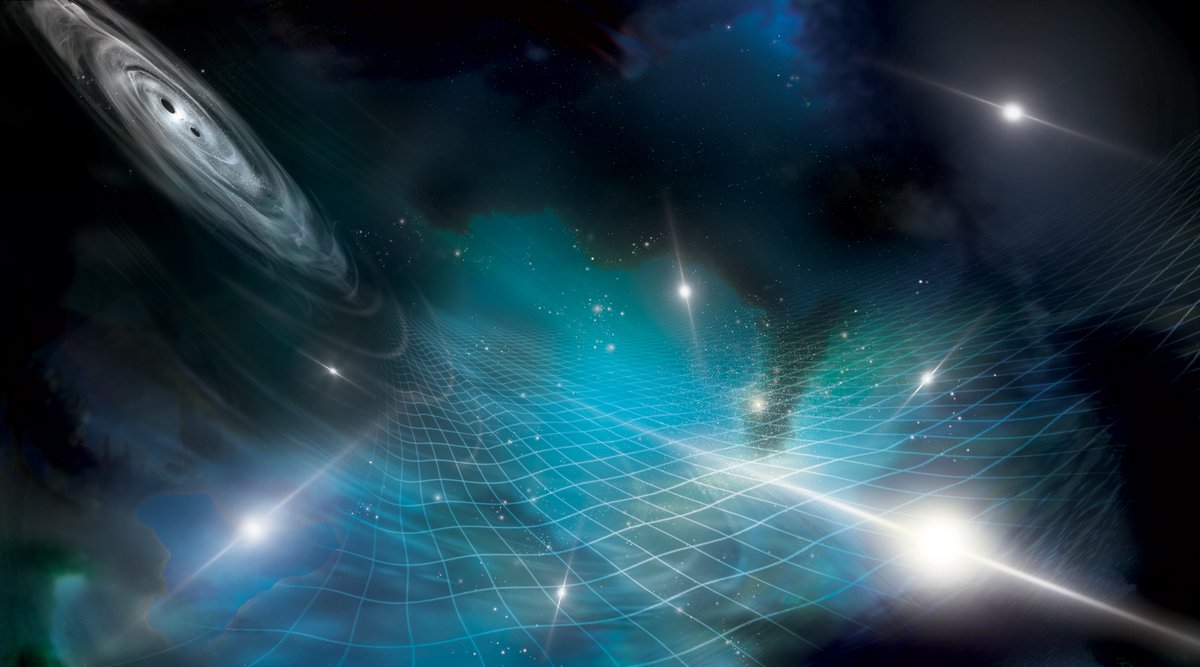
NANOGrav, a collaboration of scientists including experts from JPL, have found evidence of a spacetime murmur, or gravitational waves in the fabric of spacetime thought to have been created by supermassive black holes. https://t.co/wpIzS74Sgf
A new theory has radically revised Stephen Hawking's 1974 theory of black holes to predict that all objects with mass may eventually disappear.
https://t.co/G9V4tQed8T
#Saturn has once again taken the crown for “most known moons” from Jupiter, after 62 new Saturnians moons were discovered, taking the grand total to 145. #SaturnMoons#SolarSystem@NanditaBanerji_
https://t.co/4VljGEFKB0
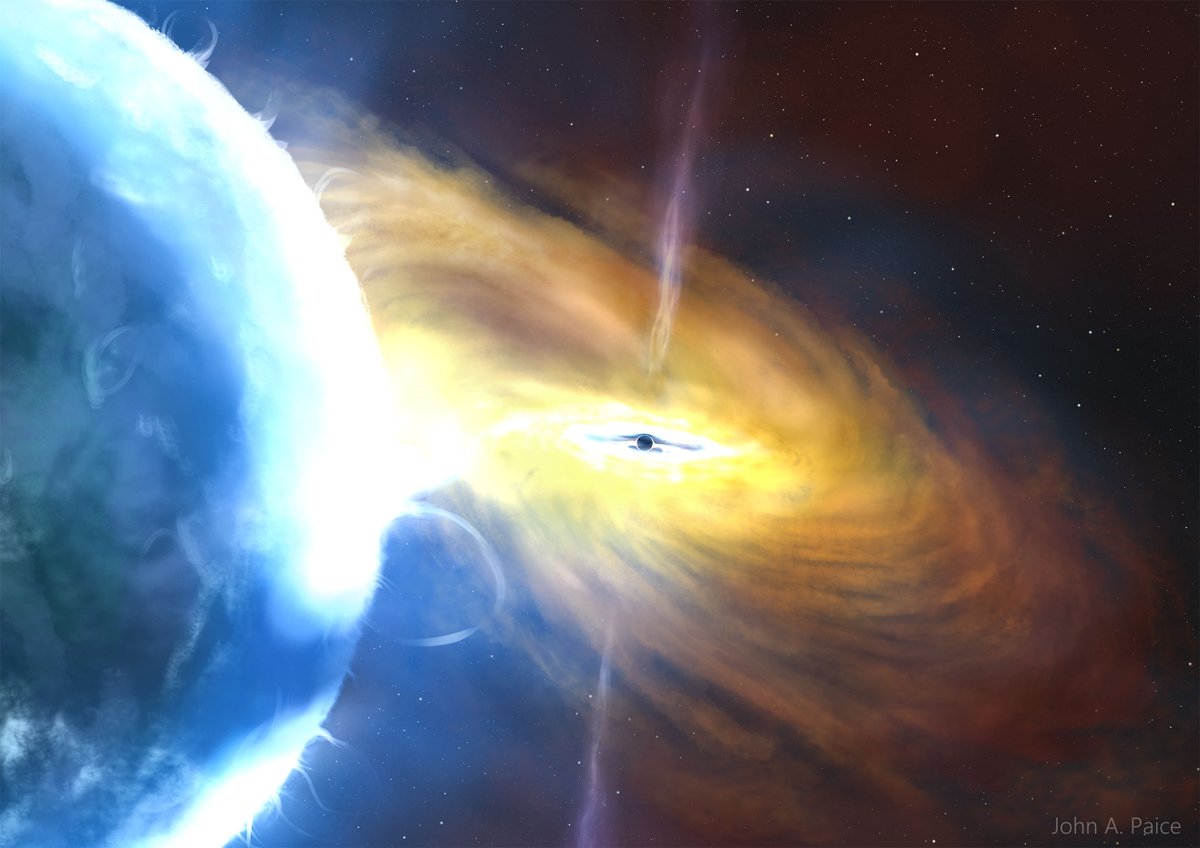
A team led by our astronomers have made history by capturing the largest cosmic explosion ever seen 🌌🤯
10X brighter than any known supernova, it is believed to be a vast cloud of gas being violently disrupted by a supermassive black hole.
Learn more 👉 https://t.co/GmzIROwDGh
Webb has a new achievement under its (asteroid) belt!
This image is our first infrared look at an asteroid belt outside our solar system. Webb reveals there are actually 3 belts, including 2 never-before-seen inner belts, around the star of Fomalhaut: https://t.co/pDQKAh4hDA
Uranus has never looked better. Really.
Only Voyager 2 and Keck (with adaptive optics) have imaged the planet's faintest rings before, and never as clearly as Webb’s first glimpse at this ice giant, which also highlights bright atmospheric features. https://t.co/aE3rJIqVKy
Two's company, and three's a crowd... even when it comes to black holes!
Hubble detected evidence of a "runaway" black hole that was ejected from its host galaxy after a tussle between it and two other black holes. Find out more: https://t.co/hEs3i7MUma