@DaleSteele11@mrillig@JosepPenuelas Why should they, it is beyond their scope! Possibly we should stop here but I think there exist two extremes: applied studies non integrating yield estimates, and practitioners trying to interpret theoretical studies not intended for practical recommendations. Thank you for this!
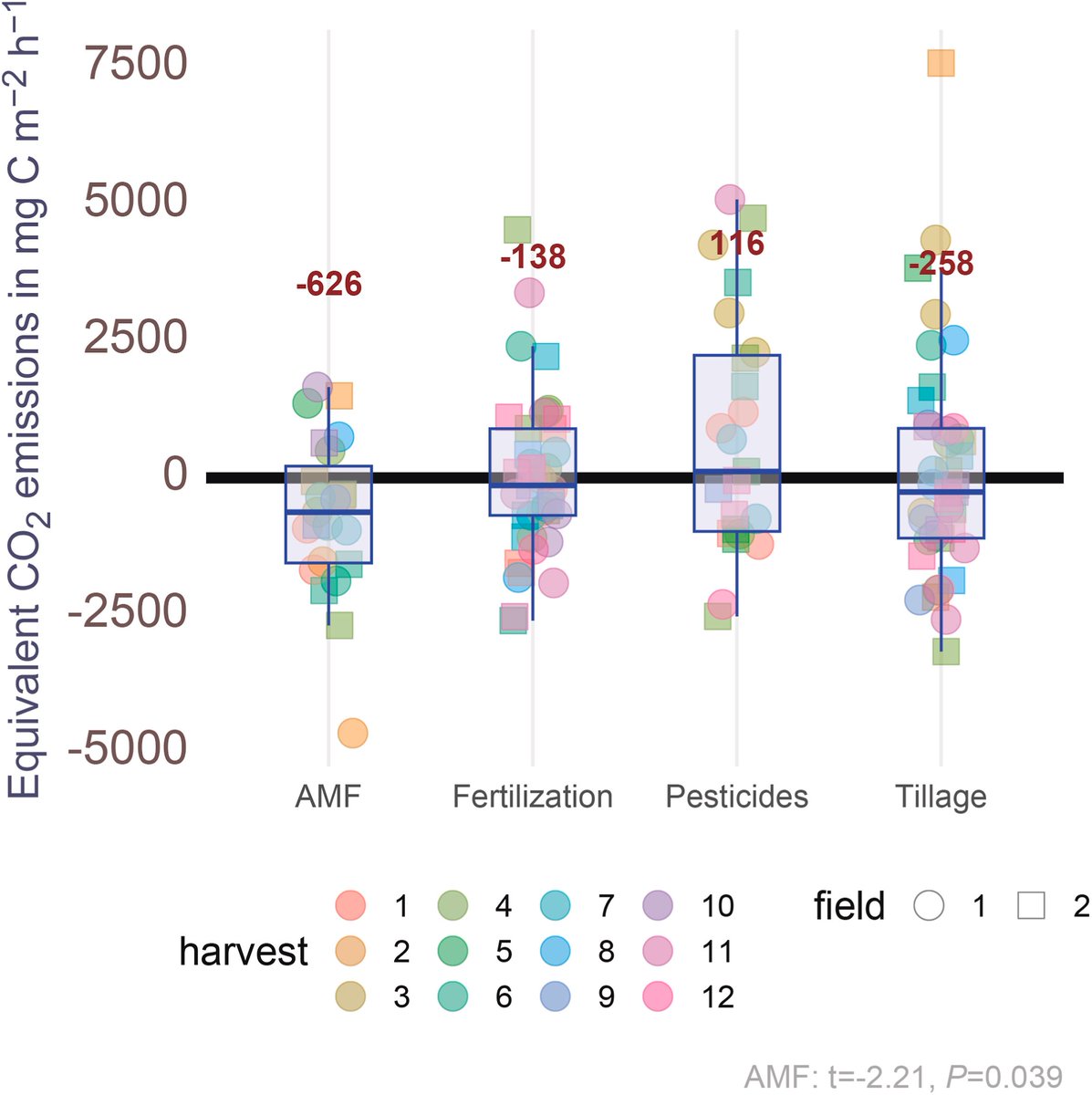
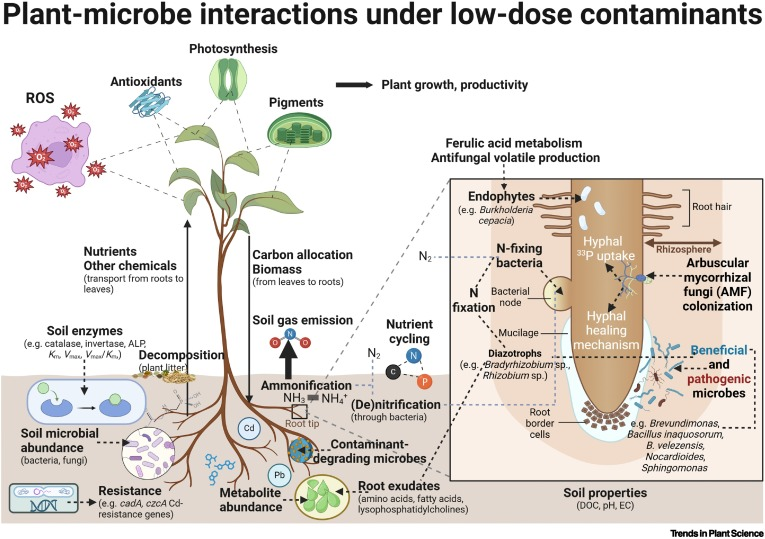
How sustainable agricultural management practices mitigate greenhouse gas emissions, led by Min Wang, with @mrillig and @JosepPenuelas#mycorrhiza
https://t.co/6dBxxFUTPO
@DaleSteele11@mrillig@JosepPenuelas Thanks again, Dale. As I noted, our study focused exclusively on GHG emission rates – it wasn’t designed to assess yield or whole‑plant CO₂ uptake, and we made no specific (i.e. applied) recommendations. I appreciate your engagement on these important trade‑offs.
@DaleSteele11@mrillig@JosepPenuelas for adoption, we need both. The abstract notes that explicitly. On your broader point: our goal isn’t to reduce food production, but to reduce emissions per calorie produced.
(this is a personal opinion and does not reflect what my coauthors think)
@DaleSteele11@mrillig@JosepPenuelas Thanks, Dale – this is an important discussion. You’re right that reporting emissions per unit yield (or with yield data) is ideal for trade‑off analysis. In this study, the research question was about context‑dependent GHG effects, so yield wasn’t the focus – but I agree that
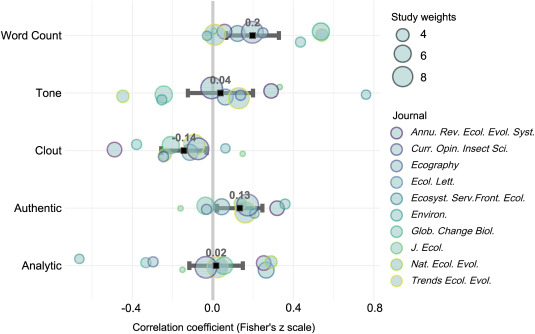
How much does language determine citation frequency in academic articles? New paper out with Evgenios Agathokleous - On the makeup of high-impact reviews in ecology https://t.co/JlWSxwVUQ0
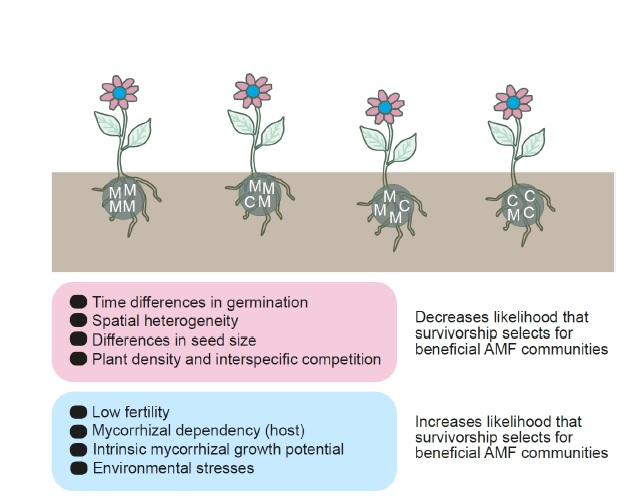
"In the land of the blind, mycorrhiza was the one-eyed king!" - distinguishing between holobiont-and individual-symbionts-types of hypotheses could foster progress! Happy to see this out at @JXBot! A huge thanks to two exceptional anonymous reviewers ! https://t.co/khKZR4t0fZ
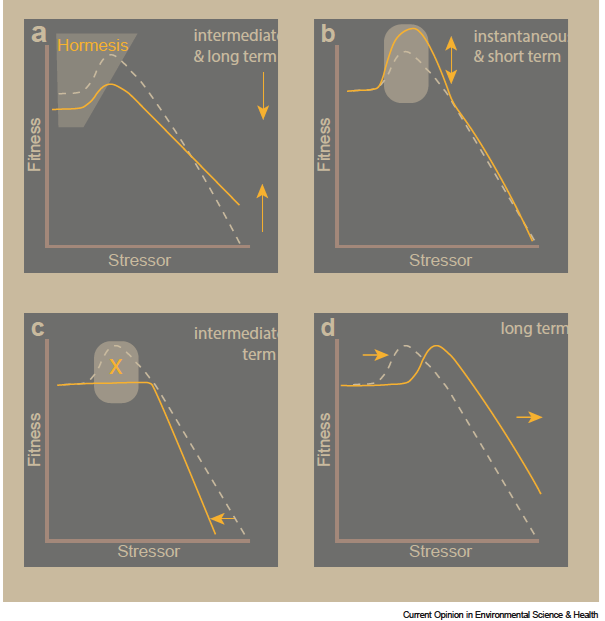
We often assume dose-response curves to stay invariable in time but this is not the case - with Costas Saitanis & Evganios Agathokleous:
https://t.co/6PzfmjXBp9
Mycorrhiza at the Cutting Edge: Trees at the Edges of Their Distribution Host Diverse and Distinct AMF Communities. Addressing the scale dependence in mutualisms hypothesis, with Guolin Li #mycorrhiza https://t.co/J010h8A7j0
New Research: Breeding in winter wheat (Triticum aestivum L.) can be further progressed by targeting previously neglected competitive traits https://t.co/Vn7f0d7nrh #FrontiersIn#PlantScience
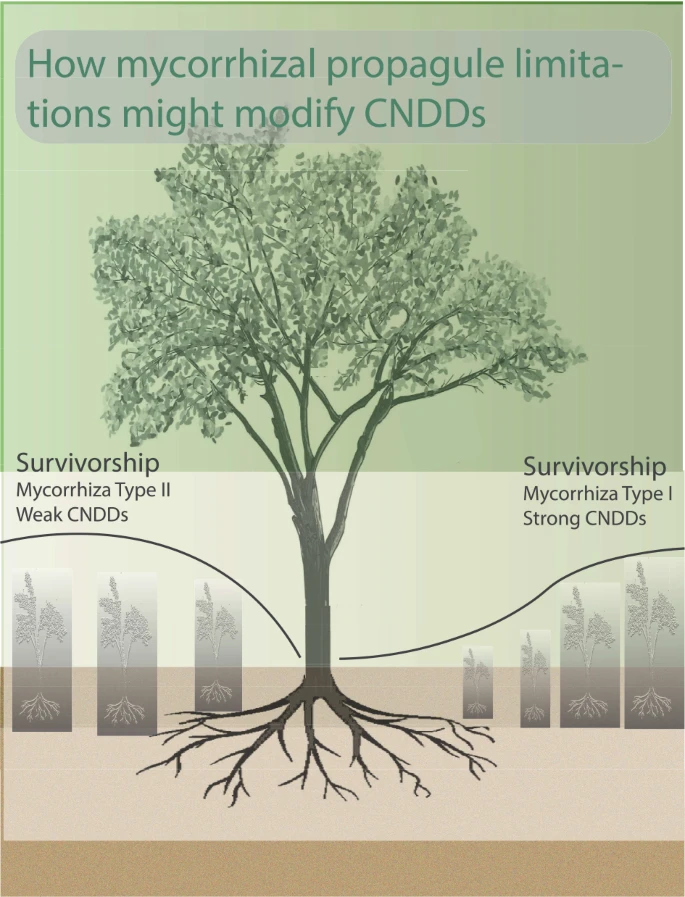
Does the mycorrhizal mediation hypothesis capture biogeographical patterns in plant-soil feedback? the case of conspecific negative density dependencies. With Hans Lambers https://t.co/DYm06IsDn1
@mrillig I think that the scholar still gains a lot of hard and soft skills over their postdocs (and throughout their academic life). It may indeed be a less efficient period from an industry perspective than working in undustry, but it is hard to envision quiting as a failure!
This article opens a new era of AI-based supervised classification of vegetation and habitat types based on species composition. César Leblanc from the University of Montpellier, with the support of colleagues from Pl@ntNet and EVA (European Vegetation Archive), has developed a classifier for EUNIS habitat types across Europe that seems to classify habitat types better than the logical definitions in the expert system. I was already playing with using artificial intelligence tools to classify vegetation types based on vegetation plots 20 years ago. My student Lenka Černá and I published the first study using artificial neural networks for the supervised classification of vegetation in 2005 (https://t.co/YiuURHr68C). At that time, however, AI tools were still in their infancy, the calculations were time-consuming, there were no continental vegetation databases and no standardized international vegetation or habitat classification. Therefore, we focused on developing logical definitions of vegetation and habitat types, which was completed for the European habitats of the EUNIS system in 2020 ( https://t.co/pivP4SOx6N). In our expert system EUNIS-ESy, we created consistent definitions of habitats across Europe, which paved the way for the application of more flexible AI tools such as those developed under César's leadership.
Open-access article: https://t.co/g4yHh4oVt5
Code on GitHub: https://t.co/wc7BMVCvPu
A brief press release on @StavrosVer 's paper exploring two common ecological strategies that promote coexistence by reducing competition
𝑺𝑷𝑶𝑰𝑳𝑬𝑹 𝑨𝑳𝑬𝑹𝑻: mutualism is the key 🌿
@JosepPenuelas@CSIC@CREAF_ecologia@iec
https://t.co/XKSQjuqjxi
This new study published in @Ecology_Letters uncovers a rare occurrence of character displacement & identifies a common mechanism employed by plants to alleviate competition Don't miss it!
Stavros Veresoglou, J Xi @JosepPenuelas@CSIC@CREAF_ecologia@iec
https://t.co/tIhcv8Xyev