Another amazing day at the 46th Chess Olympiad Expo for our FIDE Presidential Candidate @wadimrosenstein! 🇺🇿♟️
He continues to show up day after day to meet with the global chess community and discuss things such as creating clear criteria for the Development Fund and how to attract stronger long term investment in chess.
The WR2026 team looks forward to seeing everyone again tomorrow! ⭐️
A programme only means something if people can see what changes.
For me the five pillars of WR2026 aren't five separate promises. They're one picture of how FIDE should work.
• Stronger support for Member Federations, because federations are where chess actually happens.
• A professional, transparent FIDE, so members know where the money goes and why.
• A stronger, fairer sporting system, so results depend on the board, not on politics.
• Commercial growth that funds the sport instead of draining it.
• More opportunity, including education, access, social impact, so the next generation isn't locked out.
That's the FIDE I'd work to build.
Day 1 at the 46th Chess Olympiad Expo Centre is officially in the books! ♟️🇺🇿
The venue itself is a marvel! A huge congratulations to the local Uzbekistan organizers for a job well done.
Seeing how deeply this country’s chess tradition runs, and the champions it has produced, was humbling.
We couldn’t be prouder of our WR Chess booth which is modern, interactive, and full of energy.
Day 1 was a day of great conversations, great games, and a fantastic first day connecting with the chess community from all over the world. ⭐️
You can build an entire chess community and still be invisible to the people who make decisions about sport.
Does this sound familiar? Your federation organises tournaments, develops players and keeps chess active in your country. You do the work and see the results. Yet when recognition, funding or national sporting priorities are discussed, chess may still be left outside the room.
Without recognition from a sports ministry, National Olympic Committee or another public authority, you have to keep proving that chess deserves to be taken seriously.
This is where Otabek Umarov’s experience matters. He has worked in both national and international sport and understands how these institutions operate and connect. That is why he is part of the WR 2026 team.
When sporting decisions are made in your country, is chess at the table or still outside the room?
Chess will not change because of one successful tournament, one new sponsor or one social project. None of these things works alone.
New money without proper management disappears into confusion. A better competition calendar means little if federations do not have the resources to organise events. A social programme may sound impressive, but without measuring the results, nobody knows whether it actually helps.
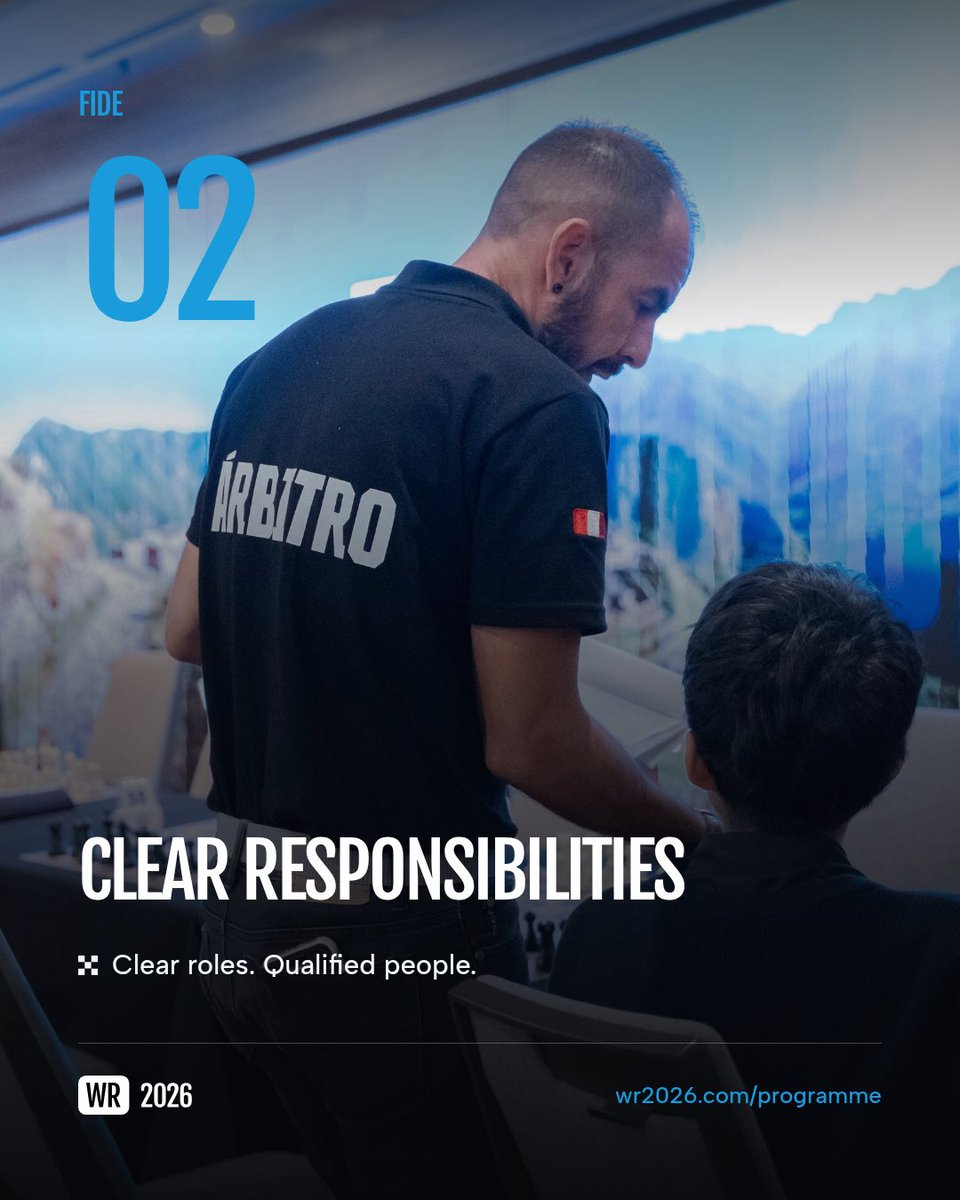
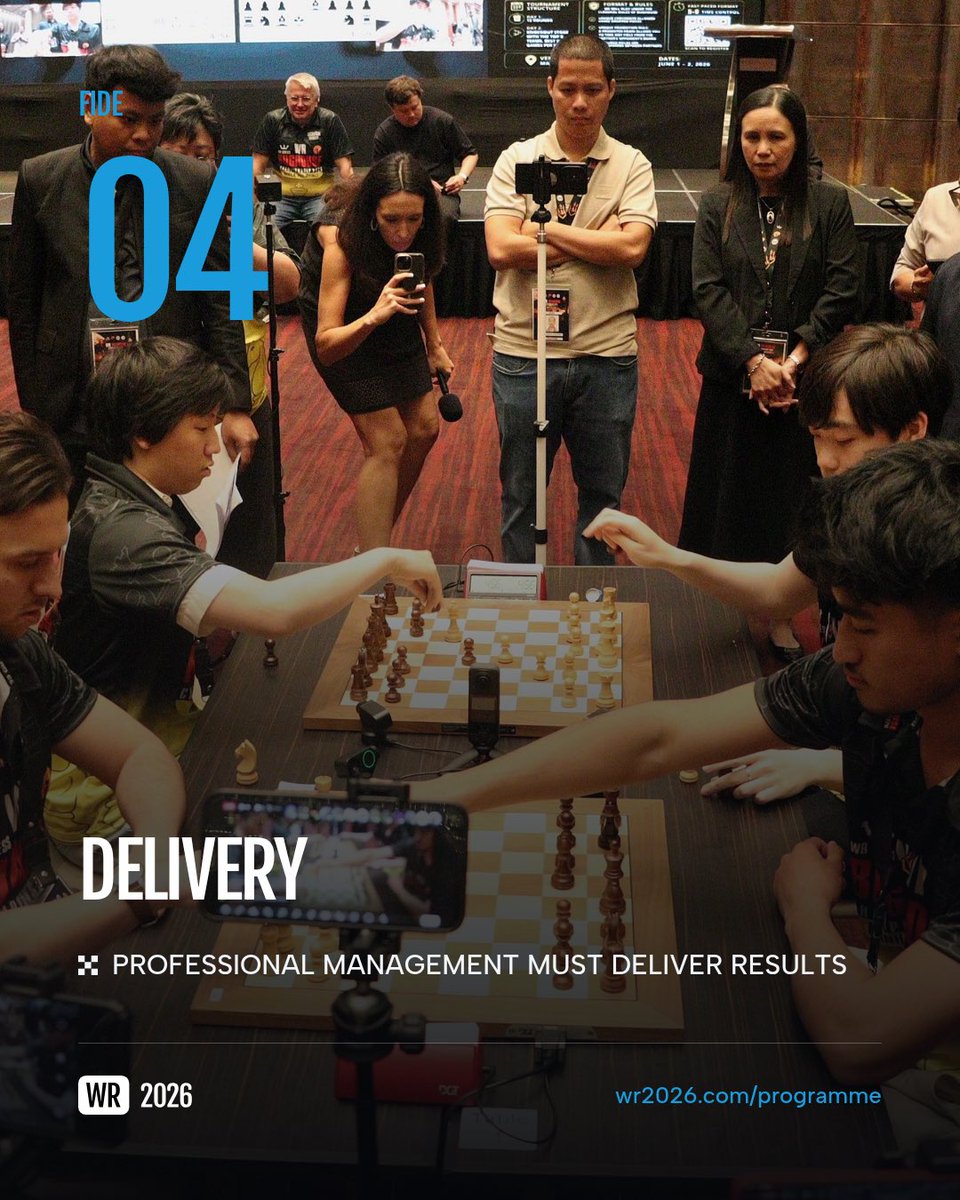
That is why Wadim’s programme connects five areas: member federations, FIDE, sport, commercial development and social impact. A change in one area must support the others. These four slides give you the shortest version.
Which part would you like Wadim to explain next, with real examples and no campaign language?
Ask someone at a national federation how they get an answer from FIDE. Very often, the answer is simple: they know whom to call. That works until that person leaves.
A federation should not need the right personal contact to get a request handled. It should know who is responsible, what information is needed, where the request stands and when to expect an answer.
The WR 2026 programme proposes one clear process: every request is recorded, responsibility is assigned, and the federation is kept informed until the issue is resolved.
How does it work for your federation today? Is there a clear process or does everything still depend on knowing the right person?
Behind every national federation are people who keep chess alive in their country. They organise tournaments, answer players, find funding, solve problems and often do far more than anyone sees.
But too much of their time is wasted. They try to find the right person, wait weeks for an answer and have the same question passed from one person to another. When nothing gets done, nobody seems to be responsible for the final result.
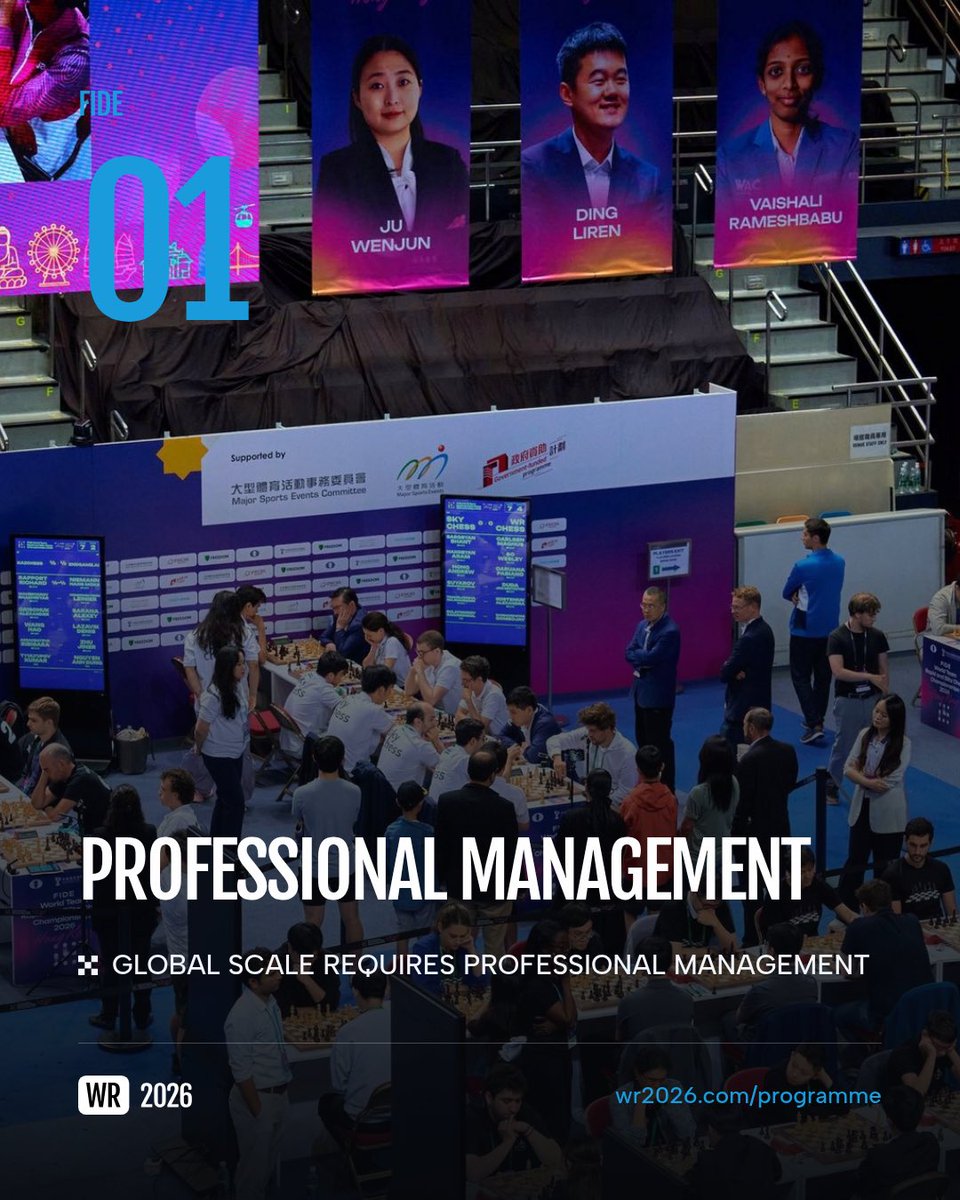
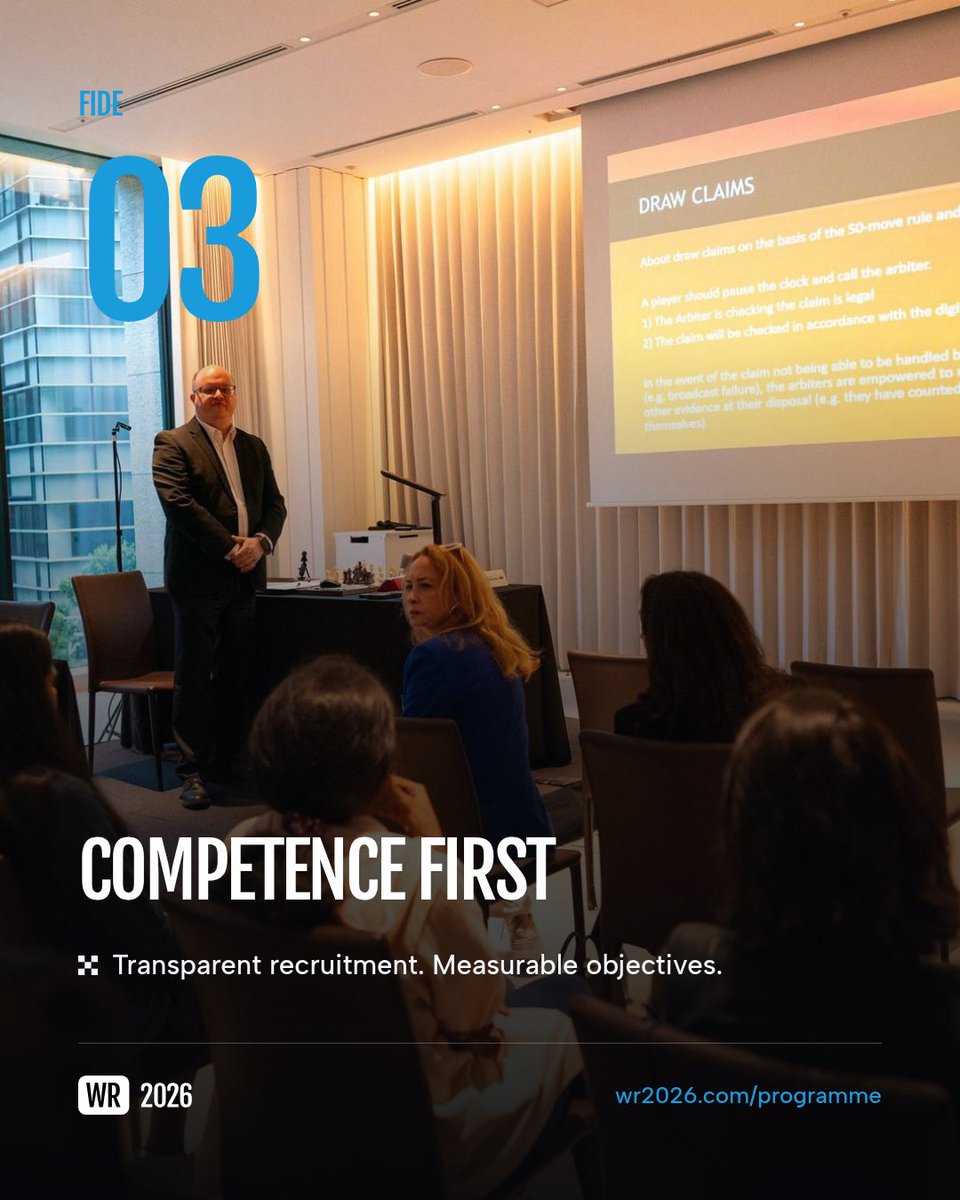
Everyone talks about professional management. But unfortunately, federations do not always see it in practice. What is needed is simple: qualified people in the right positions, clear responsibilities, measurable objectives and work that is actually completed.
This is what the WR 2026 programme proposes.
If you work with a federation, tell us honestly: what wastes most of your time today?
Good chess-in-schools programmes already exist around the world. But too often, what works in one country stays there — while another federation has to start again from zero.
WR 2026 proposes bringing that knowledge together: giving teachers practical tools, understanding what genuinely helps children, and helping federations turn successful projects into lasting programmes.
If we can prove what works, federations will have a much stronger case when they ask education ministries to give chess a permanent place in schools.
Chess in schools does not need more disconnected initiatives. It needs a system.
I joined the @wr2026official team because I truly believe @wadimrosenstein is the best person to become FIDE President ♟️
He truly loves chess and has the drive and energy to change chess for the better! ⭐️
Chess can be a tool for education, inclusion and opportunity. But meaningful social impact requires more than good intentions.
WR 2026 proposes a research-led approach to development: start with real needs, work with credible partners, use evidence, ensure proper safeguarding and measure impact.
This means being clear about where chess can genuinely make a difference, and building programmes around evidence and practical results.
The goal is to identify the areas where chess can make a real and measurable contribution.
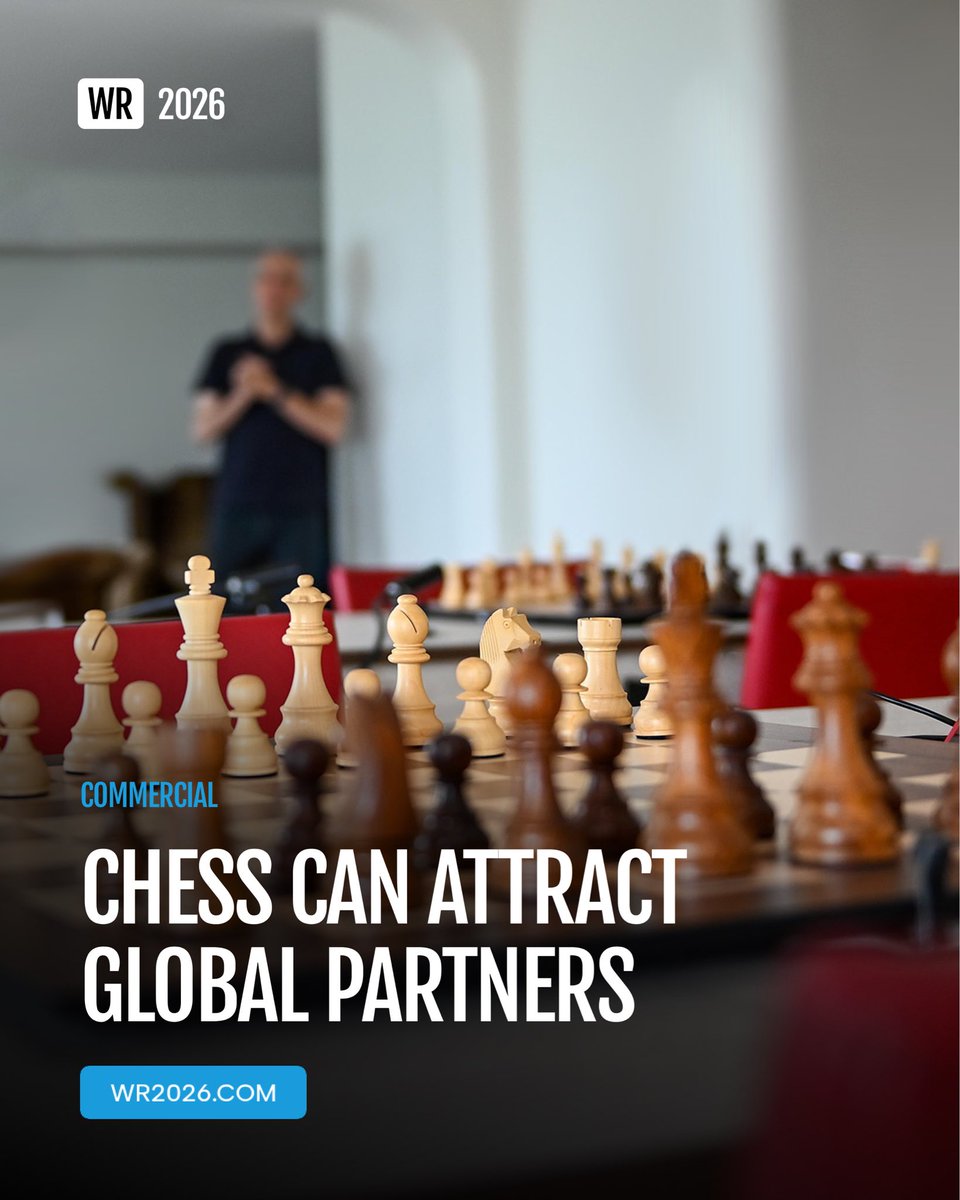
FIDE should not limit its commercial ambition to chess-related or technology partners. Chess has the reach, positive image and intellectual value to attract credible international partners from a much wider business field. That creates an opportunity, but only if it is approached professionally.
That can include industries such as aviation, banking and financial services, education, media, hospitality, logistics, fashion, energy and technology.
Major partnerships should be developed professionally and be subject to appropriate reputational, legal and governance review.
For WR 2026, commercial growth is not an end in itself. It must serve chess, players, development and Member Federations.
Too many girls leave chess during their teenage years, or never fully find their place in it, because they lack peers, role models, safe environments or visible pathways.
Wadim Rosenstein has already been working to build those pathways. In 2026, the WR Women's Chess Tour has brought four continental legs to Tokyo, Punta Cana, Maputo and Saint-Tropez, with the Grand Final to follow in Stuttgart on 22–23 November.
The WR 2026 Programme proposes going further, including targeted girls' programmes, group coaching and mentoring, more women trainers and arbiters, safer playing environments, stronger role models and improved conditions in women's competitions.
Women's chess should be both a sporting priority and a development priority.
The goal is not only to bring more girls into chess. It is to help them stay, progress and see a future in the game.
WR 2026 is strengthened by people who understand chess from more than one side. GM Antoaneta Stefanova is one of them.
The 10th Women’s World Champion, a European Women’s Champion and a Women’s World Rapid Champion, Antoaneta has spent decades at the highest level of international chess. But the perspective she brings to WR 2026 goes far beyond her achievements at the board.
Today, she is Honorary President of the Bulgarian Sports Chess Federation. This combination matters. Antoaneta understands the realities faced by elite players as well as the perspective and challenges of national federations.
She also brings a long-standing commitment to women’s chess and to creating opportunities for the next generation.
For WR 2026, Antoaneta brings something particularly valuable. Especially, the perspective of a champion, the experience of a federation leader, and a voice shaped by chess at every level.
We are proud to have GM Antoaneta Stefanova on the WR 2026 team.
WR 2026 is strengthened by people who understand chess from more than one side. GM Antoaneta Stefanova is one of them.
The 10th Women’s World Champion, a European Women’s Champion and a Women’s World Rapid Champion, Antoaneta has spent decades at the highest level of international chess. But the perspective she brings to WR 2026 goes far beyond her achievements at the board.
Today, she is Honorary President of the Bulgarian Sports Chess Federation. This combination matters. Antoaneta understands the realities faced by elite players as well as the perspective and challenges of national federations.
She also brings a long-standing commitment to women’s chess and to creating opportunities for the next generation.
For WR 2026, Antoaneta brings something particularly valuable. Especially, the perspective of a champion, the experience of a federation leader, and a voice shaped by chess at every level.
We are proud to have GM Antoaneta Stefanova on the WR 2026 team.
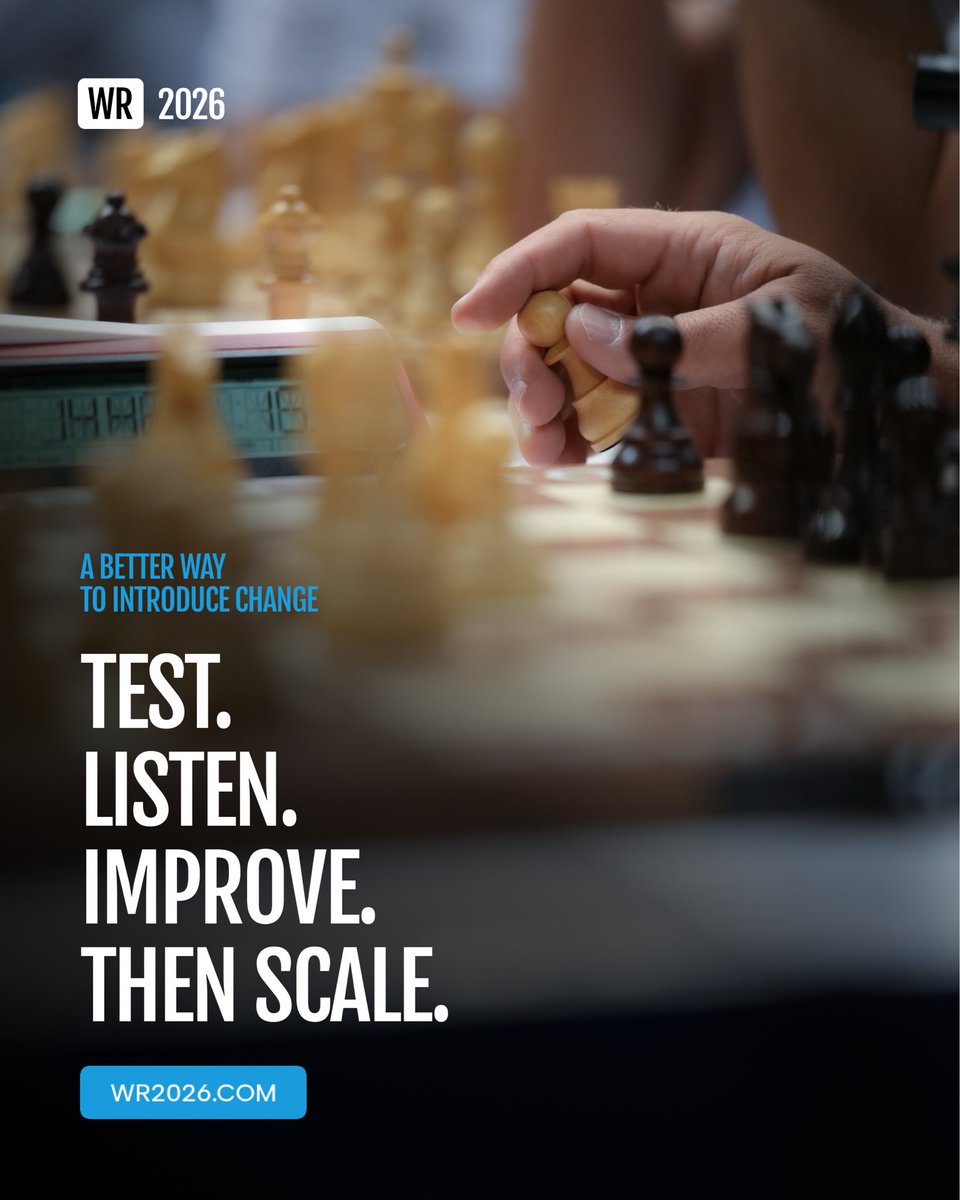
New ideas in chess can be debated for years. Sometimes, they can also be introduced too quickly, without enough testing, communication or feedback.
There is a more practical way.
The principle is familiar from modern agile management, which is about introducing change through testing, learning and adaptation, rather than applying it all at once.
Chess can use the same approach.
At the 2024 WR Chess Masters Cup in London, a faster classical time control was tested in a real tournament. The aim was not to declare a new standard or to replace classical chess. It was to test whether a faster format could complement it, and to see how the format worked in practice for players, organisers, spectators, arbiters and federations, and to learn from the experience.
The same principle can apply to other innovations in chess. Start with a pilot, communicate clearly, listen to the people involved, measure what works, improve what does not, and then take the next step.
Change works better when the people and institutions affected by it are part of the process.
THERE MUST BE A LIMIT
Elections can be tough. Political competition can be very tough. But there is a line between fighting for votes and trying to remove an opponent from the electoral process itself.
Timur Turlov’s campaign accused me of bribery, corruption and improper financial influence because of a transparent sponsorship agreement supporting German chess. They then went further and demanded the exclusion not only of me as a candidate for FIDE President, but also of the German Chess Federation.
The FIDE Electoral Commission has now ruled that both requests were inadmissible: I‘m not excluded. Germany is not excluded. No interim measures have been imposed.
This matters not only because the attempt to remove me from the election failed. One of the most respected chess federations in the world was dragged into this dispute, and its reputation was put at risk purely as part of a political fight against an opponent.
That is not how this should work. Neither Germany nor any other national federation should become an instrument in an election campaign, or collateral damage in an attempt to eliminate a candidate.
The remaining ethics allegations have not yet been decided on their merits and may still be referred to the Ethics and Disciplinary Commission. I am fully prepared to defend our position there. But one thing has already happened: the attempt to use these allegations as a way to change the field of candidates has failed.
And this is where the fundamental line must be drawn. Candidates should compete on their programmes, their teams, their experience and their vision for the future of FIDE. They can argue. They can criticise each other. They can run a tough campaign. But elections should not be decided through attempts to remove an opponent by administrative means and place a national federation under attack in the process.
Timur Turlov wants to lead FIDE. Then he should be prepared to win this election through the votes of the federations, not through attempts to exclude those who stand against him. I am ready for that kind of election.
Let the federations compare us.
Let the federations decide.
And let the winner be the candidate they genuinely trust with the future of FIDE.
We are delighted to welcome GM Antoaneta Stefanova to our team for the 2026 FIDE elections.
Former Women’s World Champion and one of the most respected figures in international chess, Antoaneta brings decades of experience at the highest level of the game, together with extensive work in chess governance and development.
With her strong international network, independent voice, and deep understanding of the needs of players and federations, she will contribute to our vision of a more professional, transparent and federation-focused FIDE.
Welcome to the team, Antoaneta!
We are delighted to welcome GM Antoaneta Stefanova to our team for the 2026 FIDE elections.
Former Women’s World Champion and one of the most respected figures in international chess, Antoaneta brings decades of experience at the highest level of the game, together with extensive work in chess governance and development.
With her strong international network, independent voice, and deep understanding of the needs of players and federations, she will contribute to our vision of a more professional, transparent and federation-focused FIDE.
Welcome to the team, Antoaneta!
I am delighted to share with you an event we have been working hard on for many months, the Sofia Cup 2026 – Balkan Rapid and Bitz Championships. It will take place 29-30 August 2026 at thGrand Hotel Sofia 🇧🇬♟️
Registration is open at https://t.co/sea6XTb0NB!
See you in Sofia!