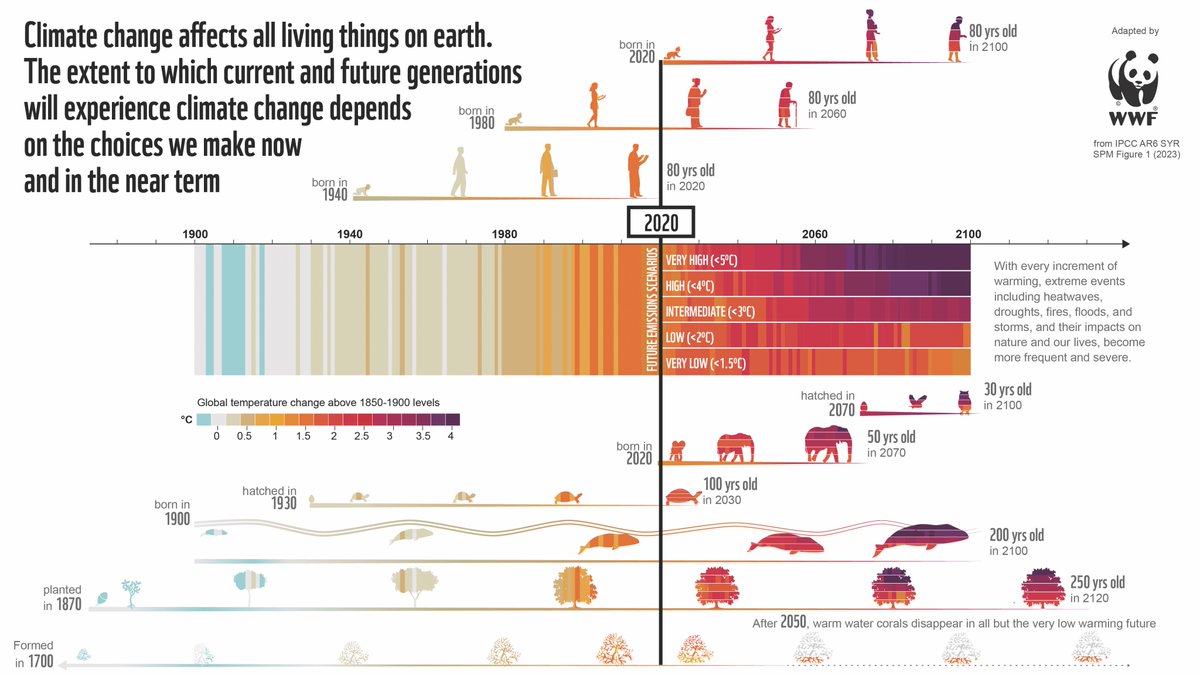
The 'climate generations' figure from @IPCC_CH SYR is one of the most compelling dataviz examples I have come across. To emphasize how climate change affects generations across ALL species on the planet, we adapted the figure by adding long & shorter lived plants & animals
Incredible stat:
A single container ship of solar panels can provide as much electricity as more than 50 large LNG tankers of gas – or 100 large coal ships
There's many more insights in IEA Energy Technology Perspectives 2024 – here's a selection 🧵
1/7
Another year, another climate gap. 🌍🔥🌡️
It's the 15th time I joined the lead author team of the @UNEP#Emissionsgap report.
How high are global emissions?
What have countries pledged?
And is this all aligned with the Paris Agreement?
Let’s dig in with a 🧵/1
The UNEP Emissions Gap Report 2024 is out, and it highlights the urgency for countries to raise their 2030 climate targets and act swiftly.
Learn more: https://t.co/ZP7GRLdY5O
New Paper: The land, rivers and oceans are linked. Food production on land, and in lakes and rivers, affects the "blue foods" we get from the sea. So, to keep our food systems healthy and sustainable, we must manage them as one interconnected whole.
https://t.co/llAzLdVN1U
Haha, this is spot on. We need to move away from this type of academic writing style, especially in the sciences that need to inform policy, practice and the public.
The opacity of academic prose arises from the epistemological imperative to operationalize disciplinary jargon, facilitating intra-specialized discourse while obfuscating heterogenous interpretive accessibility and perpetuating a recursive dialectic of erudition and exclusion.
This is super wonky, but interesting:
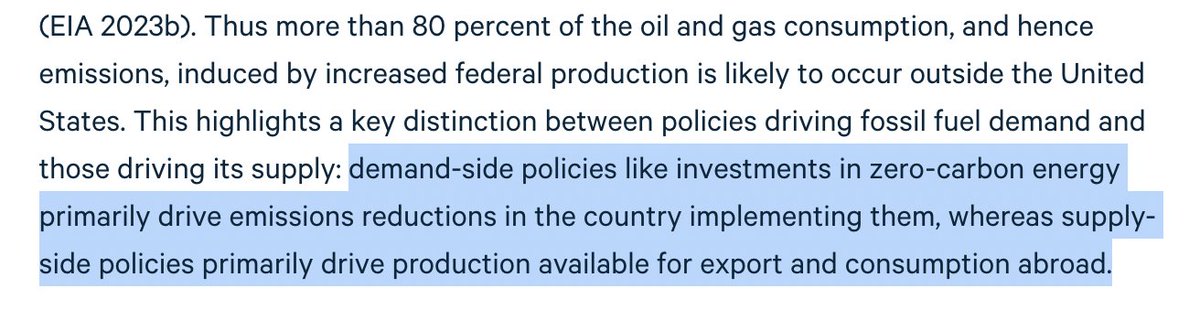
Demand-side climate policies (e.g. EV incentives, clean energy tax credits) primarily drive domestic emissions reductions.
Supply-side policies (e.g. reduced oil and gas leasing) primarily drive emissions reductions in other countries.
Fill out this survey by @OptForEU 🤩
If you're a forest expert, you can help in selecting the best Essential Forest Mitigation Indicators for assessing #forest decarbonization potential 👇
1/10
@gcarbonproject has just published the most comprehensive Global Nitrous Oxide Budget to date.
Global N2O emissions continue to grow largely driven by the increase in the use of chemical nitrogen fertilizers and the production of animal manure.
https://t.co/psrNFwYrqB
#IPCC congratulates former IPCC author Claudia Sheinbaum on being elected as Mexico’s first female president.
Ms Sheinbaum was a contributing author & lead author to the Working Group III contributions to IPCC’s Fourth & Fifth Assessment Reports.
#ClimateChange 🌡️ is exceptional and caused by human greenhouse gas emissions 🏭
We’re causing #globalwarming 100 times faster than past natural changes
We are taking Earth’s 🌎 climate beyond natural limits with carbon dioxide & temperatures levels not seen for 3 million years
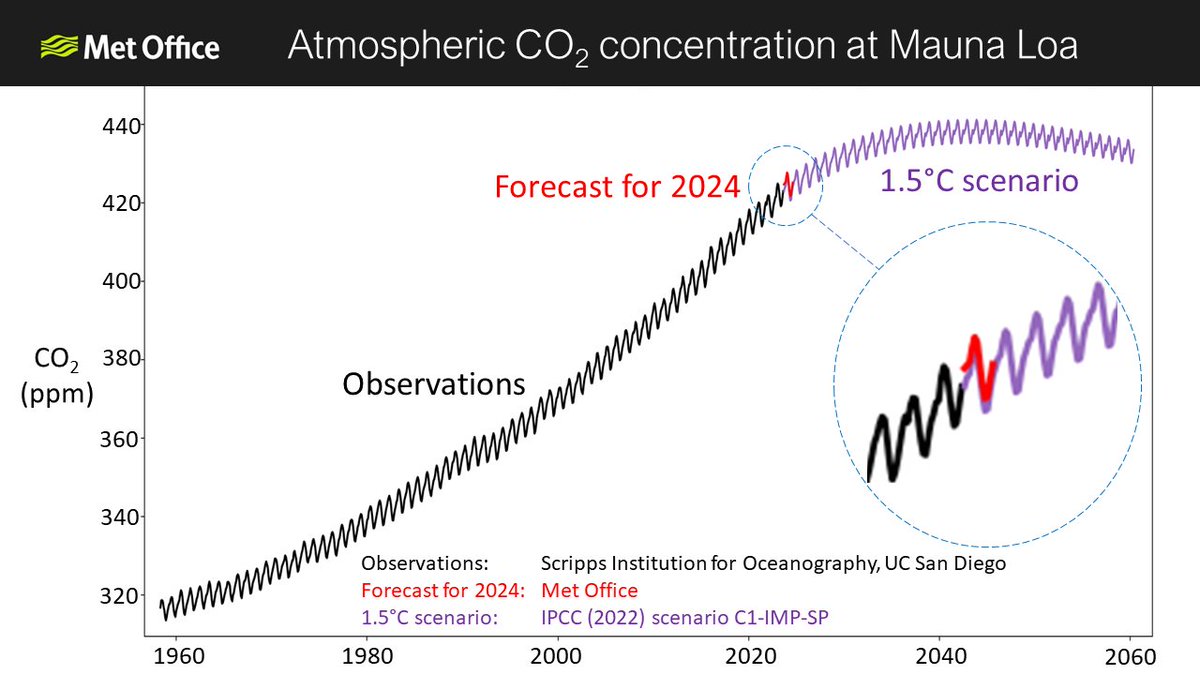
Our forecast of the atmospheric CO2 rise for 2024 is out 🧵
To limit global warming to 1.5°C, the build-up of CO2 in the air would need to stop very soon
But with a rise of 2.84 ± 0.54 ppm expected this year, there's no sign that the CO2 rise is slowing
https://t.co/ITIkWU4nXb
Well folks, it's been a year. But after a long contentious deliberative process, I'm happy to confirm that the US Treasury has endorsed the 'Three Pillars' standards for subsidized clean hydrogen production: https://t.co/MWlAP2qrBn
It's almost as if they read our paper :)
The end of the fossil fuel era is in motion.
We knew #COP28 was going to be tough, but at least the elephant in the room – fossil fuel phase out – was finally addressed.
Clear progress since Paris.
1/5
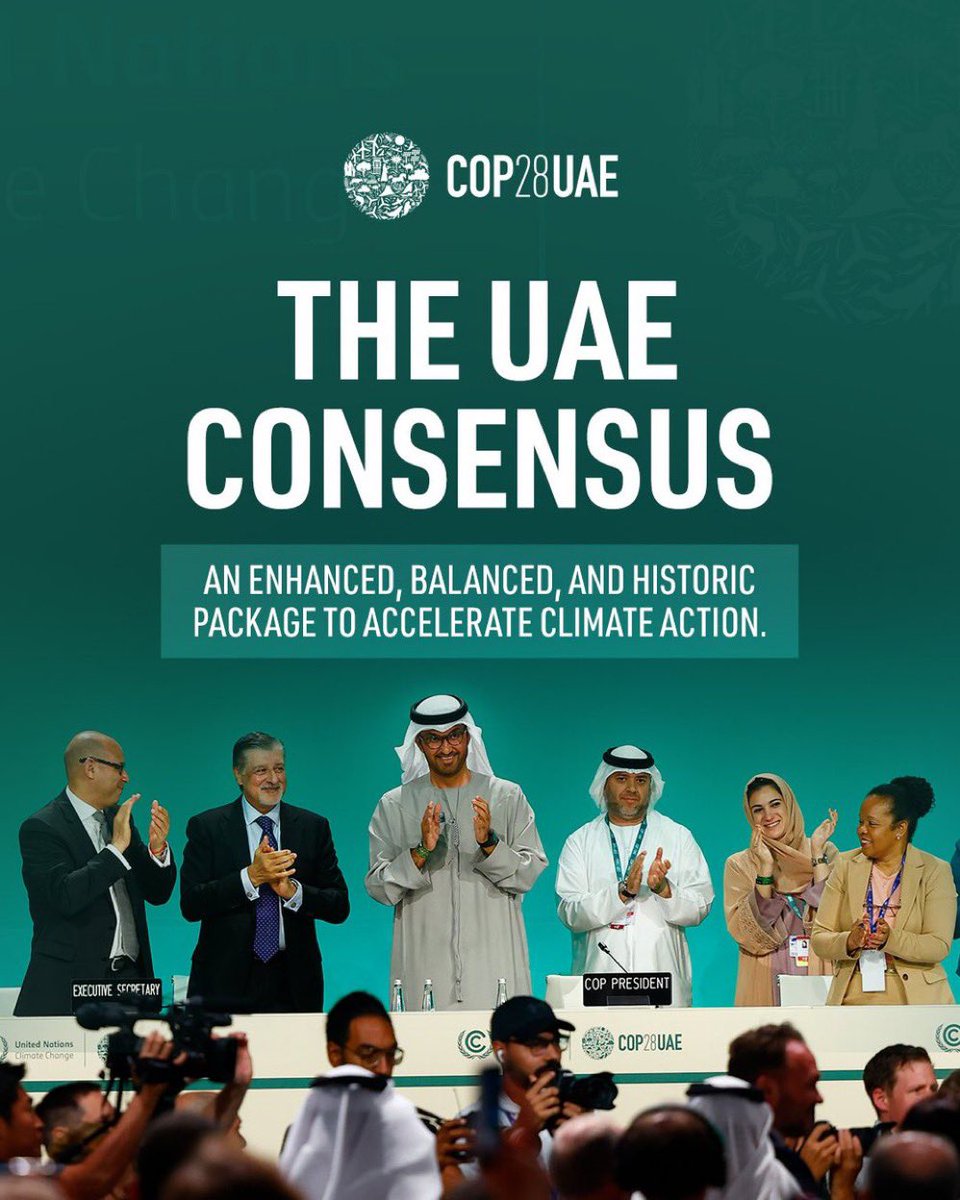
#COP28 formally concludes! After 28 years, we have the first mention of fossil fuels and our needed transition away from them in text. The adopted UAE consensus also outlines 1.5C milestones of: peaking ghgs by 2025, 43% reductions by 2030, 60% by 2035 and net zero CO2 by 2050.
Towards @cop28 many people asked me on the role of the Presidency and Sultan Al Jaber in his closing mentioned it: listen, convene, lead and build consensus, with courage to get a good decision and for the first time ever we got a mention to “transition away of fossil fuels…
Good exchange with @WWF_DG Kirsten Schuijt & @climateWWF science team: @StephenJCornelius & @StephanieRoe, & Alex Came. We had an informative discussion on the climate crisis & biodiversity, and how climate policies could integrate efforts to protect & restore biodiversity.
A new report by @WWF and @BCG compares a rapid transition to renewable energy to our current approach dominated by fossil fuels across key areas. The results clearly show that a renewable future is better for humans and nature. #Cop28
Read more: https://t.co/TxJh6crB8A