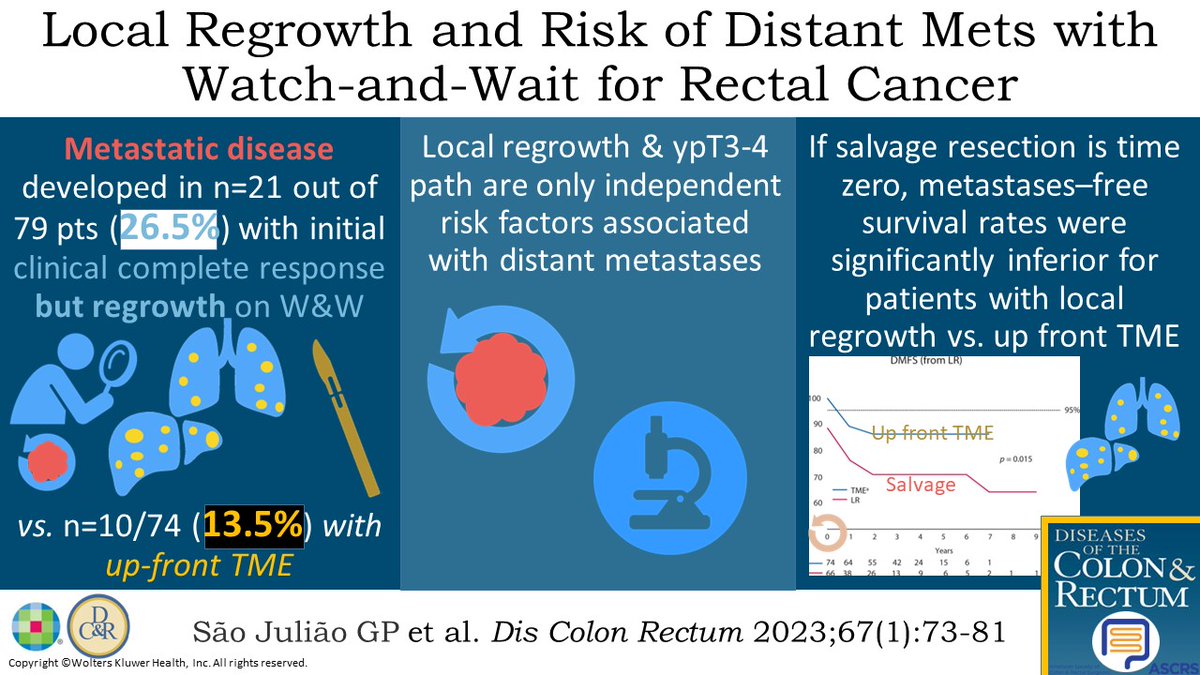
#DCRJournal visual abstract: Local Regrowth and the Risk of Distant Metastases Among Patients Undergoing Watch-and-Wait for Rectal Cancer: What Is the Best Control Group? Multicenter Retrospective Study: https://t.co/SjMTBdoL7W
@Swexner@me4_so@ACPGBI@drtracyhull@ASCRS_1
In a cohort at average risk for colorectal cancer, a cell-free DNA blood-based test had 83% sensitivity for colorectal cancer, 90% specificity for advanced neoplasia, and 13% sensitivity for advanced precancerous lesions. Full ECLIPSE study results: https://t.co/n4wanKhie2
Lateral Pelvic Nodal Management and Patterns of Failure in Patients Receiving Short-Course Radiation for Locally Advanced Rectal Cancer - summarized in #DCRJournal visual abstract: https://t.co/3RcWMWhSDR
What do you think about this abstract? Let's discuss.
Congratulations to all the general surgery chiefs at Cleveland Clinic Florida. I am privileged to have the opportunity to participate in your career development.
Thank you so much for this honor. @CleveClinicFL@RaulRosenthalMD@SWexner
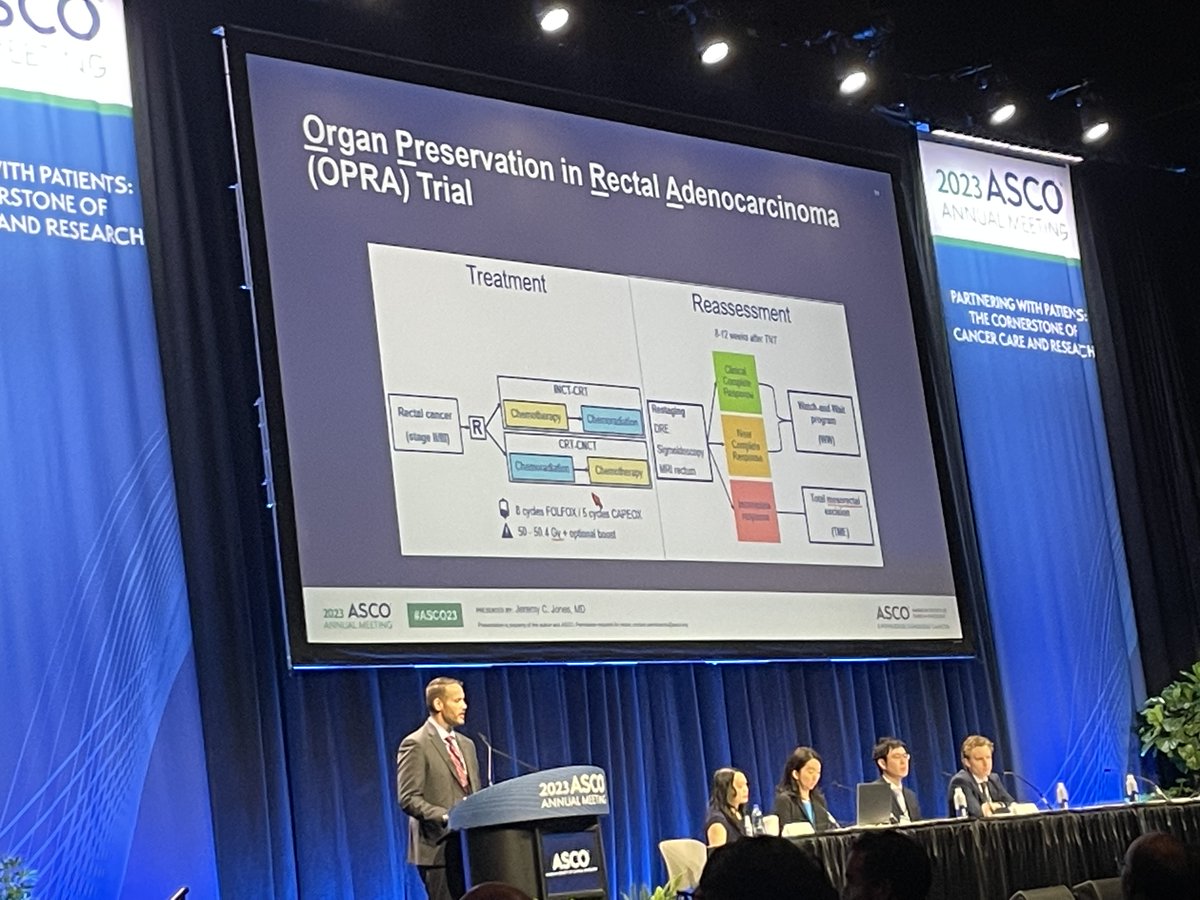
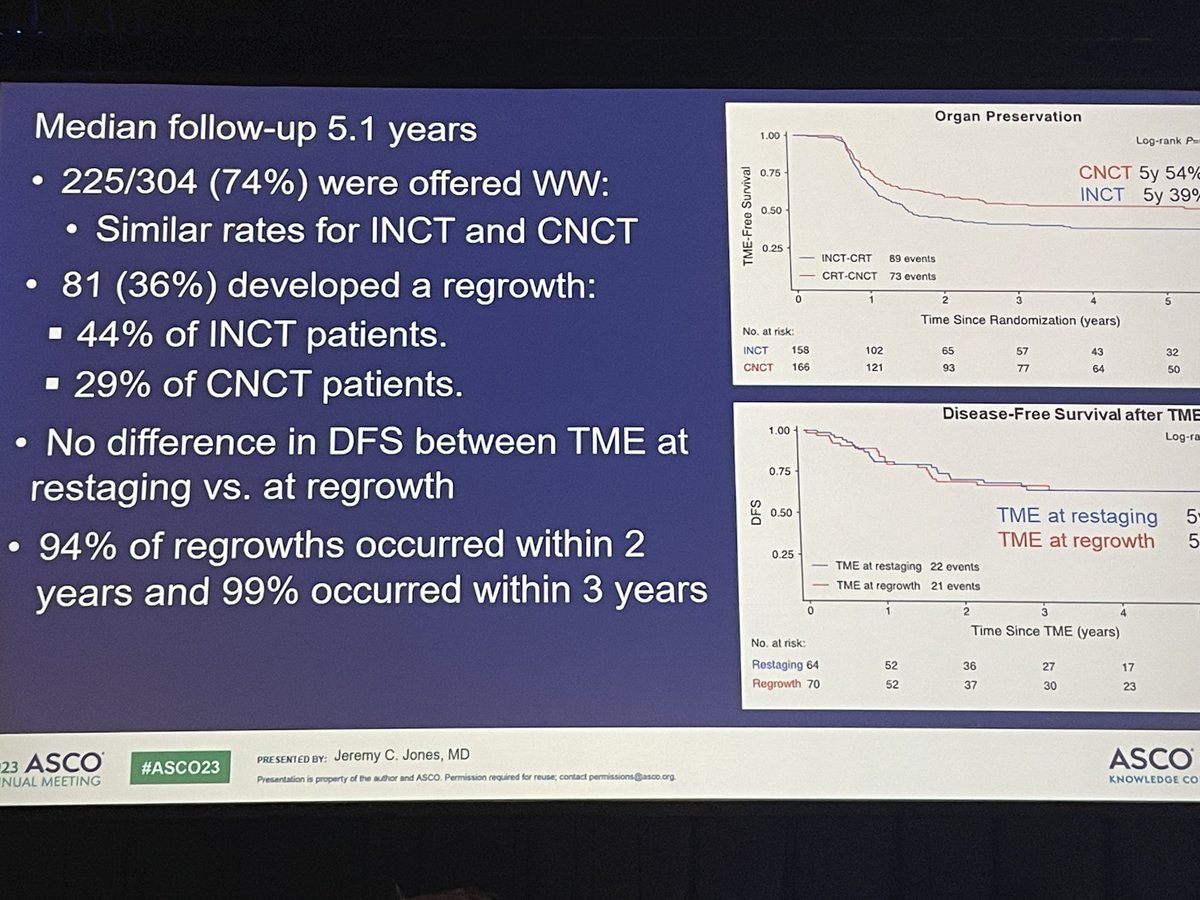
Congrats to all of the OPRA investigators and @DrGarciaAguilar - 5-year data presented today by Floris Verheij @MSKCancerCenter ; LCRT --> FOLFOX: higher rates of organ preservation, lower rates of local regrowth AND no decrement in oncologic outcomes @ASCO; #ASCO23@ASCRS_1
New pub: Predictors of nodal disease in patients with rectal cancer with complete mucosal response to neoadjuvant therapy
cN+ stage before therapy, mucinous histology & LVI are independent predictors @WorldJSurg@SWexner@nirhoresh@ZGaroufalia@dmaron01
https://t.co/itYYQkPKru
Individuals with #LynchSyndrome are at increased risk for multiple cancer types (common ones shown here). Note: MLH1 has the highest pancreatic cancer risk, MSH2 has the highest urothelial & prostate cancer risk, & PMS2 risks are mainly CRC & EC. #ColorectalCancerAwarenessMonth