Want to learn about #pocus and venous congestion in sepsis and septic shock?
Come join us in March 20th!
Thanks to @ISNkidneycare for the invite.
#vexus
For all resus and pocus peeps, keep an eye on @drvimalzenICU , a real vexus and pocus force, currently running an interventional vexus rct, and one of the pioneers in fem venous doppler! And of course part of the HR fam! https://t.co/xLt16ZWdkK
💉Do you sedate acutely ill patients in the ER or ICU?💉
🏥Check out our Network Meta-Analysis examining the safety and efficacy of all IV procedural sedation agents used in the ED and ICU!🏥
Link: https://t.co/C52CPJxo9B
See Below for a Summary of What We Found 🧵 (1/N):
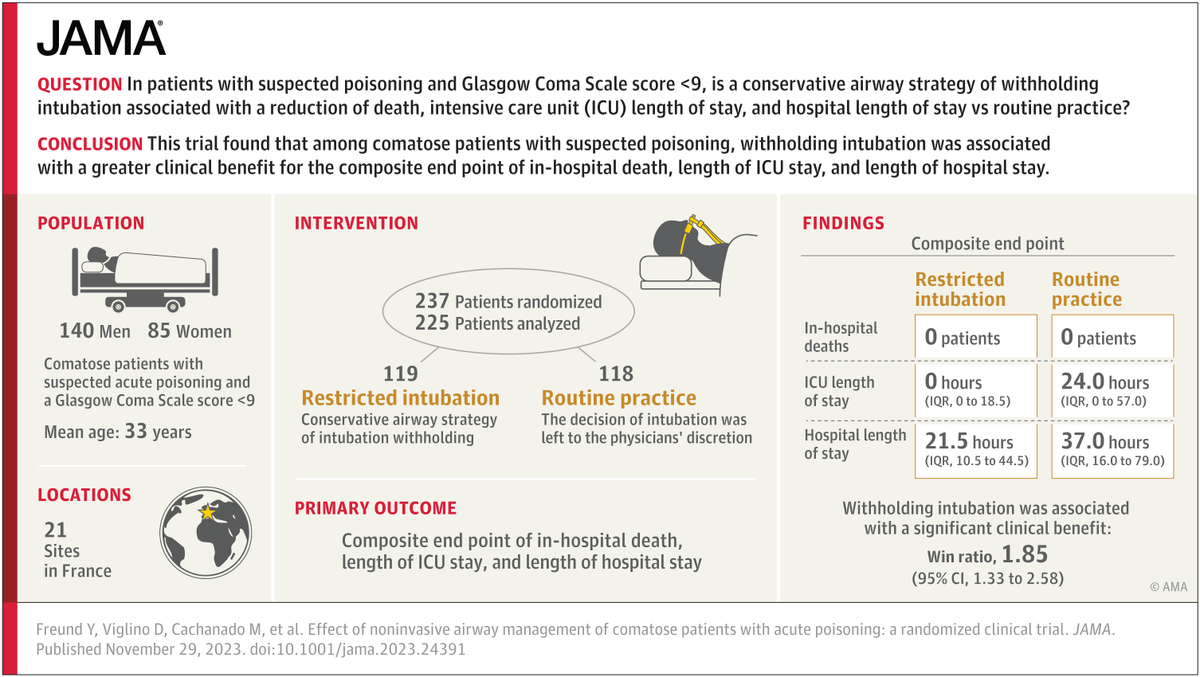
🔍 Now at @CCCForum: to intubate or not? 🤔 Exploring the impact of Noninvasive Airway Management in comatose patients with acute poisoning . @FreundYonathan published today on @JAMA_current
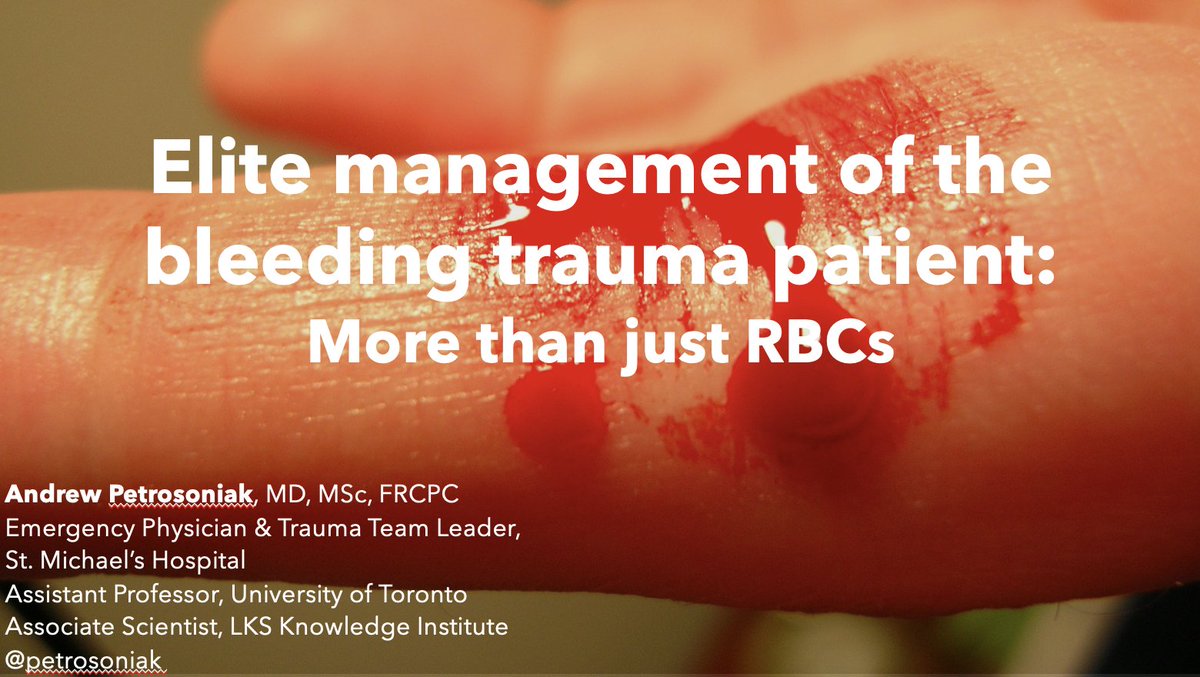
Thank you #EACEM2023 for the opportunity to speak on the management of the massively bleeding trauma patient.
While I could only join virtually, I hope to join you all in Turkey in the near future.
In case you missed it...here's some highlights:
1/
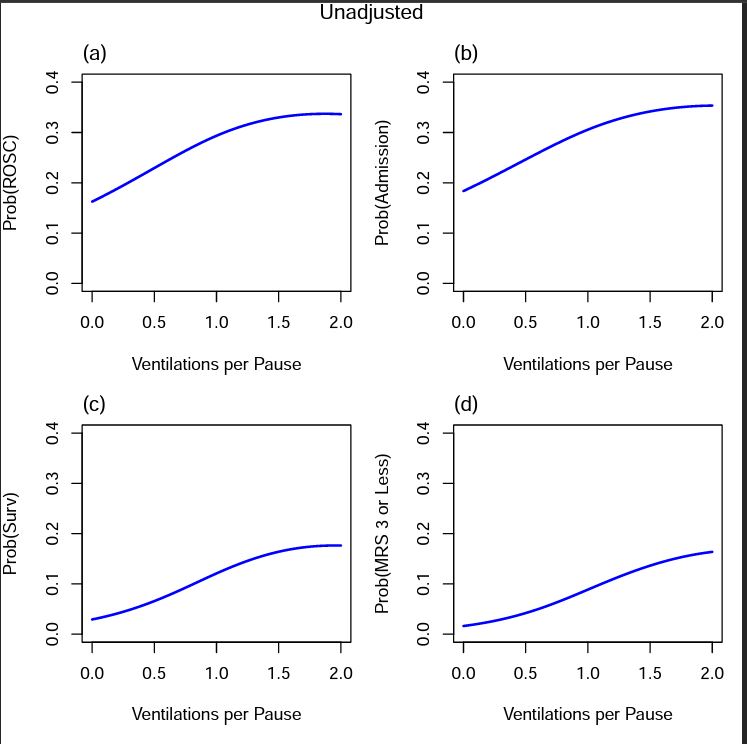
#JustPublished#SimPub#AHA23#CIRCAHA23: Among nearly 2000 patients receiving #CPR, bag-valve-mask lung inflation occurred infrequently, but was associated with improved survival and favorable neurologic @henrywangmd@bettyy0
outcome.https://t.co/NrTjl4fbvG
Manuscript is up about informal #POCUS training and false confidence! 👇
We found that among #IM residents:
⏺Informal training and confidence were ❌ associated with assessment scores
⏺FORMAL curriculum was ✅
Formal POCUS training is 🔑
https://t.co/gLR5OJ1iMv
Check out this study we completed looking at one approach to QA for ED POCUS.
Quantifying Clinically Meaningful Point-of-Care Ultrasound Interpretation Discrepancies Using an Emergency Department Quality Assurance Program https://t.co/sWlxXravCu
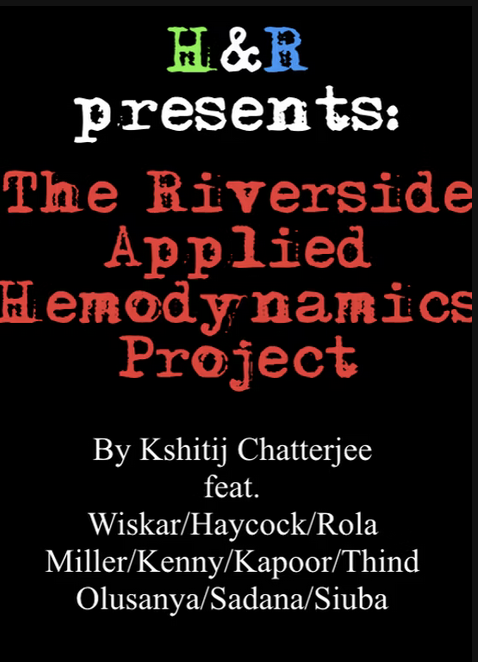
Our "Applied Hemodynamics" sessions are now available
https://t.co/0yj3T9lTJy
Content includes a series of 5 roundtable discussions facilitated by experts in hemodynamics-- highlights applications of key pathophysiological principles at the bedside when managing shock 1/n
Driving pressure at the bedside:
🛌 how to measure?
🛌 how to control driving pressure in spontaneously breathing patients?
🛌 limitations
One single Vt does not fit all: ΔP may help to titrate Vt according to lungs size, potentially improving outcomes.
🖇️ https://t.co/S6DUvjeH0A
You’re called to a 78 yo who’s POD 2 after a Whipple for pancreatic Ca. She’s hypoxic & has a SBP in the 90s. Her family says they’re not sure if she would want to go to ICU because they’ve heard even those who survive end up debilitated. How do you respond to this statement? 🧵
@AnotherICUdoc Great study! Putting myself in the shoes of the scenario, my thoughts would likely be "if they were robust enough for curative surgery, they are a reasonable ICU candidate". Really shows the difference between a 78yo 'medical' ICU patient vs 'surgical' ICU patient
Two new surgical RCT's just released by @nejm@AANSNeuro
If you're caring for patients with stroke or traumatic brain injury, these trials might change your practice or help you understand what we surgeons do and why ...
Here comes an evidence based surgery megathread ...