New Job in Surgical Data Science: please RT/share!
We're hiring a PhD computer vision / machine learning staff scientist in my NIH-funded lab @ChildrensNatl
Unique access to clinicians, clinical data, research infrastructure.
Send CV cover letter to email in the image below.
The future of neurosurgery is here—and the conversation was powerful. 🧠✨ During #AANS2026, ASBN and AANS brought together an incredible panel of experts for The Translational Future of AI in Neurosurgery, where over 50 attendees gathered to explore how artificial intelligence is transforming the field of medicine and neurosurgery.
Moderated by Dr. Sonia Eden @soncapone and Dr. Nnenna Mbabuike @NSMbabuike_MD, the discussion featured insights from:
▪️ Dr. Joseph T. Francis
▪️ Dr. Dan Orringer
▪️ Dr. Richard Byrne
▪️ Dr. Daniel Donoho @ddonoho
▪️ Dr. Samuel Browd
Panelists shared perspectives on how AI is helping close educational and healthcare access gaps by expanding the ability to share knowledge and resources globally, improving surgical precision, enhancing decision-making, and shaping the future of patient outcomes. The conversation also highlighted important ethical considerations, including the risks AI expansion may pose to low-income countries where access to technological infrastructure and resources remains limited.
Thank you to everyone who joined us for this impactful discussion and to our partners at AANS for creating space for innovation, collaboration, and forward-thinking conversations in neurosurgery.
#ASBNOrg #AANS2026 #Neurosurgery #ArtificialIntelligence #AIInMedicine #FutureOfMedicine #HealthEquity #ASBNConnects #ASBNEvents
@seattlechildrens @gwsmhs @childrensnational @mayoclinic@nyulangone @semmesmurpheyclinic
📢 AI Stewardship Principle #1: Verification is Everything
If AI is the intern, then verification is your job.
🕵🏻♀️ As Dr. @dhirajpangal shared in our recent Data Science Roundtable, every output from AI should be treated the same way you’d treat work from a junior trainee: Review it. Fact-check it. Hold it to high standards.
Whether it’s drafting text, generating code, or analyzing data, nothing should go out into the world unchecked. Because ultimately, the output reflects you.
🩺 In high-stakes fields like surgery, that standard IS NOT optional.
At SDSC, this principle is foundational. Building reliable surgical AI means more than generating outputs, it requires rigorous validation, continuous oversight, and alignment with clinical reality.
🌟 Speed is useful. Accuracy, precision and rigor are essential.
👀 Catch the full session here: https://t.co/FZLHjQB2xp
👩🏻💻 Watch previous DSRTS: https://t.co/mhuuHg9BiC
Our Data Science Roundtables (DSRTS) are one of the ways we stay anchored to real clinical needs. They bring together surgeons, researchers, and technologists to identify the questions that matter most, and to ensure the tools we build are driven by practice, not theory. As we plan upcoming sessions, we’d love your input on speakers and topics. If there’s a clinician, researcher, or innovator you’d like to hear from, please share your suggestions via this google form: https://t.co/sjUb0lUL5X
#SurgicalAI #AIinHealthcare #AIStewardship
🚀 Next up at the SDSC Data Science Roundtable! Dr. Jacob Young on “Operating Room Video, Artificial Intelligence and Surgical Training”
Dr. Jacob Young is a neurosurgeon who cares for patients with brain tumors, including low- and high-grade gliomas, meningiomas and brain metastases. He specializes in brain mapping techniques that identify areas important for motor, language and sensory functions, enabling surgeons to minimize the impact on these areas during surgery to remove a tumor. His clinical research explores how to optimize functional outcomes and minimize complications after surgery for intrinsic brain tumors.
Dr. Young's translational research interests include first-in-human early-phase clinical trials of new immunotherapies and innovative ways to deliver drugs to treat cancerous brain tumors. In his lab, he focuses on understanding the microenvironment of glioma and how it contributes to intratumoral heterogeneity (differences between cancer cells within the same tumor), treatment resistance and cancer evolution at the time of progression. Working with numerous collaborators, his ultimate goal is to design treatment strategies that improve outcomes for patients with brain tumors. His glioblastoma research has been recognized at the institutional, regional, and national levels. During his postdoctoral training, he was awarded the Chan Zuckerberg Biohub Physician-Scientist fellowship, the Andrew J. Lockhart Focused Ultrasound and Immuno-Oncology fellowship, and the American Society of Clinical Oncology Young Investigator Award.
Dr. Young earned his medical degree from the University of Chicago Pritzker School of Medicine, where he was elected to the Alpha Omega Alpha Honor Medical Society. He completed a residency in neurosurgery and a postdoctoral fellowship in tumor immunology at UCSF, where he received an Exceptional Physician Award during his training. He was recognized with the Krevan's Award for excellence in patient care at the Zuckerberg San Francisco General Hospital and the Howard Naffziger Award for Outstanding Clinical Service from the department of neurological surgery.
🗓️ Tuesday, April 21, 2026
⏰ 2:00pm–3:00 pm Eastern
🔗 Register: https://t.co/NvsYV2xCiA
#DataScienceRoundtable #AIinSurgery #SurgicalTraining
@FMoHealth A national partnership. A new model for surgical training. And a clear signal of where surgical AI is headed.
SDSC has partnered with Ethiopia’s @FMoHealth to integrate AI-driven surgical video analysis into OB/GYN training, working toward a future where every woman can access WHO-standard surgical care within 100 km of her community.
By combining global surgical video data with Ethiopia’s clinical leadership, this initiative aims to accelerate training, improve quality, and expand access to minimally invasive care, especially in underserved regions.
It’s also a powerful example of what responsible AI in healthcare can look like: government-led, locally governed, and built on real-world data.
📖 Read more: https://t.co/AcAP2JPNRy
Progress like this depends on data. If you’re a surgeon, researcher, or institution with surgical video, we’d love to collaborate. Contributing data helps train better models, improve global benchmarks, and ultimately expand access to safer surgery worldwide.
👉 Learn more and get involved: https://t.co/yHP9PWChkE
#SurgicalAI #GlobalHealth #WomensHealth #SurgicalEquity
📝New preprint!
A Comparative Study in Surgical AI: Datasets, Foundation Models, and Barriers to Med-AGI
In collab with @SurgicalDSC and led by student @kskblv
In Surgical AI, data beats scaling. Preprint and thread 👇. Feedback appreciated.
https://t.co/M2v6RN0V2d
IYKYK @DartmouthRowing this outspeaking of the strong spirit of men who may not gather redundant fruitage from the earth, nor bask in dreamy benignity of sunshine, but must break the rock for bread, and cleave the forest for fire, and show, even in what they did for their delight, some of the hard habits of the arm and heart
Great to be at @NASBSorg NASBS 2026 connecting with the skull base surgery community and continuing important conversations around AI, surgical video, and the future of surgical data science.
Our founder @ddonoho and Research Partnership Manager Hillary Henzler-Buckingham were on site throughout the meeting, sharing updates, gathering feedback, and connecting with surgeons exploring new ways to use surgical data and AI.
A few highlights from the meeting:
🧠 AI in Skull Base Surgery
Discussions ranged from “Can’t Spell Meningioma without AI” to a two-part session on advances in skull base AI—exploring how surgical data science is beginning to directly support patient care and expand surgical capability.
📊 Growing Presence in the Field
As an encouraging signal of our position within the field, three additional presenters referenced SDSC from the podium during our sessions besides our own SDSC-led sessions
🛠 Product Insights from Surgeons
We shared developments in pituitary surgery and craniotomy analytics with more than a dozen surgeons. The feedback was incredibly valuable and will help guide the next iteration of our platform.
🤝 New Connections
We met many surgeons discovering the Surgical Video Platform (SVP) for the first time; several even scanning QR codes on the spot to create new accounts. We’re excited to continue those conversations and collaborations.
📄 Research Momentum
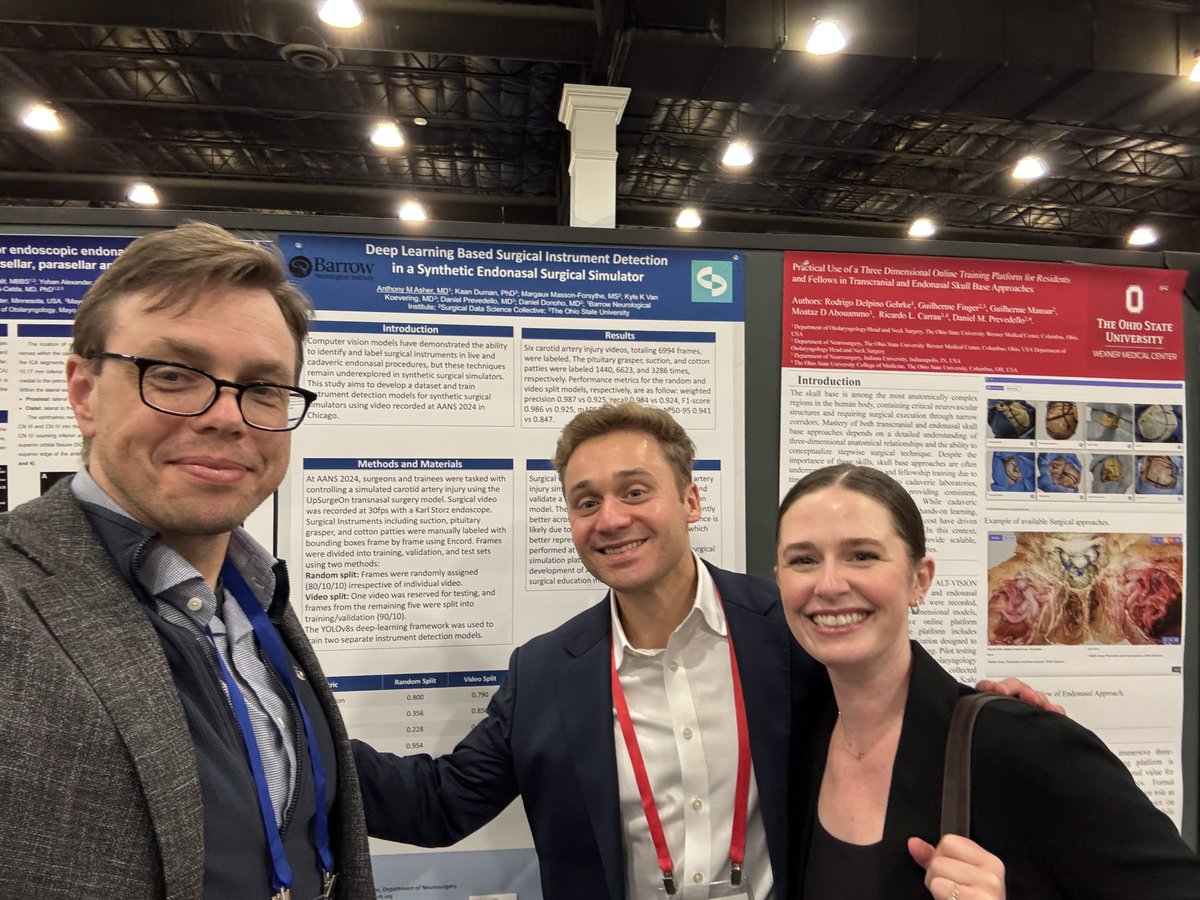
It was also great to see collaborative research highlighted at the meeting, including work on deep learning–based surgical instrument detection in a synthetic endonasal surgical simulator, presented by Tony Asher, MD (Barrow Neurological Institute), with SDSC supporting as a technology collaborator.
🍽 Community Beyond the Meeting
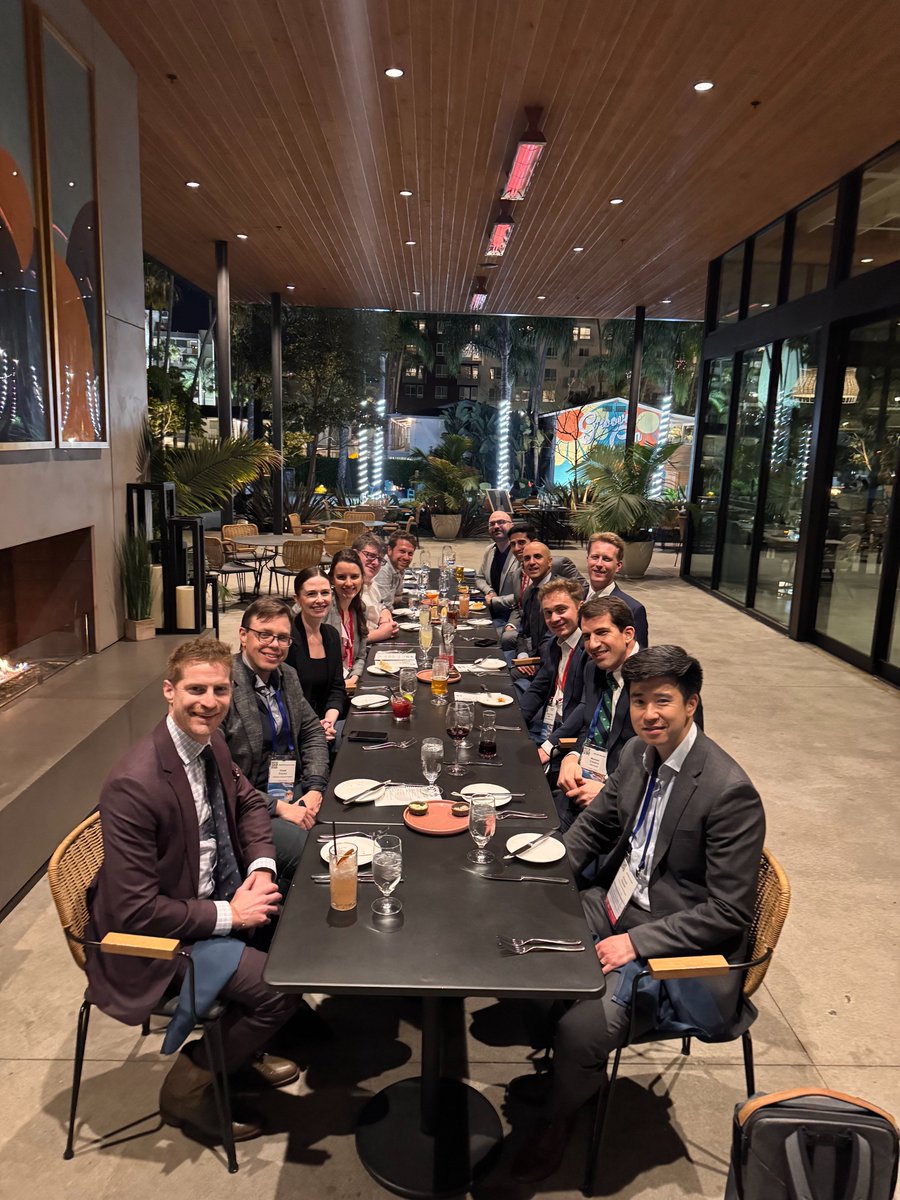
Conversations continued beyond the conference halls with colleagues and collaborators over dinner...always one of the best parts of meetings like this.
Overall, NASBS was a strong step forward in building relationships, gathering feedback, and expanding awareness of how surgical video and AI can support the next generation of neurosurgical training and research. Thank you to everyone who connected with us.
👉Learn more about SDSC: https://t.co/OE0MGjFP4u
#NASBS #Neurosurgery #SurgicalAI #SurgicalDataScience #MedTech #MedicalInnovation
🎓🧠 It’s never too early to shape the future of surgery.
Between her third and fourth years of medical school at @StGeorgesU , Danielle Levy partnered with SDSC to lead our first student-driven project on the Surgical Video Platform (SVP). She uploaded 150 transsphenoidal pituitary cases and helped train AI models that analyze surgical workflow, tool use, and procedural phases.
The result? SVP transformed complex neurosurgical cases into structured, quantitative insights.
Danielle’s work is proof that medical students don’t have to wait for residency to contribute to innovation. With the right tools, curiosity becomes contribution. 🚀
🔗 Read the full story: https://t.co/YTR5DG24eA
👉 If you’re looking to expand your network, get hands-on exposure to surgical data and AI workflows, and play a role in advancing the field, please reach out to us here: https://t.co/UCOKl8pHMO
#Neurosurgery #AIinResearch #SurgicalInnovation
[1/n]
Super excited to introduce PaperBanana 🍌! (PKU x Google Cloud AI)
As AI researchers, we often spend way too much time crafting diagrams and plots instead of focusing on the ideas 🤯. To rescue us from this burden, we built an Agentic Framework to auto-generate NeurIPS-quality paper illustrations!
📄 Paper: https://t.co/2NbQeEhzMv
🌐 Page: https://t.co/05dKkjVs7f
Key Features:
🌟 Human-like Workflow: Retrieve 🔍 -> Plan 📝 -> Style 🎨 -> Render 🖼️ -> Critique 🔄. This ensures both academic fidelity and aesthetics.
🌟 Versatile: Supports both illustrative diagrams and statistical plots.
🌟 Polishing: Also effective for polishing existing human-drawn diagrams.
Here are some example diagrams and plots generated by our PaperBanana:
The other week, we wrapped an incredible experience at the Orlando Health Flexible Ventricular Neuroendoscopy Workshop & Conference 🧠
🌎 Over three days, surgeons from 10+ countries across five continents came together for live surgery, hands-on lab training, expert lectures, and case-based discussion focused on ETV-CPC, a life-saving yet technically demanding procedure with a steep learning curve and limited formal training pathways worldwide.
What made this collaboration especially meaningful was the shared commitment to going beyond instruction:
📚 Designing training that is rigorous, repeatable, and accessible
🤝 Using anatomical models to enable scalable hands-on learning
🎥 Intentionally capturing surgical training video to support future research, education, and quality improvement
👩💻 Exploring how digital platforms and AI-enabled tools may eventually help educators better understand learning curves and trainee progress
📸 Swipe through our highlights:
🩺 Global connections in action: Dr. Fadel Albatran receiving his SDSC surgical cap and flash drive
🧰 Doctors practice using the flexible endoscope for future ETV-CPC procedures
🌟 A powerful moment capturing hands-on learning with world-class mentors: medical students learning flexible endoscopy techniques from Dr. Benjamin Warf
🔧 Learning through challenge: Dr. Samer K. Elbabaa tasked participants with using flexible endoscopes to remove seeds from a bell pepper (representing the size of a baby's brain), a fun yet humbling simulation of surgical precision
We’re grateful to the @orlandohealth team and faculty for their leadership and openness to innovation. We see this as a model worth expanding, and we’re eager to collaborate with other nonprofit hospitals and academic medical centers committed to advancing surgical education, research, and global health impact.
🎓 If your institution is thinking about how to build partnerships that meaningfully support training and knowledge-sharing, we’d love to start that conversation 👉 https://t.co/yHP9PWCPac
#Neurosurgery #Hydrocephalus #ETVCPC #GlobalHealth #ClinicalCollaboration
🌟 As we move into 2026, it’s worth reflecting on what 2025 made unmistakably clear for surgeons.
🩺 Last year, we listened closely to clinicians and academic teams working at the intersection of surgery, research, and education. The same themes surfaced again and again: clarity over complexity, tools that respect clinical reality, and systems that genuinely support learning and discovery.
Our latest blog reflects on those insights and what surgeons were consistently calling for not as predictions, but as lessons learned:
🧠 Practical needs from the OR
📚 Expectations from research and training environments
🏥 The realities faced by modern academic institutions
If you’re thinking about where surgical innovation needs to go next, this reflection may resonate.
👉 Read the full blog: https://t.co/ny55bLanl7
#AIforCoaching #Infrastructure #Feedback #SurgicalDataScience
Your data is now useful to you in ways that were irrelevant pre-GenAI.
Your emails, old writing, old tweets, financial records, health data, etc were always important in aggregate to large companies with data analysts, but now they are useful to you as AI context. Keep archives.
🌟 Happy Giving Tuesday!
🩺 Today is a reminder of the incredible ripple effect that education and training can create. Training just one surgeon can impact over 10,000 patients throughout their career. Every step we take toward advancing surgical knowledge, tools, and AI-driven assessment helps expand access to safe, high-quality surgery across the globe.
🙏 We are deeply grateful for the support of our community, our partners, collaborators, and advocates, who make this work possible. On this Giving Tuesday, consider joining us in our mission to close the global surgical divide and bring surgical excellence to every patient on Earth.
💛 Donate today: https://t.co/rKkTcrTAKS
#GivingTuesday #GlobalImpact #SurgicalTraining #HealthEquity #AIinSurgery #SDSC
🌟 We’re excited to welcome Intissar Sarker to our team!
Intissar joins us as Strategic Partnerships Manager, where she leads the expansion of research and training collaborations into new surgical specialties. With over 15 years of global health experience, Intissar has designed and led health programs across Africa and Asia. She previously held roles at USAID and Abt Global, where she managed multi-million-dollar initiatives, forged partnerships with governments, clinicians, and the private sector, and advanced access to quality health services.
🚀 We’re so proud to have you join us. Get ready for an inspiring journey ahead!
Don’t miss this exciting surgical data science learning opportunity!
For all #medtech#AI enthusiasts trying to figure out the surgical data science ecosystem
And #neurosurgery folks looking for what is possible with AI
🚀 Get excited! @hani_marcus -leading neurosurgeon, AI/robotics pioneer, and innovator behind dexterity-enhancing pituitary surgery robots—is speaking at SDSC’s Data Science Roundtable! Don’t miss this mind-blowing fusion of neurosurgery + cutting-edge tech. 🧠🤖
📅 Wed July 16, 2025, at 10:30AM - 11:30AM EST
#DataScience #MedTech
Sign up here: https://t.co/cRosRyJMcB
🚨 This week: SDSC Data Science Roundtable!
Join Dr. Sem F. Hardon (surgeon, data scientist & innovator-bio below) as he shares breakthroughs in:
🔹AI-driven skill assessment
🔹Real-time feedback (Lapron box trainer)
🔹Automated credentialing for #MIS📅When: Thu June 12, 10AM-11AM EST
🔗Sign up here: https://t.co/m7SoKPS3aN









![dwzhu128's tweet photo. [1/n]
Super excited to introduce PaperBanana 🍌! (PKU x Google Cloud AI)
As AI researchers, we often spend way too much time crafting diagrams and plots instead of focusing on the ideas 🤯. To rescue us from this burden, we built an Agentic Framework to auto-generate NeurIPS-quality paper illustrations!
📄 Paper: https://t.co/2NbQeEhzMv
🌐 Page: https://t.co/05dKkjVs7f
Key Features:
🌟 Human-like Workflow: Retrieve 🔍 -> Plan 📝 -> Style 🎨 -> Render 🖼️ -> Critique 🔄. This ensures both academic fidelity and aesthetics.
🌟 Versatile: Supports both illustrative diagrams and statistical plots.
🌟 Polishing: Also effective for polishing existing human-drawn diagrams.
Here are some example diagrams and plots generated by our PaperBanana:](https://pbs.twimg.com/media/HALQ9F8aQAAAIqk.jpg)


