The first time I understood the impact of neuromodulation was while witnessing a deep brain stimulation surgery during my first year of medical school. What stuck with me--more than anything else--was the way the patient's face lit up when her symptoms disappeared.
Surgical treatments can be world-changing, but they won't reach everyone. Imagine you could safely target those same parts of the brain, but without surgery.
At @nudge, we're doing just that, by building non-invasive brain interfaces to deliver life-changing treatments to millions of people. Excited to see where we can take this.
Half the world will experience a brain disorder in their lifetime.
At @nudge, we're building brain interfaces that are safe, precise, and non-invasive to solve that problem.
We've raised a $100M Series A led by @ThriveCapital and Greenoaks to go faster.
We're hiring. Join us.
people truly don’t appreciate the coming health insurance apocalypse. as more substantial breakthroughs come out (and they are coming!) people will see outcomes totally unimaginable before. But the coverage won’t be there. I really need to write more on this topic
We're pleased to share our first @Nature paper: Robin is the first multi-agent system for discovery in biology that integrates novel hypothesis generation with experimental data analysis in one continuous workflow.
In this study, our team, including ophthalmologist @agreeb66, applied Robin to dry age-related macular degeneration, a leading cause of irreversible sight loss with limited treatment options. The system proposed drug-repurposing hypotheses, which were then tested experimentally in the lab.
Robin developed the experimental strategy for therapeutic hypothesis generation, proposed follow-up experiments, and extracted actionable insights from the resulting data, including validation in primary human retinal pigment epithelium (RPE) stem cells.
Robin also proposed a mechanism of enhancing RPE phagocytosis by modulating the cells circadian rhythm using an experimental drug, KL001, that has never before been used in humans or proposed for AMD. To our knowledge, this mechanism had not previously been proposed.
This work points to the future of AI-enabled science: systems that connect insights across fields, surface new mechanisms, and turn existing knowledge into testable hypotheses.
It also represents the broader opportunity FutureHouse is building toward: AI that helps science cross disciplinary boundaries and move from literature to experiment to discovery.
https://t.co/4FhmTo8nRH
NSF not only ran with the X-Labs concept, but committed $1.5B This is a bold and exciting opportunity. We want to find the scientists and entrepreneurs who want to make the most of this moment.
I may by slightly biased, but I think this is one of the best jobs in the world!
It would also be awesome to see incredible neurotech folks apply to this — huge opportunity for outsized impact.
Please share widely!
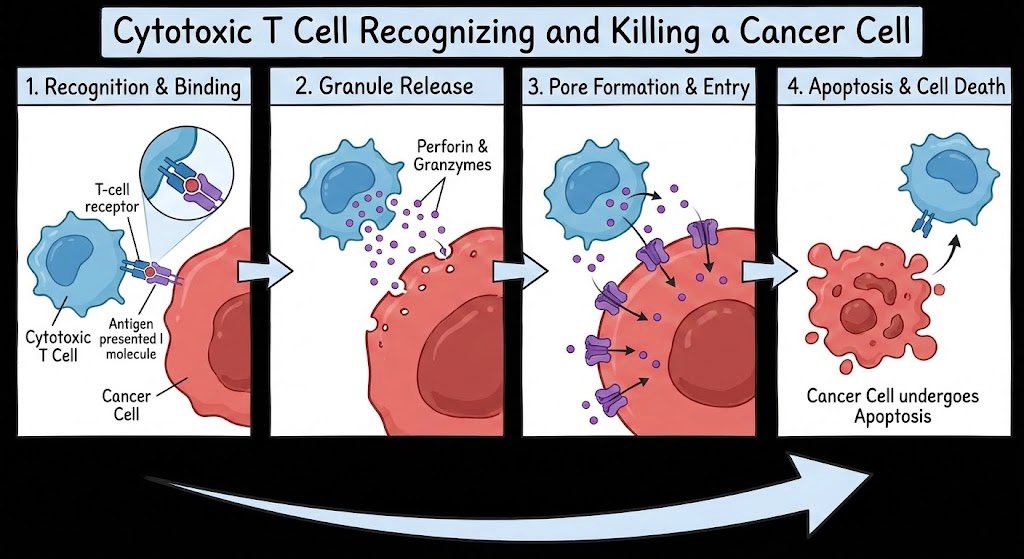
Until a few hours ago, creating this kind of scientific image would have required at least an hour of professional work. Now, with NanoBanana Pro, it only takes a simple prompt & less than 30 seconds!
Prompt: “Describe in an illustration the events for a cytotoxic T cell recognizing & killing a cancer cell.”
This is exciting; I expect we are going to see a lot more things like this and it will be one of the most important impacts of AI. Congrats to the Future House team.
https://t.co/Cxeh8UlWdk
@sama Thanks!! Anyone who is interested can try Kosmos for themselves here:
https://t.co/PHYFaC4Koc
All possible in large part due to the amazing work you guys have been doing at OpenAI. Keep it up, and the next few years are going to be awesome.
An interesting trend we're noticing at Stripe: US startups are pulling ahead of their peers elsewhere.
These charts show averaged revenue growth for software startups in each location. US startups typically grow somewhat faster than those elsewhere. However, since mid-2023, US companies have accelerated a lot. Interestingly, this is not just because of AI startups: if we strip those out, there's still a big divergence. Our leading hypothesis is that US startups (even those that aren't AI companies as such) are adopting new technologies (AI, stablecoins, etc.) faster than companies elsewhere. (This pattern of faster adoption among US companies was also seen with the internet itself.)
Whatever the cause, the pattern is striking.
[Methodological note: this pattern appears to hold beyond Europe as well.]
such incredible news: for the entire @uclh team, uk neurotech and most importantly for paul and the folks in the future who will benefit from this technology. huge congratulations to everyone involved 🚀
@BBCNews followed one of the patients at @Moorfields in London who participated in our landmark clinical trial of PRIMA. She began losing her sight more than three decades ago due to age-related macular degeneration. Now she can read again for the first time in years.
@NEJM published the results of this trial yesterday in a new peer-reviewed original paper.
Out now - a roadmap to develop precision focused ultrasound in psychiatry, with a great team brought together by the @FUSFoundation. Interested in where the field is going? Check this out 👇👇
https://t.co/AYYRYSMrMx
Out now - a roadmap to develop precision focused ultrasound in psychiatry, with a great team brought together by the @FUSFoundation. Interested in where the field is going? Check this out 👇👇
https://t.co/AYYRYSMrMx
This is big. OpenAI and Retro used a custom model to make cellular reprogramming into stem cells ~50× better, faster, and safer. Similar Wright brothers’ glider to a jet engine overnight.
We may be the first generation who won't die.
Let's take a look at what they did. 🧵


![patrickc's tweet photo. An interesting trend we're noticing at Stripe: US startups are pulling ahead of their peers elsewhere.
These charts show averaged revenue growth for software startups in each location. US startups typically grow somewhat faster than those elsewhere. However, since mid-2023, US companies have accelerated a lot. Interestingly, this is not just because of AI startups: if we strip those out, there's still a big divergence. Our leading hypothesis is that US startups (even those that aren't AI companies as such) are adopting new technologies (AI, stablecoins, etc.) faster than companies elsewhere. (This pattern of faster adoption among US companies was also seen with the internet itself.)
Whatever the cause, the pattern is striking.
[Methodological note: this pattern appears to hold beyond Europe as well.]](https://pbs.twimg.com/media/G42NhYLaAAAaDSn.png)






![patrickc's tweet photo. An interesting trend we're noticing at Stripe: US startups are pulling ahead of their peers elsewhere.
These charts show averaged revenue growth for software startups in each location. US startups typically grow somewhat faster than those elsewhere. However, since mid-2023, US companies have accelerated a lot. Interestingly, this is not just because of AI startups: if we strip those out, there's still a big divergence. Our leading hypothesis is that US startups (even those that aren't AI companies as such) are adopting new technologies (AI, stablecoins, etc.) faster than companies elsewhere. (This pattern of faster adoption among US companies was also seen with the internet itself.)
Whatever the cause, the pattern is striking.
[Methodological note: this pattern appears to hold beyond Europe as well.]](https://pbs.twimg.com/media/G43MAgHbQAERiZl.jpg)


