We heard your feedback.
Our default comps in the industry tab were bad and irrelevant. This is true.
We re-did all of them for US/CA/ADRs and will roll out the new comps globally this week.
They're MUCH better. I think you'll like it.
Loved sitting down with @ValueStockGeek to talk about my favorite investment subject - moats.
Pat Dorsey literally wrote the book on economic moats and so we dive deep to explore his teachings and how we factor in moats in our own investment process.
Give it a listen!
New Episode!
In this episode, Jeff and Jason are joined by @StocksWithBrian of Long Term Mindset to talk about investing when retirement is just around the corner. #podcast#investing
Available wherever you get podcasts.
If you haven’t had a chance to check out Finchat— a fantastic stock/company research tool for the individual investor.
Now’s a great time to check it out!
https://t.co/VIaMXzwY6J
Big news tomorrow.🎉
We are launching:
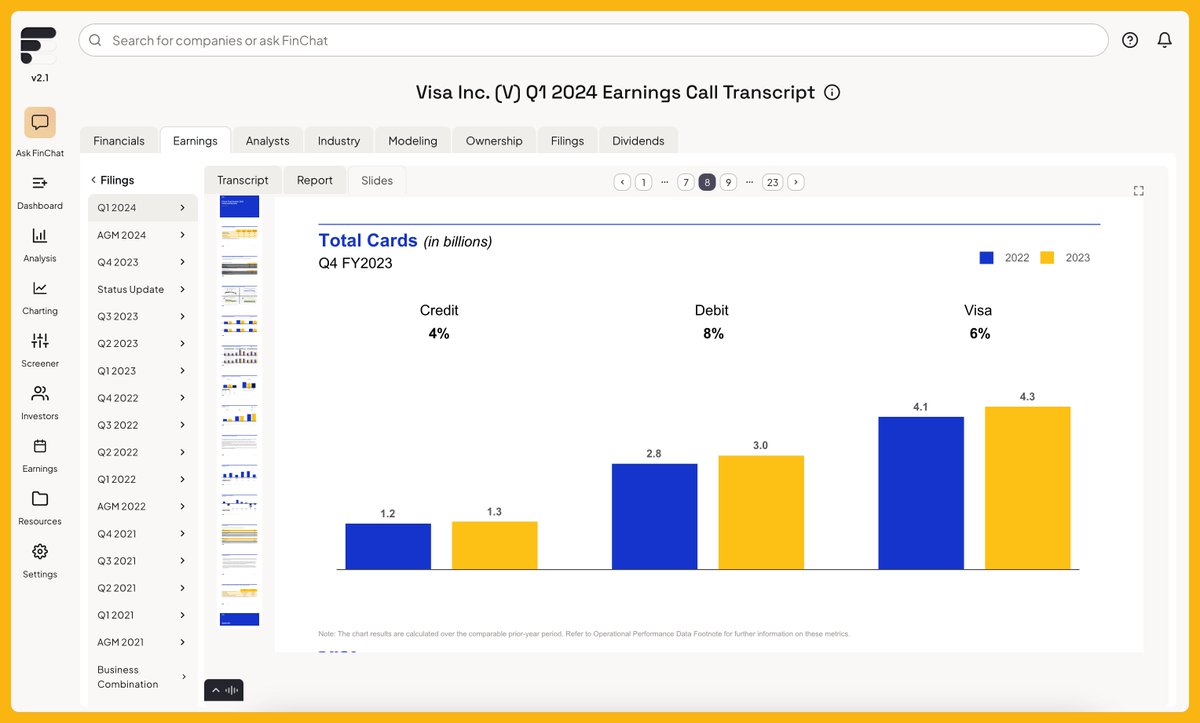
1) Earnings call audio player.
2) Upgraded UI for transcripts
3) Investor days and product launch events
4) Slide decks
All coming in tomorrow afternoon to FinChat.
There are few better role models for the retail investor than @TheMattCochrane
His strategy rests on two pillars:
1) Buy companies with wide moats
2) Hold them for a long time
"That's what I think is best for me and I think that's best for probably a lot of retail investors"
It has become consensus that:
"If you didn't own Magnificent 7 in 2023, you underperformed the market."
While Mag7 undeniably had a year to remember, this simply isn't true.
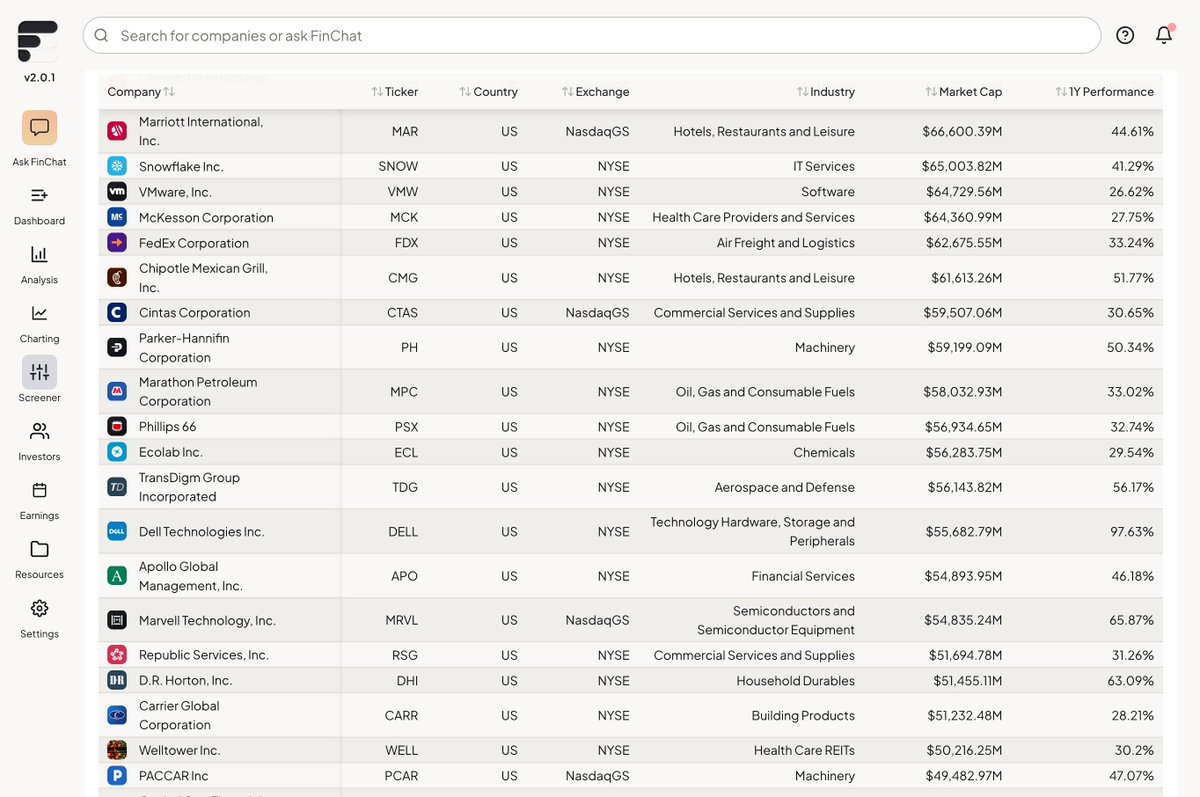
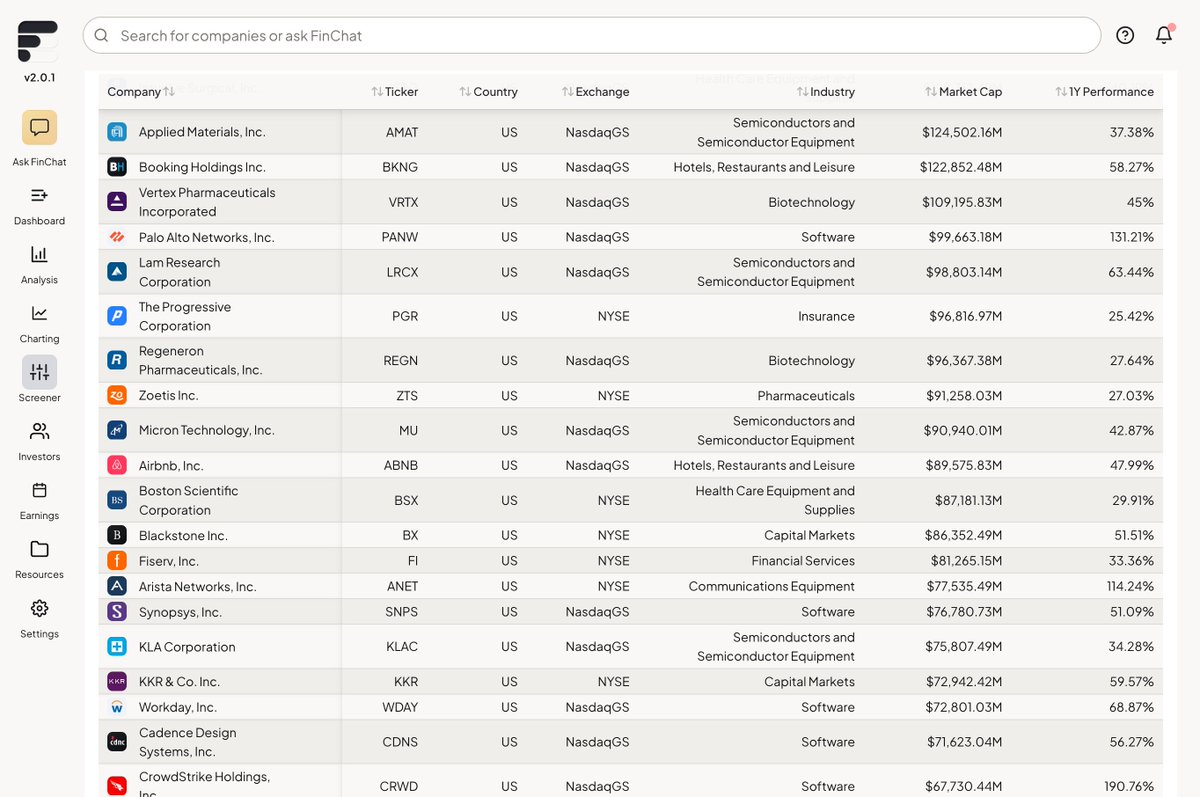
There are 181 U.S. stocks (>10 billion mkt cap) that returned >25% over the past year.
The full list:
$DIS in advanced talks with the NFL on a strategic ESPN partnership.
NFL would get an equity state.
ESPN gains control over NFL Network, RedZone & all NFL media properties.
The NFL DOMINATES the list of most watched titles in the U.S.
I love this.
Your help, please!
Our course is called "Financial Statements Explained Simply"
👉It's too long
👉Doesn't focus on stock investing
What's a better title? The winner gets to take the course for free.
The countdown is on ⏱️
On Wednesday, November 29th, FinChat and Stratosphere will officially be merged under the https://t.co/JxGL4IcTpv website and brand.
It will be a seamless experience for Stratosphere users who will now also get an AI chat experience as well.
LFG! 🎉
My kids will be millionaires by the time they are 40.
Here's how:
In 2004, when I was 37 years old, I realized the power of investing was all about time in the market. It hit me like a ton of bricks that I had waited so long to get going.
So, I decided to give my two boys a 30-year head start.
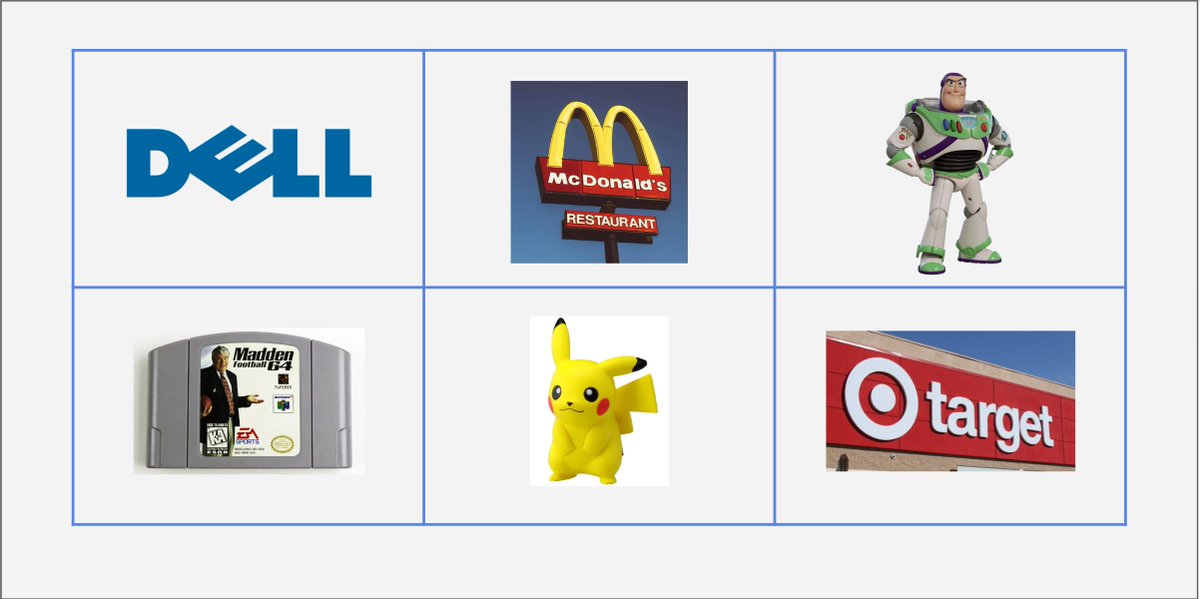
That summer, I sat down with my two boys (ages 5 & 7) and an 11" x 17" piece of construction paper. I split it into 6 sections and placed pictures or items representing 6 companies.
I gave them each a number of pennies and asked them to place more pennies on the businesses they liked the best. They picked:
▪️ Dell
▪️ Pixar
▪️ EA Sports
▪️ 4Kids Entertainment
For each penny, I invested $100 in the stocks they chose in a UGMA account for each of them.
And then I waited until next summer.
In the summer of 2005, I reminded them about the "pennies" exercise. But this time, I asked them to pick companies they were familiar with.
I got eye rolls and a little pushback. But it didn't take too long, and I could keep their attention for a few minutes.
They suggested:
▪️ eBay
▪️ Target
▪️ Gamestop
▪️ Outback Steakhouse
▪️ Nintendo
So we did the thing with the construction paper and pennies again. I invested $100 for every penny into each kid's account based on their decisions.
Every summer after that, I repeated the process.
As they got older, I got them more involved in the process.
They would pick stocks from the summer edition of the Motley Fool Stock Advisor, where all the service's stocks were reviewed.
We used a spreadsheet to "split up" the investment based on current stock prices.
After a couple of years, I shared the account balances with them so that they wouldn't select stocks that were already more than 10% of the portfolio.
I showed them how to place limit orders and buy the number of shares they wanted.
The decisions were always theirs, regardless of how I felt about the stocks.
I remember 2010 specifically. I was selling Netflix, but the kids wanted to buy shares. I let them.
At one point, those shares they bought that year turned into 40-baggers.
We rarely sold.
I used their returns to show them the power of long-term buy and hold.
When one of the stocks had a great day or was a double from when they originally purchased. I let them know.
They picked some great companies that have done amazingly well.
▪️ Amazon
▪️ Netflix
▪️ Tesla
▪️ Chipotle
▪️ Google
And some that have bombed:
▪️ 4Kids Entertainment went to zero
▪️ Nintendo and Gamestop shares were sold at a loss
▪️ Sony and Outback Steakhouse went nowhere
Now my "kids" are 24 & 26.
Unlike me, they have become extremely patient investors and rarely check their portfolios.
We stopped funding their account once college came around and left the stocks to grow in the background.
Their results have been amazing.
The best part is that they really "get" the benefits of buying and holding stocks for the long term.
This exercise has helped me be a better investor, and I've passed the bug on to my kids. Probably my best investment ever!
Because they graduated high school with a sizable nest egg, they have a massive headstart over their peers.
These investments and the LTBH habits they've built could make them millionaires before they are 40.
That's a wrap!
I would love it if you followed me @StocksWithBrian or RT to share this with your audience.
If you like my posts, you'll love our newsletter.
On Wednesdays, you'll get a short investing lesson, plus:
▪️ One simple graphic
▪️ One piece of timeless content
▪️ One Twitter thread
▪️ One useful resource
▪️ One quote
Join 80,000+ others by signing up:
https://t.co/t94b1Mh8PR
⬇️TL;DR summary ⬇️
Keys to investing with your kids:
▪️ Don't wait until they are "old enough"
▪️ You don't have to invest a lot; the key is consistency
▪️ Let them make their own decisions
▪️ Mistakes are a great learning tool
▪️ Have fun with it!
Love to hear about your experience or questions.
My kids will be millionaires by the time they are 40.
Here's how:
In 2004, when I was 37 years old, I realized the power of investing was all about time in the market. It hit me like a ton of bricks that I had waited so long to get going.
So, I decided to give my two boys a 30-year head start.
That summer, I sat down with my two boys (ages 5 & 7) and an 11" x 17" piece of construction paper. I split it into 6 sections and placed pictures or items representing 6 companies.
I gave them each a number of pennies and asked them to place more pennies on the businesses they liked the best. They picked:
▪️ Dell
▪️ Pixar
▪️ EA Sports
▪️ 4Kids Entertainment
For each penny, I invested $100 in the stocks they chose in a UGMA account for each of them.
And then I waited until next summer.
In the summer of 2005, I reminded them about the "pennies" exercise. But this time, I asked them to pick companies they were familiar with.
I got eye rolls and a little pushback. But it didn't take too long, and I could keep their attention for a few minutes.
They suggested:
▪️ eBay
▪️ Target
▪️ Gamestop
▪️ Outback Steakhouse
▪️ Nintendo
So we did the thing with the construction paper and pennies again. I invested $100 for every penny into each kid's account based on their decisions.
Every summer after that, I repeated the process.
As they got older, I got them more involved in the process.
They would pick stocks from the summer edition of the Motley Fool Stock Advisor, where all the service's stocks were reviewed.
We used a spreadsheet to "split up" the investment based on current stock prices.
After a couple of years, I shared the account balances with them so that they wouldn't select stocks that were already more than 10% of the portfolio.
I showed them how to place limit orders and buy the number of shares they wanted.
The decisions were always theirs, regardless of how I felt about the stocks.
I remember 2010 specifically. I was selling Netflix, but the kids wanted to buy shares. I let them.
At one point, those shares they bought that year turned into 40-baggers.
We rarely sold.
I used their returns to show them the power of long-term buy and hold.
When one of the stocks had a great day or was a double from when they originally purchased. I let them know.
They picked some great companies that have done amazingly well.
▪️ Amazon
▪️ Netflix
▪️ Tesla
▪️ Chipotle
▪️ Google
And some that have bombed:
▪️ 4Kids Entertainment went to zero
▪️ Nintendo and Gamestop shares were sold at a loss
▪️ Sony and Outback Steakhouse went nowhere
Now my "kids" are 24 & 26.
Unlike me, they have become extremely patient investors and rarely check their portfolios.
We stopped funding their account once college came around and left the stocks to grow in the background.
Their results have been amazing.
The best part is that they really "get" the benefits of buying and holding stocks for the long term.
This exercise has helped me be a better investor, and I've passed the bug on to my kids. Probably my best investment ever!
Because they graduated high school with a sizable nest egg, they have a massive headstart over their peers.
These investments and the LTBH habits they've built could make them millionaires before they are 40.
That's a wrap!
I would love it if you followed me @StocksWithBrian or RT to share this with your audience.
If you like my posts, you'll love our newsletter.
On Wednesdays, you'll get a short investing lesson, plus:
▪️ One simple graphic
▪️ One piece of timeless content
▪️ One Twitter thread
▪️ One useful resource
▪️ One quote
Join 80,000+ others by signing up:
https://t.co/t94b1Mh8PR
⬇️TL;DR summary ⬇️
Keys to investing with your kids:
▪️ Don't wait until they are "old enough"
▪️ You don't have to invest a lot; the key is consistency
▪️ Let them make their own decisions
▪️ Mistakes are a great learning tool
▪️ Have fun with it!
Love to hear about your experience or questions.
@OneGrittySeed It's a special account where parents are custodians on the account until the kid reaches the age of majority (18 or 21, depending on the state), then it's legally the now-adult kid's account.
https://t.co/KNNgJrBqF2
@ABucks2 Hey Austin,
The amount invested isn't as important as consistency.
We did this once per year for 12 years. We did it in a lump sum so they could pick several stocks at once.
You can't transfer stocks into an Roth, just cash.