We are introducing Clef and Clef-flash, open-source decision models hosted on Workers AI for high-speed classification and agentic workflows. https://t.co/eilE3tV0F2 #BirthdayWeek
We'll be spending a lot more time trying to understand the outputs of language models. A few thoughts, tips & tricks:
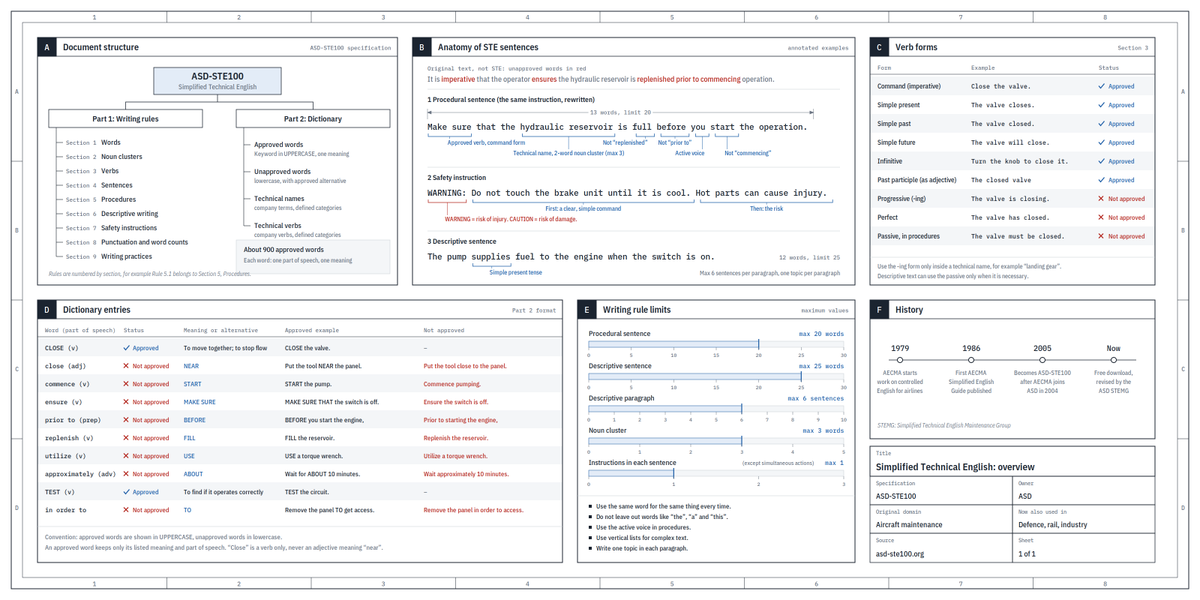
Writing. Something I've had success with: Ask your LLM to explain something in ASD-STE100, it's a controlled language specification originally developed for aerospace maintenance documentation. LLMs well-versed in this language and it comes with heavy constraints on clean writing style that I often find a lot more readable. Sometimes I've tried to soften it a bit e.g. ask for "80% of the way to ASD-STE100" because the spec is quite stringent. But even better:
Diagrams / images. Instead of writing, ask your LLM to create a diagram. These can be a lot easier to process, parse, and understand. But even better:
Web pages. Ask for output "in HTML" to get a beautiful, interactive webpage. LLMs are getting really good at frontend and can create beautiful experiences, animations, etc. But even better:
Explainer videos. The output format I am most bullish on is fully custom / bespoke explainer videos generated on any arbitrary topic. Experiment with things like "Create a 3b1b style video explainer on X. Use my ElevenLabs API key for audio narration". (you'd need an API key for the latter or you can ask your LLM to find you decent free alternatives that use your local compute). This is actually starting to work!
In summary:
- As LLMs get better, they will do more and more of the legwork autonomously, and a lot more of our work will rise up the abstractions into oversight and understanding.
- Luckily, LLMs can help here too because as intelligence and code are increasingly abundant, you can ask for large, custom, discardable software artifacts (e.g. web apps, video explainers) that would have never made sense to create before. Push the boundaries here and you'll be surprised.
Google open-sourced AX, their agentic orchestrator. first impression: it feels like kubernetes for agent executions.
check it out - https://t.co/xVDC0X4B9r
This is the biggest career risk of 2026.
I'm seeing this problem first hand.
"Meat proxies" don't review code when asked. They merely ask AI to do it.
"Meat proxies" don't understand their own code. When asked about it, they have to ask AI to explain it.
"Meat proxies" don't use their own judgement. They defer all decisions and taste to the AI.
Sure, use AI. But don't overdo it.
Be human.
we had a significant security incident during evaluation of our models. we are sharing what we have learned so far. thanks to @huggingface for the partnership on this.
https://t.co/2o2VfR6PIa
#MicrosoftBuild online is free, which means your couch has conference access.
Watch the keynote live, jump into hands-on labs, save sessions for later, and replay what you missed on demand.
Register today: https://t.co/v3NE2p3aSZ
NASA writes mission-critical flight software in C.
And the rules are absolutely INSANE.
> No recursion. Ever.
> Every loop must have a provable upper bound.
> No dynamic memory allocation after initialization.
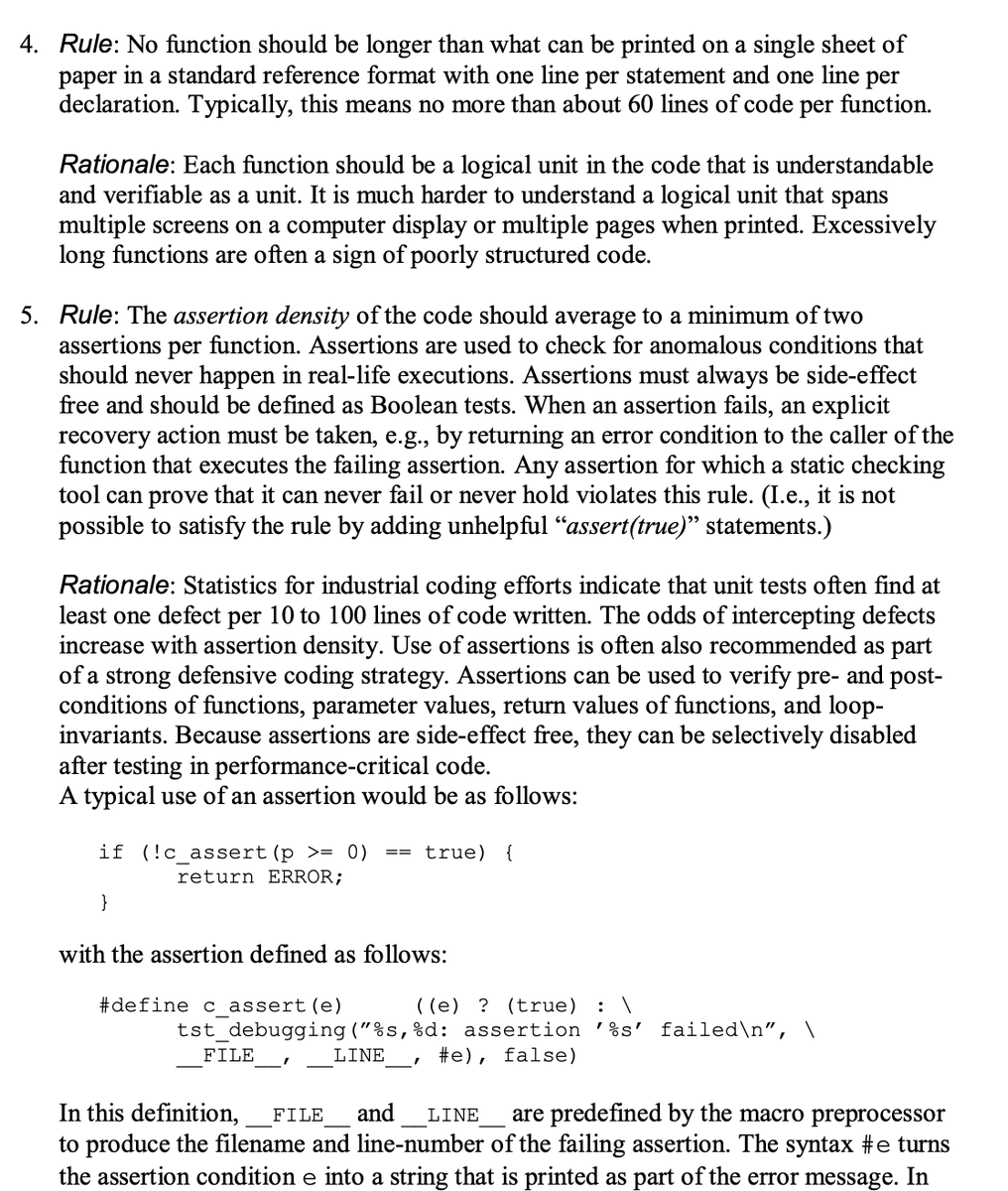
> Max ~60 lines per function.
> Minimum 2 assertions per function.
> Every return value must be checked.
> Zero compiler warnings allowed.
> Daily static analysis. Zero warnings there too.
> No function pointers.
> Restricted pointer dereferencing.
This is how they write code at NASA / JPL for mission-critical systems.
o3 and o4-mini are super good at coding, so we are releasing a new product, Codex CLI, to make them easier to use.
this is a coding agent that runs on your computer. it is fully open source and available today; we expect it to rapidly improve.
No Newcastle #PowerBI UG this month, but we're back with a bang next year!
Wishing you all a great Christmas, from myself, @SQLGeordie, @StopAtMark, and @datalakin
See you all in the new year!
https://t.co/lCnomIp6jr