SIR ALAN BATES - THANKS GOD FOR THIS MAN. EH.
In 1998 Alan Bates and his partner Suzanne packed up their lives in West Yorkshire and moved to a small town in North Wales.
They put everything they had into a post office. Every penny. Every hope. A future they had planned together.
Two years later the software started lying. Money appeared to be missing. He called the helpline 507 times. He kept going. He kept records. He kept asking.
The Post Office's response was simple. It wasn't the software. It was him.
In 2003 they sent him a letter terminating his contract. No reason given. He lost £65,000. Everything he and Suzanne had invested, gone. Their private notes about him, revealed at the public inquiry decades later, described the situation with devastating corporate elegance. He had become unmanageable.
That is what they called a man asking why the numbers were wrong.
So he did what any reasonable person would do after losing everything to an institution that called them a liar.
He spent the next 25 years fighting back with nothing. No legal fund. No media empire. No government support. Just a burning refusal to let them win.
He wrote letters promising his continued and increased resolve to bring this to people who would have no choice but to act, regardless of how many years it took.
It took 25.
While he was fighting, at least 13 people who had been through the same thing took their own lives. People who couldn't hold on long enough. People who needed someone to believe them and found nobody there.
While he was fighting, the Post Office and its lawyers billed £265 million in legal fees between 2014 and 2024. Making sure the truth stayed buried. Making sure men like Alan Bates ran out of road before they ran out of fight.
He didn't run out of fight.
He rejected three compensation offers he considered insults. He watched an @ITV drama turn his life into a television event. He watched politicians suddenly discover outrage they had been too busy to feel for two decades. He watched the country cry at a story it had been ignoring since 1999.
In June 2024 they gave him a knighthood. Twenty-five years after calling him unmanageable.
In November 2025 he settled his compensation claim. He received 49.2% of what he was owed.
No executive has been charged. Fujitsu (@Fujitsu_Global) still holds government contracts. The Post Office (@PostOffice) is still standing.
This country failed Alan Bates for 25 years. It failed every person who could not hold on long enough to see what he saw. It handed him a title instead of justice and called itself generous.
He deserved better. They all did.
Teach this man in every school in Britain. Not as a feel-good story. As a warning about what happens when ordinary people trust institutions that were never built to protect them.
And as proof that one person, with nothing but the truth and the stubbornness to keep saying it, can make an entire country look at itself in the mirror.
Even if it takes 25 years to get them to look.
Sources: @ComputerWeekly | @BBCNews AND many others
🚨 GIVEAWAY!! 🚨
We're delighted to have a copy of one-time #itfc chairman David Sheepshanks' new book to give away!
To enter:
➡️ Follow us
💙🔁 Like and repost this Tweet
🤞 We'll announce the winner tomorrow evening. Good luck!!
🗓️ OTD 26 years ago (eek!) years of #itfc playoff heartache finally ended as George Burley's side beat Barnsley at the old Wembley to win promotion back to the Premier League.
📺 Here's our video montage from a trilogy of unforgettable playoff games: https://t.co/dIpUNvAmQ1
The Netherlands is the size of Wales. It is also the second-largest agricultural exporter on the planet by value, shifting roughly €100 billion of food a year out of a country you can drive across in an afternoon. The system that built this has been running, refining itself, since the 1950s, and feeding most of northern Europe in the process.
It is also the diet that built the Dutch themselves. In 1850, the average Dutchman was 5 foot 5, among the shortest in Europe. Today he stands 6 foot, the tallest in the world. The variable, by every cross-country analysis ever run on the question, was dairy. Cheese, butter, milk, repeated every day, for six generations, on a national scale. The Netherlands grew its population upward by feeding them what the soil and the cow could produce together.
In 2019, a Dutch court ruled that the country's nitrogen emissions, principally ammonia from livestock manure, exceeded EU limits. In 2022, the government published a target: halve nitrogen emissions by 2030. According to its own modelling, this required closing roughly 11,200 farms and significantly reducing livestock numbers on a further 17,600.
€25 billion was allocated to buy farmers out. Voluntary first. Then forced, if the voluntary route did not deliver. Nitrogen minister Christianne van der Wal informed the country, in public, that there was no better offer coming.
The farmers responded by driving tractors onto motorways, blocking distribution centres, and inverting the Dutch flag. Forty thousand of them gathered in central Netherlands in a single day. The police were briefly issued with shovels because the tear gas was running low and the farmers had brought slurry.
The protest did not stop the policy. The BBB party, formed by farmers in response, briefly became the largest force in the Dutch Senate, the coalition government softened some elements, and the rest continued. The Dutch dairy farmer who built his herd in 1985 is, in 2026, either gone, going, or being offered 120% of his land's value to leave. He is being offered this because the cow that built the tallest population on Earth is, by spreadsheet, now the problem.
Meanwhile, in the same country, Schiphol airport, KLM, and the Dutch chemical industry collectively emit nitrogen oxides the dairy sector cannot match, and have been treated with significantly more diplomatic care.
The farmer is the easiest fight because the farmer is one man, on one piece of ground, with one tractor.
The chemical plant is owned by a board.
Boards do not get bought out at 120%. They get consulted.
A new video of my Ipswich Town Legends mug ✍️☕️
As always any reposts are so appreciated it’s so hard to get your work seen on social media nowadays so it really does help and I’m thankful for every share 👍🙏
#itfc#ipswich
A new video of my Ipswich Town Legends mug ✍️☕️
As always any reposts are so appreciated it’s so hard to get your work seen on social media nowadays so it really does help and I’m thankful for every share 👍🙏
#itfc#ipswich
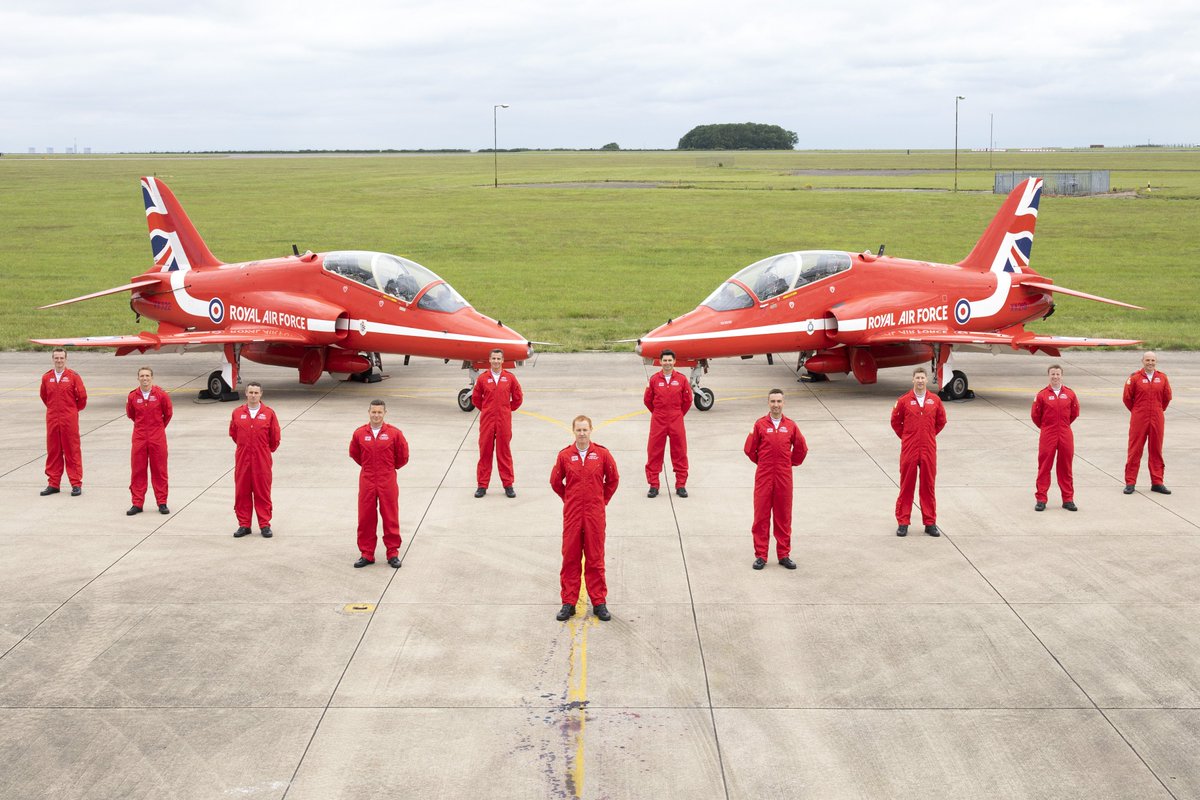
Winding down the Red Arrows is part of a broader retreat of the armed forces from public life. The Royal Tournament was once a pillar of British culture, as was the great British airshow. There used to be a dozen RAF station open days, but now there is only one official RAF airshow - at which the F35 makes only a cursory appearance, and most of the line up is classic aircraft in private hands. We have stopped showcasing our military. It plays no real part in boyhood anymore - and then the same pinheaded accountant class wonder why nobody wants to join the forces and any sense of national unity is collapsing.
They stopped the Royal Navy's Yeovilton Air Day because of Covid and then never re-started it, and I struggle to think of any military events north of the M62. The BBMF seldom ventures north of Bradford, and the main RAF presence is RIAT which is hundreds of miles away for most people, and costs £70 per adult. The airshow tradition is mainly upheld by small independent events, and though they are excellent, young people don't get the experience of being on an active military base. By the time I was of military age, I'd already been to RAF Valley, Cosford, Leeming, Culdrose, Alconbury, Finningley and Waddington.
Because of this, while I never joined the armed forces, I have maintained a lifelong appreciation for the armed forces and take a keen intertest in defence affairs. Politically, we suffer from defence illiteracy, and we're making it worse because defence of the realm is not integrated into public life.
cc: @thinkdefence@UKDefJournal
In a single afternoon on May 22, 1941, the Royal Navy lost two cruisers and a destroyer off the coast of Crete to German dive bombers. The fleet commander was urged to withdraw what was left.
His reply has been quoted ever since, but the situation that produced it is less well known. By the morning of the 22nd, the German airborne invasion of Crete was four days old and on the brink of failure. Of the seven thousand paratroopers Kurt Student had dropped on the first day, roughly half were already dead. The Germans had taken huge losses trying to capture Maleme airfield in the west of the island. Without an airfield, no reinforcements could land. Without reinforcements, the invasion would collapse.
What the Germans needed was a seaborne convoy of mountain troops, heavy weapons, and ammunition. Two such convoys were assembled in Greek ports and put to sea under Italian destroyer escort, hoping to slip across the Aegean to Crete.
The Royal Navy intercepted the first convoy on the night of May 21. In a confused action in the dark, British cruisers and destroyers tore through a fleet of small Greek caïques crammed with German soldiers. Roughly three hundred Germans drowned. The convoy was destroyed.
But by morning the Royal Navy was south of Crete in clear daylight, within range of the Luftwaffe's Fliegerkorps VIII, the most experienced and lethal dive-bomber force in the world. And the British ships were running low on anti-aircraft ammunition because they had spent most of it sinking the convoy.
The Stukas came in waves. The cruiser Gloucester took two direct hits and capsized, taking 722 men with her. The cruiser Fiji was hit by a single bomb that ruptured her hull. She sank slowly, with most of her crew getting off, but 241 men were lost. The destroyer Greyhound was bombed and went down in fifteen minutes. The battleships Warspite and Valiant were both damaged, Warspite badly enough that she had to go to the United States for repairs.
By nightfall on May 22, Admiral Andrew Cunningham, commanding the Mediterranean Fleet from Alexandria, was looking at a casualty list that included two cruisers, a destroyer, two damaged battleships, and roughly fifteen hundred dead British sailors. The army on Crete was asking for naval evacuation. The army on Crete also had thirty two thousand troops on it.
Cunningham's staff, looking at what the Luftwaffe had done in a single afternoon, urged him not to commit the rest of the fleet. He could not protect transports from Stukas in daylight. Anything he sent into the waters north of Crete would be sunk. The navy had taken enough.
Cunningham listened, and then he gave the order that is still quoted at Dartmouth Naval College.
"It takes the Navy three years to build a ship," he said. "It would take three hundred years to build a tradition. The evacuation will continue."
The fleet went back. Between May 28 and June 1, the Royal Navy evacuated 16,500 men from the south coast of Crete under continuous air attack. They lost three more cruisers and six more destroyers doing it. Thousands of British soldiers were left behind and became prisoners. But the navy did not abandon the army.
The German victory at Crete was so expensive that Hitler never authorized another major airborne operation for the rest of the war. The paratroopers had taken the island, but the airborne arm as a strategic weapon was effectively destroyed in the process.
Cunningham's decision was not a calculation about morale. It was a statement about what kind of institution the Royal Navy was, made in the moment when the institution was being tested. He was sixty years old. He had spent forty four years at sea. He understood, in a way that staff officers in London did not, that an institution that abandoned its soldiers in 1941 would still be remembered for it in 2041.
Three hundred years to build a tradition. Eighty five years ago today, the bill came due, and Cunningham paid it.
Farmer: "Gentlemen. I'd like to present the ultimate plant-based protein technology."
Investor 1: "We're listening."
Farmer: "It converts inedible plant matter into complete protein. Grass, cornstalks, brewery waste, vegetable peelings. Anything cellulose-rich that humans can't digest."
Investor 2: "Energy requirements."
Farmer: "Sunlight."
Investor 2: "For the plant matter, you mean."
Farmer: "And for the conversion. Same sunlight. Reused."
Investor 3: "Heating costs for the bioreactor."
Farmer: "None. The unit holds 38.5 degrees year-round on its own."
Investor 1: "Failure rate."
Farmer: "Self-repairing. The unit also replicates once a year at no additional cost."
Investor 3: "Replicates."
Farmer: "Produces a smaller version of itself. Which becomes a full unit."
Investor 2: "Net carbon."
Farmer: "Neutral. The carbon in goes back to the air the grass pulled it from. Round and round, same atoms, no new ones added."
Investor 1: "And the waste output."
Farmer: "Twenty tonnes of soil enrichment per unit per year. The waste is also a product."
Investor 2: "This would obliterate Beyond Meat."
Farmer: "It already has. They just don't know yet."
Investor 1: "Where can we see one."
Farmer: "There are about 1.5 billion currently deployed. Have been for ten thousand years."
[silence]
Investor 3: "It's a cow, isn't it."
Farmer: "It's a cow."
Investor 2: "We were promised plant-based."
Farmer: "The plant goes in one end. I don't know what else you wanted."
If you want genuine, authentic cricket with great access to players, a pitch-side view of your own choosing, a great atmosphere and pleasant surroundings, there’s something — whisper it — that’s arguably even better for your soul than the County Championship. And it’s absolutely FREE!
Our sport is increasingly dominated by money and politics, yet club cricket remains an oasis of quiet sanity in an insane world.
So maybe wander over to your local club this Bank Holiday weekend. They’ll be pleased to see you.
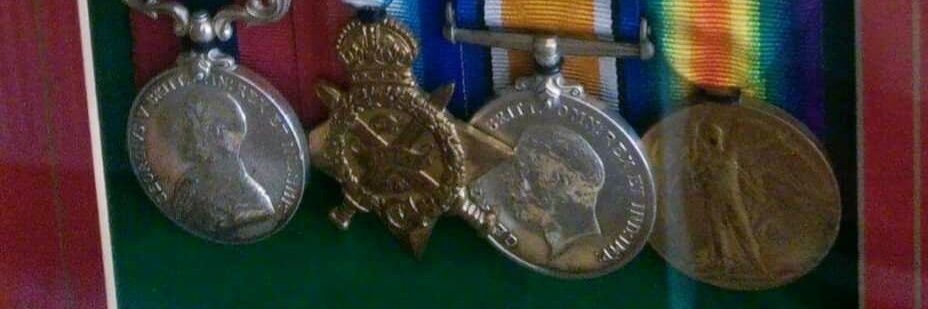
Retiring from the British Army can be complicated...
Lt. Colonel Robert Maclaren retired from the British Army in 2001 after a long fulfilling career. On the day that he retired he received a letter from the Personnel Department of the Ministry of Defence setting out details of his pension and, in particular, the tax-free ‘lump sum’ award, (based upon completed years of service), that he would receive in addition to his monthly pension.
The letter read:
“Dear Lt. Colonel Maclaren,
We write to confirm that you retired from the Royal Scots Dragoon Guards on 1st March 2001 at the rank of Lt Colonel, having been commissioned into the British Army at Edinburgh Castle as a 2nd Lieutenant on 1st February 1366.
Accordingly your lump sum payment, based on years served, has been calculated as £68,500. You will receive a cheque for this amount in due course.
Yours sincerely,
Army Paymaster”
Col Maclaren replied:
“Dear Paymaster,
Thank you for your recent letter confirming that I served as an officer in the Royal Scots Dragoon Guards between 1st February 1366 and 1st March 2001 – a total period of 635 years and 1 month.
I note however that you have calculated my lump sum to be £68, 500, which seems to be considerably less than it should be bearing in mind my length of service since I received my commission from King Edward III.
By my calculation, allowing for interest payments and currency fluctuations, my lump sum should actually be £6,427,586,619.47p.
I look forward to receiving a cheque for this amount in due course.
Yours sincerely,
Robert Maclaren (Lt Col Retd)”
A month passed by and then in early April, a stout manilla envelope from the Ministry of Defence in Edinburgh dropped through Col Maclaren’s letter box, it read:
“Dear Lt Colonel Maclaren,
We have reviewed the circumstances of your case as outlined in your recent letter to us dated 8th March inst.
We do indeed confirm that you were commissioned into the Royal Scots Dragoon Guards by King Edward III at Edinburgh Castle on 1st February 1366, and that you served continuously for the following 635 years and 1 month.
We have re-calculated your pension and have pleasure in confirming that the lump sum payment due to you is indeed £6,427,586,619.47p.
However,
We also note that according to our records you are the only surviving officer who had command responsibility during the following campaigns and battles:
*The Wars of the Roses 1455 -1485 (Including the battles of Bosworth Field, Barnet and Towton)
*The Civil War 1642 -1651 (Including the battles Edge Hill, Naseby and the conquest of Ireland)
*The Napoleonic War 1803 – 1815 (including the battle of Waterloo and the Peninsular War)
*The Crimean War (1853 – 1856) (including the battle of Sevastopol and the Charge of the Light Brigade)
*The Boer War (1899 -1902).
We would therefore wish to know what happened to the following, which do not appear to have been returned to Stores by you on completion of operations:
*9765 Cannon
*26,785 Swords
*12,889 Pikes
*127,345 Rifles (with bayonets)
*28,987 horses (fully kitted)
Plus three complete marching bands with instruments and banners.
We have calculated the total cost of these items and they amount to £6,427,518.119.47p.
WE have therefore subtracted this sum from your lump sum, leaving a residual amount of £68,500, for which you will receive a cheque in due course.
Yours sincerely . . . .”
Activist: "I refuse to fund cruelty."
Farmer: "What did you eat today?"
Activist: "Avocado on toast."
Farmer: "Mexican cartel. Shot the man who grew it. Drink?"
Activist: "A latte. Oat."
Farmer: "Oat from a Lincolnshire field that displaced a thousand hares and got sprayed with three different herbicides last spring. What was the toast?"
Activist: "Sourdough."
Farmer: "Wheat from a field where the combine took out about forty mice, six rabbits, and a fawn. Lunch?"
Activist: "Quinoa salad."
Farmer: "A Bolivian farmer who can no longer afford to eat his own crop. Pudding?"
Activist: "Dark chocolate."
Farmer: "A child in Ivory Coast with a machete who has never tasted chocolate."
Activist: "..."
Farmer: "Your plate has been to seven countries today and killed forty mammals before you sat down. The cow at the bottom of my hill walked from one field to another."
Activist: "I do what I can."
Farmer: "What I do is eat the cow. The cow had a name. The cow had a friend. The cow walked twelve miles to the abattoir on her own legs. Your dinner came via a freighter. The leaf on the package has been to a graphic designer."








![SamaHoole's tweet photo. Farmer: "Gentlemen. I'd like to present the ultimate plant-based protein technology."
Investor 1: "We're listening."
Farmer: "It converts inedible plant matter into complete protein. Grass, cornstalks, brewery waste, vegetable peelings. Anything cellulose-rich that humans can't digest."
Investor 2: "Energy requirements."
Farmer: "Sunlight."
Investor 2: "For the plant matter, you mean."
Farmer: "And for the conversion. Same sunlight. Reused."
Investor 3: "Heating costs for the bioreactor."
Farmer: "None. The unit holds 38.5 degrees year-round on its own."
Investor 1: "Failure rate."
Farmer: "Self-repairing. The unit also replicates once a year at no additional cost."
Investor 3: "Replicates."
Farmer: "Produces a smaller version of itself. Which becomes a full unit."
Investor 2: "Net carbon."
Farmer: "Neutral. The carbon in goes back to the air the grass pulled it from. Round and round, same atoms, no new ones added."
Investor 1: "And the waste output."
Farmer: "Twenty tonnes of soil enrichment per unit per year. The waste is also a product."
Investor 2: "This would obliterate Beyond Meat."
Farmer: "It already has. They just don't know yet."
Investor 1: "Where can we see one."
Farmer: "There are about 1.5 billion currently deployed. Have been for ten thousand years."
[silence]
Investor 3: "It's a cow, isn't it."
Farmer: "It's a cow."
Investor 2: "We were promised plant-based."
Farmer: "The plant goes in one end. I don't know what else you wanted."](https://pbs.twimg.com/media/HI1_ZQsW8AAJAfB.jpg)





