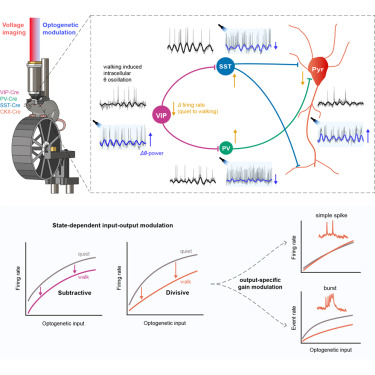
Where, exactly, does learning happen in the brain?
Out now @Nature , we identify a synaptic locus of birdsong learning and show that the circuit can be tuned to make birds learn faster, but at a cost.🧵 #neuroscience
https://t.co/mS6EJUPVa2
Open link: https://t.co/wiJ16guRj1
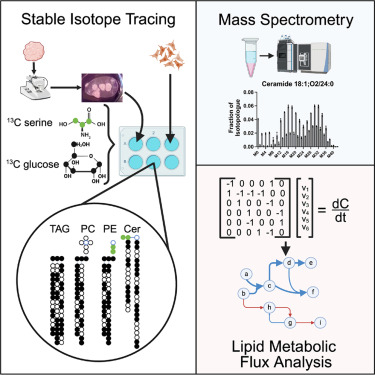
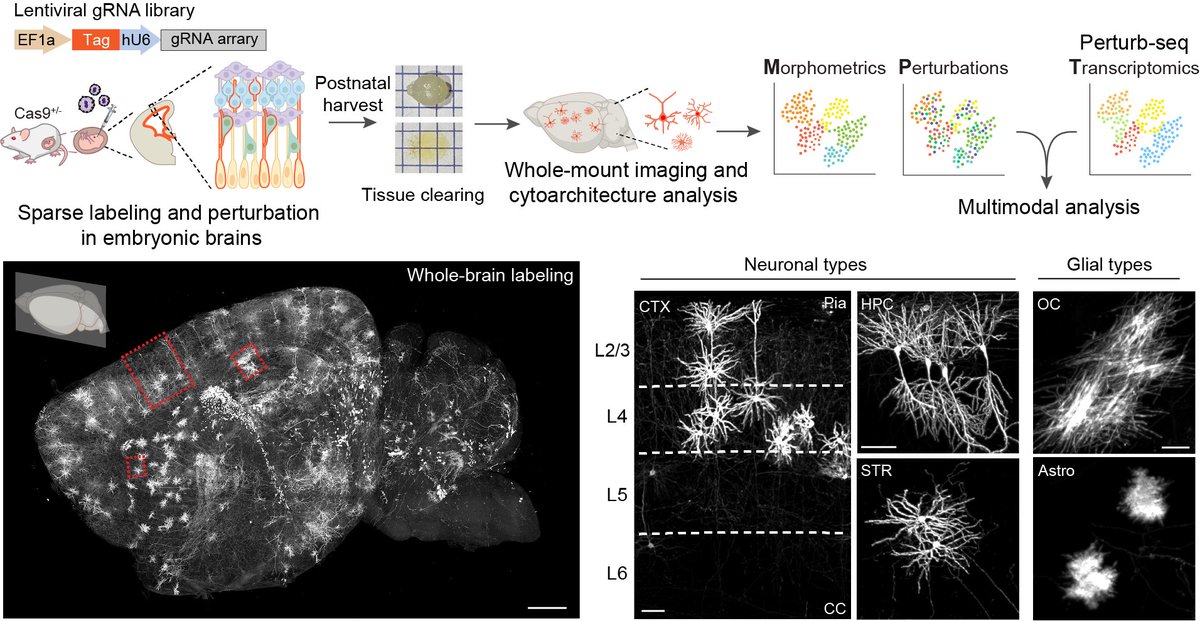
Form follows function, or function dictates form?
📢Preprint: we build Perturb-CLEAR, in vivo screen of neuroanatomy! Disease perturbations produce selective morphology-RNA changes that RNA impact alone cannot predict. Was led by the invincible @BoliWu!
https://t.co/KlGBbRO4oV
How does the brain build a memory?
A common assumption is that the neurons activated during an experience collectively form the memory engram.
In our new Nature Neuroscience paper (finally out!), we show that this is not the case.
https://t.co/PB0k6AWKQx
This week we are introducing neuromodulatory assembloids
Over the past few years, many circuits and cell-cell interactions have been modeled in assembloids, but these systems have not systematically incorporated neuromodulation.
In this new @biorxivpreprint, we first generated #organoids containing neuromodulatory neuronal populations, including raphe nuclei-like neurons that produce and secrete serotonin, and then integrated them with cortical organoids.
The resulting neuromodulatory #assemboids allowed us to monitor serotonin release using genetically encoded serotonin sensors & its modulation of activity in cortical networks. We also used it to identify defects in assembloids from 22q11.2 deletion syndrome, and found that they can be modulated by SSRIs.
More needs to be done, but this is a first step toward understanding how neuromodulation shapes aspects of human development and disease.
This work was led by a incredible group of scientists in lab: Sabina Kanton, Xiangling Meng, Chunyang Dong, Fikri Birey.
Video below depicts responses to serotonin of neurons in human cortical organoids captured with the PsychLight2 sensor.
🚨 Today in @Nature, we report GEMINI—a genetically encoded intracellular memory device that writes cellular dynamics into tree-ring-like fluorescent patterns within cytoplasmic protein assemblies.[1/n]
https://t.co/eVchPCiK6f
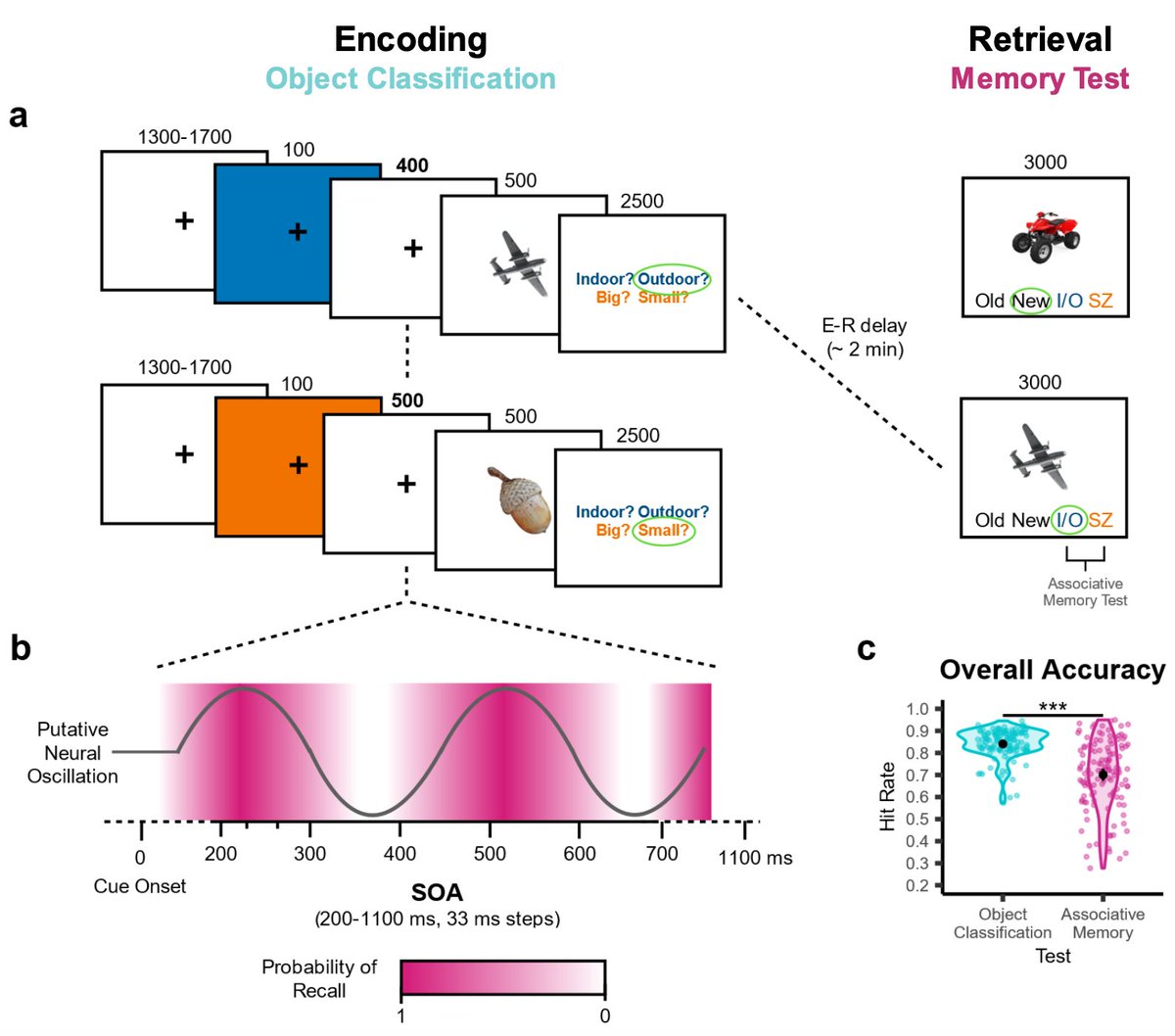
Thrilled to share my first pre-print, where we show that episodic memory formation is theta-rythmic! Thanks to my supervisor, Katherine Duncan, and collaborators for your support and insights. Looking forward to where this research program takes us!
https://t.co/LOtKAHB3mj
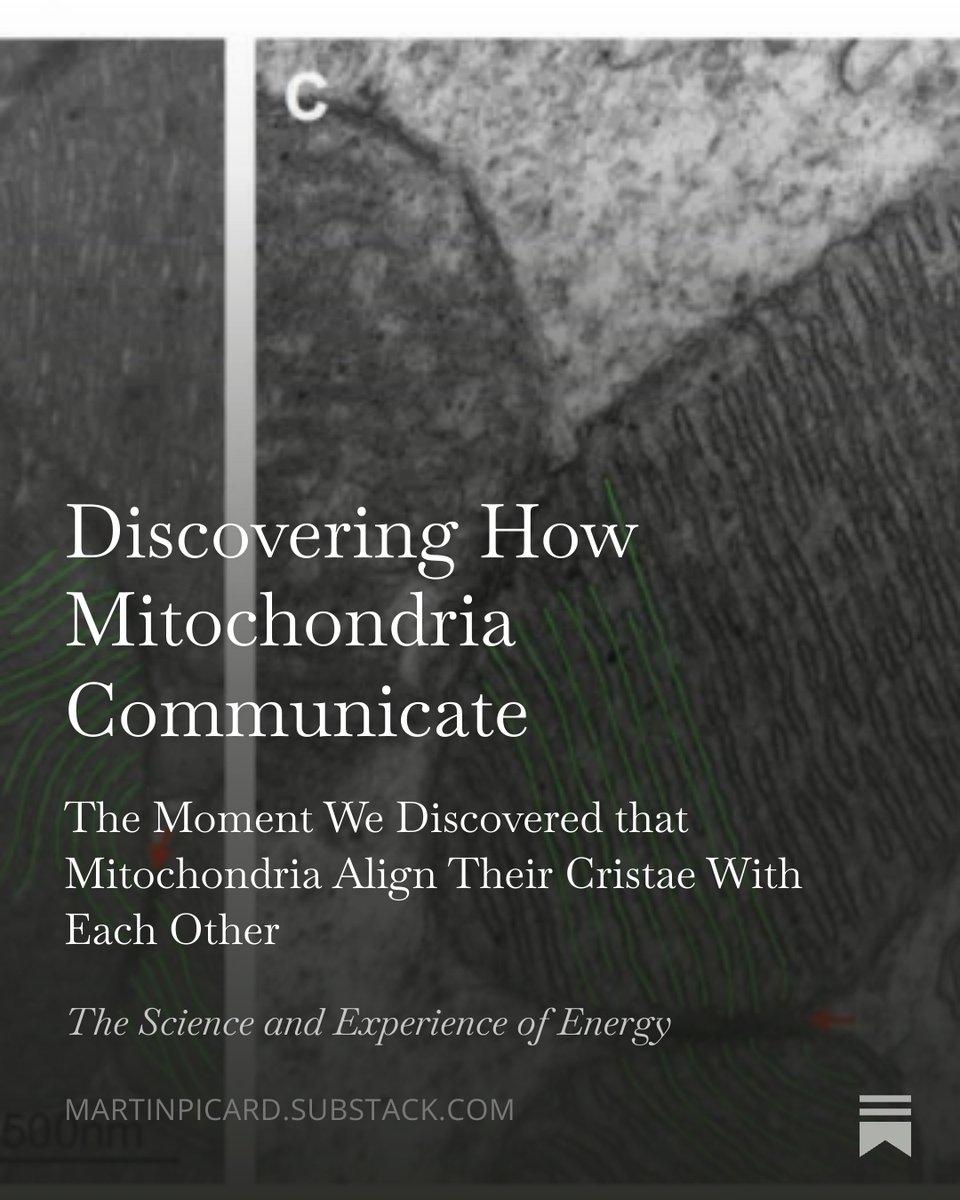
The first physical evidence that mitochondria exchange information with one another transformed how I think about these beautiful organelles. From isolated beans to social collective.
In 2015, we discovered that the inner membranes of mitochondria, where the oxygen we breathe and food-derived electrons converge, somehow interact BETWEEN mitochondria.
This is the story, with videos and pictures, of how this happened while working with Meagan McManus @MitoLoveLab in Doug Wallace's lab.
https://t.co/LRE9ocZ2wT







![DingchangLin's tweet photo. 🚨 Today in @Nature, we report GEMINI—a genetically encoded intracellular memory device that writes cellular dynamics into tree-ring-like fluorescent patterns within cytoplasmic protein assemblies.[1/n]
https://t.co/eVchPCiK6f https://t.co/KPmYKFgnZt](https://pbs.twimg.com/media/HCgxFtcWkAAoaPS.jpg)