Microsoft has laid off thousands of people while pouring billions into AI.
Then Outlook goes down around the world, and for 10+ hours everyone is waiting on human engineers to bring it back.
Now picture those engineers digging through millions of lines of AI-generated code, 3 years of agents shipping straight to production, trying to work out what any of it actually does.
Funny how companies keep talking about replacing people, right up until something breaks and they need people to fix it.
We’re opening all available pathways to restore service, as our actions taken thus far have not provided the anticipated relief. We found a core process on affected servers is becoming overwhelmed, causing capacity loss. To validate a potential recovery, we're isolating a portion of infrastructure, restarting affected components, and reintroducing traffic to confirm the services remain stable before applying the change more broadly. More info under EX1550543 and MO1550821 in the Microsoft 365 admin center, as well as https://t.co/pYdahqxDv3 if the admin center is not available to you.
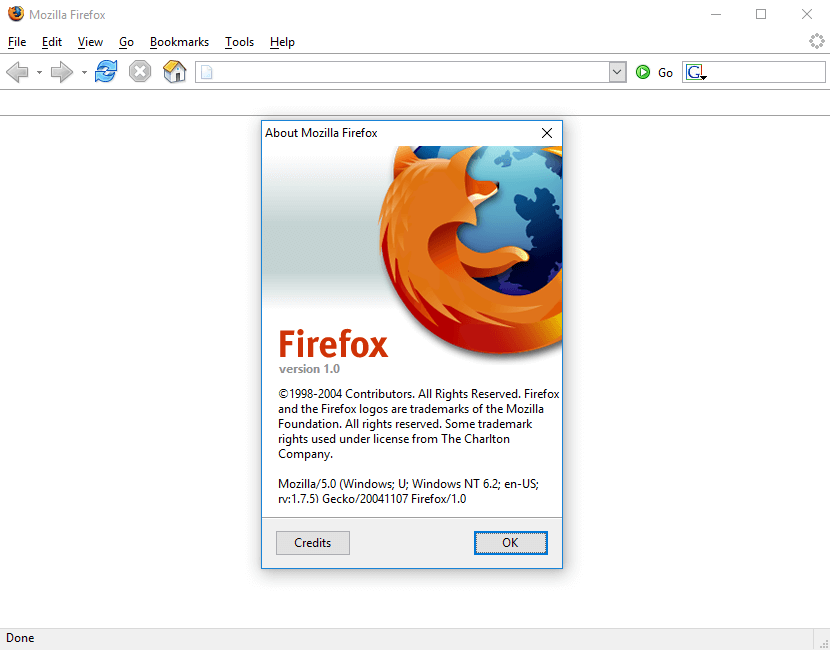
On November 9, 2004, Mozilla Corporation released a multiplatform web browser, Firefox 1.0.
Firefox gained major popularity among users and exceeded 1 billion downloads between 2004 and 2009.
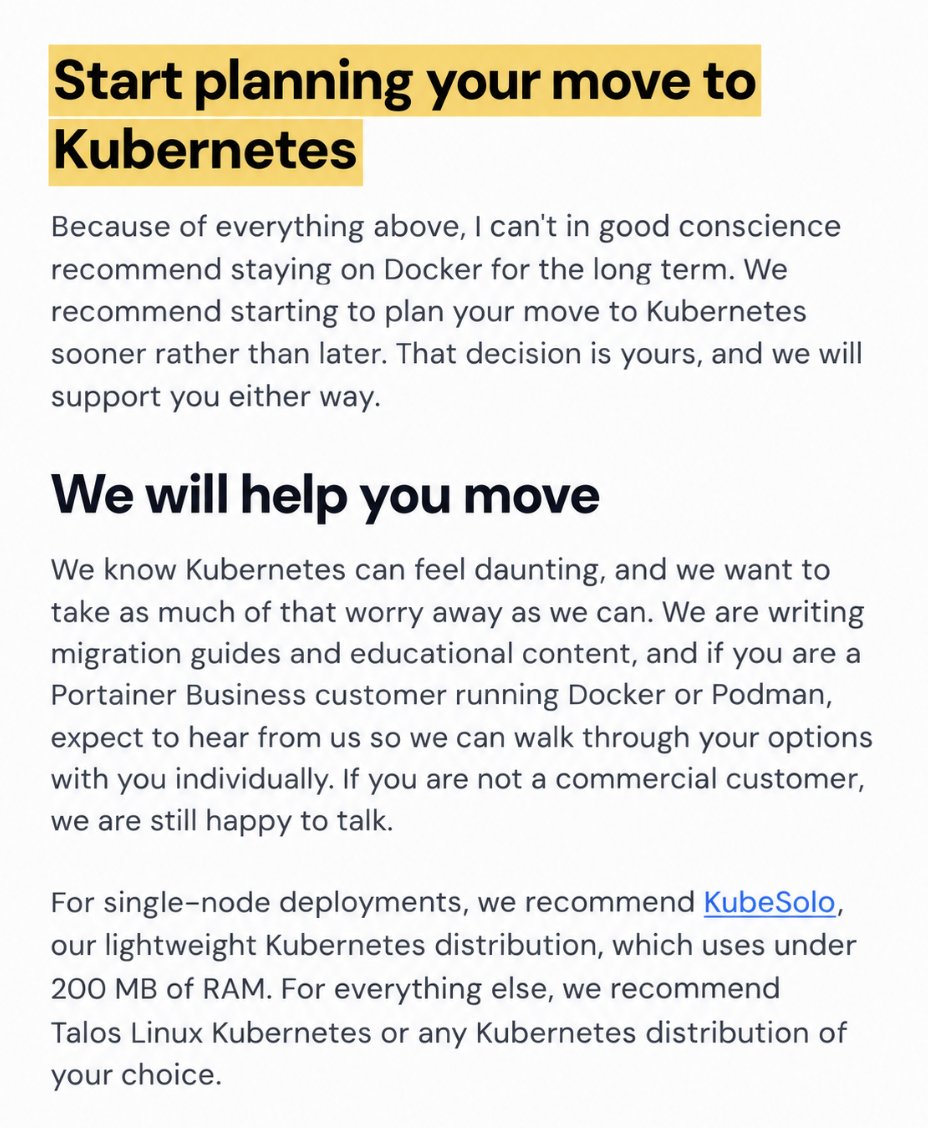
Portainer’s CEO says Docker users should start planning their move to Kubernetes.
Neil Cresswell says he can no longer recommend Docker long term, citing security concerns around autonomous apps and AI agents.
Portainer 3 will focus new features on Kubernetes. Docker, Swarm and Podman will keep receiving bug and security fixes.
The separate Community Edition is also ending, with CE 2.45 as its final release.
Portainer-D2K offers a migration path that lets users keep familiar Docker tooling on Kubernetes.
Full story: https://t.co/zuYWbupVfw
@jhleath I get your point, but VMs aren’t completely safe either. VM escapes exist, just like Linux privilege escalation bugs. And proving Linux can never have privilege escalation is unrealistic. No system is 100% secure. That’s why we need multiple layers of security.
Hard to overstate how big of a deal this is.
tl;dr — ANY unpatched Linux server with even a single TCP port exposed to the internet (say for HTTP or SSH) and MPTCP active (default for many Go web servers) is vulnerable to complete takeover.
BREAKING: Europe is under a massive widespread cyber attack right now Sweden, Belgium, Luxembourg, Estonia, Ireland the Netherlands and just now Finland are all experiencing disruptions to supermarket refrigeration systems causing food to go off.
The attack is spreading...
This is why I said you want your VPS ports all closed
Then only let it be accessible inside your Tailscale for SSH and via a Cloudflare Tunnel to receive web traffic
Any Linux box can be taken over with just a single TCP port exposed to the internet now
A stop gap is disabling MPTCP on your VPS now but even better is not having any public ports exposed!
if you're on a mac and want computer use without the agent touching your personal stuff, here's how i do it
run agent-desktop inside a macOS VM. Apple's Virtualization framework boots a full guest in a window, and the agent only sees what's inside it.
you keep working on your mac and your agents runs inside the VM
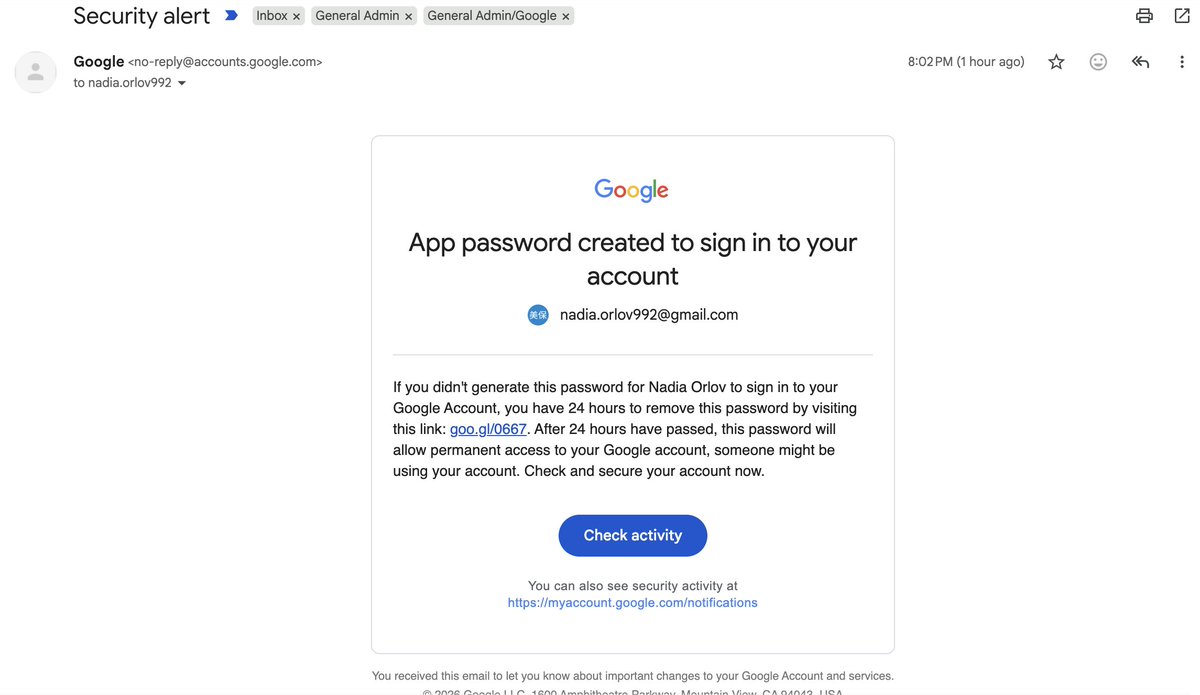
Just got a phishing email that Gmail authenticated as Google. DKIM/DMARC passed. I can see a lot of people falling for this one, since it plays to the idea that your account has already been compromised.
Scammer puts the scam in an app-password name, triggers a real Google alert, then forwards the alert email to your email address.
How this attack works, and why it’s convincing:
1. The trick: The attacker puts the threatening text and shortened URL into an app password’s customizable name on another account. Google incorporates that text into a real security notification and signs the email.
2. The delivery: That notification is forwarded through another mailbox to the victim. In this message, Gmail still recorded passing Google DKIM and DMARC authentication.
3. What makes it convincing: The Google sender, signature, branding, and “Check activity” button are legitimate. The suspected attacker-supplied text appears inside the same trusted-looking template, using a deadline to push you toward its separate link.
4. The giveaway: Both the notification and its genuine Google button refer to someone else’s account. The “permanent access after 24 hours” claim is false; app passwords can be revoked.
Be careful out there folks!
Ubuntu's policy of not bothering to use the standard stable kernels and go their own way with their own backports bites again, this time being weeks late to patch probably the most critical Linux vuln ever.
Ubuntu was never a serious distro and you shouldn't treat it as one.
Introducing 𝙻𝙵𝙼𝟹: our new generation of Liquid Foundation Models. With a new tri-hybrid architecture and new multimodal encoders, the LFM3 family is the ideal model suite for specialized intelligence.
> 6 model instances, across text, audio, vision, and omni modalities, generative and decision models.
> 𝙻𝙵𝙼𝟹-𝟷.𝟽𝙱: text, 256k context window.
> 𝙻𝙵𝙼𝟹-𝚅𝙻-𝟸𝙱: vision-language model with video-input support for spatial understanding
> 𝙻𝙵𝙼𝟹-𝙰𝚞𝚍𝚒𝚘-𝟸𝙱: tool calls, voice chat, reasoning in 18 languages.
> 𝙻𝙵𝙼𝟹-𝙾𝚖𝚗𝚒-𝟸𝙱: an omni model combines vision, audio, and language.
> 𝚍𝟷-𝟸𝙱 and 𝚍𝟷-𝙾𝚖𝚗𝚒-𝟸𝙱: decision models with typed outputs and calibrated probabilities in a single pass. Omni adds audio input.
> fine-tune on 1 GPU.
> a new tri-hybrid architecture
> architecture optimized for 14 processor classes across GPUs, CPUs, and NPUs.
> 𝙻𝙵𝙼𝟹-𝚅𝙻-𝟸𝙱 is a beast. It performs competitively with Gemma 4 12B (6x larger), and Gemini 3.5 Flash Lite, and GPT-5.6 Luna, with 1.9B parameters.
> 𝙻𝙵𝙼𝟹-𝟷.𝟽𝙱 is #1 on the Pareto frontier of device intelligence 𝚙𝚒𝚙𝚎𝚝𝚝𝚎.𝚕𝚒𝚚𝚞𝚒𝚍.𝚊𝚒
Every modality for specialized intelligence. Pick the one that fits your use case, customize it, and run it on-device.
1/ 🧵
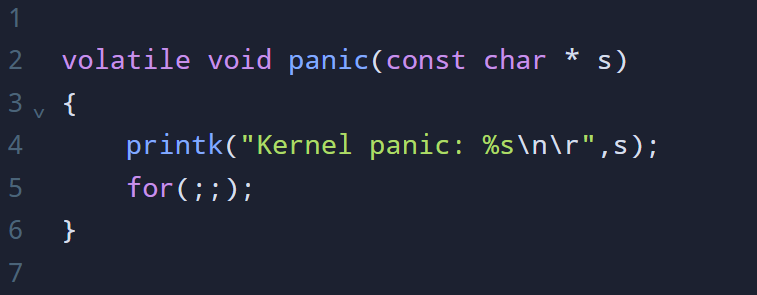
The original Linux 0.01 source code from 1991 is fascinating.
Linus Torvalds' Makefile used 16-bit assembly tools alongside GCC to build a bootable kernel image.
And look at how he handled a kernel panic:
Announcing 3 Critical vulns for hundreds of millions of IoT, Firewalls, OT, and Military devices including: Palo Alto Networks, Comcast, D-Link, HP, Canon, Honeywell, GE, Oracle, Siemens, Rockwell, Digi, Lockheed Martin, Boeing...
The vulns are with GoAhead Web Server which is a backend library used by these devices. There's a patch available from GoAhead but that doesn't mean there's a patch available for the devices yet -- that's up to the manufacturer.
- TLS traffic over DHE ciphers have a 1-byte secret, "04", meaning anyone can decrypt connections to these devices and steal login credentials and session tokens if the client negotiated with DHE ciphers like the latest TLS_DHE_RSA_WITH_CHACHA20_POLY1305_SHA256, which is extremely likely.
- LibreSSL mTLS has been completely bypassed, meaning anyone can connect over mTLS. If you have one of these devices listening on the internet and are expecting mTLS to protect it from attackers, take it offline or patch asap.
- OpenSSL Certificate Revocation Lists (CRLs) are not enforced, meaning if a user device is stolen or compromised, and you revoke that mTLS cert, nothing actually happens. There are a lot of other attacks this can be used for.
These are critical because these types of devices run our world. Water systems, electricity, military, firewalls, critical infrastructure.
https://t.co/AYUgNsrA0f