1/19
A middle-aged man presents with acute sudden-onset dyspnea and hypotension. He is sitting upright. What do you notice? Let’s see if we can figure out the cause of hypotension.
Among patients with idiopathic #Myelopathy, screening for anti-CD320 antibodies with metabolic confirmation of central nervous system–restricted #VitaminB12 deficiency may help clarify diagnosis and guide treatment evaluation.
https://t.co/i3yV726oJa
Delighted to be part of this follow on study to the 2024 MS diagnostic criteria led by @darshi_r & Andy Solomon focusing on its application for routine clinical care & for non-specialists & trainees globally👇
https://t.co/kfqCxUfwD6
📈Systematic review finds non-motor outcomes after stroke are highly prevalent
❗️Evidence remains limited by inconsistent measurement, little data after ICH & scarce long-term follow-up
👉More research needed
https://t.co/6T6uo66G83 @HOzkan92@UCLStrokeRes
I often observe residents and fellows practicing medicine as if “anything is possible” rather than focusing on what is most likely. The fear of missing something is common among them, and I believe artificial intelligence is making this worse.
We must continue to rely on our greatest strength: clinical reasoning. Every diagnosis should be based on the time course (tempo), clinical syndromes, and key associated features (for neuropathy: autonomic dysfunction, family history, medication list and systemic signs).
AI should be used to narrow the differential diagnosis and guide appropriate tests for the most likely conditions, but not to test every possible cause.
Hussam Abu Safiya remains held in Israeli detention without charge or trial, his condition is now critical and he requires urgent hospital treatment.
The medical community cannot remain passive as a senior paediatrician is left to die
https://t.co/t5n9vM4MP4
🧠 World Brain Day 2026 | Brain Health: Access for All
Today, we join the global community in supporting the World Federation of Neurology campaign to raise awareness of the importance of equitable access to neurological care.
More than 3.4 billion people worldwide are living with neurological conditions, making brain disorders the leading cause of disability globally. Yet many people continue to face barriers to diagnosis, treatment and specialist care.
World Brain Day 2026 highlights the urgent need to improve access to neurological services, support earlier diagnosis and ensure that brain health is a priority for everyone, everywhere.
Because when it comes to brain health, access delayed can mean access denied.
Explore the latest neurology education and insights from touchNEUROLOGY:
https://t.co/8Iqdn1N5vw
@wfneurology
#WorldBrainDay #BrainHealth #Neurology #AccessForAll #WorldBrainDay2026 #NeurologicalDisorders
A new blood test seems able to predict whether a cognitively normal older person will develop #Alzheimers disease even when their brain scans show no signs of AD pathology: https://t.co/tqJqsAVcAv
#NeuroTwitter@MGHNeurology@UFMBI
📣📣📣📣
Innovation without access is not innovation.
Stroke remains the second leading cause of death and a leading cause of long-term disability worldwide. While intravenous thrombolysis and mechanical thrombectomy have revolutionized acute ischemic stroke care, millions of patients still never reach these treatments.
The greatest barriers are often not the therapies themselves, but the systems that deliver them:
* Delayed recognition of stroke symptoms.
* Cultural and societal barriers to seeking care.
* Limited emergency medical services and stroke infrastructure.
* Inequitable access to comprehensive stroke centers and trained specialists.
As stroke physicians and healthcare leaders, our mission extends beyond advancing science. We must build systems of care that make evidence-based treatment accessible to every patient regardless of where they live.
The next breakthrough in stroke care isn’t just the next device or drug. It’s closing the gap between what is possible and what is available.
The future of stroke care will be measured not only by innovation, but by equity.
#Stroke #Thrombectomy #Neurointervention #VascularNeurology #HealthcareLeadership #HealthEquity #GlobalHealth #StrokeSystemsOfCare
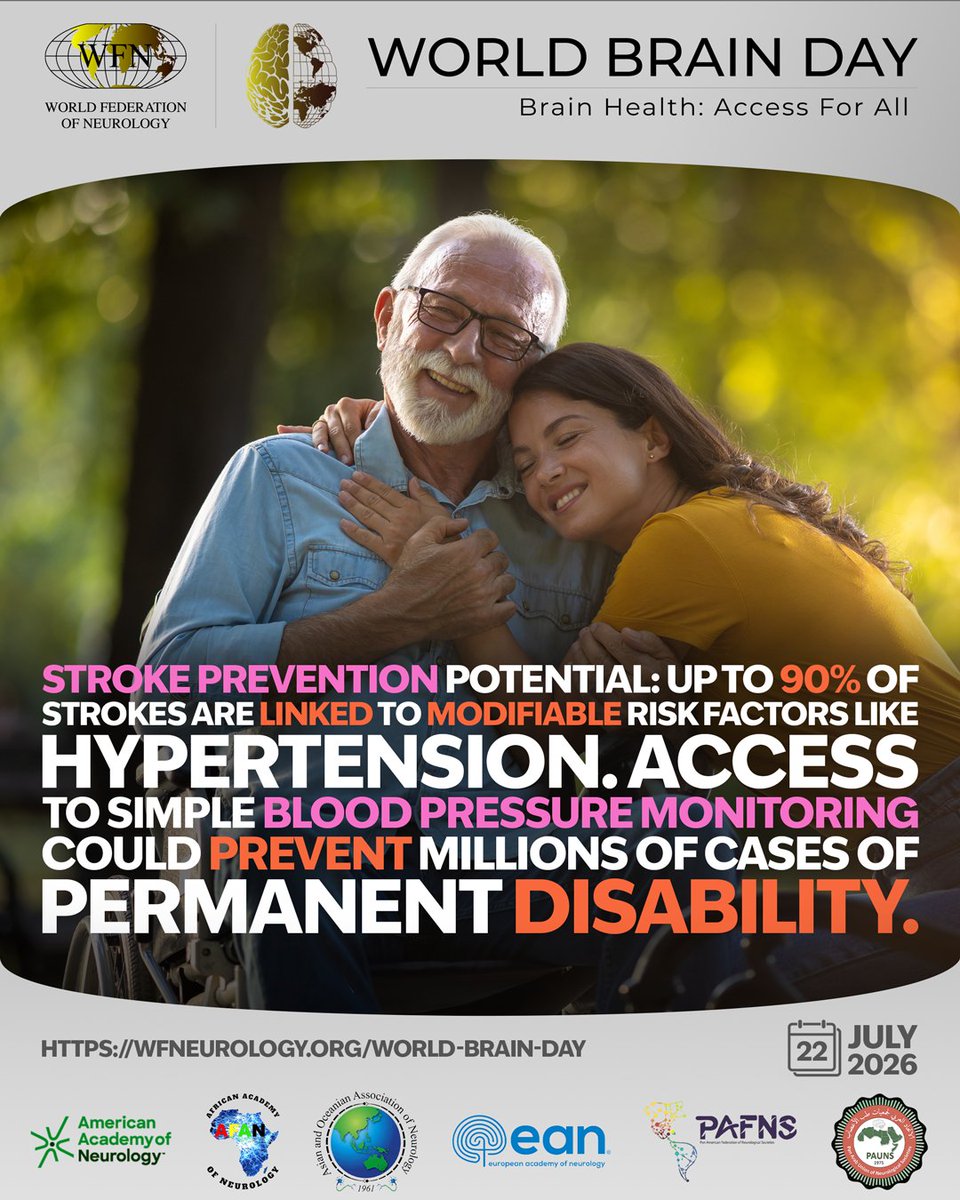
Up to 90% of strokes can be prevented by managing risk factors like high blood pressure. Simple checking tools can help protect millions of people from lasting health issues. 🩺 Learn how countries are scaling prevention on World Brain Day, 22 July 2026.
Register for our free webinar at https://t.co/J59f78irSF
#WorldBrainDay #AccessForAll #StrokePrevention #Hypertension
He was born far from the stadium lights in a refugee camp in Tanzania, to a family escaping war from Burundi.
No academies, no guarantees, just a kid growing up in Adelaide with a heavy left foot and bigger dreams than his surroundings.
Nestory Irankunda didn’t come through a smooth path. He came through struggle, street football and raw belief.
Now he’s wearing the green and gold of Australia and in this World Cup moment, he’s just scored against Turkey.
From a refugee camp… to deciding games on the biggest stage.
That’s not just a goal but that’s a life story breaking through in real time.
𝐅𝐨𝐨𝐭𝐛𝐚𝐥𝐥. 𝐀𝐥𝐰𝐚𝐲𝐬. 𝐇𝐚𝐬. 𝐀. 𝐒𝐭𝐨𝐫𝐲. ✨
#worldcupwithmicky
#fifaworldcup
#australia
Imagine travelling to the World Cup and stumbling across three masked fans wrestling in the street. 😭
Then, just as you're trying to process what's happening, a woman launches herself into the action like she's Rey Mysterio.
Welcome to Mexico. 🇲🇽😂
ARISE-FLUIDS has arrived and it's awesome 🥳
For over a decade, the Surviving Sepsis Guidelines recommended that septic patients get at least 30 cc/kg fluid. In the United States, these guidelines were weaponized into performance metrics, pressuring clinicians to prescribe arbitrary volumes to every patient.
Evidence-based clinicians have LONG known that this guideline lacked evidentiary support. For example, I've attached a picture of a blog I wrote about this back in 2017. Despite the lack of evidentiary support and some evidence of harm, the Surviving Sepsis Guidelines INSISTED on perpetually recommending 30 cc/kg fluid resuscitation.
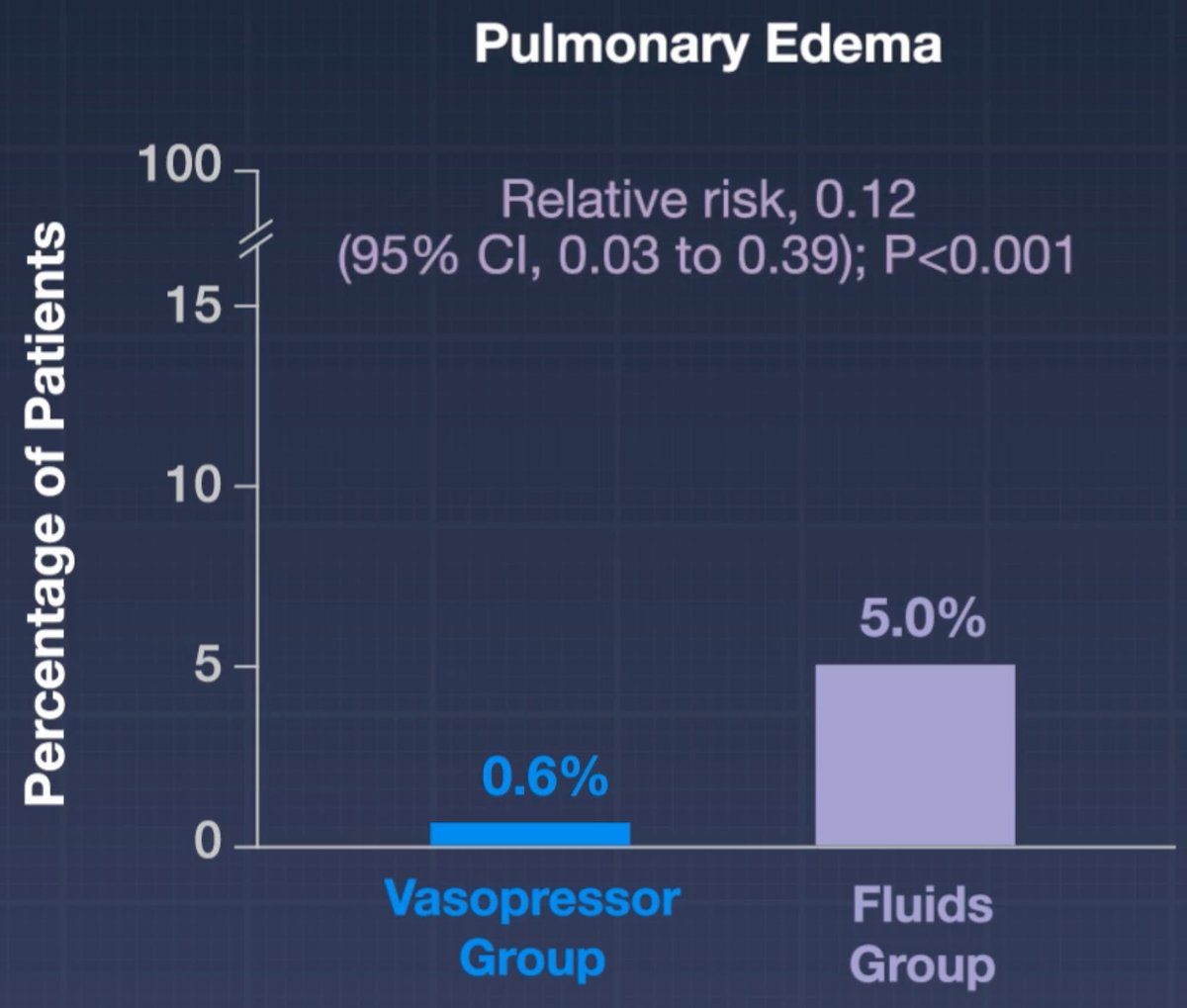
We finally have a prospective RCT demonstrating that mandating early administration of 30 cc/kg fluid (as compared to early vasopressors) doesn't help and may actually cause harm.
It's important to note that all of the hard endpoints in this trial were neutral (e.g., mortality, days free of organ support).
I still think that 30 cc/kg fluid is a pretty reasonable volume of fluid for *most* patients. But the study does suggest that giving too much fluid may promote edema - so we should be *thoughtful* about this intervention rather than mandating it for every septic patient.
Based on the subgroup analysis, the fluid-conservative strategy may have helped the subgroup of pneumonia patients the most. This is statistically nonsignificant but aligns with my expectation. ARDSy patients often don't respond well to fluid. (In contrast, I really doubt that a liter of fluids in either direction matters for most urosepsis patients.)
This is a great example of the over-reach of guidelines and protocoled medicine. People get all upset about practice variation, so sometimes they try to stomp it out using guidelines and protocols. But these guidelines are highly fallible, so what may occur is that you standardize care in a way that harms everyone equally. 🤦♂️
Uniform BP targets after mechanical thrombectomy are officially outdated! 🚨 The HOPE Trial proves that reperfusion-guided, individualized BP management significantly improves 90-day outcomes and reduces hemorrhagic transformation. 🧠🩸
I created this sketchnote to summarize the practice-changing data. 👇🎨
#NeuroTwitter #Stroke #Thrombectomy #ESOC2026 #InterventionalNeuroradiology #FOAMed
King's College Hospital in London has opened a rooftop garden for critical care patients. Its first patient, a 29-year-old woman dependent on feeding tubes, said the outdoor space gave her 'a real boost to keep on going
An Israeli strike captured on camera has killed three paramedics in Lebanon. Just 12 hours earlier, four other medics were killed.
Sky's @AlexCrawfordSky reports
https://t.co/MTDOQ3T0vB