Response after 2 weeks that it was forwarded to Legal Cell of CBIC on 24.1.26. Doesn’t the Customs Department have to follow the law and respect an order of CESTAT. Can they hide behind the claim that our issue has been reviewed by competent authority and it has not attained finality. Order of 6th August. 90 days to file SLP but 224 days have passed. No reply to multiple applications. #Greviance Case closed. What is the point of #CPGram? Why have #CESTAT or any #Tribunal. Ease of doing business is a fallacy. I will have to close business… cannot afford expensive lawyers when my money is blocked with Bank Guarantees given to Customs. Does @cbic_india monitor days of CESTAT or High Court order. Is there an SOP. Is the Customs Department higher than our courts. @FinMinIndia@nsitharaman@narendramodi@PMOIndia@pmo
@vikramchandra Are we ready to not buy Russian oil. What happens to dependence on Russia for defence- new purchase, maintenance/spares, upgrades, JVs, etc. Unless Russia Ukraine deal is also happening
It’s not a Pharma Dispute- it stems from frivolous legal proceedings initiated by a multinational diagnostics company whose commercial interests are threatened by transparent, per-donation NAT testing. For years, such companies have profited by conducting a single test while charging for multiple tests, disproportionately exploiting thalassemia and other multi-transfused patients. Commercial profiteering cannot be allowed to override public health
Deaths caused by contaminated drinking water in Indore and documented cases of HIV transmission through blood in Jharkhand are stark reminders that delays in public health decision-making or execution are not procedural lapses—they are fatal failures. Punjab must not become the next cautionary tale. Despite a government decision to introduce NAT testing for blood, implementation remains stalled—placing thousands of patients at preventable risk of HIV infections.
The right to safe blood, clean drinking water and many other basic necessities are intrinsic to public health and constitute a core component of the right to life guaranteed under Article 21 of the Constitution of India.
The judiciary must urgently intervene in the larger public interest. At the very least, any status quo or stay orders must be vacated to allow NAT testing to commence immediately while legal proceedings continue on their merits. Courts have consistently held that commercial disputes cannot obstruct life-saving public health interventions.
There is no legal, ethical, or scientific justification for denying Punjab’s blood recipients the protection of NAT testing for even a single additional day. Recent tragedies expose the deadly cost of regulatory delay. The State Government must act decisively, and the judiciary must ensure that public health prevails over private profit. Delay today risks infections tomorrow—and lives lost can never be restored.
Dear @BhagwantMann ji
The dispute between the companies would be for their commercial interest
But the interest and priority of the Government should be the safety of the patients FIRST
The government should take a call and start the NAT facility
Further any commercial interest or compensation to the company may be taken care once the dispute resolves
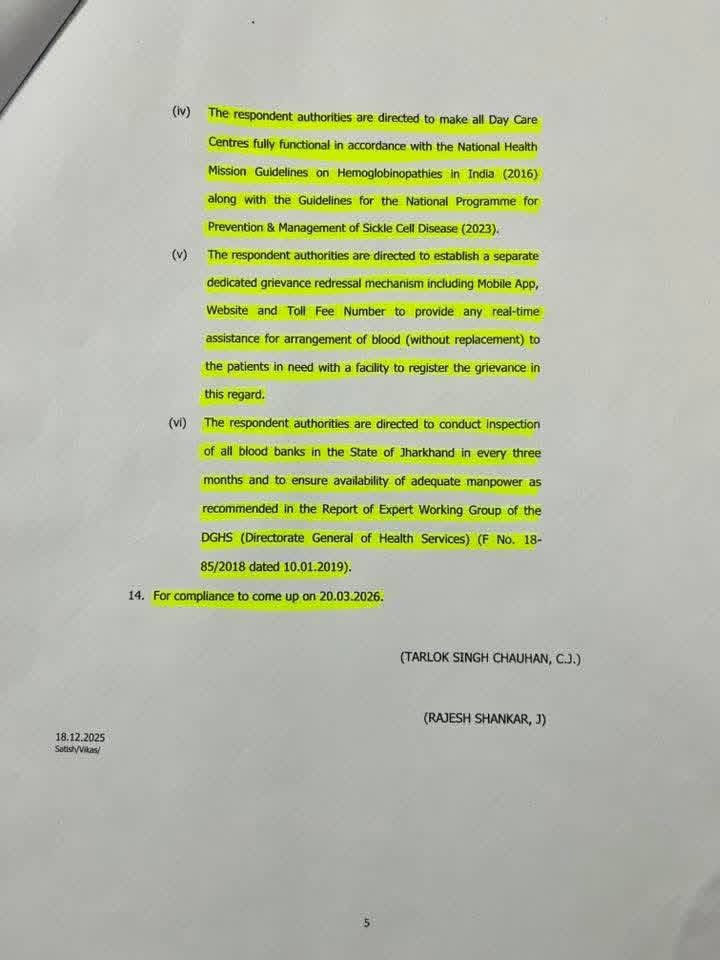
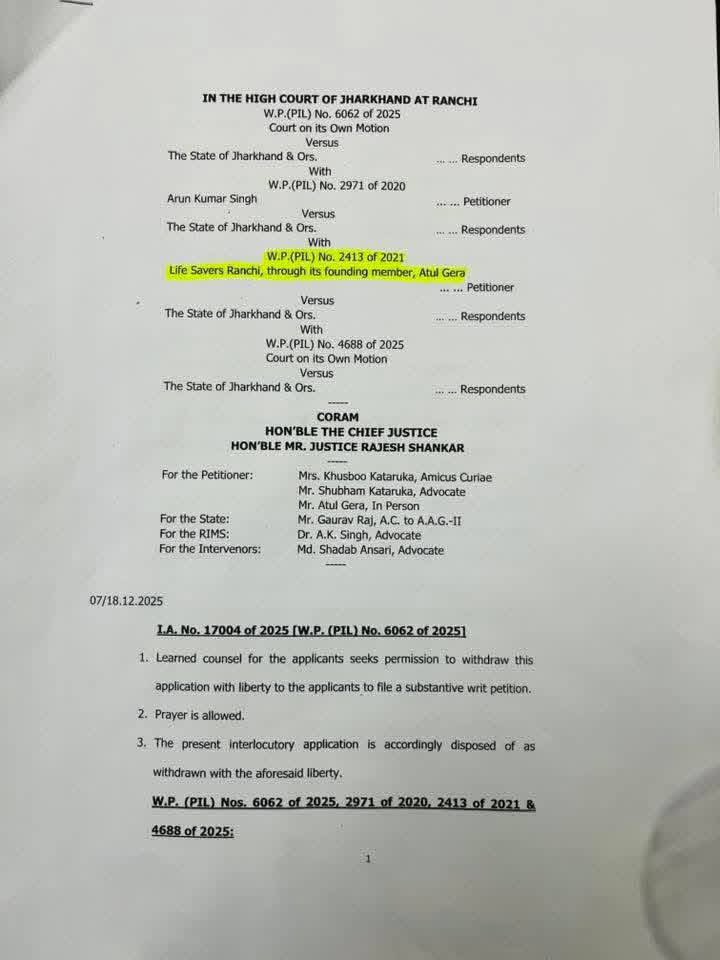
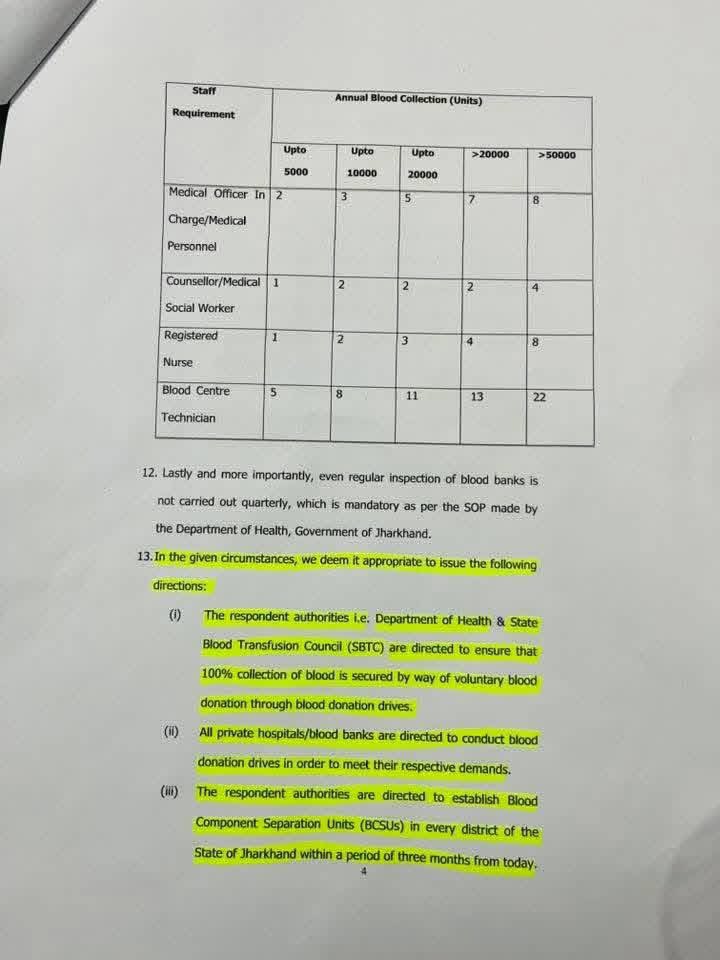
Hon’ble Jharkhand High Court has delivered a very remarkable decision on keeping the patient Safety on the priority
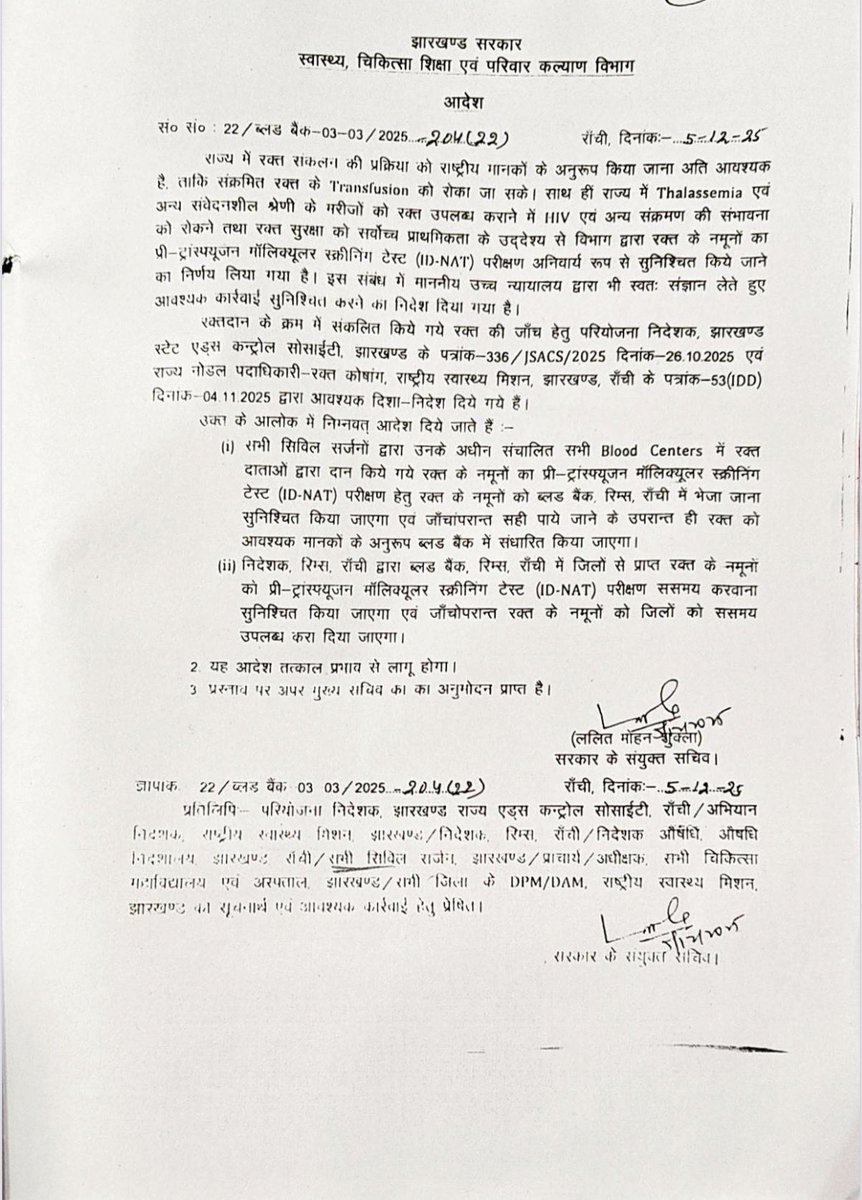
Also Jharkhand government has initiated NAT tested facility in all 24 districts in Govt Centres
PFA a copy of the orders
Blood supplied to patients from 100% collection of blood through Blood Donation Drives with NAT test is the best situation
@GovtofPunjabPK@ArvindKejriwal@AamAadmiParty@AAPPunjab@pagthals@thalassaemiaTIF@IndianRedCross@thalindia
Deaths caused by contaminated drinking water in Indore and documented cases of HIV transmission through blood in Jharkhand are stark reminders that delays in public health decision-making or execution are not procedural lapses—they are fatal failures. Punjab must not become the next cautionary tale. Despite a government decision to introduce NAT testing for blood, implementation remains stalled—placing thousands of patients at preventable risk of HIV infections.
The right to safe blood, clean drinking water and many other basic necessities are intrinsic to public health and constitute a core component of the right to life guaranteed under Article 21 of the Constitution of India.
The judiciary must urgently intervene in the larger public interest. At the very least, any status quo or stay orders must be vacated to allow NAT testing to commence immediately while legal proceedings continue on their merits. Courts have consistently held that commercial disputes cannot obstruct life-saving public health interventions.
This delay has nothing to do with lack of medical evidence or administrative preparedness. It stems from frivolous legal proceedings initiated by a multinational diagnostics company whose commercial interests are threatened by transparent, per-donation NAT testing. For years, such companies have profited by conducting a single test while charging for multiple tests, disproportionately exploiting thalassemia and other multi-transfused patients. Commercial profiteering cannot be allowed to override public health.
There is no legal, ethical, or scientific justification for denying Punjab’s blood recipients the protection of NAT testing for even a single additional day. Recent tragedies expose the deadly cost of regulatory delay. The State Government must act decisively, and the judiciary must ensure that public health prevails over private profit. Delay today risks infections tomorrow—and lives lost can never be restored.
I believe Madhya Pradesh was testing blood with Minipool NAT, which should have detected many infections, though missing some, and surprisingly where 1 test is used to test 6 samples (imagine cutting chai or soup by 2 - divided into 6 instead of 2,) it is charged for 6 and not 1. Are we waiting for more reported cases after Jharkhand and Satna! God knows how many cases are not reported, including many Hepatitis B and C cases. I think the Government must make #NAT mandatory in India and ensure blood is safe for all its citizens, including thalassemia patients who get multiple transfusions
I believe Madhya Pradesh was testing blood with Minipool NAT, which should have detected many infections, though missing some, and surprisingly where 1 test is used to test 6 samples (imagine cutting chai or soup by 2 - divided into 6 instead of 2,) it is charged for 6 and not 1. Are we waiting for more reported cases after Jharkhand and Satna! God knows how many cases are not reported, including many Hepatitis B and C cases. I think the Government must make #NAT mandatory in India and ensure blood is safe for all its citizens, including thalassemia patients who get multiple transfusions
I believe Madhya Pradesh was testing blood with Minipool NAT, which should have detected many infections, though missing some, and surprisingly where 1 test is used to test 6 samples (imagine cutting chai or soup by 2 - divided into 6 instead of 2,) it is charged for 6 and not 1. Are we waiting for more reported cases after Jharkhand and Satna! God knows how many cases are not reported, including many Hepatitis B and C cases. I think the Government must make #NAT mandatory in India and ensure blood is safe for all its citizens, including thalassemia patients who get multiple transfusions
I believe Madhya Pradesh was testing blood with Minipool NAT, which should have detected many infections, though missing some, and surprisingly where 1 test is used to test 6 samples (imagine cutting chai or soup by 2 - divided into 6 instead of 2,) it is charged for 6 and not 1. Are we waiting for more reported cases after Jharkhand and Satna! God knows how many cases are not reported, including many Hepatitis B and C cases. I think the Government must make #NAT mandatory in India and ensure blood is safe for all its citizens, including thalassemia patients who get multiple transfusions
I believe Madhya Pradesh was testing blood with Minipool NAT, which should have detected many infections, though missing some, and surprisingly where 1 test is used to test 6 samples (imagine cutting chai or soup by 2 - divided into 6 instead of 2,) it is charged for 6 and not 1. Are we waiting for more reported cases after Jharkhand and Satna! God knows how many cases are not reported, including many Hepatitis B and C cases. I think the Government must make #NAT mandatory in India and ensure blood is safe for all its citizens, including thalassemia patients who get multiple transfusions