Responding in my personal capacity, but wanted to share my perspective..
We are in a great-power competition with so much at stake in the years ahead. There is no one in America who has lived during a time when the United States wasn't the preeminent superpower and, despite our imperfections, a force for good in the world. A nation that fought and helped end wars on behalf of those who couldn't, pioneered powered flight, put humanity on the Moon, led revolutions in medicine and technology that improved billions of lives and distributed hundreds of billions in aid around the world.
I don't know how handicapping this nation by going after one of its largest employers, a company that has created wealth for millions, ushered in electric cars, rockets that don't need to be thrown away, satellites that connect the disconnected and have unquestionably saved lives, not to mention access to information that is pretty foundational to solving many of the world's problems, biotech to restore function to those with disabilities, and so much more, serves America's interests. Without the contributions of these companies, there is little question America would be behind in a competition where the outcome is far from certain and the consequence so great.
Now, maybe I am just a bit new to this, but from the billboards, TV and digital ads, spam texts, and fundraising calls, it would seem both parties have no issue raising money, including from billionaires, with the aim of influencing and buying votes. And if that means campaign reform, maybe include dialing back the spam calls and texts..But with all that is going on in the world, and so much at stake for our country, I question the priorities reflected in the post below.
@AJamesMcCarthy “Baby sleeping, please do not disturb”
“Recording in progress”
Maybe post this entire thread on your door to give them something more to read. 😁
@NASAAdmin@dpoddolphinpro Ok, this just brought spontaneous tears of pride and joy to my eyes. This is why I love the USA. We need more of this kind of awesome in our leadership. Jared, thank you for being a leader that is worth telling my children about. Exemplary goodness. 🇺🇸🤩♥️
@cboyack@elonmusk@lexfridman This struck me:
> “Comfort, left unexamined, corrodes. Necessity is what historically forced humans to develop capability, character, and meaning. Wealth removes necessity for those who have it.”
We all tend to innately crave wealth and comfort, yet are unprepared for having it.
@ynab, are you, by any chance, working on a feature that allows users to submit their budget to an LLM (aka "AI") to analyze their spending habits and potentially find where they might be able to save some money? (Not "Spendy", of course. 😅)
A guy with a YouTube channel just accidentally redesigned the most complex machine in human history.
Not an aerospace engineer. Not a SpaceX executive.
A guy with a camera who asked one obvious question.
Tim Dodd was walking around Starbase when Musk proudly explained how the Super Heavy booster eliminated its entire cold gas thruster system. Instead of a separate, heavy, complex mechanism, it just vents hot gas directly from the propellant tanks.
Elegant. Zero added mass. Zero extra failure points.
Dodd asked one question.
“But this is only for the booster, right?”
Musk stopped.
Not to defend. Not to explain. Not to reframe the question so it didn’t threaten what he had just said.
He stopped because something clicked.
Musk: “Yes. Although arguably, now you mention it… we might be wise to do this for the ship, too. Now that… we’re going to fix that.”
Mid-sentence. In real time. On camera.
No pause to protect his pride. No deflection. No “good point, let me circle back on that.” Just the immediate, unfiltered acknowledgment that a better path existed and they were going to take it.
Seven months later, Musk confirmed it was one of the biggest improvements ever made to the vehicle.
Think about what just happened.
To change a fundamental flight system at a legacy aerospace company requires years of environmental reviews, safety committees, and budget approvals.
Musk deprecated an entire subsystem in 15 seconds because a podcaster asked the obvious question that nobody inside had dared to ask.
In a traditional corporation, that cold gas system gets built anyway.
Because admitting the architecture is flawed is politically expensive.
The VP doesn’t want to lose the headcount.
The engineers don’t want to scrap the work.
The manager doesn’t want to explain the pivot to their director.
And so the mistake gets a budget. Gets a timeline. Gets a team assigned to it.
The machine gets heavier. The flaw becomes load-bearing. And eventually the flaw becomes so embedded in the structure that fixing it would require tearing down everything built around it.
So nobody fixes it.
Now think about the last time someone pointed out a flaw in something you built. Something you were proud of. Something you had already explained to twelve people without anyone questioning it.
Did you stop the way Musk stopped?
Or did you feel that heat in your chest. That reflexive need to explain why they were missing the point. Why the context was more complicated than they understood. Why the question, though interesting, didn’t really apply here.
That heat is the most expensive thing most organizations will ever pay for.
A failed launch at least tells you the truth.
A defended mistake just compounds.
This is the organizational architecture required to win the AI arms race.
The ultimate moat isn’t compute. It isn’t capital.
It is the velocity of error correction.
The geopolitical AI race will not be won by whoever starts with the best blueprint.
It will be won by whoever can feel that heat in their chest and choose the truth anyway.
A journalist asked a question. The best answer won.
The rocket got lighter.
Most egos don’t.
One of the most damaging myths young people believe is that the adults around them have life figured out. That somewhere along the way, a switch flipped and everything just started making sense.
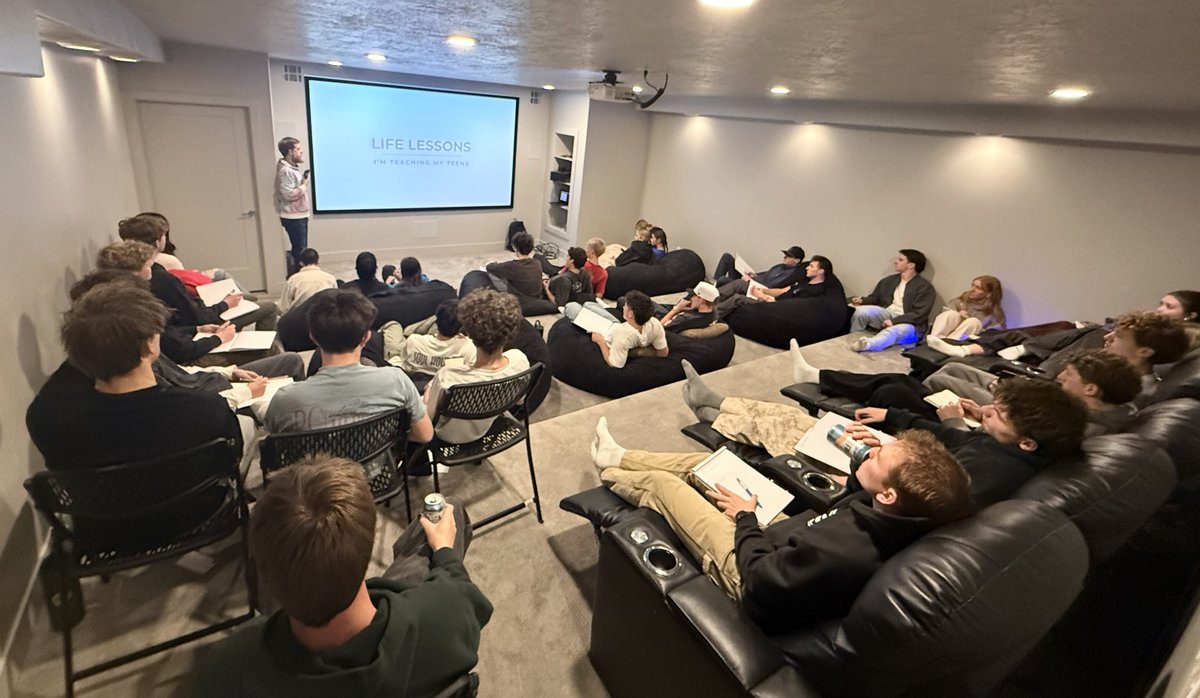
I know this because I see it every time I speak to a room full of young people. They're often anxious and look at a quickly changing economy and wonder if they, too, can figure things out enough to be successful.
Here's what I wish someone had told me earlier: the people you admire most are making it up as they go.
That business owner you think had a master plan? They probably failed at three other ventures first. That leader who seems so composed in every meeting? They're looking up answers to basic questions at 11pm just like you. Adults have simply gotten better at projecting confidence while quietly figuring things out in real time.
Success is not a straight line. It's a messy, repetitive process of trying things, falling short, adjusting, and trying again. The entrepreneur you look up to didn't sit down one day with a flawless blueprint. They experimented. They pivoted. They built something, watched it break, and started over with slightly better instincts than before.
That cycle repeated dozens or even hundreds of times before anything resembling "success" showed up. (This is my situation too)
The most powerful thing I've ever been able to share with a young audience is this: nobody knows what they're doing, and everything is figureoutable.
You can almost feel the tension leave the room. Shoulders relax. Eyes light up a little. Beacuse suddenly the pressure to have a perfect plan evaporates. They realize they don't need to compare their uncertain beginning to someone else's polished highlight reel.
If you're young and feeling paralyzed by the idea that you should already know your path, let this be your permission slip to stop waiting and start doing. Put in the reps. Try something. Let it fail. You won't be "behind" - that's just part of the process. It's exactly how it works for everyone, at every stage.
The journey is the thing. Enjoy it.