El síndrome postdiálisis en personas en hemodiálisis crónica se presenta >50% de los casos, debemos interrogar su presencia, medirlo y tratarlo. El ajuste de la dosis dialítica puede ser la estrategia más relevante
Aquí sus contribuyentes
Kidney360 2025
10.34067/KID.0000001062
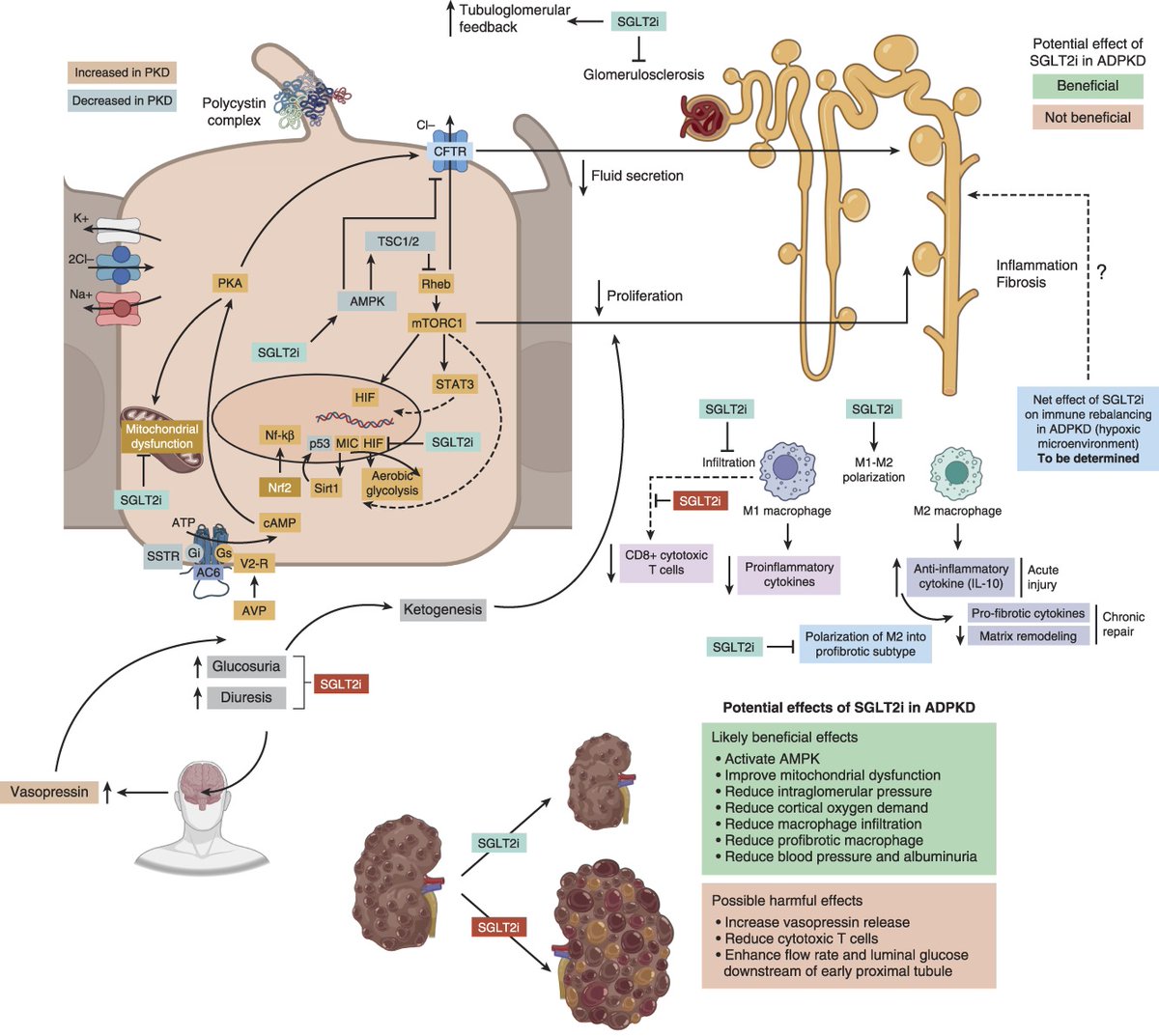
SGLT2is, by virtue of their kidney, metabolic, hemodynamic, and cardioprotective effects, represent a promising therapeutic strategy for ADPKD. Read the full review in #ASNJASN: https://t.co/qFdrCaPHor
"The things that you think are true, or maybe the evidence that was derived from a really well-controlled clinical trial, does it play out in real life?"
-Dr. Glenn Chertow
Learn more about #GlomCon RADIANT Program here: https://t.co/FLzmFz2m2e
🎥Watch Vanessa Marchant present the NDT publication:
Troxerutin is a novel osmotic agent for peritoneal dialysis with protective cardiovascular actions
https://t.co/XLRrnHYCEe
The impact of concomitant medications on treatment outcomes in patients with cancer receiving immune checkpoint inhibitors | Nature Reviews Cancer https://t.co/LH1XWxcLaQ
Nephrotoxicity of Conventional Chemotherapeutics: Part I — Platinum Compounds and Antimetabolite Agents https://t.co/7VyBCt3x0j @kdjhaveri@renalmyeloma@NDTsocial
😊 Happy to share our latest work
📖 “Vibe Coding in Nephrology Education: Clinician-led, AI-assisted Development of Open-source Interactive Learning Tools”
Led by Francesco Pesce, MD, PhD @FrancescoPesce
🔗 https://t.co/y5NeTjj0I9
In this paper 📝 , we introduce Vibe Coding — a new framework merging clinician-led design with AI-assisted development to create interactive, open-source learning tools for nephrology education. #AI #MedEd @WeAreTandF@RenalFailureTF
✨ Key highlights:
• Integrates expert clinical reasoning into dynamic, interactive learning experiences.
• Uses AI-assisted code generation so clinicians can build educational tools without programming expertise.
• Promotes open-source collaboration and transparent, reproducible scholarship.
• Demonstrates real-world applications:
– NephroFlow CKRT Copilot
– Kidney Stone Navigator
– Renal Tubular Acidosis Assistant
– Disorders of Volume Curriculum
• Embeds human-centered interface design to mirror real expert reasoning and decision flow.
This work represents a meaningful step toward AI-augmented medical education, blending clinical insight with digital innovation.
🙏 Grateful to collaborate on shaping the next generation of nephrology education through open innovation and responsible AI.
#Nephrology #AIinMedicine #MedicalEducation #AIinNephrology #DigitalLearning #OpenSource #ClinicalReasoning #VibeCoding @MayoClinicNeph
Glomerular disease made simple:
The location of injury➡️ dictates pattern of injury➡️points to etiology (based on immunofluorescence) ➡️ and results in a specific clinical syndrome.
Study this figure carefully & you will understand the basics of GN.
https://t.co/aGD0K0htNV
Now online in@JASN_News @StefanieSteige6@PRomagnani
How to Cure Autoimmune GN and Podocytopathies
🧐 In relapsing disease (LN, ANCA-GN, SDNS) the first priority is to control immunological activity and to prevent relapse (not to reduce UPCR).
▶️https://t.co/RBPMC9vdXZ