How petty can you be to mock someone's unnatural death, partly to some extent in high probability accelerated by repeated harassment with intent to destroy his reputation and livelihood - such a crucial aspect to a public facing chess figure - you made him resign irl, enjoy, and fu
Get ready for an all-out gaming experience IRL.
Cutting-edge gameplay, exclusive showcases, and pro-level esports come together.
Join us in Seoul on September 24th.
BREAKING NEWS: First-in-the-World Ivermectin, Mebendazole and Fenbendazole Protocol in Cancer has been peer-reviewed and published on Sep.19, 2024!
The future of Cancer Treatment starts NOW.
My thanks to lead authors Ilyes Baghli and Pierrick Martinez for their incredible inspired work, FLCCC’s Dr.Paul Marik for his extensive work on repurposed drugs and every co-author who worked hard to bring this paper to life.
I hope that this peer-reviewed paper lays the groundwork for a brand new future for Cancer Treatment.
Many of you know that I have been helping thousands of Cancer patients with high dose Ivermectin, Mebendazole, and Fenbendazole.
We are already starting to see incredible successes with these repurposed drugs.
Mainstream Oncology collapsed after the rollout of contaminated COVID-19 mRNA Vaccines.
Most Oncologists abandoned their Hippocratic Oath, gave contaminated mRNA Vaccines to all their cancer patients and took the mRNA jabs themselves.
Some Oncologists have now developed mRNA Induced Cardiac arrests, blood clots and Turbo Cancer. Others have already died suddenly.
These Oncologists buried their heads in the sand and abandoned everything that it takes to be a good competent doctor.
However, there are doctors who are blazing a new path into the future. See you there! 😃
@TuckerCarlson@joerogan
What’s Next for Chain Abstraction?
Key takeaways from my latest Messari report.
Crypto is too focused on debating the end-state of chains and applications. While predicting the long-term future is exciting, it overlooks a key factor for success: timing. Building or investing based on a long-term view means you're betting on future scenarios playing out exactly as predicted. In short, focusing on the end-state means you’re building for future demand, not current needs.
Chain abstraction has fallen into this “end-state” narrative, revolving around these views:
1) Users want better cross-chain experiences (current demand)
2) Users want aggregated liquidity (current demand)
3) Users will want protocols to decide which chain to use (future demand)
4) Users will want protocols to decide which app to use (future demand)
The first two points are well-covered, so I’ll focus on the last two and why I believe we are far from users wanting protocols to decide which chains and apps they use. This plays into my near-term view of chain abstraction (2-3 years).
Users Prefer Certain Chains
Currently, 90% of DeFi usage happens on just 7 chains, with Ethereum, Solana, Base, and Arbitrum making up 75%. This shows that users have clear preferences for specific chains. Much of this concentration is due to limited cross-chain token deployments—users choose chains based on where tokens are available. Since tokens are mostly chain-specific, there’s no need for chain abstraction to decide which chain to use.
For the chain abstraction end-state to take off, we’d need more cross-chain token deployments, allowing solvers to decide which chain offers the best exposure.
Users Prefer Certain Applications
While limited cross-chain token deployments explain some of the chain concentration, it doesn’t fully account for the dominance of certain applications.
This happens because most products are similar, and there are limited onchain actions to choose from.
Users typically pick the largest protocol, assuming the market has already vetted it. Unless we see more diverse and differentiated applications, there’s little reason for users to outsource their decisions to protocols. If that diversity increases, users may need to do more research to find the right app.
Near-Term Outlook for Chain Abstraction
Based on my view, here are a few hypotheses on how chain abstraction may evolve over the next two to three years:
Bridging vs. Cross-Chain Messaging
Bridging growth will slow as more apps integrate cross-chain messaging, reducing the need for users to bridge assets between chains.
Intent-Based Applications
Intent-based apps can still run their own auctions as long as they stay competitive on price. Since there’s limited app diversity, solvers will compete more on speed and price rather than handling complex, multi-protocol actions. Users already know which apps they want, so solvers aren't needed for app decisions.
Messaging Becoming a Commodity
Messaging protocols will likely become commoditized, competing on price and security due to the small number of major ecosystems, limiting their ability to build strong network effects.
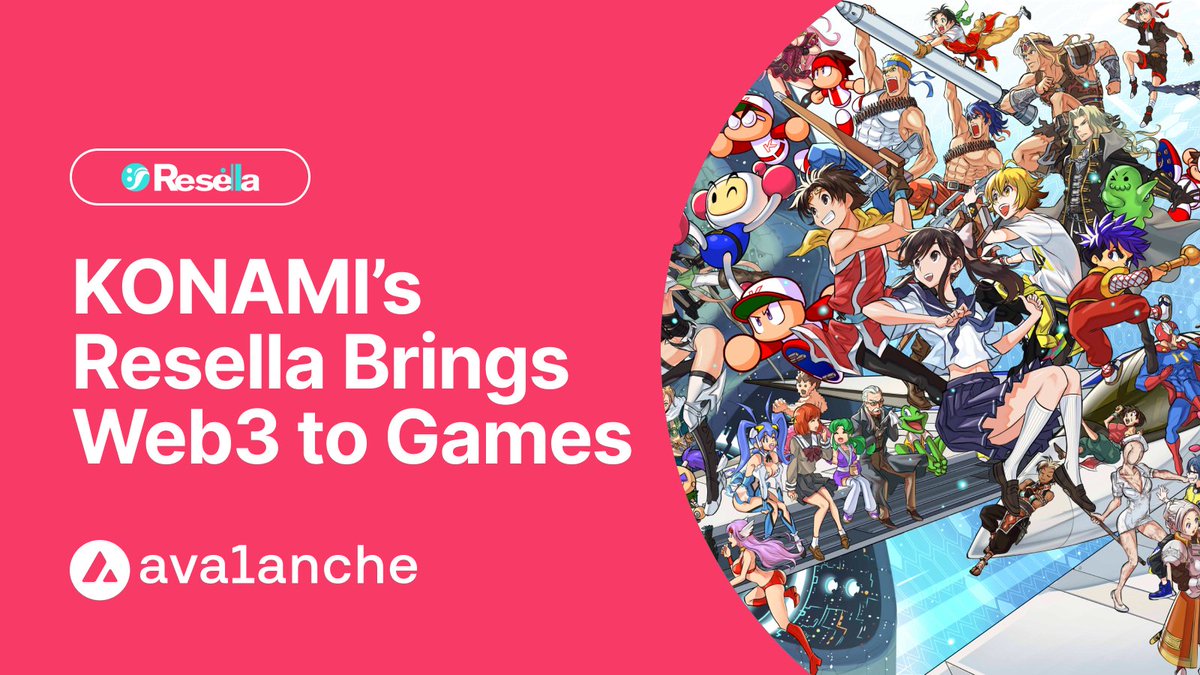
KONAMI is building a blockchain.
Resella, a gaming focused L1 powered by Avalanche, is the latest innovation from a company that’s made video games for half a century.
Crafted to meet the needs of both game developers and users, here’s what to expect from @Konami’s Resella.👇
Groq is a Radically Different kind of AI architecture
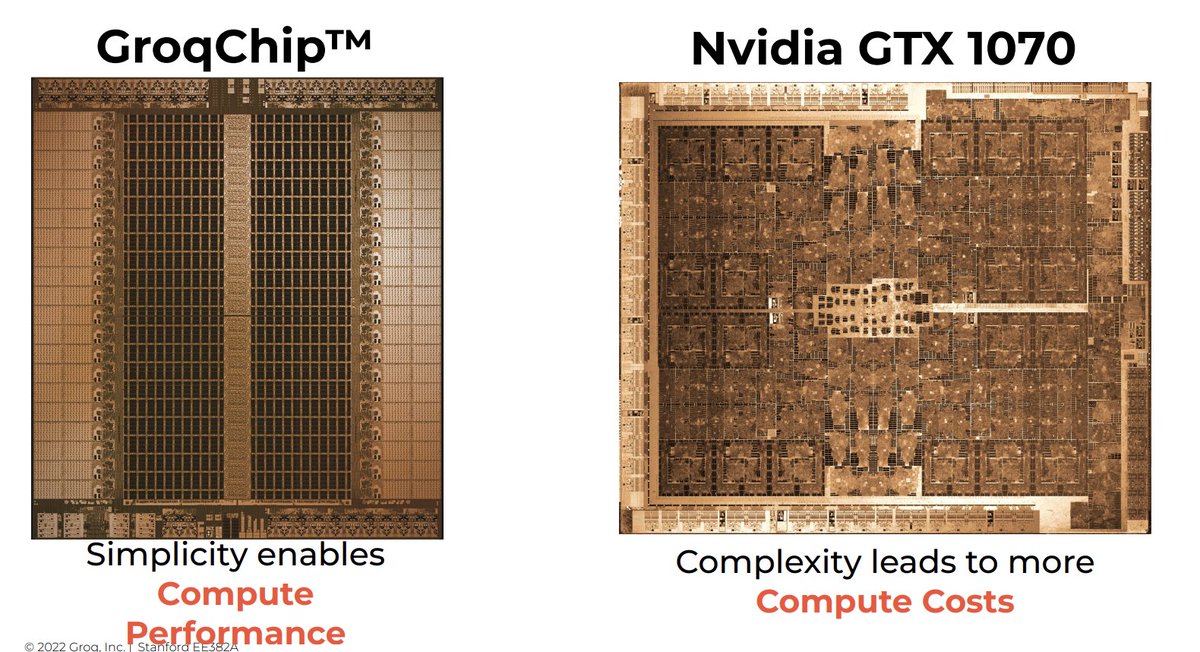
Among the new crop of AI chip startups, Groq stands out with a radically different approach centered around its compiler technology for optimizing a minimalist yet high-performance architecture. Groq's secret sauce is this compiler-first method that shuns complexity in favor of tailored efficiency.
At the heart of Groq’s architecture is an almost surprisingly bare-bones design that does away with unnecessary logic in favor of raw parallel throughput. The hardware itself is comparable to an ASIC – an application-specific integrated circuit finely tuned for machine learning. However, unlike a fixed-function ASIC, Groq leverages a custom compiler that can adapt and optimize across different models. It is this combination of a streamlined architecture and an intelligent compiler that sets Groq apart.
The key insight is that many AI chips stack components, like GPUs, that bring extraneous hardware and bloat. Groq returns to first principles, recognizing that machine learning workloads are about massive parallelism over simple data types and operations. By eliminating generic hardware and even concepts like locality, the design maximizes throughput and efficiency.
This is enabled by Groq’s compiler that sits between software frameworks like TensorFlow and the hardware. The compiler analyzes and optimizes neural network graphs, tailoring and mapping them to the underlying architecture for accelerated execution. It breaks computations into the smallest operations to unlock parallelism. The compiler also enables capabilities like batch size 1 inference that ensures all hardware is usefully leveraged.
Critically, Groq built its compiler before even finalizing the hardware design. The software insights directly informed the architecture. This co-design process allowed inference-specific optimization without legacy limitations. The compiler also provides deterministic guarantees of runtimes, enabling reliable scaling.
Together, the Groq compiler and architecture form a streamlined, robust engine for machine learning inference. The innovative compiler-first methodology allows custom optimization that balances flexibility with performance. Rather than chasing complexity, Groq realizes less can be more when software and hardware align – a compelling recipe as AI workloads continue evolving.
Remember when influencers with a lot of followers start shilling a project launch at the same time it is likely bc they have allocation and will dump their cheap tokens on you.
I often share new ecosystems early since it's a chance to catch 30-100x multiple times.
Did you miss out on:
- $TIA at $2?
- $INJ at $1.5?
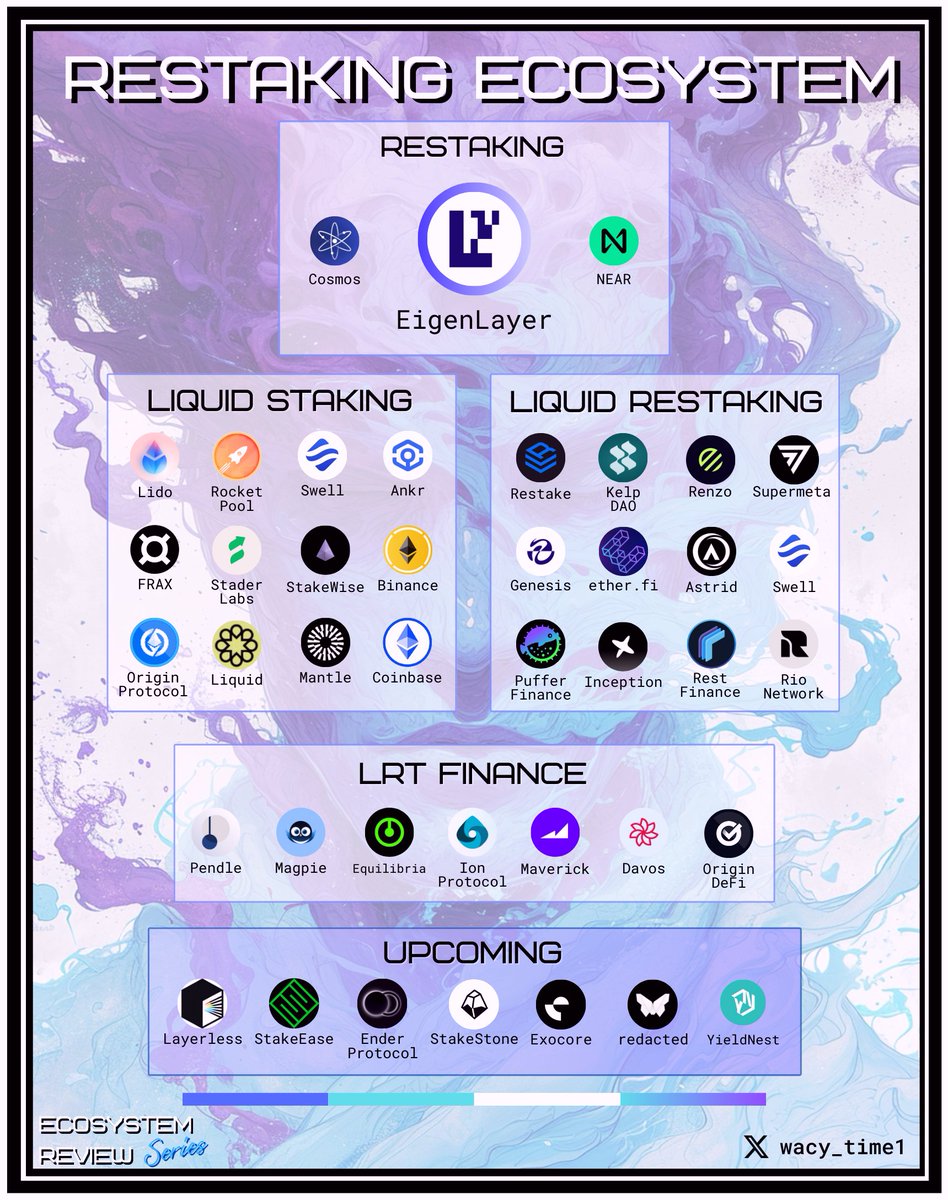
Restaking with $EIGEN launch will be a game changer!
Discover how to earn a dozen new tokens in ~$2B Ecosystem 🧵⬇️
Today we are very excited to launch the Stage 2 testnet for EigenLayer and EigenDA, onboarding operators to EigenLayer and rollups to EigenDA.
This testnet introduces new functionality for restakers, operators, and developers. Learn how to use it here: https://t.co/pUKuwpAU6C
@Itachi_x92 @PolkaThom It's 25k for orderbook liq, the only real spend is 15k$ for marketing which again is a good deal considering the breadth and the duration of the campaign. It would be shortsighted to ignore long term positive impacts of user acquisition both off chain and on chain from India
@Itachi_x92 It's about the long game though and an additional PDEX/INR market in the long run will be beneficial for exposure, India as a market shouldn't be dismissed purely based on current trading volumes. It's indirect user acquisition from an on-chain perspective too
Binance Labs is one of the top VCs, with a $7.5 Billion fund size.
I went through their 165+ projects to find their best new investments.
My top 8 new Binance Labs-backed projects: 🧵