I still remember August 2020 when...........
@latha_venkatesh (who I respect as one of the most erudite macroeconomic commentators) came on @CNBCTV18Live with childlike enthusiasm and correctly predicted that #ShashidharJagdishan would likely be the next God of Banking in God’s own Bank.
She announced a festival, not a bank appointment. Sashidhar Jagdishan had been cleared by the RBI to succeed Aditya Puri.
Continuity. Safe pair of hands. Strong consumption. The market did what television wanted it to do. It broke into a joyous relief. The stock jumped about 5 percent on that approval. For a few hours it felt as if the future of India’s best private bank had been settled with a smile.
Fast forward to the last days of August 2026.
The same man has said he will not seek another term. He retires on 26 Oct. And markets are now being told that this - his leaving - may be the biggest positive for #HDFCBank in years. Some desks are already writing the next chapter (reasons to buy the stock) before the next person has even been named.
Now think hard and reflect maturely :
In 2020, his arrival was joy. In 2026, his departure is joy beyond normal proportion.
If both reactions can be sold with the same excitement, then the excitement was never about the bank. It was about the need to have a story by 9 a.m.
That is the first lesson, and it is not complicated.
Television does not know. It creates a moment. It needs drama to stay relevant. A shallow market - and India is still, for large stretches of the day, a shallow market - should not be jerked around by a handful of studios. Retail investors, who are decent people trying to grow savings, give these channels a credibility they have not earned. They take the tone of the anchor as if it were a research report. It is not. It is programming.
Warren Buffett said it cleanly: “Forecasts may tell you a great deal about the forecaster; they tell you nothing about the future.”
Look at the scoreboard instead of the studio.
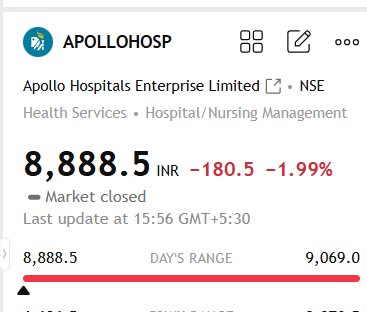
From the day Jagdishan took charge in October 2020 to now, HDFC Bank has suffered beyond comprehension. In the same stretch, other banks are up dramatically. This year the stock is down close to 28 percent, against a much smaller decline in Bank Nifty. Since the merger, it has lagged peers badly. Price-to-book has compressed from about 3.2 times to about 1.8 times. The loan book and deposits grew. Asset quality held. The share price did not behave like a franchise the market still trusted at the old premium.
That is not a TV opinion. That is six years of price.
Peter Lynch’s line still does the work: “Know what you own, and know why you own it.”
If you owned @HDFC_Bank because an anchor was happy, you owned a mood. If you owned it because it was a compounding machine with a funding advantage, a credit culture and a distribution engine, then you should judge the last six years on those things - and you should judge the next CEO on those things too.
The same television habit has already cost people real money in other “darlings.” Kaynes Technology is the fresh example. It was sold as the electronics-manufacturing story you could not afford to miss. From the October 2025 highs near ₹7,700 the stock has been cut nearly in half, at times closer to 60 percent. Mutual funds that crowded in watched thousands of crores of mark-to-market wealth disappear. The business did not vanish overnight. The story did. Guidance missed. Working capital stretched. Disclosures questioned. The people who bought the narrative, not the accounts, are the ones sitting with the loss. That kind of damage is not a one-week dip. For many it is years of compounding gone.
Trent and a list of other consumption and “new India” names have taught the same lesson at different times: a stock that is loved on television can still be a poor home for savings if the price has already assumed a perfect future.
Now the next temptation.
This morning the name doing the rounds is #DineshKhara. He turned 65 three days ago. He ran #SBI from Oct 2020 to Aug 2024, then retired.
CNBC-TV18 is reporting that he is among the names being considered for HDFC Bank’s top job. The same reports say the bank had earlier sounded him out for the part-time chairman’s seat after Atanu Chakraborty quit, and that he declined. That chair went to Rajiv Kumar.
Now the larger chair is being floated.
Reflect again.
Think about this as a human being, not as a headline.
Khara has already done the biggest public-sector banking job in the country. He has finished that race. At 65, after retirement, a man in that position is not hungry in the way a builder is hungry. He has nothing left to prove to the system that made him. Philosophically, that is not a small thing. Drive at the top of a private bank does not come from prestige. It comes from a restlessness that has not yet been satisfied. A retired chairman who has already collected the last salute is, by definition, a man whose original race is over.
There is also the money, and the money tells you the psychology. Years ago, another SBI chairman, Rajnish Kumar, said on record that his annual salary at the country’s largest bank was about ₹28 lakh. Khara’s own cash pay at SBI sat in the mid-thirties of lakhs - ₹37 lakh in FY23. Meanwhile, the man he would replace at HDFC Bank took home about ₹6.5 crore in an earlier year and about ₹15 crore in FY26 – besides hundreds of crores of stock. That is twenty, thirty, even forty times the PSU paycheck.
So what is the offer, if you strip the ceremony out of it?
You take a man who has already retired. You pay him twenty to forty times what the SBI thought the job of running India’s largest balance sheet was worth. And you hand him a private bank that is already in the dumps with the market - a stock down more than a quarter this year, a franchise whose premium has been compressed, a culture built on aggressive retail push, cross-sell, and product velocity.
That last part matters more than the salary.
HDFC Bank was not built like a government office. It was built as an aggressive private lender. That aggression created a great franchise. It also created habits - product push, third-party distribution, overselling that sits uncomfortably close to mis-selling when the incentives are wrong. You do not fix that with a press conference. You do not fix it by importing the temperament of a finished PSU career and multiplying the pay packet. Culture mismatch at the top of a giant balance sheet is not a small risk.
IT IS THE RISK.
A decent, experienced, retired public-sector chairman can still be the wrong instrument for this particular machine. Celebrating his elevation before the mandate, the incentives, and the operating style are clear is the same old mistake in a new suit.
So no, Jagdishan’s exit is not automatically Diwali. And Dinesh Khara’s probable name as the next boss is not automatically a rescue.
The bank is still a powerful machine. It still makes a great deal of money. It is trading at a valuation that no longer assumes perfection. That is interesting if the next leader protects credit, repairs the liability franchise, stops the market from doubting the books, and does not try to grow by shouting. It is not interesting because an anchor needs a headline to create drama.
Do not outsource that judgement to a news channel. They were thrilled when Sashi came. They are prepared to be 'soooper' thrilled as Shashi leaves. They will be thrilled if Khara is named. The job of the shareholder is quieter.
Read the results. Watch the CASA. Watch the slippages. Watch who actually sits in the chair in October.
And watch one more thing, closer than all the studio names.
Watch how soon Sashidhar Jagdishan begins to get rid of his entire holding in HDFC Bank.
That filing will tell you more than any breaking-news ticker.
#nifty Shashidharan
An Indian engineer in Bengaluru got tired of potholes destroying his car.
So he built an app with Codex that detects them, finds who is responsible, and files a complaint.
Here is how it works. He installed a dashcam with GPS and an accelerometer. The app records everything while he drives.
A vision model classifies every pothole by size. Small, medium, large.
But here is the clever part. Most Indian roads are under warranty.
The contractor who built them is legally responsible for fixing potholes for free.
His app searches through 2,900 government contracts, finds the exact tender number, identifies the officer responsible, attaches the photo and geolocation, and generates a ready-to-file complaint.
One drive to work. 12 potholes detected. 12 complaints ready.
--
vc: @gkcs_
Minister @RamMNK Please solve the biggest issue about airport security for passengers.
Why force people to remove electronics items and put in separate tray? Please have X ray machines which do away with this as in airports overseas! Will hasten checks.
Why humiliate all passengers with slow manual frisking, security touch you all over body? Please have the big machines which avoid this. Bengaluru already has this, not approved by BAS under you.
Please focus on this to help passengers urgently @ncbn Babu garu please help @PMOIndia@narendramodi@AmitShah@Tejasvi_Surya@PCMohanMP@PiyushGoyal
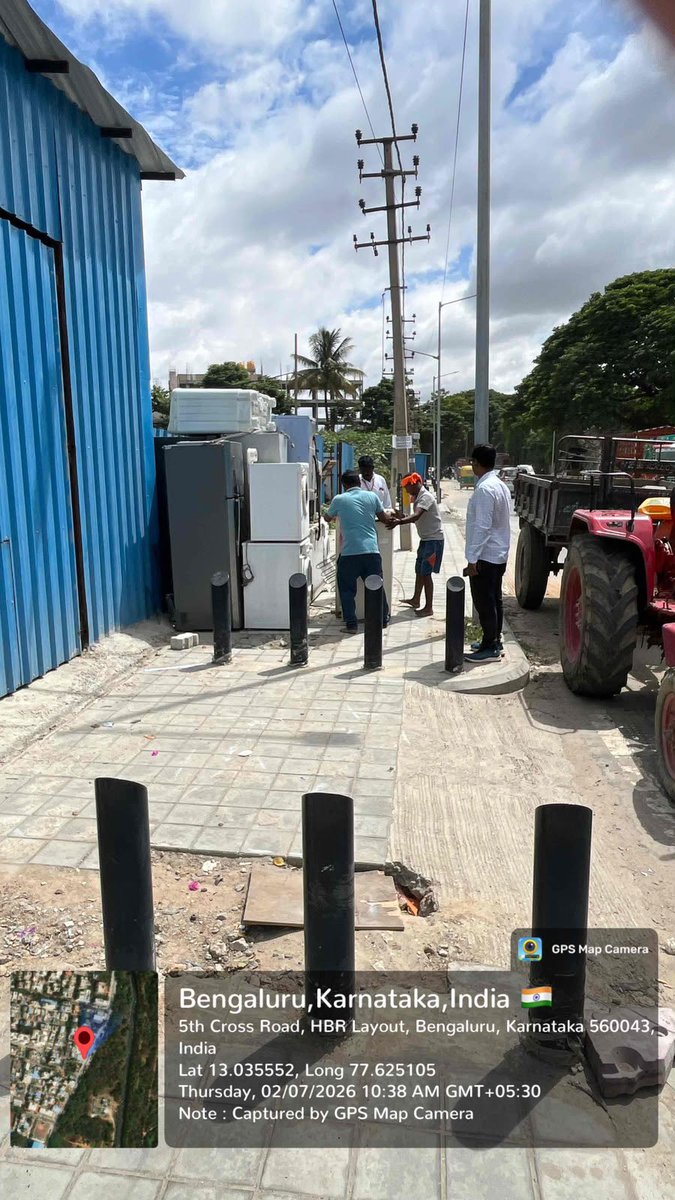
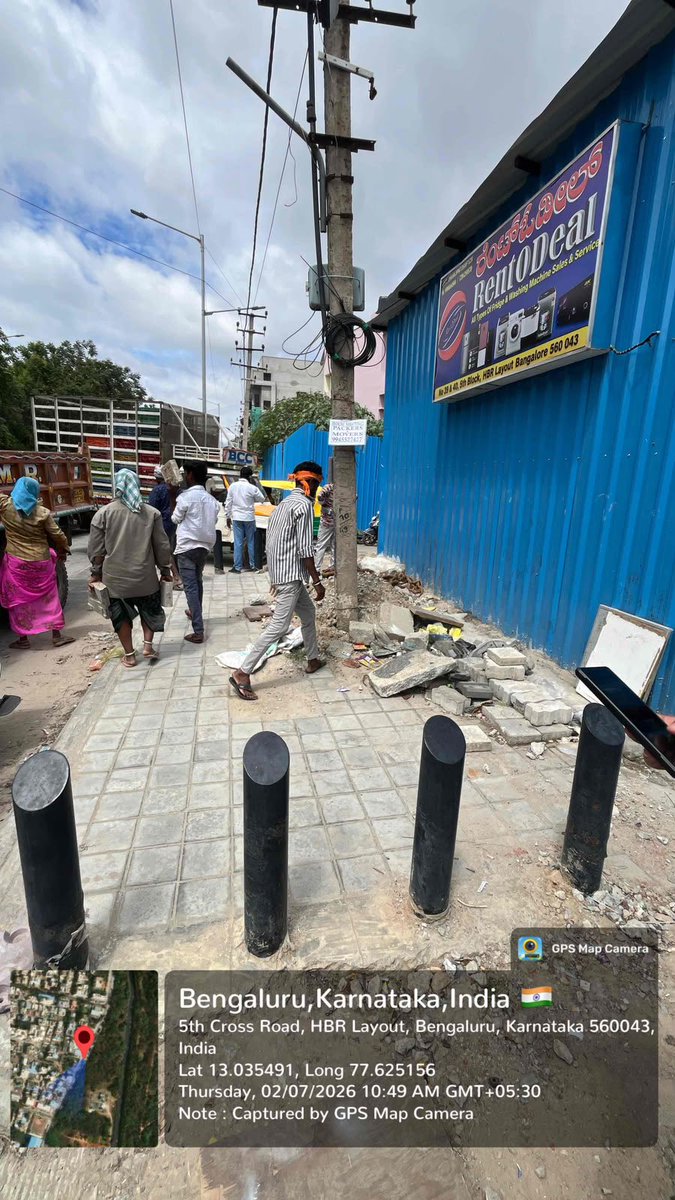
This is a moment of reckoning for Bangaloreans. If we don't support @krishnabgowda now, we will lose any last hope of revival for the city.
Bangalore's old charm was about its walkable streets and giant trees dotting the roads on both sides. Today it's a dream to find such footpaths and roads.
The only way to make Bengaluru Great Again is to reclaim it's public spaces that has turned into garbage den.
For the first time we have a politician not just talking about it but working towards making the city livable with dignity. We all must support unconditionally...
VERY URGENT APPEAL
Balakrishna Uppada, 38, brother of an Indian Army soldier currently deployed in Kashmir, was working in Saudi Arabia with Awn Services Co. Ltd. He has reportedly suffered multiple serious injuries while on duty at a construction site. He is currently on a ventilator, alone and in a coma
The family in India is struggling to obtain timely and accurate information regarding his medical condition and treatment. While he has reportedly been admitted to a government hospital, communication from the company has been extremely limited
His brother, serving in the Indian Army, is making all possible efforts to help the family reach Saudi Arabia and obtain information about his condition.
We earnestly request @MEAIndia@IndianEmbRiyadh@DrSJaishankar to urgently intervene, establish contact with the employer and hospital authorities, and provide necessary assistance to the family during this critical time
The family urgently needs support, information, and consular assistance 🙏 @KSAembassyIND@KingSalman
Balakrishna Uppada's very worried family can be contacted on +916301177330 (Mr Ramoji Rao). Please help 🙏
#IndianWorkers #SaudiArabia #MEAIndia #IndianEmbassy #EmergencyAssistance #IndianDiaspora #HelpIndianWorker
Demands from vehicle owners before ANY move to E25/E30:
Mandatory pump labelling.
Free compatibility upgrades.
Government-backed repair warranty
Non-ethanol fuel option at every station.
Is that too much to ask? @PetroleumMin@nitin_gadkari
Turbo petrol owners: Toyota Hycross users reported 3 injector failures within 5,000 km on E20. High-pressure fuel systems and ethanol don't mix well. The "no damage" guarantee is hollow.
India spent a decade learning why retrospective tax is poison. We're about to throw the lesson away.
Picture this: your team wins a cricket match, clean, by the rules of the game that day. A year later, the umpire changes a rule and applies it backward — and declares you lost the match you already won.
That's retrospective tax. You broke nothing. They moved the line, then pointed it at your past.
We did exactly this to Vodafone in 2012, chasing them over a 2007 deal. Cairn Energy got hit too. Both went to international arbitration. Both won. India refunded over $1.2 billion and spent years as the cautionary tale that every global investor cited as the reason they hesitated on us.
In 2021, we finally repealed it and called retro taxation a thing of the past. Capital started trusting us again.
This week, the courts upheld retrospective GST on online gaming. Dream11 and an entire industry now owe tax on years of operations under rules that didn't exist at the time.
Retrospective tax doesn't punish what you did. It punishes you for not predicting what the government would later wish you'd done.
As a country, we should not set such a precedent.
#Noretrospectivetax
Respected @nsitharaman ji and @FinMinIndia ,
Suggestion 1 of 3 for strengthening India's capital markets:
Long-term capital gains tax on listed equities should be abolished.
A long-term shareholder is not a speculator but a provider of patient risk capital. By investing in and holding businesses, investors help companies expand, create jobs, innovate and contribute to India's economic growth.
India requires enormous amounts of long-term capital to build world class enterprises, infrastructure and global champions. Tax policy should encourage households to move savings from passive assets, including imported stores of value such as gold, into productive businesses that create jobs, generate tax revenues and build national wealth.
The appreciation in a company's value is not created in isolation. During its growth journey, the government already collects corporate tax, GST, income tax from employees, customs duties, stamp duties and numerous other levies. Long-term capital gains are often the final outcome of economic activity that has already generated substantial tax revenues.
Most importantly, tax policy should clearly distinguish between investment and speculation. A long term shareholder is a partner in wealth creation, not merely a participant in market transactions. Tax policy should reward long-term ownership of productive businesses and distinguish it from short-term speculation.
India needs more patient capital, more entrepreneurship and more long term investing. Abolishing long-term capital gains tax on listed equities would be a powerful step in that direction.
Respectfully submitted.
I've already retweeted @Options_IndiaAB post.
Since I want this to reach lot of people, posting it separately too.
Here is the post:
I recently spent 2 weeks in China.
6 cities: Shanghai, Beijing, Xi’an, Zhangjiajie, Chongqing and Chengdu.
I went there with curiosity.
Like many Indians, I had heard a lot about China through media, social media and conversations. I expected to see progress, maybe discover some business ideas, and understand what the country is actually building.
I came back with a very uncomfortable feeling.
Not because I found a business idea for myself.
But because I saw 100 things that governments can do when infrastructure, tourism, transport, urban planning and civic systems are treated seriously.
I travelled within China by flights, trains, cars and local transport. The infrastructure was honestly stunning.
Clean cities. Smooth roads. High-speed trains. Well-managed traffic. Public spaces that actually feel designed for people. Tourist destinations that are built, maintained and promoted like national assets.
And then I kept thinking about India.
We keep comparing ourselves to China. Our media keeps telling us how India is catching up, how China is restrictive, how we are better in so many ways.
After spending time there and speaking to people, I realised how much of that narrative is just comfort food.
China is not perfect. No country is.
But on infrastructure, execution, tourism, civic discipline and quality of urban life, they are not 5 years ahead of us.
They are decades ahead.
The saddest part for me was the currency.
Everything felt expensive. Not because China was insanely expensive, but because the rupee has weakened so much that even normal spending starts feeling heavy. As an Indian taxpayer, that genuinely hurt.
We pay taxes. We work hard. We talk about becoming a global power.
But where is the quality of life?
Where is the civic sense?
Where is the infrastructure that makes daily life easier?
Where is the tourism vision beyond religious tourism?
I met travellers from other countries who were excited to visit China because they wanted to see its progress. When I asked about India, many had no real desire to visit. Not out of hate. India simply was not on their aspirational travel list.
That should bother us.
Even the so-called “closed internet” surprised me. We are told people there are missing out because they don’t use Google, Instagram, WhatsApp or Facebook.
But China has built its own digital ecosystem. Payments, maps, transport, messaging, shopping, everything works inside their own infrastructure. People did not seem to feel deprived. They seemed adapted.
Again, this is not a hate post.
I love India. That is exactly why this trip bothered me.
Patriotism cannot only be about saying we are great.
Real patriotism is having the courage to admit where we are falling behind.
China made me realise one thing very clearly:
India’s potential is not the problem.
Execution is.
And unless we stop comforting ourselves with comparisons and start demanding better infrastructure, better governance, better tourism, cleaner cities and a higher quality of life, we will keep celebrating the idea of progress instead of actually living it.
@_prashantnair pls finish your questions to guests fast, you take whole day to ask one question. with so much of experience do you not know to maintain brevity while asking questions?