On This Day, June 27, 1806, Augustus De Morgan was born in India. He grew up to become one of the most important British mathematicians and logicians of the 19th century.
He played a major role in developing modern symbolic logic and algebra. He is best remembered for De Morgan’s Laws, which explain how to negate “and” and “or” statements; rules still essential in mathematics, computer science, and programming today. He also gave the first rigorous foundation to mathematical induction and helped popularize the fraction slash (½).
Clear symbols and precise logical thinking turn complex ideas into manageable ones.
De Morgan showed that formalizing reasoning makes knowledge more powerful and accessible. His work teaches us the value of challenging conventions and making abstract concepts clear and practical.
The Calcutta Mathematical Society published two important pioneer papers in information geometry in the same issue, vol. 37, in 1945:
- The Fisher-Rao geometry celebrated paper of CR Rao
- The dualistic structure of connections of RN Sen
The Cambridge Prank on Ramanujan!
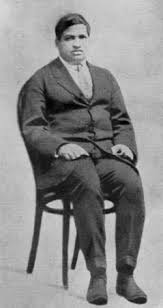
While at King's College, P. C. Mahalanobis (Father of Statistics in India) became incredibly close friends with iconic Indian genius, the mathematician Srinivasa Ramanujan.
1 afternoon, Mahalanobis was reading a Cambridge strand magazine & found a highly complex mathematical puzzle involving a street of houses numbered 1 to N. The puzzle required finding a house number x such that the sum of the house numbers to its left equaled the sum of the house numbers to its right.
Mahalanobis figured it out after a few mins of trial calculations. He walked over to Ramanujan's room, where Ramanujan was busy frying vegetables for dinner. Mahalanobis read out the puzzle. W/o even turning around from his frying pan, Ramanujan started stirring the vegetables & calmly said: "Take down the solution."
Ramanujan did not just give the single answer to that specific puzzle, he dictated a continued fraction that provided the universal solution for the infinite family of all such streets that could ever exist.
Mahalanobis was paralyzed with shock. He asked Ramanujan how he did it instantly. Ramanujan famously replied, "The moment I heard the problem, I knew that the answer was a continued fraction. Which continued fraction? I just asked myself & the answer came."
[Press Update] The public consultation process for the Future Circular Collider (FCC) project begins in Switzerland and France.
Find out more:
https://t.co/9kvAcAlkVS
@garellaprachi Very well written. It can also be triggered by trying to solve a problem that seems trivial—until you actually get your hands dirty with it. Those moments quietly reveal the gap between familiarity and true understanding.
Congratulations to Clay Córdova, Shu-Heng Shao, Thomas Dumitrescu and Yifan Wang on winning the 2026 New Horizons in Physics Prize for generalizing the notion of symmetry in various ways, and for exploring the consequences of these generalized symmetries, in quantum field theory, particle physics, condensed matter physics, string theory, and quantum information theory. https://t.co/awmRtAX5vT
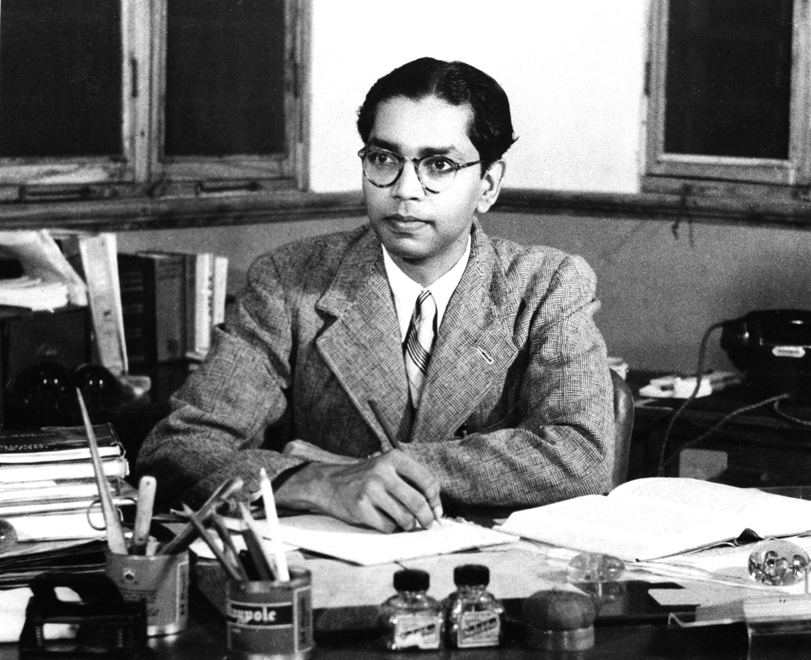
In 1945, a student asked C.R. Rao in a classroom at the Indian Statistical Institute, “How much information can we truly extract from a tiny bit of data?”
Rao went home, worked through the night, & derived a fundamental inequality that sets the theoretical limit on how precisely we can estimate any parameter from data. This is now known as the Cramér-Rao Inequality (or Cramér-Rao Lower Bound).
It tells engineers, physicists, & data scientists worldwide, from those building GPS systems to those searching for the Higgs boson (God Particle)...the absolute maximum precision they can ever achieve with unbiased estimators. It remains 1 of the most important speed limits in information theory & statistics.
CERN's experiments are global efforts. The 2025 Breakthrough Prize in Fundamental Physics honors over 13,000 researchers whose labors have led to the precise description the Higgs mechanism, the discovery of dozens of new particles, analysis of rare processes and matter-antimatter asymmetry and exploration of nature at the shortest distances and most extreme conditions. https://t.co/OSDzo6jMHF @CERN
Over more than 6 decades, Gerard 't Hooft's discoveries have been critical in the development of modern quantum field theory and the Standard Model of particle physics – not to mention his other contributions, from black holes to holography. This year, a Special Breakthrough Prize in Fundamental Physics recognizes his pioneering career. https://t.co/OSDzo6jeS7
@UniUtrecht
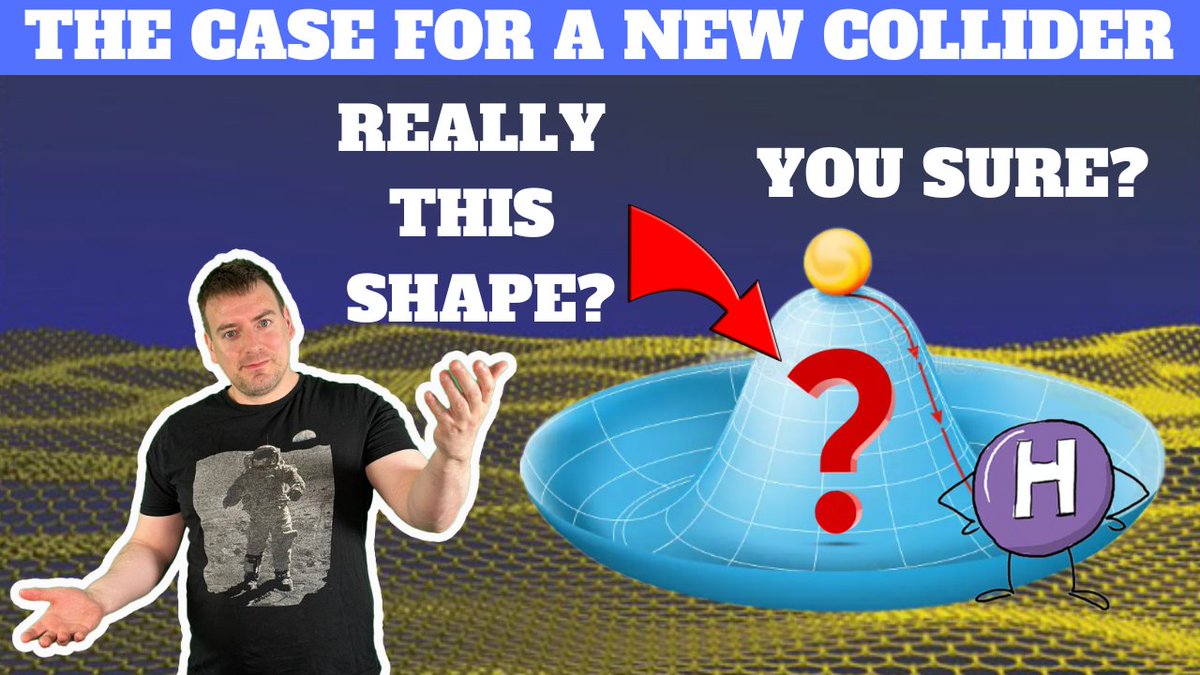
Episode 2 of the "Case for a new collider series" is out!
Today, we explore the Higgs potential and how its form in our universe is still a deep mystery that might hide answers to some of the most pressing open questions in particle physics.
Playlist: https://t.co/PmYX3MEfia







![CERNpress's tweet photo. [Press Update] The public consultation process for the Future Circular Collider (FCC) project begins in Switzerland and France.
Find out more:
https://t.co/9kvAcAlkVS https://t.co/PyCB4i8QWm](https://pbs.twimg.com/media/HILmhakXEAA1yIn.jpg)



![BahramShakerin's tweet photo. [Freeman Dyson's Birthday]
Birds and Frogs
Freeman Dyson
https://t.co/NLCjW43uUr https://t.co/xev3HSCd2z](https://pbs.twimg.com/media/Ge2qgDuWYAA3vAw.jpg)


