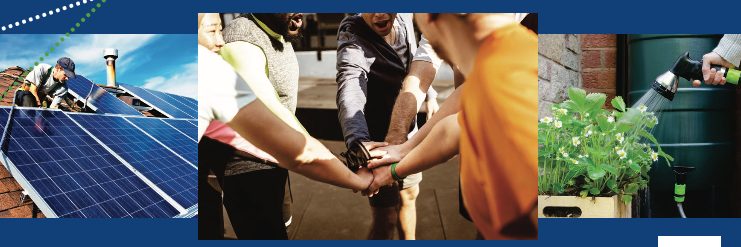
Do you want to make the water and energy sectors more environmentally and socially sustainable? We're #hiring a new #chair and seeking a new #treasurer to join our #boardoftrustees at Sustainability First, as Phil Barton steps down as chair.
#greenjobs
https://t.co/mBywVxbPBM
What is smart economic regulation in a world facing climate change and the need to have greater resilience? Read our consultation where we urge for greater consumer engagement and a wider debate about the role of data https://t.co/eDKczWS8iS
A year after Associate Maxine Frerk wrote a report Its a Lottery about Economy 7 customers being unfairly treated. Ofgem still has not responded to the report or carried out an assessment of this part of the market. We would like to know why? Read her blog https://t.co/90bCm0zUnu
The size of extra investment and bill rises in the water sector's price review, PR24, looks unprecedented in the period since privatisation. We have also seen a rise in changes to draft plans. Read Martin Hurst's viewpoint in favour of more flexibility https://t.co/Uz7PLkM6Ic
While the shift will bring challenges, there are also opportunities. Energy companies should collaborate with industry stakeholders to identify skills gaps and job opportunities in the changing energy sector.
For the wider #energysector, attendees at our Fair Transition workshops wanted transparency so that energy company profits and pricing structures are clear. This transparency will help build trust following public concerns about excessive profits. https://t.co/jaPLvmFOOy
A key theme was community engagement from planning and implementation stages of new projects to gain insights, build trust, and identify potential issues early on. Public meetings, community events, and digital tools are all needed to reach diverse demographics.
The root causes of the #energycrisis need addressing, people argued, by reforming the energy market structure. Citizens need direct engagement in these changes, such as in the Review of Electricity Market. Arrangements. #REMA
Following a series of public and stakeholder workshops with @NationalGrid , #SustainabilityFirst highlights how important engagement is to ensure no one is left behind in the #cleanenergy shift.
https://t.co/jaPLvmFOOy
Clear, transparent communication across the energy sector, including @National Grid, @Ofgem, government and companies is crucial. Just one of the recommendations from our latest research on the #FairTransition to a #cleanenergy future.
Given the scale and speed needed in the shift to #cleanenergy and the possible economic opportunities, citizens argued that @nationalgriduk should promote potential opportunities for #greenjobs and #skills to inspire young people to pursue careers in this vital sector.
Citizens believe low-income and vulnerable individuals need support in the shift to clean energy. Following a series of #FairTransition workshops with @nationalgriduk the public & stakeholders #SustainabilityFirst underlines the need for engagement. https://t.co/jaPLvmFOOy
Our citizen workshops highlighted the need for #energycompanies to build trust through open and transparent communications in the shift to #cleanenergy. People said @nationalgriduk could play a key role in raising #energy and #climate awareness.
Fancy 240,000 particles of nanoplasitc with your litre of bottled water?
Bottled water has been found to contain hundreds of thousands of tiny particles of plastic that have not previously been counted, raising questions over the impact on human health
https://t.co/nvjZ1mlssO
Your regular reminder that the UK's North Sea gas production has dropped by two-thirds since 2000 and is set to fall by another 97% by 2050 – or by 95% with new licensing
One year after #COP15 what progress has Gov made to meet its nature targets?
New analysis finds 👇
👈11 targets have seen no progress or gone backwards
❗️7 targets have seen progress (in very small amounts)
Read 👉https://t.co/adRzliy9yC.
A report on flood resilience in England published by the National Audit Office warned that under current Environment Agency plans FORTY PERCENT FEWER PROPERTIES IN ENGLAND WILL BE PROTECTED FROM FLOODING compared to the number first forecast in 2020. https://t.co/5X0h8VP9GO
"Govt must set clear and measurable targets to reduce the likelihood of property flooding in urban and rural areas in line with @NatInfraCom recommendations, to help quantify and target necessary investment – the NAO report highlights challenges created by this lack of clarity."
Why do we have a sewage crisis and how can we fix it? Read Associate Martin Hurst's briefing for @GreenAllianceUK. The current approach – led by the government and the Environment Agency – is too heavily focused on building more storm tanks. https://t.co/tvpTZI8mmY