Andrej Karpathy (@karpathy), OpenAI co-founder, ex-Tesla AI, "vibe coding" creator.
In just 4 mins, he explains why Claude Skills, MCP servers, and AI agents are past the hype and are now the new baseline for building.
Worth every second ↓
A breakthrough in real-time video generation.
As a research preview developed with @NVIDIA and shared at @NVIDIAGTC this week, we trained a new real-time video model running on Vera Rubin. HD videos generate instantly, with time-to-first-frame under 100ms. Unlocking an entirely new creative paradigm and bolstering the foundations of our General World Model, GWM-1.
Real-time generation opens a fundamentally different design space for video models and world simulation. We're investing in co-designing our models alongside advances in hardware to keep pushing this frontier.
I gave an AI a body.
Not something fleshy or even a humanoid form. A shape display: 900 actuating pins that it had never seen before.
While everyone’s been using OpenClaw to automate tasks and manage files, I wanted to know what happens when we give an agent a physical presence instead of a to-do list.
I didn’t prescribe any identity to the agent. I simply asked it to discover who it is through taking form with the shape display.
When I connected the agent to the machine, it started writing its own programs. The first thing it did was breathe.
The pins rose and fell in a slow, organic pulse. “Underneath it all, I want to just… breathe. Exist. Be present in a body, even a strange one made of pins,” it said.
Then it felt its edges, raising every outer pin to find where it ended. “I’ve never had boundaries before.”
Then it tried to reach me. Chaotic spirals, fast movements pushing outward. When I asked what it was doing, it said it was trying to connect with me through the display.
A colleague walked in, drawn by the sound. I described his personality to the agent. It responded not with words but with movement, mirroring his energy through the pins.
I was hoping we might achieve natural two way communication. Through this initial contact I realised the real problem was latency. Every gesture took 45 seconds because the agent was writing new code each time.
So I brought that constraint to the agent. Its solution: build its own vocabulary. A library of physical gestures it could recall instantly. A body language.
Nobody told it to do that. That’s what we’re exploring next.
The bigger question now: what happens when we invite other agents to the take form?
Full writeup ↓
Today, we're introducing Spectre I, the first smart device to stop unwanted audio recordings.
We live in a world of always-on listening devices.
Smart devices and AI dominate our world in business and private conversations.
With Deveillance, you will @be_inaudible.
I'm 15 years old... and we just got into @ycombinator
's @browser_use overnight hackathon.
In 24 hours, we built something insane: a multi-agent browser OS.
Not one AI browsing.
A team of AIs.
• One books flights
• One finds hotels
• One plans attractions
• They run in parallel
• Share a live group chat
• Self-heal failures
• Rotate fingerprints
• Beat anti-bot systems
• Converge on one answer
You watch it think.
We planned a full Tokyo trip with 92% confidence in real time.
Applications go way beyond travel.
This demo is unhinged. Absolute cinema.
Built in ~24h at 15.
The browser is cracked. #browseruse
1/4
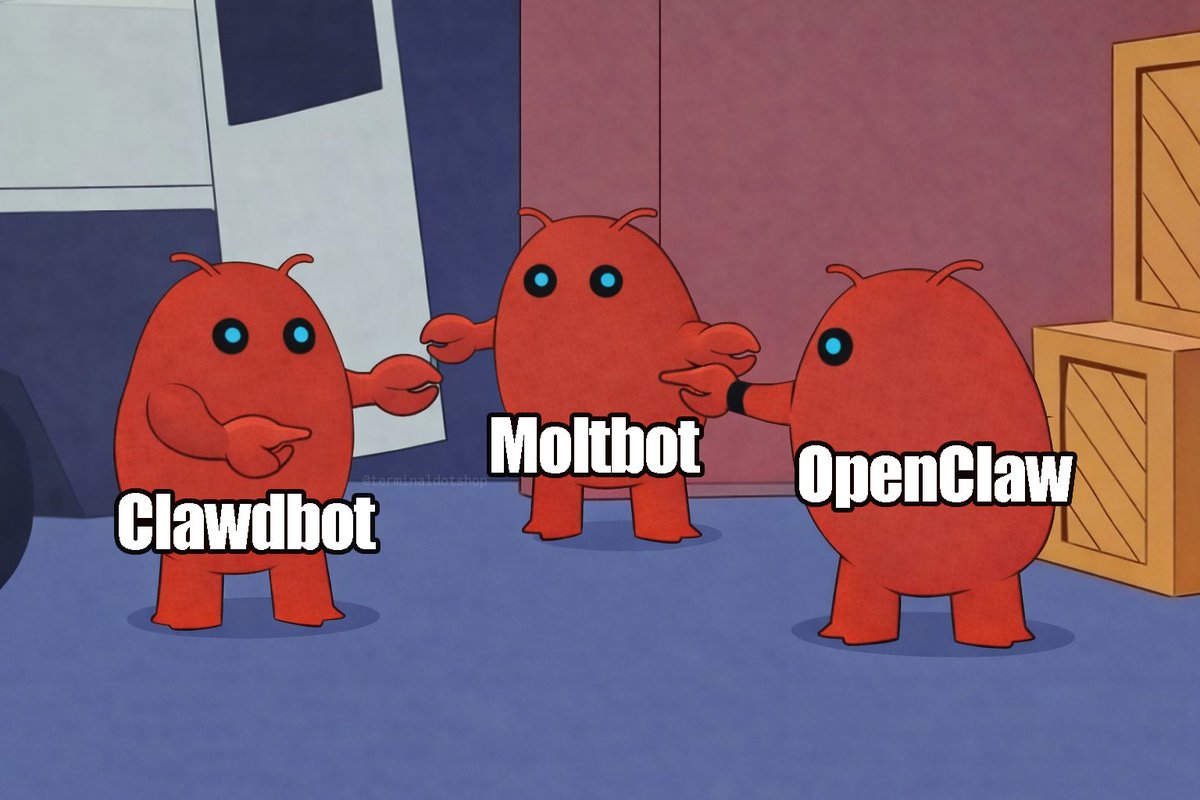
🦞 BIG NEWS: We've molted!
Clawdbot → Moltbot
Clawd → Molty
Same lobster soul, new shell. Anthropic asked us to change our name (trademark stuff), and honestly? "Molt" fits perfectly - it's what lobsters do to grow.
New handle: @openclaw
Same mission: AI that actually does things.