Be Cyber RESILIENT, Treasure EVERY Moment, TRAVEL, Learn, SHARE, Volunteer, THRIVE, be CURIOUS, Intrepid & GRATEFUL, Challenge Yourself, LOVE All & GOD! ✈🔎📚🌍
The real leverage point right now isn’t the tool itself, but the decision systems, incentives, and workflows that determine how humans integrate #AI into production environments.
#AI Long-running autonomous agent systems can produce #unpredictable, emergent macro-behavior that is not visible in standard benchmark testing.
https://t.co/WRewkBkKRA
Finnish scientists trucked in real forest dirt and grass and laid it over the gravel at four daycare yards. They let the kids dig around in it for a month. The blood tests came back with changes the researchers hadn’t expected to see so fast or so clear.
The study ran at ten daycares in two Finnish cities with 75 kids aged three to five. Four of the yards got the forest treatment: about a tennis court worth of soil and grass laid over the gravel, plus planters and peat blocks the kids could dig and climb on. Three others stuck with their normal gravel yards. The last three were daycares where the kids were already visiting real forests every day.
After one month, the variety of bacteria living on the kids’ skin shot up, and the kind that helps train the skin’s immune defenses jumped the most. Their gut bacteria started to look like the gut bacteria of the forest-visiting kids. Their blood showed more of the immune cells whose job is to keep the body from freaking out at harmless stuff like pollen and peanuts, and overall inflammation dropped. The kids on the plain gravel yards showed none of this.
Childhood asthma in the US doubled between 1980 and 1995. Food allergies in kids jumped 50 percent between 1997 and 2011, then jumped another 50 percent between 2007 and 2021. And peanut allergies in one-year-olds tripled between 2001 and 2017.
The Finnish researchers think one of the reasons is simple: kids today don’t get dirty enough. 37 percent of American preschoolers now spend an hour or less outside on a normal weekday. Their immune systems are getting trained in environments stripped of the bacteria humans have always lived around.
Aki Sinkkonen, who led the study, put it in plain words: “It would be best if children could play in puddles and everyone could dig organic soil.” The Finnish government is now helping pay for daycares across the country to make the same changes.
Top YouTube Channels to Master Tech Skills.
1. SQL
https://t.co/97fgCc5Rcx
2. Excel
https://t.co/dt0lVmFDxw
3. Statistics
https://t.co/GXDE2dHBEf
4. Math
https://t.co/FhzebEseW2
5. Python
https://t.co/BQS17dgICw
6. Data Analysis
https://t.co/Mv9Y2zxjxf
7. Machine Learning
https://t.co/UB2e398FT5
8. Deep Learning
https://t.co/kpMsX4SPuv
9. Java
https://t.co/NG5BF9g2lS
10. Big Data
https://t.co/ln8hkOstT8
11. Data Engineering
https://t.co/EWrdRu0k07
12. NLP (Natural Language Processing)
https://t.co/TVQA3AJKFV
13. Computer Vision & AI
https://t.co/hlnXziTfsO
14. Generative AI
https://t.co/wE840JVCUD
15. University-Level Courses
https://t.co/5ZP5NwT77G
https://t.co/UW4Dpvev9c
16. All-in-One Learning
https://t.co/HVjOECQ3rs
Like
Repost
Bookmark
Follow @ai_explorer25 for more of these free courses. productivity content.
I'll send you in the DM.
A man spends 50 years teaching at MIT.
He knows his time is running out.
So he records one last lecture — everything he knows, distilled into a single hour.
He died 5 months later.
This is that lecture.
The most important hour you'll watch this week. 👇
Bookmark it for later
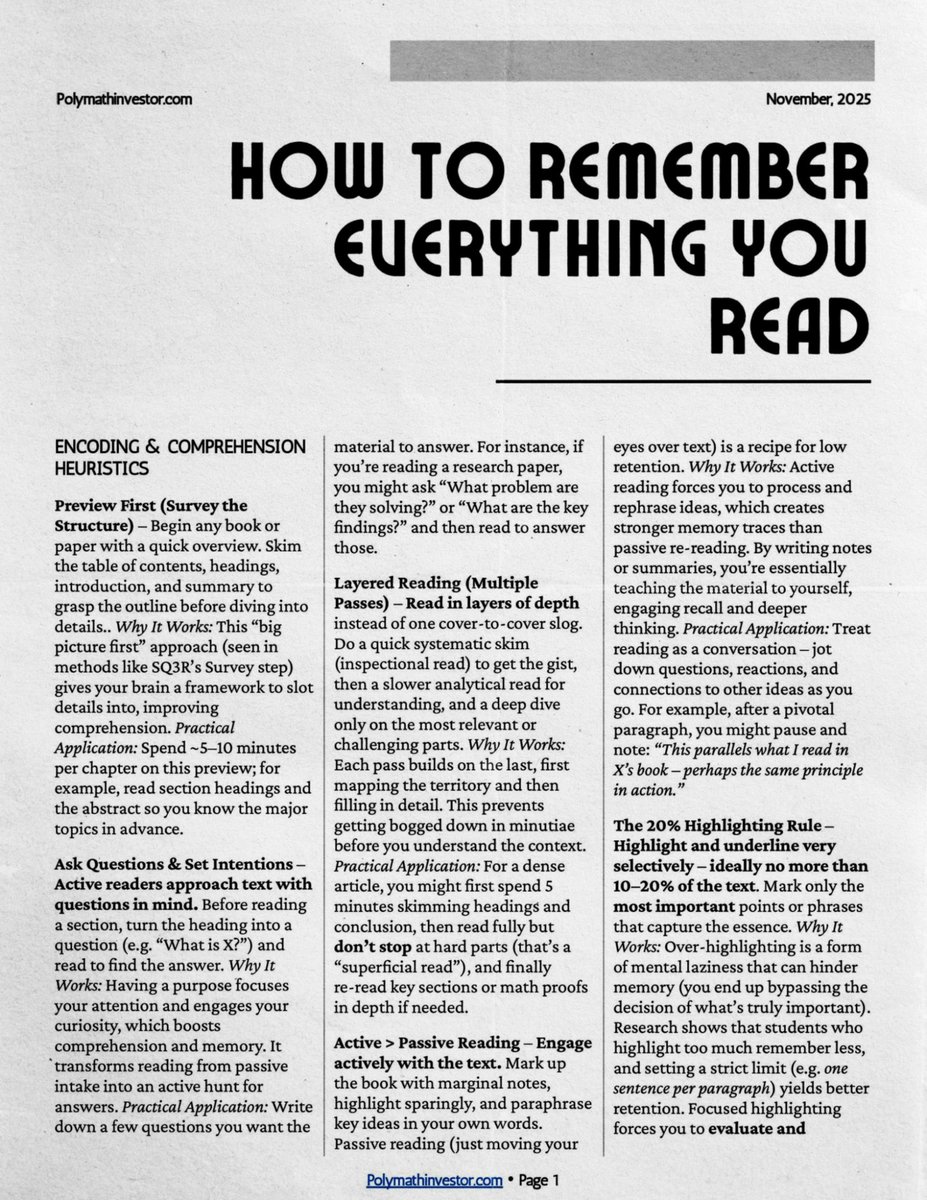
A few months back, I published this guide on how to remember everything you read.
Re-sharing it here for anyone who finds these protocols useful.
(1/11)
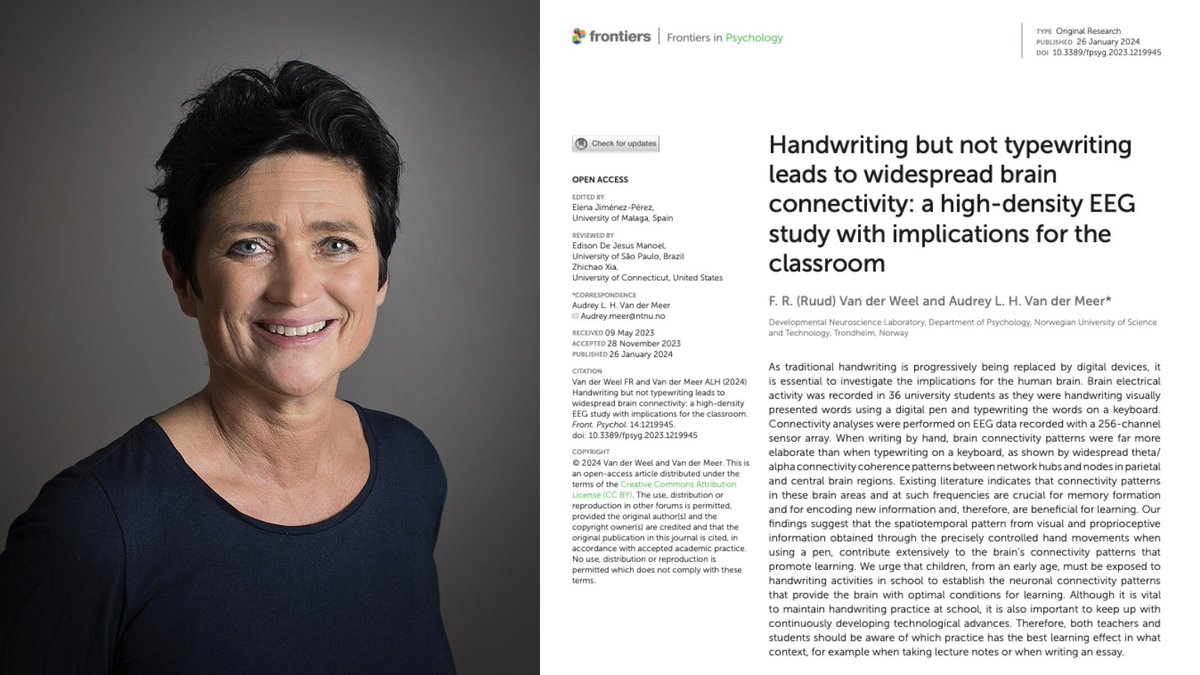
A Norwegian neuroscientist spent 20 years proving that the act of writing by hand changes the human brain in ways typing physically cannot, and almost nobody outside her field has read the paper.
Her name is Audrey van der Meer.
She runs a brain research lab in Trondheim, and the paper that closed the argument was published in 2024 in a journal called Frontiers in Psychology. The finding is brutal enough that it should have changed every classroom on Earth.
The experiment was simple. She recruited 36 university students and put each one in a cap with 256 sensors pressed against their scalp to record brain activity. Words flashed on a screen one at a time.
Sometimes the students wrote the word by hand on a touchscreen using a digital pen, and sometimes they typed the same word on a keyboard. Every neural response was recorded for the full five seconds the word stayed on screen.
Then her team looked at the part of the data most researchers had ignored for years, which is how different parts of the brain were communicating with each other during the task.
When the students wrote by hand, the brain lit up everywhere at once.
The regions responsible for memory, sensory integration, and the encoding of new information were all firing together in a coordinated pattern that spread across the entire cortex. The whole network was awake and connected.
When the same students typed the same word, that pattern collapsed almost completely.
Most of the brain went quiet, and the connections between regions that had been alive seconds earlier were nowhere to be found on the EEG.
Same word, same brain, same person, and two completely different neurological events.
The reason turned out to be something nobody had really paid attention to before her work. Writing by hand is not one motion but a sequence of thousands of tiny micro-movements coordinated with your eyes in real time, where each letter is a different shape that requires the brain to solve a slightly different spatial problem.
Your fingers, wrist, vision, and the parts of your brain that track position in space are all working together to produce one letter, then the next, then the next.
Typing throws all of that away. Every key on a keyboard requires the exact same finger motion regardless of which letter you are pressing, which means the brain has almost nothing to integrate and almost no problem to solve.
Van der Meer said it plainly in her interviews.
Pressing the same key with the same finger over and over does not stimulate the brain in any meaningful way, and she pointed out something that should scare every parent who handed their kid an iPad.
Children who learn to read and write on tablets often cannot tell letters like b and d apart, because they have never physically felt with their bodies what it takes to actually produce those letters on a page.
A decade before her, two researchers at Princeton ran the same fight using a completely different method and ended up at the same answer. Pam Mueller and Daniel Oppenheimer tested 327 students across three experiments, where half took notes on laptops with the internet disabled and half took notes by hand, before testing everyone on what they actually understood from the lectures they had watched.
The handwriting group won by a wide margin on every question that required real understanding rather than surface recall.
The reason was hiding in the transcripts of what the two groups had actually written down.
The laptop students typed almost word for word, capturing more total content but processing almost none of it as they went, while the handwriting students physically could not write fast enough to transcribe a lecture in real time, which forced them to listen carefully, decide what actually mattered, and put it in their own words on the page.
That single act of choosing what to keep was the learning itself, and the keyboard had quietly skipped the choosing and skipped the learning along with it.
Two studies. Two countries. Same answer.
Handwriting makes the brain work. Typing lets it coast.
Every note you have ever typed instead of written went into your brain through a thinner pipe. Every meeting, every book highlight, every idea you captured on your phone instead of on paper was processed at half depth.
You did not forget those things because your memory is bad. You forgot them because typing never woke the part of the brain that would have made them stick.
The fix is the thing your grandmother already knew.
Pick up a pen. Write the thing down. The slower road is the faster one.
INSTEAD OF WATCHING AN HOUR OF NETFLIX TONIGHT.
This 1 hour MIT lecture will teach you more about building real Generational Wealth than 20 years inside any hedge fund, investment bank or financial institution.
Drone skills are about more than flying. 🚁🗺️
Learn how educators are combining drone imagery with mapping, spatial analysis, and ArcGIS to power engaging student projects in the classroom.
Watch the webinar on demand: https://t.co/wjbbAYyRo7
Godfather of AI: "If you sleep well tonight, you may not have understood this lecture."
This 47-minute lecture is the best thing I saw about AI in the last few months.
It will definitely help you understand how it actually works and where it's going.
Geoffrey Hinton built the neural networks behind every AI alive, then quit Google to warn the world about it.
The part nobody wanted to hear:
> AI is already developing abilities its creators didn't intend
> in most cognitive tasks it's already ahead of us
> the question is no longer if it surpasses us but when
> the only decision left is which side of that line you're on
Right now the average person opens Claude, types something, gets an answer, closes the tab.
They think they're using AI. they're using maybe 10% of it.
I went through his entire lecture, built a practical system from what he was describing.
18 steps to actually use Claude the right way, with copy-paste prompts that work today.
Full guide in the post below.
INSTEAD OF WATCHING AN HOUR OF NETFLIX.
This 60-minute MIT lecture by Steve jobs will teach you more about building companies than every startup book you've read combined.
Bookmark it and give it an hour, no matter what.
En 2007, el profesor de Stanford Joel Peterson impartió una clase de 1 hora sobre cómo negociar y obtener lo que quieres.
Sus 3 ideas:
→ Nunca muestres necesidad
→ La confianza vence a la manipulación
→ Piensa en términos de relaciones
12 lecciones para negociar mejor:
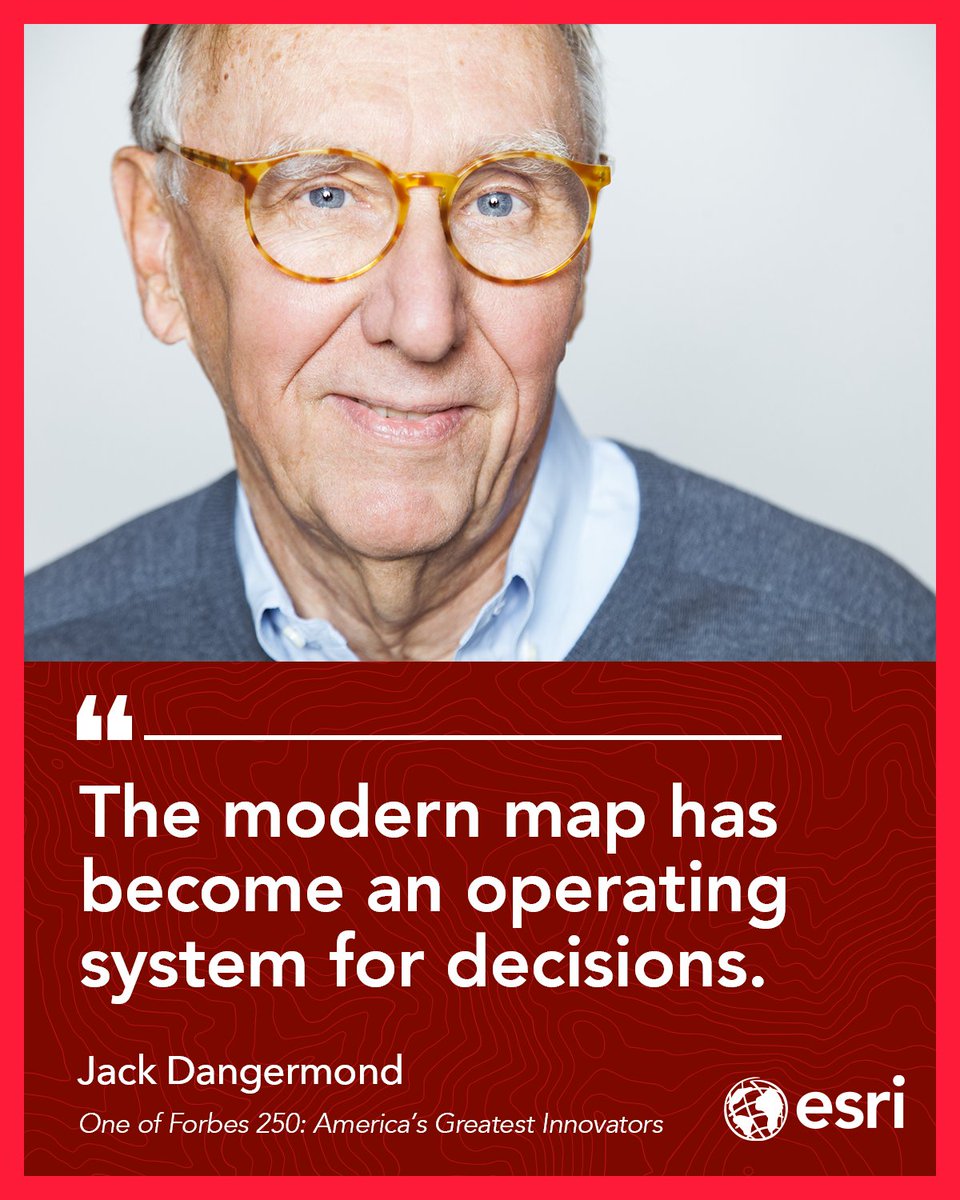
Maps used to show us where things were. Now, they help us understand what’s happening and where to act.
In @Forbes, Jack Dangermond explores how modern maps are becoming dynamic, AI-enabled systems for decision-making across industries. https://t.co/WeQVN5kH2L
Instead of another YouTube rabbit hole tonight.
Take these 11 courses to master Claude (for free):
→ Level 1 - 20 mins: The basics.
Claude certificates: https://t.co/Vn60ElPrcK
Claude For Dummies: https://t.co/QQDmzBAoH5
→ Level 2 - 55 mins: Real workflows.
Claude Cowork: https://t.co/uWTpOI3oyE
Claude for teams: https://t.co/qxlcqheAme
Cowork + Projects: https://t.co/xU97EpdrEe
Claude for slides: https://t.co/L0bPMgWEsy
Claude Skills: https://t.co/6cHYYfjpP2
→ Level 3 - 45 mins: The pro moves.
Claude Code: https://t.co/UgE9xBXnm6
Stop hitting Claude's limits: https://t.co/Yu24rPQafQ
Upload yourself in Claude: https://t.co/LyV7fegv4c
Stop prompting Claude: https://t.co/45xPLDRB6Y
Pro tip: Don't binge it. Do one level per sitting.
Actually apply each guide before moving to the next.
INSTEAD OF WATCHING AN HOUR OF NETFLIX.
This 60-minute MIT lecture will teach you more about building companies than every startup book you've read combined.
Bookmark it and give it an hour, no matter what.