My brother @wekesa_amos, I hear you clearly. I am ready to cooperate with colleagues and give my full support to push for the realisation of these standards. I also know that @DrCWCBKiyonga and @RudeMondayJ (Chair of the Health Committee) are better placed to help meet some of these conditions. At the same time, the Kasese District Local Government must step up its efforts. It is possible. Mwase thukolere hawuma.
Henry Muhoozi in action at the U17 World Cup in Qatar? It is like N'golo Kante ran into Kobbie Maino'o at 15, and the two morphed into one! I know, I know ...
But seriously, hopefully his minders are meeting/talking to the right people already, the boy needs to move to a European club with a history of bringing kids through. Ideally, I wouldn't even wamt him on the return flight from Doha to Ebb!
Okay, I will calm down now and get coherent. FIFA's U17 program and the amount of activity it has forced on member associations at that level might turn out to be the best thing to happen to Ugandan football. Many looking likely to follow James Bogere off our conveyor belt.
Like I mentioned earlier, the roofing works at Mandela National Stadium, Namboole, are progressing at a remarkable speed.
The transformation continues as Uganda steps up preparations to co-host AFCON 2027.
Every milestone brings us closer to welcoming Africa to Uganda. The Road to AFCON 2027 is taking shape!
📸: @mandelastadium
#RoadToAFCON2027
#ErichMboowaReports
BREAKING NEWS
BBC WORLD SERVICE
RWENZORI MARATHON 2026
OVER 100m WILL BE LISTENING TO DOCUMENTARY ABOUT UGANDA.
BY PROF BEN GARROD
This week, I have my first documentary for the BBC World Service Trust go out. On Saturday, ‘From Barefoot to Blacktop’ explores our evolutionary journey from canopy-living quadruped apes to bipedal, endurance walking (and marathon running) humans. I travelled back to Uganda, where I once lived, to see how chimpanzees, our nearest living relatives, evolved to thrive in humid rainforests. I also meet some of the very best human runners I’ve ever encountered, to see for myself how they train.
Finally, I lace up my shoes and head to a town called Kasese where I join the thousands of runners for the Rwenzori Marathon and meet the man behind the legendary race Wekesa Amos to see how his race is not only helping improve runners lives but also Ugandas local economy and international sporting reputation. How do I manage surviving the humidity, heat, elevation and still get some interviews in while running up into the foothills of the Rwenzoris?
This was a lovely project to work on and blends science, culture and sports. It’s fair to say I’m quite proud of this one. Working with Eric M. and Rami Tzabar Eleanor Dobing and Julian Mayers from yadayada | evidence-based marketing was great and there are brilliant and insightful contributions from colleague Dr Josh Arnold from University of East Anglia and Prof Cat Hobaiter from University of St Andrews. Big thanks also to Cimmissioner Gwenan Roberts who supported us and the project throughout.
A huge final thanks to the Uganda Tourism Board for help and support in this production. It makes all the difference and your support was invaluable.
https://t.co/UKTuAVQSxA
The moment that Matthieu Reeb, the director general of the Court of Arbitration for Sport, announced that Senegal had been reinstated as winners of Afcon 2025 🇸🇳
After weeks of negotiations, 10
Ugandans who are victims of human trafficking have been released from Myanmar prisons. I thank Ambassador Betty Bigombe for hard work, the United Kingdom Embassy in Myanmar for welfare support and role in the release, Eden an NGO particularly its President Lisa for prison visits and support and International Organization for Migration for provision of air tickets to return home this week. Felix Legkwo Adupe who was released earlier is still weak to travel.
🚨 Senegal's 2025 AFCON win is confirmed.🇸🇳
CAS determined the 'field of play' doctrine was applicable. After a walk off in the final, play was restarted.
The Swiss Federal Tribunal recently defined the ‘field of play’ doctrine as follows: “CAS has long developed a practice known as the ‘field of play doctrine’ […] under which it refrains from ‘reviewing decisions taken on the playing field by referees or other officials responsible for applying the rules of the game, unless there is evidence that those rules were applied arbitrarily or in bad faith’”.
As a result, the Court of Arbitration for Sport (CAS) upheld the appeal by the Senegalese Football Federation (FSF) against the Confederation of African Football (CAF) and the the Royal Moroccan Football Federation.
It means Senegal's 1-0 win over Morocco stands.
CAF had previously awarded the title to Morocco stating Senegal forfeited the game by walking off.
In their appeal, Senegal argued that the decision of the Referee, Jean-Jacques Ngambo Ndala, to resume the match at the 109th minute (90+19) during the AFCON 2025 final and to allow it to be concluded with a sporting result could not be reviewed, pursuant to the ‘field of play’ doctrine.
The FRMF argued, the Referee's decision did not fall under the ‘field of play’ doctrine and that Senegal breached Articles 82 and 84 of the AFCON Regulations, which should have led the Referee to bring the match to an early conclusion.
CAS say, "After having examined the arguments raised by the Parties, the Arbitral Panel considered that the Referee’s decision to resume the match or to stop it fell definitively within his sole authority. By blowing his whistle to restart play, the Referee considered that the conditions for resuming the match had been met - both teams were on the pitch again, and both expressed their willingness to resume."
The Panel also acknowledged that the Referee had to make a decision in "an atmosphere of extreme tension".
The CAS Panel was composed of Professor Gérald Simon as President (France), Professor Dr. Ulrich Haas (Germany) and Professor Luigi Fumagalli (Italy).
An in-person hearing took place behind closed doors at CAS headquarters, in Lausanne, on Thursday 8 October 2026.
The Parties did not agree to expedite this procedure, which therefore followed a standard timeline according to CAS procedural rules.
The Physical Planning Act (2010) & Building Control Act (2013): Under these statutes and the National Building (Building Control) Regulations (2020), KCCA cannot approve architectural plans or issue an Occupation Permit for multi-storey commercial buildings, malls, factories,
WEST NILE HAS THE POWER. WHERE ARE THE FACTORIES?
For decades, the loudest demand from West Nile was electricity. Our leaders pressed for it in Parliament, in campaigns and in every meeting with government. We were told the lack of power was the biggest obstacle to our transformation. They were right to fight.
That fight is won. The next one has not started.
West Nile now has about 170 MW of nominal electricity capacity: 145 MW from the national grid, 20 MW of solar and 5 MW of additional hydropower from Nyagak.
Our peak demand is 11 MW.
We use about 6.5% of what we have. On paper, 159 MW sits idle.
As an engineer, let me turn that into factories and jobs. In theory, 159 MW could run any one of these:
• 636 small factories at 250 kW each
• 318 agro-processing plants at 500 kW
• 79 medium factories at 2 MW
• 31 large factories at 5 MW
• 15 heavy industrial plants at 10 MW
That would translate to over 35,000 direct jobs and 40,000 indirect jobs. Overall, 75,000 jobs created.
So I ask our leaders: where is the noise now?
Where are the demands for industrial parks? For special economic zones? Where are the delegations going out to bring factories home?
Electricity was never the goal. It was the enabler. Poles, substations and transmission lines will not lift our people out of poverty. Factories will. Jobs will. Value addition will.
The West Nile Parliamentary Caucus and our regional leaders must unite behind one industrial agenda:
1. Fully serviced industrial parks, special economic zones and export processing zones.
2. Processing what we grow: coffee, cassava, maize, sesame, fruit and edible oil.
3. Manufacturing what our markets buy: construction materials, textiles, pharmaceuticals and consumer goods.
4. Affordable, long-term industrial finance.
5. Technical and vocational skills.
6. Aggressive promotion of West Nile as a place to invest.
But this is not a job for politicians alone. Our business community must carry its share, and I say this as one. Look around our towns. Our money is going into hotels and apartments. Many of us must now shift to building industrial facilities: factories, warehouses and processing plants. If we can build apartments to rent, we can build factory space to rent.
South Sudan and DR Congo are on our doorstep. We should be the factory that supplies them, not the corridor for goods made elsewhere.
Let us stop counting poles, transformers and kilometres of line. Let us count factories, jobs, exports and households lifted out of poverty.
170 MW against 11 MW should wake up every political and business leader in West Nile.
We fought for electricity and we got it. Now we must fight even harder for industry.
Electricity was the means. Industrialization is the goal. Prosperity is the outcome.
Joel Aita
Chairman Joadah Group
You chose to address staff concerns while the public is crying out about water disappearing from their homes. Where did the water go? How does water vanish from homesteads without @nwscug knowing in advance that it is about to disappear? Why wait until the complaints pile up before you respond?
The public is not protesting against your staff. They are protesting dry taps and unreliable supply. You may be doing some works, but why does action only come after the shortage has already become a crisis? Customers should come first as we are often told.
The heart break of a trader in Kampala.
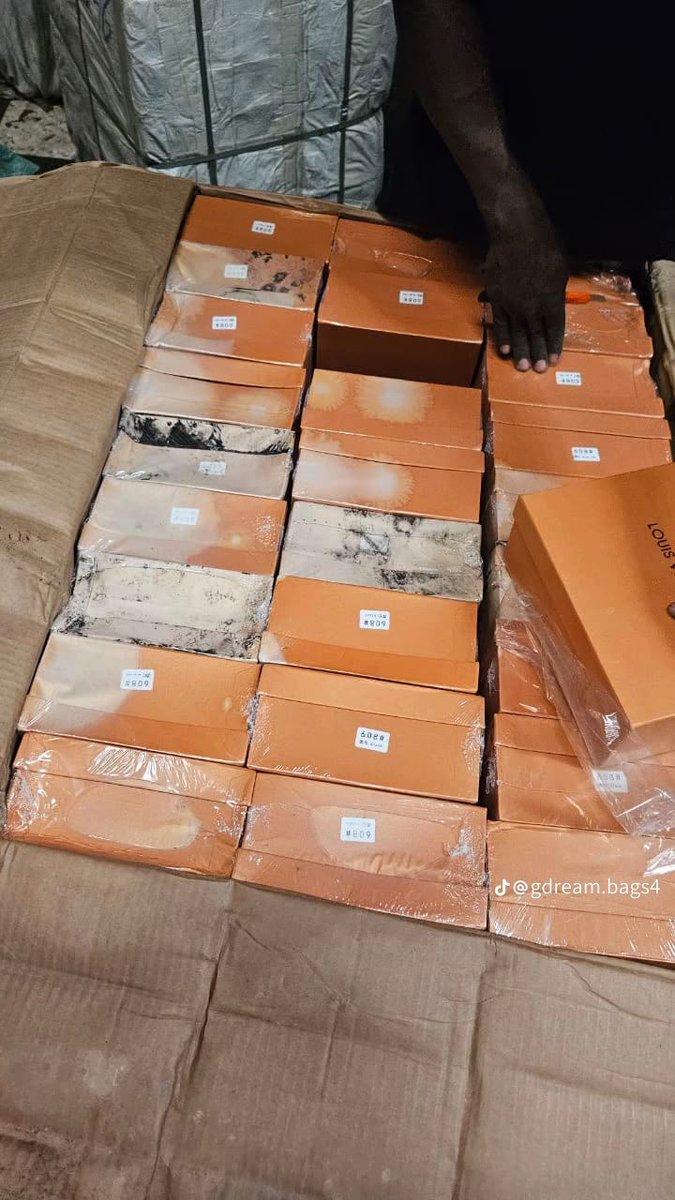
Imagine your goods being held for months due to bureaucracy in the clearing process and you finally get done and on opening the goods, they are all damaged.
That's the real heart break of a trader. Business gone, loans and there's no compensation.
Awo @URAuganda wetusiiza omusubuzi.
AFCON 2027 will be full of opportunities for many creatives and content creators.
I have seen someone on Instagram who was already started positioning himself with his graphics work. It will be up to the decision makers to source him and work with him.
Our very own @OfficialFUFA could think about working with him in that area.
So NOW you release the goods?!
After traders shut down Kikuubo. After traders lost millions. After traders cried, protested, and went on strike. NOW URA has decided to release goods belonging to traders held in bonded warehouses?
Let that sink in.
If these goods could be released TODAY, why were they held in the first place? What was the reason for holding them? What crime did these traders commit to deserve having their goods locked away?
And the biggest question: WHY DID YOU WAIT FOR A STRIKE?
Why does URA only listen when traders close their shops? Why does government only intervene when the economy is already bleeding? Why must Ugandans suffer first before you do the right thing?
Think about the traders who waited. And waited. And waited.
Some waited until their rent expired. Some waited until their loans defaulted. Some waited until their customers left and went to Kenya, to Tanzania, to Dubai. Some waited until they gave up completely and closed their businesses for good.
For those traders, this release is TOO LATE. Their businesses are already dead. Who will compensate them? Who will pay for the days, weeks, months they lost? Who will bring back the customers they lost? Who will pay the bank interest that kept growing while URA held their goods for no reason?
You cannot kill a business and then come and say "sorry, here are your goods." What is a trader supposed to do with goods when his shop is already closed? When his landlord has already locked him out? When his workers have already gone home hungry?
This is not a favour, URA. This is not kindness. This is you fixing a mess YOU created.
And nobody is talking about accountability.
Who ordered the goods to be held? Who benefited from holding them? Who will answer for the businesses that died in bonded warehouses? Who will be punished for killing Ugandan businesses?
Because in Uganda, when a trader makes a small mistake, URA fines him, closes him, auctions his goods. But when URA makes a big mistake that kills hundreds of businesses, nobody is punished. Nobody apologises. Nobody resigns. They just say "we have released the goods" like nothing happened.
No. We will not forget.
Releasing the goods now does not erase the damage. It does not bring back the businesses that collapsed. It does not pay the debts. It does not feed the families that went hungry.
URA, if you can release them now, you could have released them then. You CHOSE not to. You chose to punish traders. You chose to let businesses die.
So we ask again: Why is URA killing businesses instead of growing them? And who is accountable for all this mess?