Say goodbye to jittery foot sliding and rigid state machines—Learned Motion Matching is changing how 3D characters handle basic locomotion. 🏃♂️💨
this breakdown demonstrates AiKodex's tool for Unity, using machine learning to generate ultra-smooth, responsive human movement.
Maybe if physics had always been this easy to visualize and learn, we might have had more physicists than ever.
AI is making learning so much easier to understand and actually fun.
This is an electromagnetic field visualization built using Claude Opus 5.5.
I do not think I have ever understood this subject better than I did by simply seeing it visualized like this 😅
5½ days of sunspot group 4366
We've seen 63 M-class flares, 6 X-class flares, 0 radiation storms, 5 coronal mass ejections (CMEs) - 3 of them slow.
It has passed its zenith, but it is not yet at an end. The big question is: will it produce another CME?
Lecture 2 of our Physics-Informed Neural Networks mini-series.
In Lecture 1 we made the idea visible...a neural network isn’t predicting a PDE solution, it is the candidate function uᵩ(x,t), and the PDE residual rᵩ(x,t) is the leash that keeps it honest. Now the natural question follows:
How can a neural network be punished for breaking a PDE when nobody ever handed it the true solution, and the equation itself contains derivatives like uᵩₜₜ and uᵩₓₓ?
Here’s the satisfying answer:
A PINN doesn’t need the true answer to be corrected. It only needs a way to measure how wrong it is according to the PDE!
The network outputs uᵩ(x,t). A software called "autodiff" is used to compute the derivatives (uᵩₓ, uᵩₜ, uᵩₓₓ, …) exactly by applying the chain rule through the network. Those derivatives get dropped into the PDE to produce rᵩ(x,t). If rᵩ is big at some point, the loss spikes there, and gradient descent pushes the parameters so that rᵩ shrinks.
The math breakdown
We want a function u(x,t) that satisfies a PDE on a domain Ω. In this lecture we keep a concrete nonlinear example in mind, the damped sine-Gordon equation
uₜₜ(x,t) + γ uₜ(x,t) − c² uₓₓ(x,t) + sin(u(x,t)) = 0.
A PINN replaces the unknown function u with a neural network
uᵩ(x,t),
where ᵩ means all the network parameters (weights and biases).
Now we build the physics residual by plugging uᵩ into the PDE
rᵩ(x,t) = uᵩₜₜ(x,t) + γ uᵩₜ(x,t) − c² uᵩₓₓ(x,t) + sin(uᵩ(x,t)).
If uᵩ were a true solution, rᵩ would be 0 everywhere.
So we sample points (xⱼ,tⱼ) inside the domain. These are collocation points. At each one we evaluate rᵩ, and we define a physics loss
L_phys(ᵩ) = meanⱼ |rᵩ(xⱼ,tⱼ)|².
This is the punishment mechanism. (Punish just means: if |rᵩ| is big, L_phys is big; training updates ᵩ to make L_phys smaller. Reward means the loss drops, so those parameter changes are kept.)
The key question was where the derivatives come from. Since uᵩ is built out of differentiable operations, we can compute
uᵩₜ(x,t), uᵩₜₜ(x,t), uᵩₓ(x,t), uᵩₓₓ(x,t),
at any input (x,t) we choose.
Imagine a simple differentiable model written as a sum of nonlinear features
uᵩ(x,t) = Σₖ vₖ σ( wₖx x + wₖt t + bₖ ) + b₀.
Then the derivatives are just chain rule
uᵩₓ(x,t) = Σₖ vₖ σ′(·) wₖx
uᵩₓₓ(x,t) = Σₖ vₖ σ″(·) (wₖx)²
uᵩₜ(x,t) = Σₖ vₖ σ′(·) wₖt
uᵩₜₜ(x,t) = Σₖ vₖ σ″(·) (wₖt)².
So rᵩ(x,t) is an explicit computable number at every (x,t). For the damped sine-Gordon example, it’s the same story, just with one extra nonlinear term:
rᵩ(x,t) = [uᵩₜₜ(x,t) + γ uᵩₜ(x,t) − c² uᵩₓₓ(x,t)] + sin(uᵩ(x,t)).
A real PINN is a deeper composition of these same building blocks, but it’s still just a chain rule, and autodiff is the machinery that does that bookkeeping reliably for big graphs.
Then we train by gradient descent on the total loss. Even if we use only physics for the moment, the update is conceptually just
ᵩ ← ᵩ − η ∇ᵩ L_phys(ᵩ),
with learning rate η.
In practice we also include initial/boundary conditions or data, because PDEs aren’t uniquely determined without them
L(ᵩ) = L_data(ᵩ) + λ L_phys(ᵩ) + L_bc/ic(ᵩ),
where L_bc/ic(ᵩ) enforces things like uᵩ(x,0) ≈ u₀(x) and uᵩₜ(x,0) ≈ v₀(x), or boundary conditions at x = ±L.
So Lecture 2’s punchline is simple: the PDE becomes a training signal. We keep differentiating uᵩ, measuring rᵩ, and updating ᵩ until the residual goes quiet across Ω.
#PINNs #PhysicsInformedNeuralNetworks #ScientificMachineLearning #AutoDiff #Backpropagation #PDE #DifferentialEquations #Optimization #MachineLearning #AppliedMath #ComputationalPhysics
This “microtubule donut” is living physics, energy-driven filaments sensing light, self-organizing into swirling order inside a ring, blurring matter and motion.
In 1996, James Sethian showed something almost unfair...you can find shortest routes through a messy world by letting a wave expand once...no trial paths, no search beams, just one growing front.
Here’s how: we solve for an arrival-time field T(x,y) so that T literally means how long the wave needs to reach this point. The rule is ||∇ T|| = 1/F, where the medium is fast (F large) the front sprints, where it’s slow it trudges, and obstacles are speed ≈ 0, so the front wraps around them because that’s the only way forward.
Then comes the satisfying part: once T exists, a path doesn’t need to search at all...drop a bead anywhere and let it follow ẋ ∝ -∇ T, it slides downhill on the time landscape and traces a globally fastest route back to the source. This “wave = optimal control” viewpoint is exactly what Tsitsiklis (1995) made precise from the Hamilton-Jacobi side...compute the value/arrival-time function and the optimal trajectories fall out from it.
#FastMarching #EikonalEquation
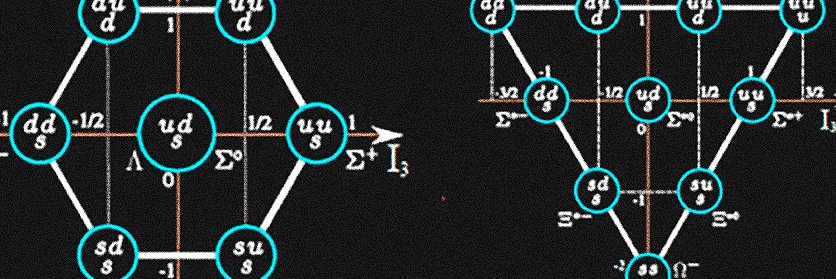
Group theory is the mathematical study of symmetry. In machine learning, it's the foundation for Geometric Deep Learning. Its principles ensure models respect the data's structure. For example, Convolutional Neural Networks (CNNs) are "translation equivariant," meaning they recognize an object regardless of its position. This concept is extended to models for graphs and 3D molecules. In real life, it's fundamental to quantum physics (classifying particles) and chemistry (understanding molecular vibrations and crystal structures).
https://t.co/EfMWp5d7mm
From the point of view of science I've never been too excited about the Game of Life. But now I realize that what's really exciting about it is what it tells us about what we can call metaengineering. That half century of impressive Life hacking gives us a uniquely clean example of an arc of engineering progress, the role of invention vs. discovery, and possible "laws of innovation"...
https://t.co/Nr0X9KD8sa