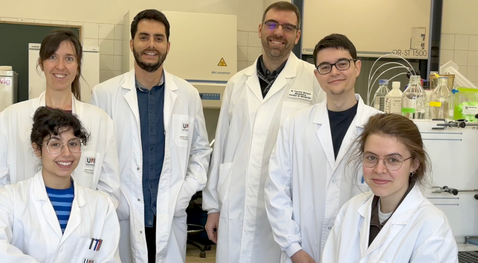
1/ 💊 Com hem d’utilitzar els antibiòtics per ajudar a frenar la resistència bacteriana?
Per tancar la Setmana de Sensibilització sobre l’Ús dels Antibiòtics, compartim els consells de cinc investigadors de la nostra xarxa.
Difon-los i ajuda’ns a combatre aquesta amenaça global! 🔄👇
@UABBarcelona 2/ 🔍 And if you want to learn more about the history of antibiotic resistance and the most innovative research within our network, follow our posts throughout the World Antimicrobial Awareness Week.
Stay tuned! 🔜
1/ 🦠 “Nightmare bacteria,” superbugs… these terms are increasingly heard and highlight a major global health challenge: antibiotic resistance. How can we tackle it?
Today we ask researcher Marc Torrent (@UABBarcelona) from our network. 👇
🔗 https://t.co/uql3WBPsO2
@UABBarcelona 2/ 🔍 I si vols saber més sobre la història de la resistència als antibiòtics i les investigacions més innovadores de la nostra xarxa, segueix les nostres publicacions durant la Setmana de la Conscienciació sobre l’Ús dels Antibiòtics.
Stay tuned! 🔜
1/ 🦠 “Bacteris malson”, superbacteris… són noms que sentim cada cop més i que posen de manifest un desafiament de salut global: la resistència als antibiòtics. Com podem afrontar-la?
Avui li preguntem a l’investigador de la nostra xarxa Marc Torrent (@UABBarcelona). Llegeix-ne més 👇
🔗 https://t.co/tUwuyanqD4
🦠 La resistència als antibiòtics és un repte global que causa centenars de milers de morts a l’any.
Amb #CaixaImpulse, Marc Torrent (@sysbiogr@UABBarcelona) desenvolupa nous antibiòtics precisos i segurs que eliminen bacteris infecciosos sense danyar els beneficiosos.
https://t.co/Fs34EWJBin
La resistencia a los antibióticos es un reto global que causa cientos de miles de muertes al año.
Con #CaixaImpulse, Marc Torrent (@sysbiogr@UABBarcelona) desarrolla antibióticos precisos y seguros que eliminan bacterias infecciosas sin dañar las beneficiosas.
https://t.co/3nzge5dc4T
🆕Nuevo estudio, coordinado por Marc Torrent Burgas, investigador de la @UAB y responsable científico del proyecto colaborativo Abpathfinder, identifica una fuente de antibióticos naturales en nuestras propias proteínas.
👀👉 https://t.co/kar2Kg4CX8
Grateful to all co-authors and collaborators who made this work possible—especially first authors Daniel Sandín and @RoberBEMA—, Prof. David Andreu, and the teams at @UABbarcelona, @UPFBarcelona, @VHIR_ and @CSIC
🧩 Could our own proteins hide secret weapons against bacteria? We’ve uncovered hidden peptides in heparin-binding proteins that selectively kill Gram-negative pathogens 🦠
https://t.co/WYY4m4X4EG
#AntimicrobialPeptides#AMR#Microbiology#AcademicTwitter
3️⃣ A powerful proof-of-concept: We synthesized these hidden peptides, and several showed exceptional activity against Gram-negative pathogens, including multi-drug-resistant strains.
After a long journey, it’s out.
Can prion-like proteins from the gut microbiome trigger neurodegeneration?
"Exogenous prion-like proteins and their potential to trigger cognitive dysfunction" 🧠🦠 | Molecular Systems Biology https://t.co/aCBREIw5CI
#Neurodegeneration#Microbiome
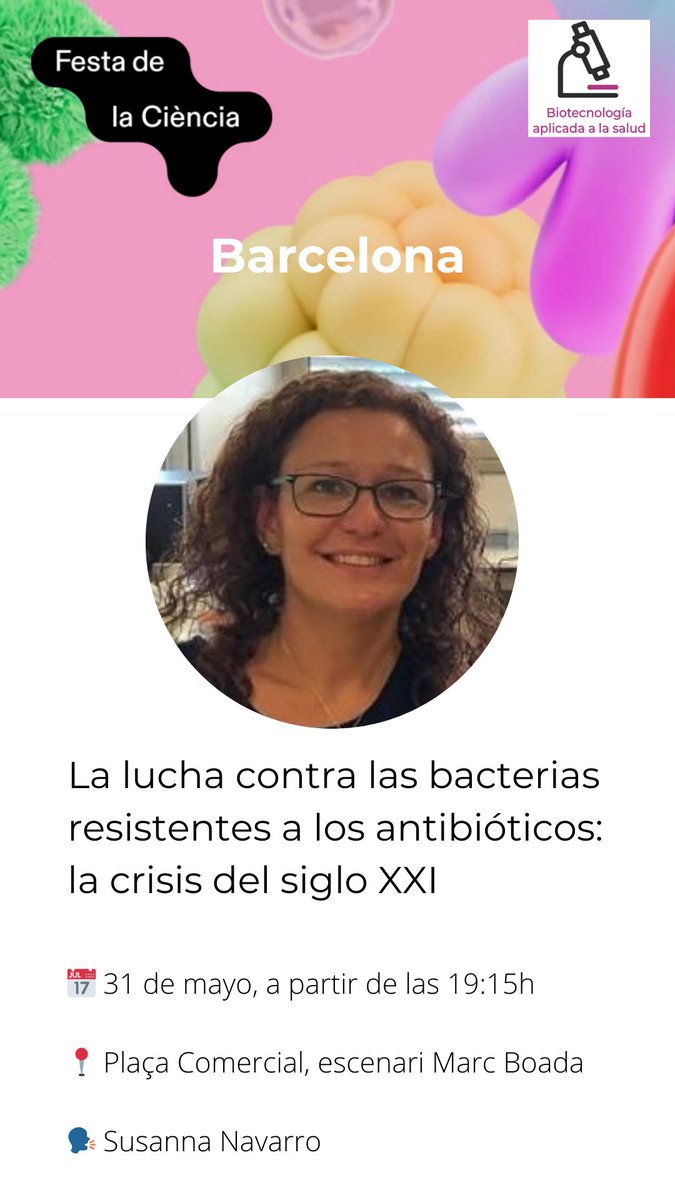
📢 ¡Atención a todos los entusiastas de la ciencia y la tecnología! Susanna Navarro, investigadora de ABPATHFINDER, brindará una microcharla sobre las bacterias resistentes a los antibióticos en la #FestadelaCiència.
🗓️ 31.05
🕖 19:15
📍 Plaça Comercial, escenario Marc Boada
Design of Facilitated Dissociation Enables Control Over Cytokine Signaling Duration @UWproteindesign
🚀 New preprint from David Baker!🚀
1. This study introduces a protein engineering approach to control protein-protein interaction kinetics through facilitated dissociation, leveraging induced-fit conformational changes to modulate dissociation rates by up to 6000-fold.
2. The approach creates a ternary complex intermediate using an effector protein, reshaping the energy landscape to accelerate dissociation of the protein partner. This provides precise temporal control over binding events.
3. Applications include cytokine signaling modulation, where a designed interleukin-2 (IL-2) mimic enables seconds-scale termination of receptor activation, providing tools for studying dynamic immune responses.
4. Structural analysis via crystallography and molecular dynamics simulations confirms the successful design of strained intermediate states that resolve protein-protein interaction frustrations.
5. The method has been applied to create sensors and split enzyme systems with rapid on/off capabilities, overcoming traditional trade-offs between dynamic range and response time.
6. This work demonstrates the potential to engineer protein systems with finely tuned kinetic properties, paving the way for advanced therapeutic applications and the study of transient biological processes.
@FloPraetorius@DMZuckermanLab@Mohamad_Abedi@malichtenstein@adam_broerman
📜Paper: https://t.co/gR9H14PGeN
#ProteinEngineering #CytokineSignaling #Bioinformatics #Therapeutics #KineticControl