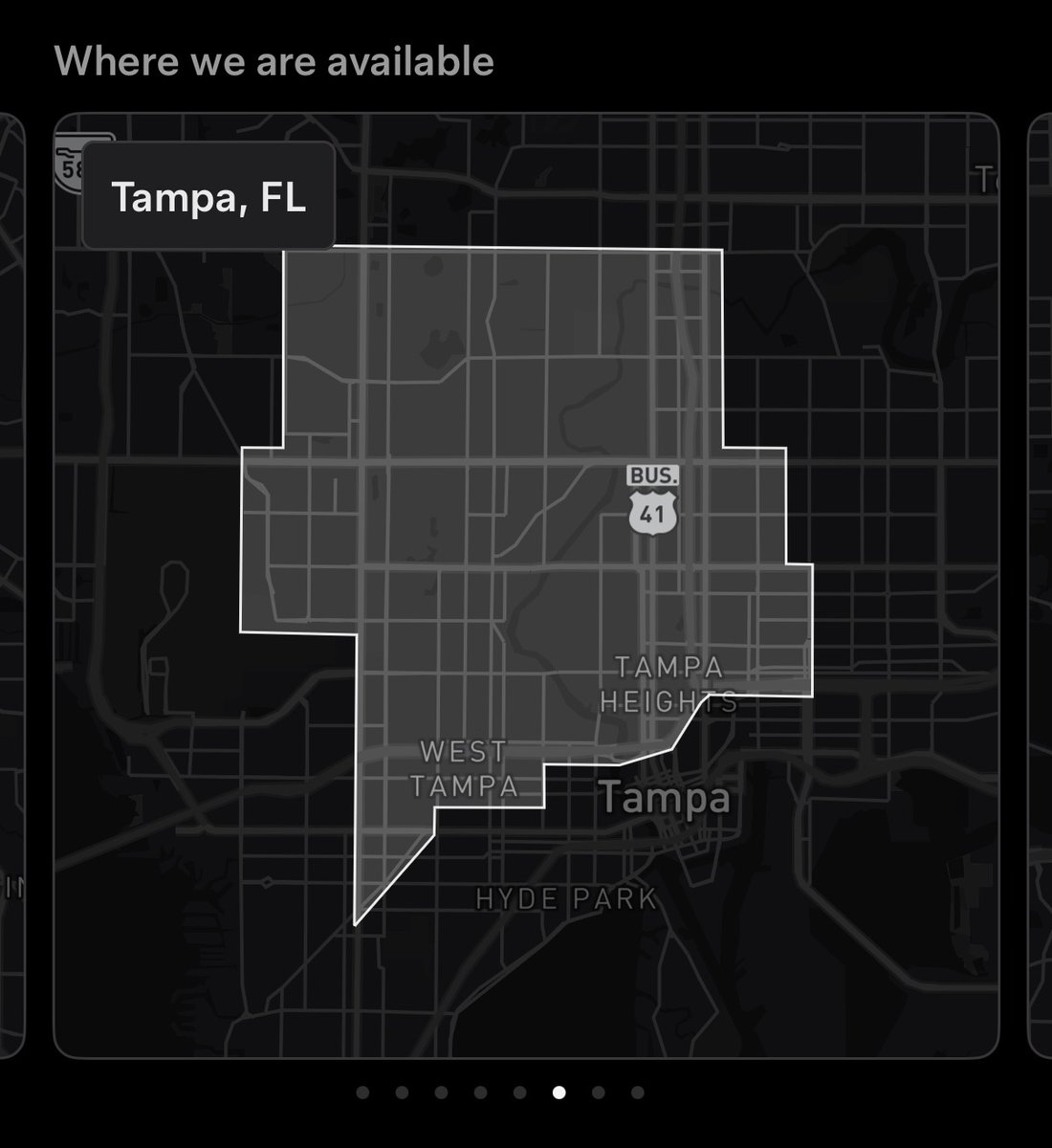
GOOD NEWS 🚖 Job postings on Tesla’s careers page strongly suggest that Phoenix in Arizona, San Antonio and Fort Worth in Texas, have been selected as the next target cities for Robotaxi service expansion 🔥
This will expand Tesla’s Robotaxi service footprint to 10 cities across 4 states (Texas, Florida, California, plus Arizona) 🔥
Redefining the boundaries of human capability requires pioneers.
If you have quadriplegia and want to explore new ways of controlling your computer, we invite you to participate in our clinical trial.
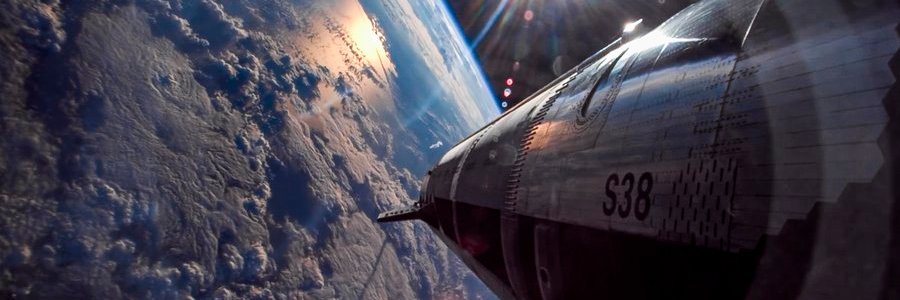
Now targeting Friday, July 24 for Starship’s thirteenth flight test, due to weather.
A key objective for the flight test is to get clear imagery from the ground of Starship’s heatshield as it flies at a higher dynamic pressure during ascent, which won't be possible with today's weather conditions. Visibility is forecast to be ideal for a Friday attempt.
@TandemPD Shuttle was too complicated & costly tho? Starship will be better. Dont forget test flight today! Livestream starts in 2.5hrs! 🚀 🤩
https://t.co/e5yAmqhKtc
@TandemPD@Echo5550 icymi 👇 Really good (2022) documentary. Lots of interviews & details about what it was like to work on Shuttle from engineers, heat shield tiler, ground crew, directors, mission control, etc
https://t.co/nnc6CIOvPm
PBS
https://t.co/5gaul2Lptk
or YouTube
https://t.co/XbrENFmAte
@EdwardMeunier1@SawyerMerritt Grok says: Tesla does not officially sell the Cybertruck in Europe due to missing EU type approval over pedestrian safety, sharp edges, and weight regulations, with only a small number of modified private imports registered in select countries like Czechia.
GOOD NEWS 🚀 For the first time in history, a human-made spacecraft will be exactly one light-day away from Earth 🔥
At exactly 10:16 a.m. GMT on November 18, 2026, Voyager 1 will reach an unprecedented milestone in the history of space exploration: becoming the first human-made object to be exactly one light-day away from Earth 🆒
🌌 What is a "light-day"? Light travels at a speed of nearly 300,000 km/s. In 24 hours, light travels about 16.09 billion miles (25.9 billion kilometers)—a massive distance that took Voyager 1 just over 49 years to conquer.
This also means that:
📡 A radio signal sent from Earth will take 24 hours to reach Voyager 1.
📨 If the spacecraft responds immediately, NASA engineers will have to wait another 24 hours to receive the signal. Just a simple back-and-forth exchange will take two full days.
📻 The spacecraft communicates across this vast distance using a transmitter that radiates only about 22 watts—comparable to a small refrigerator light bulb—and sends its science data back at a trickle of just 160 bits per second.
☄️ To reach this incredible distance, Voyager 1 has been cruising at a blistering speed of about 38,000 mph (61,150 km/h) relative to the Sun.
🔋 The spacecraft is powered by the natural decay of plutonium-238, but it loses about four watts of available power annually. As of mid-2026, only two science instruments remain operational. NASA engineers are carefully managing this fading power to hopefully stretch its life into the 2030s, though continued operation is not guaranteed.
📸 Before permanently powering off its cameras to save energy, Voyager 1 snapped the famous "Pale Blue Dot" photograph about 3.7 billion miles from the Sun. Earth occupied a mere 0.12 pixel, suspended in a band of scattered sunlight across the camera optics. Just 34 minutes later, the cameras were shut down forever.
🚀 Launched on September 5, 1977, Voyager 1 successfully explored Jupiter and Saturn before a close encounter with Saturn's moon Titan bent its trajectory northward, launching it out of the planetary plane. On August 25, 2012, it crossed the heliopause and became the first spacecraft to enter interstellar space. While it hasn't completely left the Sun's gravitational domain (it will take roughly 300 years just to reach the inner Oort Cloud!), it continues to send back invaluable data from the cosmic shoreline.
Although it is purely a milestone of distance, Voyager 1 reaching the one light-day threshold is a striking reminder of the immense scale of the universe. The most distant object ever built by humans still required just over 49 years to travel the distance that light covers in exactly one day.
💙 After almost half a century of continuously plunging into the endless void, Voyager 1 continues its journey—carrying the Golden Record containing sounds, images, and messages from Earth, as humanity's greeting to the cosmos.
The first statue ever raised in St Paul's Cathedral is not a king, a general or a saint.👑🚫⛪️
It is a quiet Bedfordshire squire who asked one question nobody wanted asked. 🇬🇧
In Georgian England you could be found not guilty and stay in gaol. 🏴
The gaoler drew no wage, he lived on fees from his prisoners, and if you could not pay, the door stayed shut. Innocent or not.
In 1773 John Howard was made High Sheriff of Bedfordshire. Most sheriffs sent a deputy to the county gaol. Howard walked in himself. ⚖️
He asked the magistrates to pay the gaoler a wage instead.
They asked him to name one county in England that did. So he rode out to find one.
Gaol after gaol, county after county, there was none. Just the same fee at every door, cells cut below ground and a fever in the straw that killed more prisoners than the gallows.
In 1774 Parliament called him to the bar of the Commons, thanked him for his humanity and zeal and changed the law of England. Fees struck down. Cleared men freed in open court.
Howard printed the new law himself and sent it to every gaol in England. 📜
Then he kept going. Scotland, Ireland, France, Germany, Russia. 🏴🇮🇪🇫🇷🇩🇪🇷🇺
He weighed the prison bread and measured the cells in hundreds of prisons, over 42,000 miles by his own count, and set it all down in The State of the Prisons in 1777.
In 1779 Parliament passed the Penitentiary Act with his evidence before it.
At 63, at Kherson on the Black Sea, he sat at a fever patient's bedside, and the gaol fever he had followed through the prisons of Europe took him too.
He asked for a quiet grave, a sundial and to be forgotten. 🔥
Britain refused.
St Paul's had never once held a statue. The first ever raised was his. The reformers who came after him took his name and carry it still.
━━━━━━━━━━━━━━
One quiet Englishman kept opening doors nobody wanted opened.
We are the home of British heroes.
There is a place for you with us.
👉 https://t.co/rih7iKwnvf 👈
Be part of us. ☝️🇬🇧
Be Proud Of Us. 🙏🇬🇧
@3sloth3 Hey u know theres meds that slow dementia/memory loss? (or it could be a thyroid issue or something else)
I know someone on memantine (generic Namenda) whos doing well on it with no side effects. Its for moderate to severe tho but theres other meds for mild
This is insane. A New Jersey bill proposed (A3968) would require any driverless robotaxi to be equipped with cameras plus two additional distinct sensor types capable of detecting obstacles even if cameras fail (LiDAR, Radar). This bill wouldn’t allow Tesla to operate in the state since they use a camera-only approach.
The requirements from the bill are:
• 50,000 supervised miles with operators
• Triple-sensor hardware before any robotaxi goes fully driverless.
Sen. Andrew Zwicker: "At this point, I don't think the evidence is sufficient that a single sensor with software can handle situations that humans can."
What? Have these people seen anything Tesla is doing right now? This bill is absolutely ridiculous.
Link to oppose the bill is below.
A 33-year-old woman at MIT wrote the code that ran inside the Apollo 11 lunar lander, and 20 seconds before Neil Armstrong touched the moon, her program made a decision the astronauts didn't know was happening that was the only reason the mission didn't crash.
Her name was Margaret Hamilton.
She led the team writing every line of code that would fly humans to the moon and back. The part almost nobody knows is that she had to fight to be allowed to do the work at all.
Code in 1965 was not treated as real work.
Rockets were serious. Circuits were serious. Writing code was something the men at NASA thought secretaries could do on the side. Hamilton was told this to her face more than once.
So she started calling what her team did "software engineering."
She used the phrase on purpose. In meetings. In memos. To force people to treat it as a discipline instead of a chore. Colleagues laughed at her the first few times she said it out loud.
That phrase is now the name of the biggest engineering profession on earth.
The story of what her code did on July 20, 1969 is the one every kid should be taught.
Neil Armstrong and Buzz Aldrin were 3 minutes from touching down when the computer inside the lunar module started flashing an alarm.
1202.
Then again. Then 1201. Five alarms in four minutes. The computer was telling the astronauts it could not finish everything it had been asked to do.
The computer they were flying with had less memory than a modern microwave.
Someone on the checklist had left a switch in the wrong position, and a radar the astronauts did not even need right then was flooding the computer with data. It was eating around 13% of the machine's brain at the exact moment every second mattered.
In almost any other system, that overload would have frozen the machine.
A frozen machine 30,000 feet above the moon means a crash. It means two dead astronauts and a third one orbiting alone above them, waiting for a signal that would never come.
Hamilton's code did something else.
She had built the software with a rule almost nobody in her field was using at the time. When the machine ran out of room, it would not treat every task as equally important. It would look at the list of jobs it had been asked to do, throw out the ones that could wait, and keep running only the ones keeping the crew alive.
The radar was the low priority job.
The landing was the highest.
So the computer did what she had told it to do. It dumped the radar. It kept flying. The alarm was not a failure. It was the machine reporting that it was handling the overload exactly the way she had designed it to.
Down in Houston, a 24-year-old engineer named Jack Garman recognized the alarm from a test his team had run months earlier. He shouted "Go" to the flight controller. The controller shouted it up to the crew. The landing kept going.
Armstrong touched the surface with 25 seconds of fuel left.
The part that gets lost in every retelling is why Hamilton had built that safety net in the first place.
NASA had not asked for it.
She had added it on her own, years earlier, because her 4-year-old daughter Lauren had once crashed the simulator by pressing a button during a test. The button was one the astronauts had been told they would never press.
Hamilton wanted the code to survive that button press anyway.
Her bosses told her it was a waste of time. Astronauts do not make mistakes.
She insisted. The safety net went in.
Two years later, on the way to the moon, an astronaut left a switch in the wrong position. The exact class of mistake she had been told would never happen.
There is a photograph of her from that period.
She is standing next to a stack of paper as tall as she is. Every page in that stack is the code her team wrote for the mission. She is smiling at the camera like she knows something the rest of the aerospace industry has not figured out yet.
In 2016, Barack Obama put the Presidential Medal of Freedom around her neck and said the astronauts did not have much time, but thankfully, they had Margaret Hamilton.
Every autopilot in every plane you have ever flown on uses a version of what she invented. Every pacemaker. Every self driving car. Every satellite in orbit.
The idea that a machine should know which job matters most and drop the rest when it runs out of room is now the foundation of almost every safety system on the planet.
She wrote it because a 4 year old crashed a simulator and nobody else thought it was worth fixing.
The men in the room laughed at her for calling it engineering.
Then her code was the only thing in the sky that did not fail.