🚨 BREAKING: Canada has launched online passport renewals.
As of July 28, Canadians can renew their passport online if they:
• are 16 or older
• are applying from within Canada
• have a passport issued within the past 15 years
Applicants can upload a digital passport photo, track their application in real time and receive updates as it is processed.
The government estimates up to 2 million applications per year could be eligible for the new online service.
What you need to know ⬇️
I was carrying 21kg I didn't need, a soft middle and a rounder face, and I had to get lean before fall hit. Here is how I did it, in 26 rules:
RULE 1. STOP RUNNING (your knees will thank you).
In the Santiago Bernabéu Stadium, the real grass is moved underground when the stadium hosts concerts and events.
This allows the field to stay healthy while the space transforms for huge crowds.
Scientists have developed a new treatment for baldness.
The new treatment consists of a sugar gel that showed strong results in lab mice, promoting regrowth of thick, long fur in areas affected by testosterone-driven hair loss.
Researchers discovered this effect while studying how deoxyribose, a naturally occurring sugar in DNA, heals wounds in mice. During those trials, they observed faster fur regrowth around treated wounds. This led to a focused study in which male mice had fur removed from their backs and were treated daily with a deoxyribose-based gel. The gel triggered robust hair regrowth comparable to minoxidil, one of only two FDA-approved drugs for androgenic alopecia.
The researchers believe the sugar may increase blood flow to hair follicles, a known factor in stimulating growth. Their biodegradable, non-toxic gel outperformed a placebo and matched minoxidil's 90% regrowth success rate in mice.
A combination of both treatments did not enhance results further. No testing has yet been done on female mice or humans. Current drugs like finasteride, which blocks testosterone conversion, can cause side effects and aren’t approved for women.
The sugar gel could offer a simpler and safer option, especially for cases where minoxidil or finasteride is ineffective or poorly tolerated. Photographic evidence showed visible differences over a 20-day trial period. Still, the mechanism behind the sugar gel's effectiveness remains unclear. Researchers observed more blood vessels and skin cells near the application site, which could explain the growth.
🧠 Your Complaints May Be Rewiring Your Brain
Every repeated thought leaves a mark. Scientists suggest that constantly focusing on problems may keep your stress system active, increasing cortisol and affecting focus, memory, and mood.
The good news? Your brain can change. Through neuroplasticity, positive habits like gratitude, problem-solving, and healthy coping can build stronger mental pathways.
Your thoughts are not just words… they are shaping your brain.
Source:
McEwen, B. S. Neurobiological and systemic effects of chronic stress. Chronic Stress, 1, 1–11.
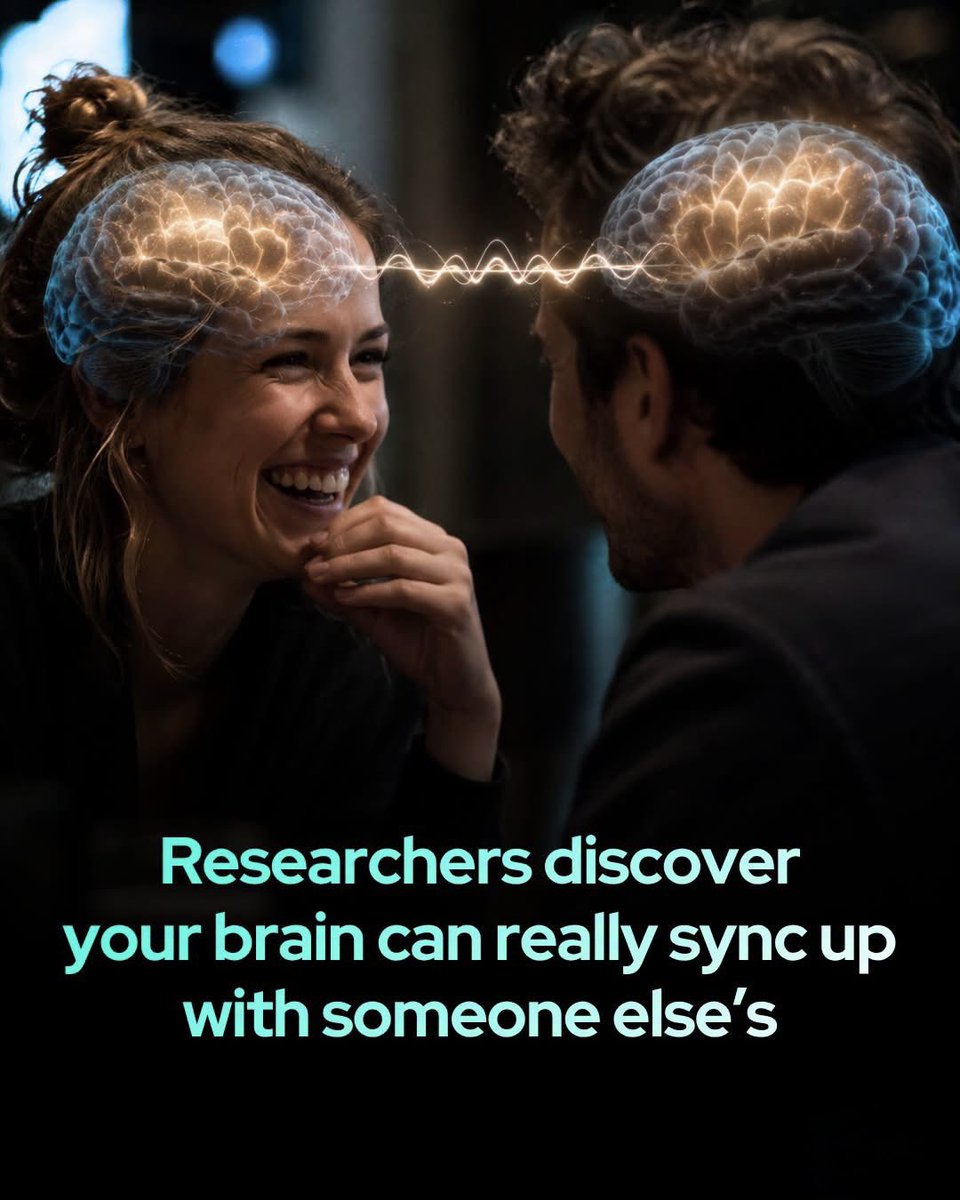
🚨 SCIENTISTS DISCOVER YOUR BRAIN CAN SYNC WITH SOMEONE ELSE'S
What if feeling "on the same wavelength" isn't just a saying?
Scientists have found that when people truly connect, learn, or work together, their brain activity can actually synchronize. This phenomenon, called brain synchrony, has been observed in classrooms, music studios, and team activities.
It's not mind reading—but it may explain why some people instantly connect. Researchers believe this discovery could one day improve education, teamwork, and even mental health treatment.
Source: Babiloni, F., et al. Multi-brain neurofeedback: What are we training for? Trends in Cognitive Sciences.
Feeling overwhelmed? Here’s a surprisingly effective reset.
A quick burst of cold under your arms can activate the vagus nerve—the body’s built-in “calm switch.”
This cool signal helps slow your heart rate, ease tension, and pull you out of that intense fight-or-flight state.
It’s not a long-term solution, but it is a fast, natural way to regain control when stress starts to spike.
Have you ever tried a cold-therapy before?
A new kind of cancer vaccine is in human trials.
Researchers at the University of Florida have created a new kind of mRNA cancer vaccine—one that can be mass-produced and stored ready-to-use, rather than laboriously customized for each patient.
Speed is the game-changer: traditional personalized cancer vaccines often take months to design and manufacture, during which time a tumor can mutate and slip away. This off-the-shelf version instead delivers a powerful, broad-spectrum wake-up call to the immune system by dramatically increasing type-I interferons—signaling molecules that put the body’s earliest defenses on high alert against any cancer cells.
In mouse studies, the vaccine sharply slowed or completely halted melanoma, aggressive brain tumors (gliomas), and lung-metastasized bone cancer. When paired with checkpoint-inhibitor immunotherapy, it achieved even stronger results, turning “cold,” treatment-resistant tumors hot and responsive.
Unlike most cancer vaccines that zero in on a single tumor-specific antigen, this one activates the innate immune system—the fast-acting, non-specialized branch that doesn’t need to “learn” the enemy first. That makes it especially promising for hard-to-treat, immunologically silent cancers such as pancreatic and ovarian tumors.
Clinical trials are already underway in patients with recurrent brain and bone cancers. If the approach proves successful in humans, it could transform how we prevent cancer from coming back after initial treatment—and provide a vital new weapon when standard therapies have run out of road.
["Sensitization of tumours to immunotherapy by boosting early type-I interferon responses enables epitope spreading." Nature Biomedical Engineering, 18 July 2025]
New Gartner research shows sacrificing human workers for AI investments is backfiring — yielding zero financial gains for major corporations.
As tech giants and major corporations rush to replace human employees with artificial intelligence, a new Gartner survey of 350 executives at billion-dollar companies reveals a harsh reality: these layoffs are not paying off.
While 80 percent of surveyed leaders admitted to trimming their staff to fund autonomous tech, those who slashed headcount saw the exact same financial gains as companies that retained their workforce.
This premature rush to automate has left many businesses sacrificing valuable institutional knowledge and employee morale for absolutely no detectable return on investment.
The study highlights that the most successful companies aren't replacing workers, but rather using AI to amplify them. Organizations that provide AI tools to boost employee efficiency, rather than replace them, are the ones seeing actual, tangible benefits.
However, implementing this strategy remains a hurdle, as prior research indicates over half of employees actively avoid using in-house AI tools [1]. Ultimately, the data suggests that treating AI as a collaborator rather than a replacement is the key to unlocking its true economic potential.
source: Vermes, K. (2026). Large Study Finds That Replacing Workers With AI Is Backfiring Badly. Futurism.
🧠 Your Legs May Be Protecting Your Brain... Here's Why!
What if the secret to a sharper brain isn't in your head... but in your legs?
Research suggests that strong leg muscles release natural signals during exercise that help support memory, learning, and the growth of healthy brain cells. Regular lower-body exercise may also reduce inflammation and help protect your brain as you age.
Maybe "never skip leg day" is about more than just fitness. Your future brain could thank you for it.
Source: Lloyd, B. A., et al. The Journal of Physiology. PMID: 26551663.
New research reveals that listening to music can slash dementia risk by 40%.
A landmark Monash University-led study involving more than 10,800 participants has discovered a powerful connection between music and cognitive preservation in seniors. Researchers found that consistently listening to music after age 70 is associated with a staggering 39 percent reduction in dementia risk. For those who play an instrument, the risk is lowered by 35 percent, indicating that both active and passive musical engagement can serve as a potent shield against brain decline.
Lead researchers Emma Jaffa and Professor Joanne Ryan emphasize that these findings offer a vital, accessible strategy for maintaining brain health in an aging global population. Beyond reducing dementia risk, regular musical engagement was linked to sharper episodic memory and improved overall cognition. As medicine continues to extend human lifespans, integrating music into daily life represents a simple yet transformative lifestyle choice that may delay the onset of neurodegenerative conditions where cures remain elusive.
source: Jaffa, E., & Ryan, J. (2025). What is the association between music-related leisure activities and dementia risk? A cohort study. International Journal of Geriatric Psychiatry.
UNUSUAL
Chemical-free, technology-based: A mosquito-free park in CHINA
In a park in Hangzhou, a smart mosquito control system has been implemented without the use of chemicals.
The traps mimic human body signals—heat, scent, and carbon dioxide—attracting mosquitoes and then killing them using air suction.
This technology offers an alternative to traditional urban pest control methods.






![Rainmaker1973's tweet photo. A new kind of cancer vaccine is in human trials.
Researchers at the University of Florida have created a new kind of mRNA cancer vaccine—one that can be mass-produced and stored ready-to-use, rather than laboriously customized for each patient.
Speed is the game-changer: traditional personalized cancer vaccines often take months to design and manufacture, during which time a tumor can mutate and slip away. This off-the-shelf version instead delivers a powerful, broad-spectrum wake-up call to the immune system by dramatically increasing type-I interferons—signaling molecules that put the body’s earliest defenses on high alert against any cancer cells.
In mouse studies, the vaccine sharply slowed or completely halted melanoma, aggressive brain tumors (gliomas), and lung-metastasized bone cancer. When paired with checkpoint-inhibitor immunotherapy, it achieved even stronger results, turning “cold,” treatment-resistant tumors hot and responsive.
Unlike most cancer vaccines that zero in on a single tumor-specific antigen, this one activates the innate immune system—the fast-acting, non-specialized branch that doesn’t need to “learn” the enemy first. That makes it especially promising for hard-to-treat, immunologically silent cancers such as pancreatic and ovarian tumors.
Clinical trials are already underway in patients with recurrent brain and bone cancers. If the approach proves successful in humans, it could transform how we prevent cancer from coming back after initial treatment—and provide a vital new weapon when standard therapies have run out of road.
["Sensitization of tumours to immunotherapy by boosting early type-I interferon responses enables epitope spreading." Nature Biomedical Engineering, 18 July 2025]](https://pbs.twimg.com/media/HMxRQjNWUAAcg7A.png)

![ShiningScience's tweet photo. New Gartner research shows sacrificing human workers for AI investments is backfiring — yielding zero financial gains for major corporations.
As tech giants and major corporations rush to replace human employees with artificial intelligence, a new Gartner survey of 350 executives at billion-dollar companies reveals a harsh reality: these layoffs are not paying off.
While 80 percent of surveyed leaders admitted to trimming their staff to fund autonomous tech, those who slashed headcount saw the exact same financial gains as companies that retained their workforce.
This premature rush to automate has left many businesses sacrificing valuable institutional knowledge and employee morale for absolutely no detectable return on investment.
The study highlights that the most successful companies aren't replacing workers, but rather using AI to amplify them. Organizations that provide AI tools to boost employee efficiency, rather than replace them, are the ones seeing actual, tangible benefits.
However, implementing this strategy remains a hurdle, as prior research indicates over half of employees actively avoid using in-house AI tools [1]. Ultimately, the data suggests that treating AI as a collaborator rather than a replacement is the key to unlocking its true economic potential.
source: Vermes, K. (2026). Large Study Finds That Replacing Workers With AI Is Backfiring Badly. Futurism.](https://pbs.twimg.com/media/HMduqBbacAANjym.jpg)


