We are extremely excited to announce that The Hunt for Galaxy Clusters @TClusters has just become an official @the_zooniverse project! You can find it in the Zooniverse projects list: https://t.co/GdU24mtU31 Let's explore the large scales of our Universe with Galaxy clusters!
We are super excited to announce that the paper about The Hunt for Galaxy Clusters has been accepted for publication in the MNRAS and that it just appeared online on the arXiv today!
https://t.co/pBzUjOX2VZ
We are very thankful to all our volunteers participating in the Hunt!
Sweaty comet 67p - the heat from the sun was really starting to hit it. The shape is likely due to a low speed collision. The observed water vapor is very different from the water we have on Earth so this tells us that our water doesnt come from comets 📸: ESA/Rosetta/NAVCAM
This morning, @SpaceX successfully landed 3 falcon heavy rocket boosters for the first time. This is the world's most powerful rocket, designed to take humans to space! Today's mission launched Saudia Arabia's Arabsat 6A communication satellite #amazing#space#ElonForPresident
X-ray binary stars are point-like X-ray emission sources. They consist of a neutron star or a black hole accreting matter from a companion main sequence star. This produces wide range of electromagnetic waves (light) including X-rays.
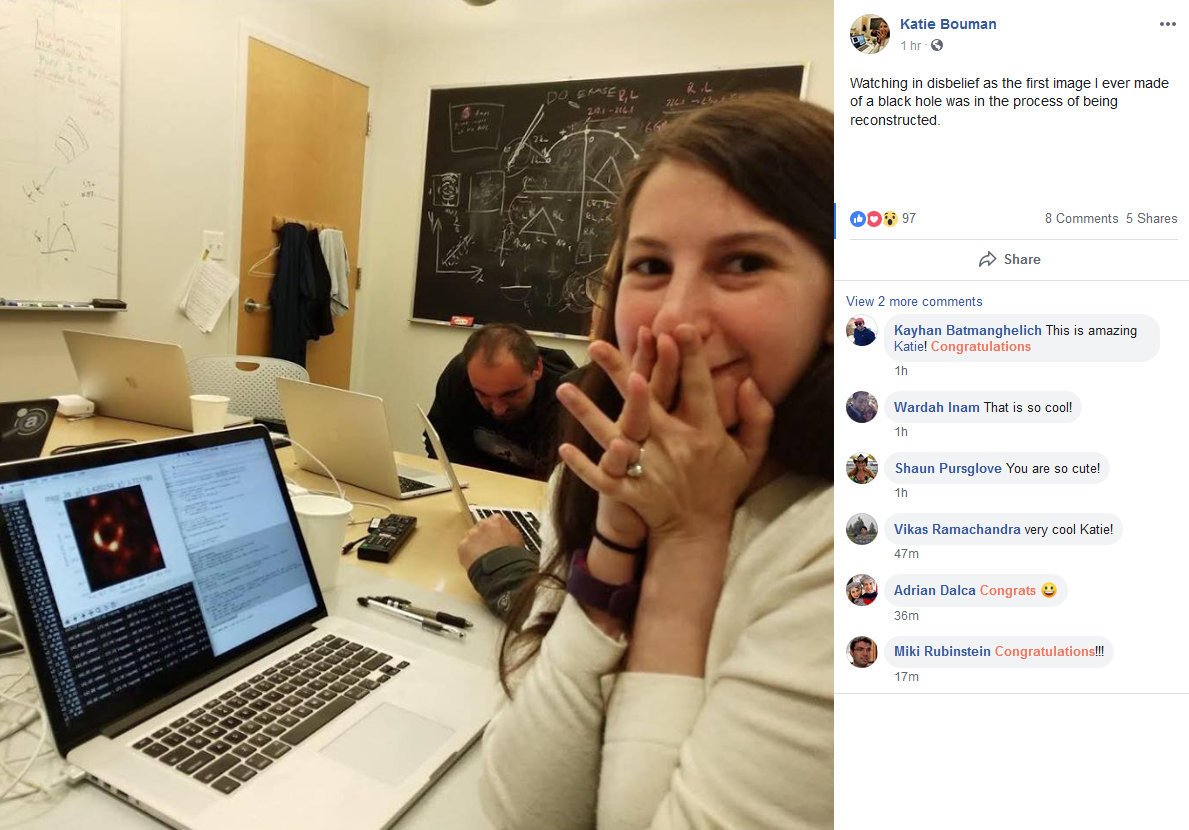
Here's the moment when the first black hole image was processed, from the eyes of researcher Katie Bouman. #EHTBlackHole#BlackHoleDay#BlackHole (v/@dfbarajas)
Katie Bouman led the creation of an algorithm that helped capture the first ever image of a black hole. We asked her what this breakthrough means for science. For more reaction from other scientists, visit our YouTube channel: https://t.co/H1UfPI6Y8V
When it comes to mass, galaxy clusters are composed of galaxies (∼2% mass), visible in optical light, tens to hundreds of millions of degrees hot intra-cluster gas (∼12%) visible in X-rays and mysterious Dark Matter (∼86%. IDCS J1426 galaxy cluster on the image, credit #NASA .
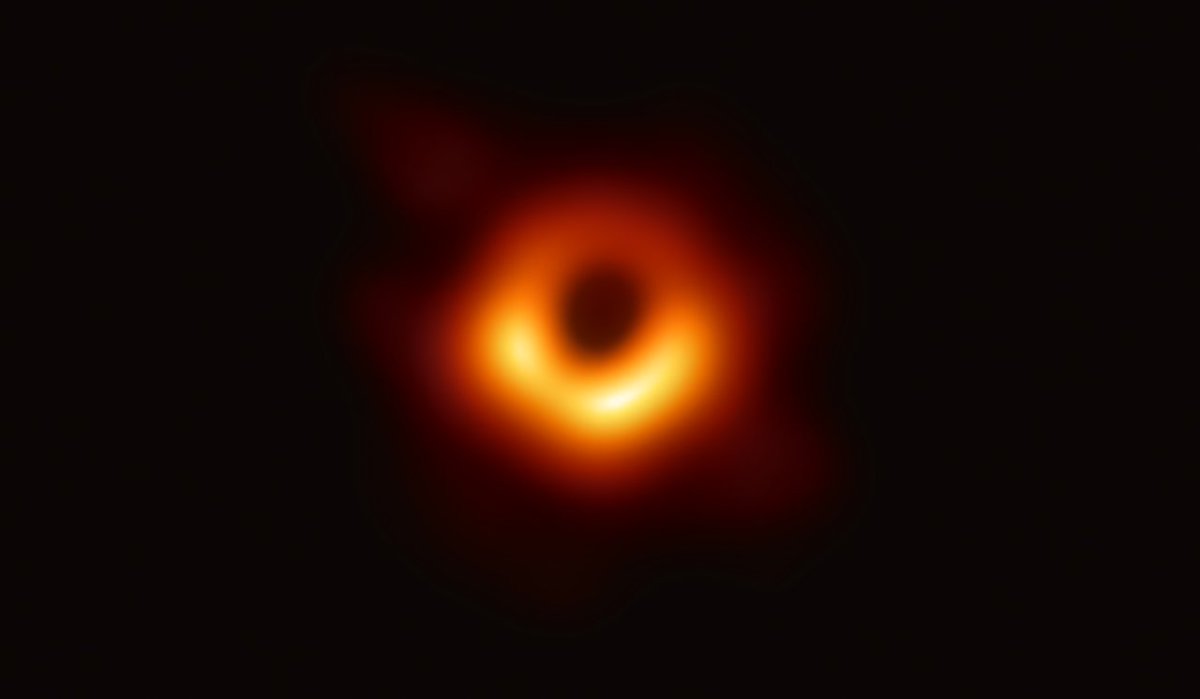
#BreakingNews Astronomers capture first image of a #BlackHole! @ESO@ALMAObs & APEX contributed to observations of gargantuan black hole at the heart of galaxy Messier 87.
#RealBlackHole
Web: https://t.co/CTJHrg5MN9
Press Release: https://t.co/HKGF6eG4ru
Credit: EHT Collaboration
In a space agency filled with trailblazers, women play a vital role shaping how we explore our home planet & the universe. In honor of #WomensHistoryMonth, join #WomenatNASA on @Reddit at 2pm ET to ask anything about careers & our mission of exploration: https://t.co/ipNy10dX2e
We’re opening our doors for social media users to come behind the scenes for the next @SpaceX cargo launch to the International @Space_Station, currently targeted for late April. Apply to attend this #NASASocial event at @NASAKennedy in Florida: https://t.co/coliTzYhfG
Do you know the beautiful heart-shaped galaxy merger known as Antennae galaxies? What does it look like in X-rays? They're also found in The Hunt for Galaxy Clusters, because they are strong sources of X-rays!
What strange thing could happen in the XMM-Newton images? Our volunteers help us find some extraordinary X-ray patterns in the XMM-Newtons X-ray data. Below are some examples, what could be happening?
Can we see the black holes in the X-ray images of XMM-Newton? How do they look? Are there many of them? We can not see them directly, but their interaction with their environment, can appear as X-ray point sources. Have you found any yet?
How do we know about the evolution of galaxy clusters when it takes them billions of years to evolve? Each galaxy cluster is a snapshot of a stage of clusters evolution, which we put together like a puzzle to understand it. L: XMM-Newton's X-ray image, R: DSS2 optical