More good news from CRISPR Tx and Vertex on their #CRISPR-Cas9 drug candidates: two beta-thalassemia patients and one sickle-cell patient now treated and showing disease amelioration. 7 patients in total now dosed, all showing successful HSC engraftment. https://t.co/j0XiVdF1QX
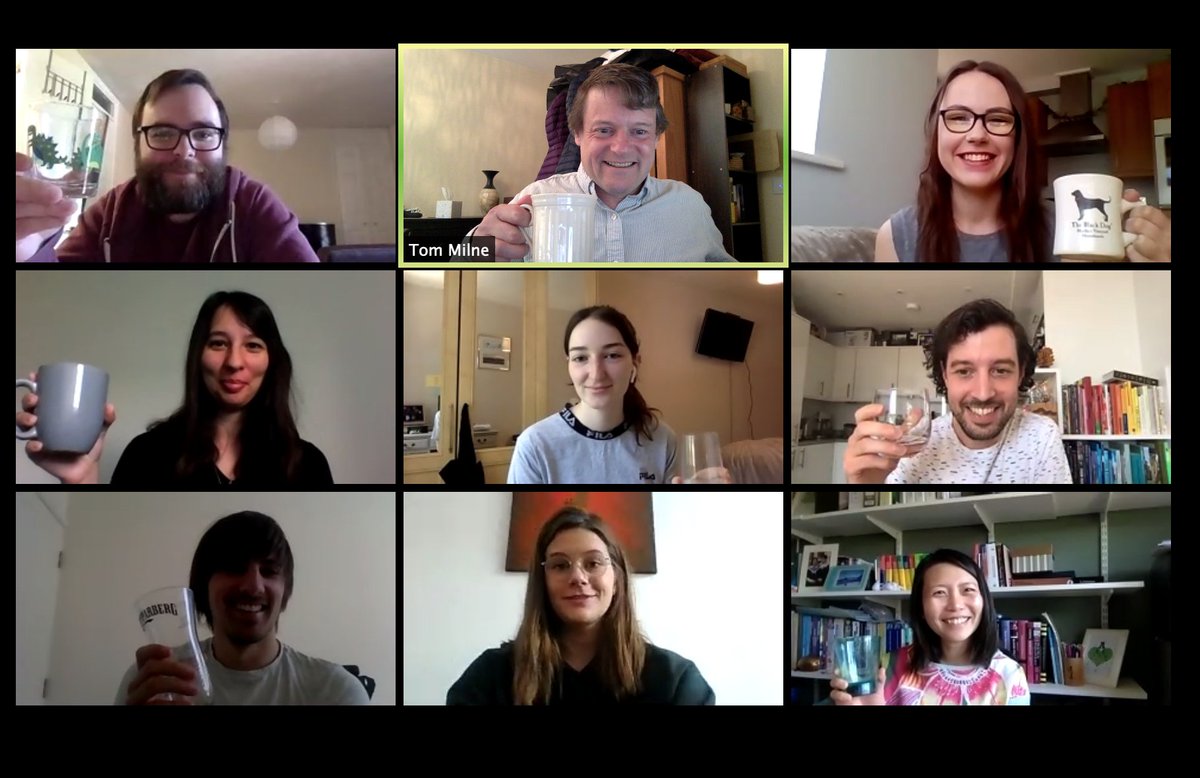
Congratulations I-Jun on her successful viva defense yesterday! And thanks to the lab for coming together this morning for an impromptu congratulations, as I forgot to take a screenshot of the events yesterday @MRC_WIMM. Thanks to examiners @Marcrmansour and Claus.
We are very happy to announce Tatjana Sauka Spengler at the 2020 Cheryll Tickle medal winner! Well done @saukaspengler
https://t.co/kRgAqPIkGR
https://t.co/B0TX98JOeY
The sequence where Francisco and Rodolfe and Jill and Jennifer narrate the discovery of CRISPR-Cas is one of the best film representations of why science is such a glorious profession - one of many reasons to see this. @CRISPRlab@BanfieldLab@doudna_lab
https://t.co/ME6AlDEqMh
Today we are sharing a research protocol for SHERLOCK-based COVID-19 #coronavirus detection, and hope it will help others who are working to combat the outbreak. We will continue to update this as we make further progress: https://t.co/Fg1PhJl2RP
Exciting! 1. No humoral responses to Cas9 detected, 2. Chromosomal translocations with triple KO detected but decreases over time (no apparent growth adv), 3. Long term engraftment - avg half life of T cells is 84 days vs 1 wk with previous engineered NYESO T cells
Carl June was the PI on the first gene editing trial, in 2009, and continues to lead in essential ways. Key findings from this trial at Penn will inform, enhance, and accelerate gene editing trials in cancer and beyond. @carlhjune https://t.co/JM8NlLnhDc
I am delighted to share our latest @TSS_Lab study, a great collaborative effort with @GroupRiley and Choudhury lab, spearheaded by @simoesfili in collaboration with @tomjcahill and @amykenyon3. Congratulations everyone! https://t.co/rS2m89AANU
A DEEPLY affecting article. Scientifically, magnificent to see Stu Orkin, who led the discovery of the BCL11A enhancer, recognized for work @danielevanbauer@bloodgenes that gave us 3 trials for SCD: this one and the @CRISPRTX and @SangamoTx editing ones.
https://t.co/dUKoIRPeQ1
I am very proud to share our latest paper - Vagal Neural Crest gene regulatory circuitry in chick embryo decoded. Congratulations @irvingling@TSS_Lab https://t.co/iqfuj4tPbf
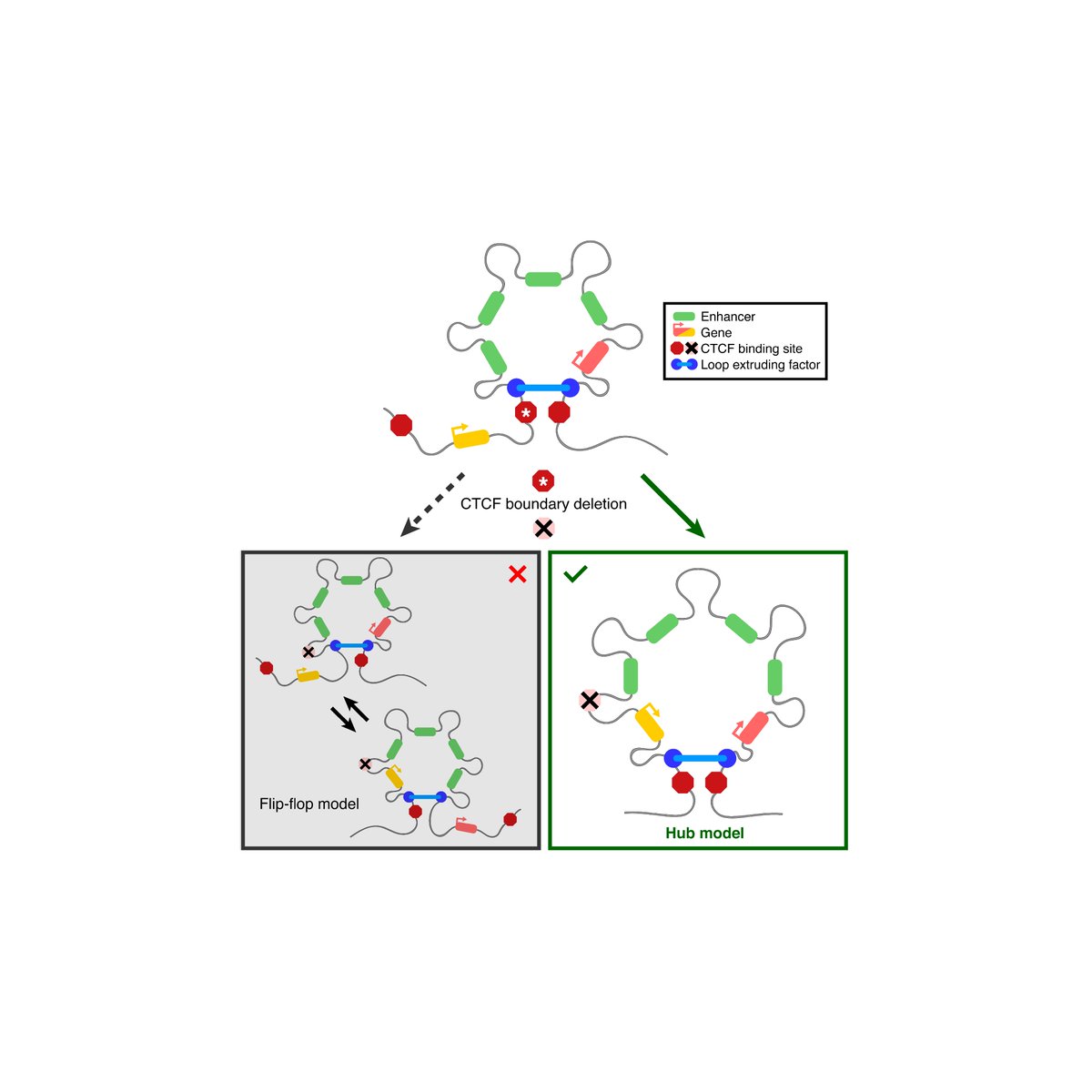
Our paper is out in @NatureComms: A revised model for promoter competition based on multi-way chromatin interactions at the alpha-globin locus. See thread below. Great teamwork with @CazzHarrold and @jrmmhughes. #3Dgenome#generegulation https://t.co/Vk2MsFh9xk
5 years of hard work led by Martin Larke, using his scRNA-seq assay. Investigating how enhancers control gene expression in primary cells during cell differentiation.
Enhancers predominantly regulate gene expression in vivo via transcription initiation. https://t.co/0u7RQKmds4
I'm happy we finally submitted our new preprint exploring the role of BET proteins such as BRD4 in maintaining enhancer-promoter interactions. Hint: they don't have a role
BET inhibition disrupts transcription but retains enhancer-promoter contact https://t.co/HRAzAIaU86
Delighted to share our work on reverse engineering and testing global gene regulatory circuitry of the cranial neural crest. Congratulations @RuthWilliamsOx but also @ivanferrreira, rest of @TSS_Lab and our collaborators E Repapi, S Taylor and @jrmmhughes
https://t.co/P16aiCiWq3
This week we focus on the #neuralcrest as we welcome Tatjana Sauka-Spengler, PhD, from @MRC_WIMM for our #WednesdayLecture. Before the noon talk, check out the @TSS_Lab's recent work on reconstruction of the neural crest gene regulatory network. https://t.co/udfoVMb42G
Many congratulations to @MiraKassouf, a postdoctoral researcher in the Higgs group, who was recognised as one of the “50 Movers and Shakers in BioBusiness 2019” for her efforts to break silos in life sciences with entrepreneurship! https://t.co/68qYuVhld7 @RDMOxford@OxfordMedSci