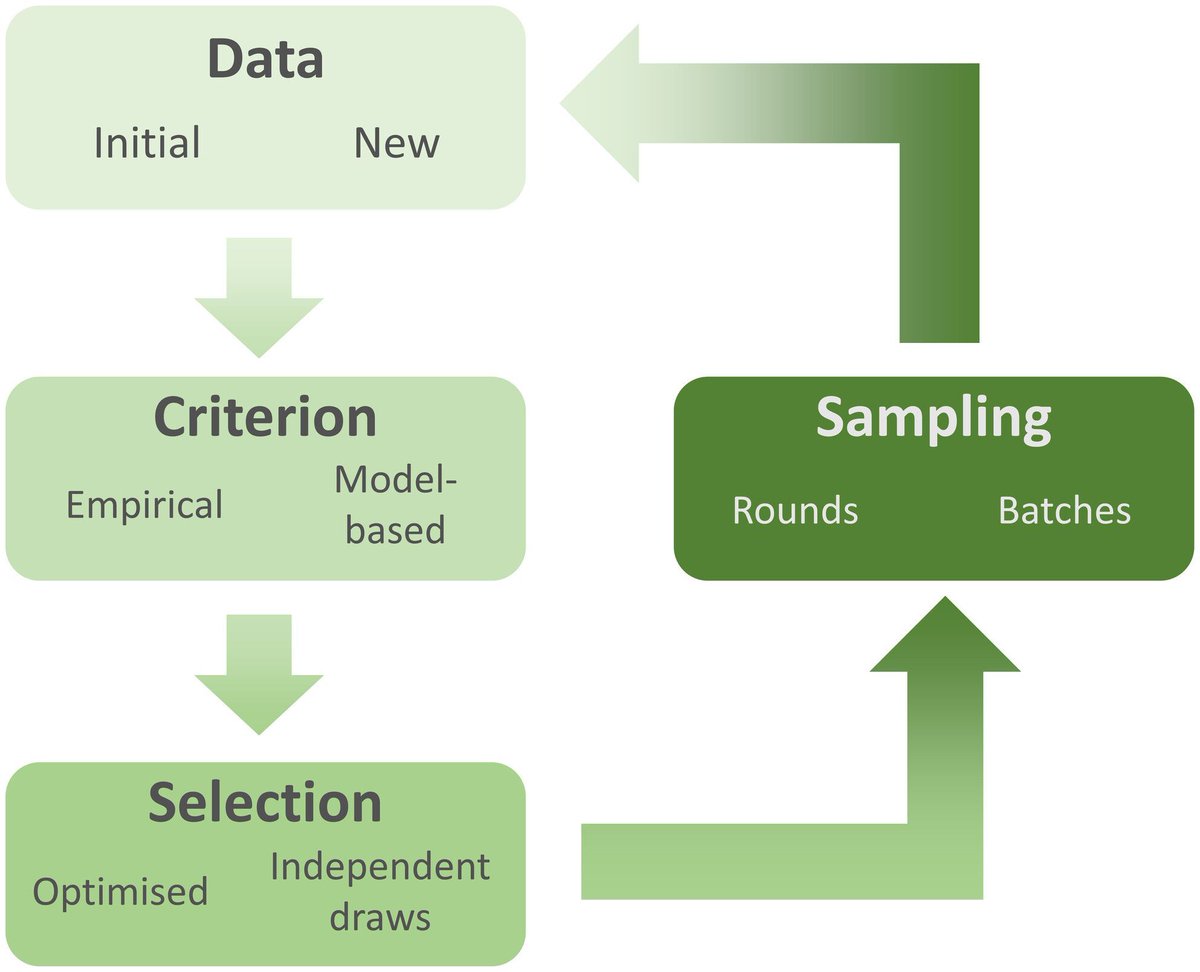
We just published a simulation study showing that model-based sampling can improve the performance of species distribution models using #citizenscience data! Really cool to see how beneficial adaptive sampling can be in real-world contexts! https://t.co/n26sHuj8Nq
Apply now for a 2025 AOS Kessel Fellowship. This year, our early-career Fellowship grant amounts will be $15K each for #OrnithologicalResearch & one $30K grant for #ArcticResearch. Applications are due by 1/31/25.
https://t.co/BBo9s0ydAw
Why do birds coordinate provisioning to young? Work by @ChayAnimalFacts, @beckerhopper, @SamCPatrick & Hatchwell suggests long-tailed tits exhibit 2 forms of coordination; synchronizing visits to ⬇️predation risk & turn feeding to ⬆️ offspring recruitment.
https://t.co/UeKthyhqup
New exciting 2.5 postdoc position available in our team at @NorskPolar to identify & map the distribution of North Atlantic seabird prey species 🐠🐟🗺️
https://t.co/1vbgnBT0Jv
Two papers in @MethodsEcolEvol in the space of a few months really blows my mind a little. These have been a long time in the making and am very pleased to see them out. A lot of hard work through challenging times...
The "older" one is a simulation study investigating a few different methods to evaluate whether adaptive sampling could work for improving citizen science data. Spoiler: it works! https://t.co/n26sHuj8Nq
Using log(X+1) when estimating population trends is a classic mistakes of many papers in ecology, including famous one published in @Science and @NatureEcoEvo about #insect decline.
Why is it a mistake? Because it breaks the interpretability of the slope (trend) as a growth rate.
If any EU/UK citizens want to come hang out in warm and sunny Florida for a couple years and work on a postdoc, please don't hesitate to reach out about developing a proposal for this call! Anything related to ecology, macroecology, citizen science, urban ecology, etc.