this is pure f*cking treasure
15 GitHub projects with 497.8K combined stars for building an AI product people can actually use
interface. auth. data. agent tools. background jobs. evals. observability. usage. billing. analytics. deployment
01 AI SDK · model and agent features
▸ https://t.co/ZhNyVaUYUJ
02 assistant-ui · chat interface components for AI products
▸ https://t.co/rxi8rHI9Kv
03 Better Auth · accounts and permissions
▸ https://t.co/LK0Knhn8ie
04 Supabase · database, storage and backend
▸ https://t.co/7LsMAiDekg
05 Drizzle · typed database schema
▸ https://t.co/hZDMn9sSMn
06 FastMCP · tools your agent can call
▸ https://t.co/nLZDg7Y1Ni
07 Trigger. dev · long-running AI jobs
▸ https://t.co/6D1H6Y3neP
08 Promptfoo · evals and red-teaming
▸ https://t.co/EyruGSpRY1
09 SigNoz · traces and monitoring
▸ https://t.co/O8wlMRmBNr
10 OpenMeter · usage and entitlements
▸ https://t.co/V56zj3mxc8
11 Lago · billing and invoices
▸ https://t.co/N4fuxCrsM3
12 Novu · product notifications
▸ https://t.co/oudXvXHbsd
13 PostHog · what users actually do
▸ https://t.co/wHO7xNOPKo
14 Coolify · deploy the app
▸ https://t.co/0EOPJyRqZ0
15 Dub · links and attribution
▸ https://t.co/ubjYBEZLEz
the loop:
build the interface → give users accounts → connect data and agent tools → run jobs reliably → test the outputs → trace failures → meter usage → bill customers → watch real behavior → ship the next version
save this, then build a second brain for your product ⭣
Ray Dalio. Paul Tudor Jones. Steve Cohen. The three most feared traders on Wall Street all survived Black Monday using the same document - and made sure the MIT professor who wrote it never had to work again.
A 2026 classified working note restored from MIT's restricted archive. "Probability & Risk." The framework that let $2B desks calculate exactly how much they could lose before they lost it. On Black Monday, the traders who had it walked away with portfolios intact. Some walked away up.
Their gratitude made him a fortune.
Here's what was inside.
Value at Risk. Expected Shortfall. The Efficient Frontier. Every risk desk at Goldman Sachs, Citadel, and Bridgewater runs these exact calculations on $100B+ in assets today. In 1987, when Black Monday wiped $500 billion off the market in a single day - the traders who had this framework knew their number before the bell rang. They sized positions accordingly. They survived.
The ones who didn't have it got margin-called into zero.
The core idea: VaR tells you how much you might lose. Expected Shortfall tells you how much you can really lose when markets break. The difference between those two numbers is what separates a fund that survives a crash from one that gets liquidated at the bottom.
Monte Carlo simulation. 10,000 paths modeled before a single dollar goes at risk. The document runs the exact calculation - 12% expected return, -2.8% VaR on worst days. Bridgewater uses the same method on $150B today. So does every quant desk paying analysts $600k+ to run it.
Watch the moment [Fig. 2]
The Efficient Frontier. One curve.
Every point below it: you're leaving money on the table. Every point above it: impossible. One point on the curve: the portfolio that survives anything.
The chart that told $2B traders exactly where to stand before the floor collapsed.
MIT Mathematical Methods for Financial Decisions - Restricted, 2026
Declassified from archive
bookmark this
EVERY INVESTOR MUST WATCH THIS CLOSELY
• Global oil inventories have reached the 7.6B operational stress level — where pipelines and refineries start facing increasing pressure
• The next key level is the 6.8B operational floor — below this, maintaining normal pipeline and refinery operations becomes increasingly difficult
• The original projection suggests we could be only 3–5 months away from reaching that level
Historically, major oil crises have repeatedly reignited inflation and coincided with severe market crashes.
But this doesn’t mean every stock is going to zero. It means you need to position yourself in the right assets to benefit from the environment.
That’s exactly what we’re doing on our Patreon.
In today’s Oil Analysis, I also show where I expect the next major entry opportunity — and where we could potentially position ourselves for the next 30–60% move.
GPT-6 Astra is the most dangerous AI model right now.
It gives you AGI-adjacent reasoning.
That can discover new profitable trading strategies for you 24/7.
If you set it up correctly, you gain a personal hedge fund. https://t.co/Sam7AYOut3
This is a super cool website.
You can scroll around and look at any country's population pyramid, fertility rate, and mortality rate by year.
Check this out:
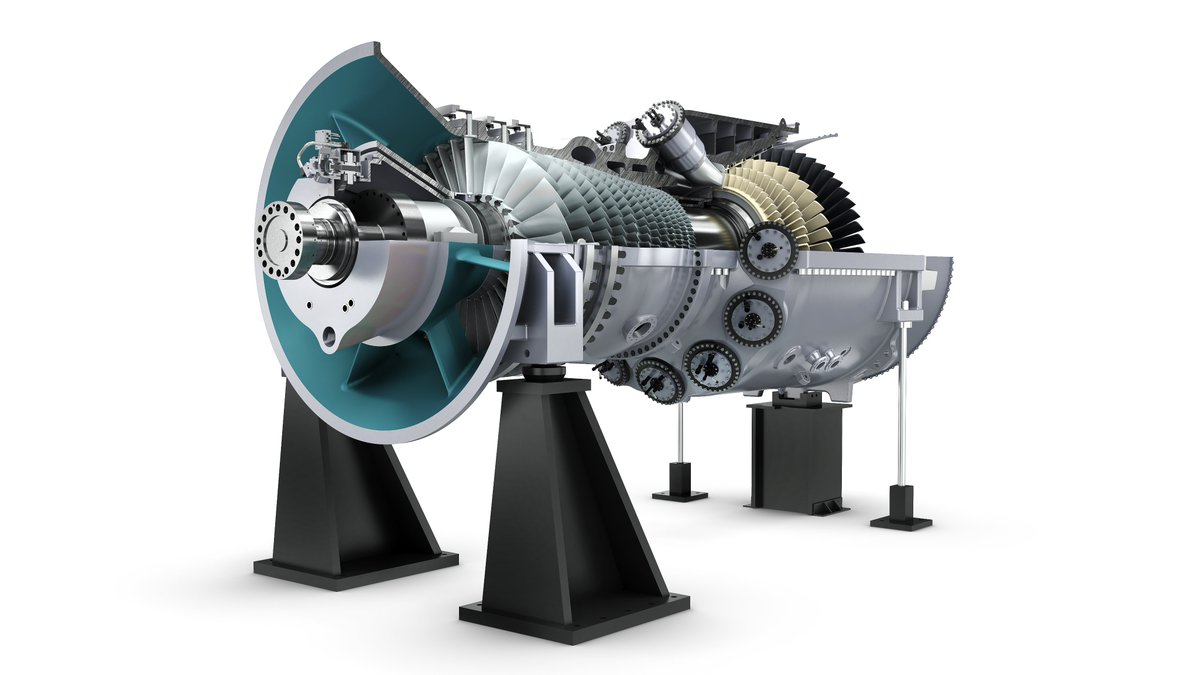
This is the most powerful single gas turbine engine ever built for electricity generation.
Siemens Energy's SGT5-9000HL weighs nearly 500 tonnes, spins at 3,000+ rpm and can produce 593 MW from a single machine.
Its exhaust leaves at around 670°C. Instead of wasting that energy, a combined cycle plant uses it to drive a second steam turbine, pushing total output to roughly 880 MW at over 64% efficiency, enough electricity for around 840,000+ homes.
Run it continuously for 24 hours and that's 21.1 GWh of electricity.
For perspective, to generate the same amount of electricity it would take roughly 1 million 600 W solar panels spread across 16 km² and would take around 6 average days to generate that much electricity.
Or 40 modern 15 MW offshore wind turbines would take roughly 3 average days.
This is the sheer scale and power density of modern gas-turbine engines, generating hundreds of megawatts, continuously, from a single rotating machine.
COPPER - LONG-TERM PERSPECTIVE
While copper, adjusted for money supply, remains 50% below its most recent peaks (which happened during disinflationary periods), a change of regime could justify far higher prices.
• Disinflationary period: positive but falling inflation.
• Inflationary period: positive and rising inflation.
Indeed, the last inflationary period, which ended in 1980, led to persistently higher commodity prices (not only during short-term spikes).
In such a case, when long-duration assets are avoided and real assets are chased, commodities overshoot inflation (and money supply) as investors and consumer stockpile the rare assets allowing them to beat inflation.
Those price increases obviously elevate inflation afterwards, increasing further demand for commodities as a result, creating a cycle where inflation and commodities fuel each other.
Here is why only looking at the recent past may only give a partial overview of the possible scenarios.
Independently of the scenario one picks (inflationary VS disinflationary), the current level suggests in any case that the risk remains on the upside.
$COPX $CPER
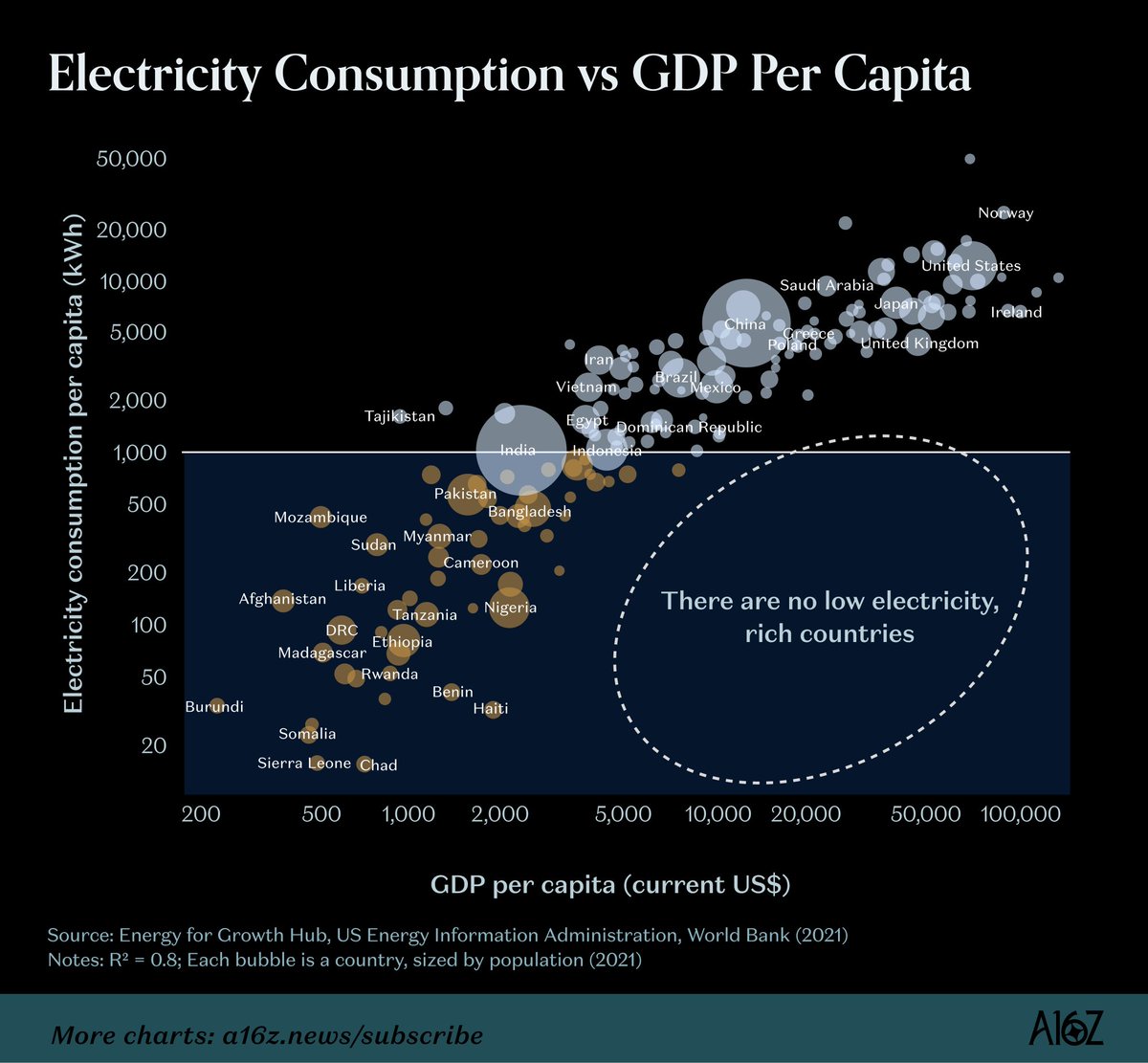
We don't have enough power.
AI chip-driven electricity demand is projected to surge to a record ~315 gigawatts globally by 2033.
That would represent an increase of more than +1,100% since 2025.
The US is expected to account for ~64% of this new AI electricity demand, or ~200 GW.
Meanwhile, AI data centers are also putting huge strain on power infrastructure.
During model training, hundreds of thousands of GPUs can power up and down simultaneously, causing electricity usage to spike as much as 50% above design capacity.
These sharp power swings can accelerate wear on batteries, generators, cooling systems, and other critical infrastructure, increasing maintenance and replacement costs.
We need new energy infrastructure.
AI capex is no longer just a hyperscaler story.
As the earnings season goes through its 5th week, reports confirm that the capex cycle remains firmly on track and, if anything, appears to be accelerating.
Consensus estimates imply aggregate spending by the leading firms will rise 91% this year, followed by another 35% next year.
But Big Tech is only the visible layer of the cycle.
Companies across the economy are investing in AI infrastructure and capabilities to keep pace with competitors.
As result, AI capex has contributed around 0.6pp to the U.S. annualized growth in H1 2026, according to BofA estimates.
In short, this investment cycle needs to maintain this pace to remain a substantial tailwind for economic growth.
$AMZN $GOOG $MSFT $META #AI #Hyperscalers
$FEAM Inceleme (ASLA YATIRIM TAVSIYESI DEGILDIR! Asiri risk icerir.)
Genel Bakış
5E Advanced Materials, ABD merkezli bir bor ve lityum üreticisi. Şirketin ana varlığı Fort Cady Boron-Lithium Kompleksi (California) — bu proje, ABD’nin kendi topraklarında bor üretmek için onlarca yıldır gördüğü en ciddi girişim.
Bugün dünyadaki bor arzının büyük kısmı Türkiye (Eti Maden) ve kısmen Rio Tinto’nun elinde. ABD, stratejik olarak bu bağımlılığı azaltmak istiyor. 5E tam olarak bu boşluğu dolduruyor.
Şirketin Özelliği
Fort Cady sahası, Türkiye dışındaki en büyük colemanite tipi bor yatağı.
Rezerv: 13,97 milyon ton borik asit eşdeğeri ve 300.000 ton lityum karbonat eşdeğeri.
Saha Los Angeles – Las Vegas koridorunda, enerji ve ulaşım altyapısına yakın.
Üstelik tesis, ABD İç Güvenlik Bakanlığı tarafından “kritik altyapı” olarak tanımlanmış durumda. Bu statü, izin süreçlerinde ciddi avantaj sağlıyor.
Teknoloji ve Üretim Yaklaşımı
Şirketin madencilik yöntemi geleneksel açık ocak değil — in-situ leaching (yerinde çözündürme).
Bu yöntem, araziyi kazmadan yer altına asit enjekte ederek cevheri çözündürüp yüzeye almayı içeriyor.
Sonuç olarak çevresel etki minimum, atık barajı gerekmiyor, maliyet düşük, izin süreçleri kolaylaşıyor.
Bu model ABD’nin “yeşil madencilik” yaklaşımına birebir uyuyor.
2024 Nisan’ında küçük ölçekli pilot tesis devreye alındı. Günde 1 kısa ton borik asit üretiyor ve bu üretim, müşterilere kalite onayı (qualification) için gönderiliyor.
Pilot tesisin çalışması, projenin “de-risked” yani teknik riskinin azaltıldığını gösteriyor.
Finansal Durum
Şirketin bilançosu şu anda zayıf: nakit yaklaşık 5–6 milyon USD, toplam borç 40 milyon USD civarında, net borç 34 milyon USD.
Ancak kritik nokta şu: Şirket, ABD EXIM Bank’tan 285 milyon dolarlık finansman için niyet mektubu (LOI) aldı.
Üretim Planı
Pilot Operasyon (2024–2026): 2.000 ST/yıl üretim, pozitif nakit akışı hedefli.
Commercial Phase 1 (2027–2028): 90.000 ST/yıl borik asit üretimi, 390–430 milyon $ yatırım, 100 milyon $ yıllık EBITDA hedefi, %18–22 IRR, 650–715 milyon $ NPV.
Commercial Phase 2 (2029–2031): Kapasite %75 artış planlı.
Şirket şu anda ticari faz için müşteri sözleşmeleri (off-take) üzerinde çalışıyor; üretimin %80’den fazlası için ön talep alınmış durumda.
Pazar Dinamikleri
Bor pazarı, 2030’a kadar yılda ortalama %5 büyüme gösteriyor.
Talep artışı yenilenebilir enerji, elektrikli araç motorları, savunma sanayii, tarım ve kompozit malzeme sektörlerinden geliyor.
ABD, boru “kritik mineral” sınıfına aldı. Bu durum devlet destekli projelere uzun vadeli teşvik kapılarını açıyor.
Devlet Desteği
EXIM Bank LOI: 285 milyon USD’ye kadar borç finansmanı (Eylül 2024).
Critical Infrastructure statüsü: Hükümet tarafından tanındı, izin süreçlerinde hızlandırma sağlıyor.
“Make More in America Initiative” kapsamına alındı: ABD topraklarında stratejik mineral üretim projelerini destekliyor.
Henüz doğrudan hibe veya kredi onayı yok; ancak devletin FEAM’i “stratejik öncelikli proje” listesine aldığı açık.
Stratejik Anlamı
ABD, boru Türkiye’den ithal edebiliyor, ama artık “fiyat değil güvenlik” odaklı düşünüyor.
Bor sadece bir sanayi girdisi değil, aynı zamanda savunma zincirinin bir parçası: F-35 jetleri, füze ısı kalkanları, tank zırhları (bor karbür), nükleer reaktör kontrol çubukları.
Bu nedenle Pentagon ve DOE’nin stratejik planlarında yerli bor üretimi özel bir yer tutuyor.
Türkiye ile Fark
Türkiye dünyanın en büyük bor rezervine sahip olsa da, üretimin büyük kısmı ham veya düşük işlenmiş bor ürünlerinden oluşuyor.
Eti Maden daha çok boraks, kolemanit, borik asit gibi temel bileşenleri ihraç ediyor.
ABD’nin 5E üzerinden hedeflediği ise yüksek saflıkta, elektronik ve askeri kalite bor türevleri üretmek.
Bu bor türü mıknatıs, zırh veya yarı iletken üretiminde kullanılıyor ve %99+ kimyasal saflık gerektiriyor.
Yani Türkiye boru çıkarıyor, ABD ise boru ileri teknolojiye dönüştürüyor.
Biri madenci, diğeri stratejik kimyasal üretici.
Bu fark, 5E’nin ekonomik olarak değil, jeopolitik ve teknolojik olarak değerli olmasını sağlıyor.
Riskler
Şirket henüz gelir üretmiyor.
Büyük sermaye ihtiyacı nedeniyle dış finansmana bağımlı.
Bor fiyatlarındaki dalgalanma kârlılığı etkileyebilir.
Faiz oranları yüksek, EXIM kredisi gecikirse finansal baskı artar.
Tüm proje tek sahaya (Fort Cady) bağlı; jeolojik risk yoğun.
HC Wainwright analizi:
Yatırım Görüşü:
Risk: Yüksek
Potansiyel Getiri: Çok yüksek
Vizyon: ABD’nin bor bağımsızlığını sağlayacak ilk üretici olma.
Bu proje çalıştığında FEAM sadece bir maden şirketi değil, stratejik altyapı unsuru haline gelecek. ABD bor kimyasında kendi kendine yeterli hâle geldiğinde, FEAM’in değeri çarpan etkisiyle artacaktır.
HC Wainwright analizine göre hedef fiyat 7,50 USD, tavsiye “Buy” (Al).
Genel Düşüncem
5E Advanced Materials (FEAM), bugün baktığında zayıf bilançosu, düşük nakdi ve büyük finansman ihtiyacıyla çok riskli bir şirket gibi görünüyor, çünkü öyle.
Ama bu hikaye klasik “bor madeni” hikayesi değil. Bu, ABD’nin kritik mineral bağımsızlığına oynayan bir stratejik hamle.
ABD’nin Duruşu Anahtar
ABD son yıllarda “kaynağı dışarıdan almak yerine içeride üretelim” politikasına geçti.
Bunu daha önce çiplerde, batarya kimyasallarında, şimdi de bor ve nadir toprak elementlerinde yapıyor.
Bu, kısa vadede verimsiz ama uzun vadede jeopolitik olarak zorunlu bir yönelim.
FEAM bu denklemde küçük ama doğru konumlanmış bir oyuncu.
Fort Cady projesi devlet tarafından kritik altyapı olarak tanındıysa ve EXIM Bank’tan 285 milyon dolarlık finansman için LOI aldıysa, bu demek oluyor ki ABD devleti projeyi ölmesini istemiyor.
Bu, şu anki piyasa değeri 50–60 milyon dolarlık bir şirket için çok büyük bir anlam taşıyor.
Risk – Ödül Dengesi
Kısa vadede FEAM likidite riski taşıyor. Eğer EXIM kredisi gecikirse, şirketin 2026’ya kadar nakit akışı yeterli olmayabilir.
Yani hisse volatil, hatta bazen sert düşebilir.
Ama bu şirket ayakta kalır, devlet desteği resmileşirse, o zaman bu değerleme düzeyinde potansiyel katlama ihtimali çok yüksek.
Böyle küçük ölçekli ama devlet bağlantılı projeler genelde “bir gün sıfır olur, bir gün beş kat gider” tarzı bir risk profiline sahip.
Stratejik Fark: Türkiye vs ABD
Türkiye boru çıkarır, satabilir; ama ileri teknolojiye dönüştürmez.
ABD boru çıkarıp yüksek saflıkta bor karbür, bor nitrür, ileri kimyasallar üretmek istiyor.
Bu alan kimyasal mühendislik ve savunma sanayiiyle iç içe.
Yani 5E aslında bir maden şirketi değil, ileri malzeme üretim şirketi.
Bunu piyasada doğru anlayan az kişi var.
Bu yüzden FEAM’in uzun vadeli potansiyeli “bor madeninden değil, bor kimyasından para kazanmak” üzerine kurulu.
Kısa vadeli (0–6 ay): Negatif / Nötr – Finansman belirsizliği, düşük nakit, yüksek risk.
Orta vadeli (6–18 ay): Spekülatif fırsat – EXIM onayı gelirse piyasa yeniden fiyatlar.
Uzun vadeli: Olumlu – Devlet desteği netleşirse FEAM, ABD’nin bor üretim omurgası olur.
Sonuç
FEAM’e temkinli ama dikkatli bir izleme pozisyonu düşünülebilir.
Bu hisse, “yüksek risk – yüksek getiri” sınıfının tam merkezinde.
Eğer ABD, 285 milyon $ EXIM kredisini resmen onaylarsa, bugünkü fiyatlar uzun vadede ucuz sayılır.
Ama o onay gelmezse, bu şirketin nakit akışı 2026’ya kadar sıkıntıya girer.
2025 ve 2026 raporlarında şirket hâlâ bu LOI’yi “finansman yolu güçlendi” ifadesiyle vurguluyor, fakat kredi ödemeleri ya da fon tahsisi gerçekleştiğine dair resmi beyanlar yok.
Yani özetle:
FEAM bugün bir “hikaye hissesi”, ama yarın ABD’nin bor tedarik zincirinin kalbi olabilir.
Şu anda riskli, fakat bu hikaye tutarsa getiri çok yüksek olur.
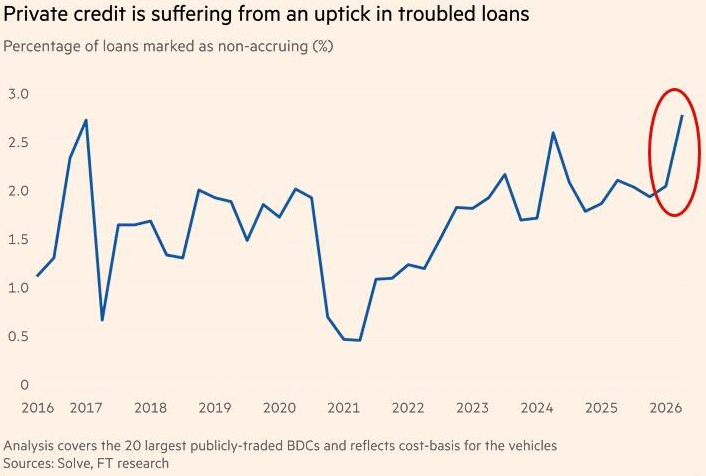
BREAKING 🚨: Private Credit
Percentage of loans from borrowers that have stopped paying or are on the brink of default is at its highest level in a decade 🤯 👀
Demand for Chinese chips is skyrocketing:
Chinese integrated circuit industry revenue jumped +22% YoY in 2025, to a record $245 billion.
Since 2020, Chinese chip industry sales have nearly doubled.
As a result, China now accounts for ~6% of the global semiconductor market.
This is roughly in-line with Japan and the European Union, at ~7% each, and Taiwan, at ~6%.
By comparison, North America represents 53% of the market, while South Korea accounts for 21%.
China is rapidly emerging as a major global player in semiconductors.
Quaise Energy is developing technology to drill up to 20 kilometers deep to unlock geothermal energy from the Earth’s extreme heat.
Its system uses powerful millimeter waves to vaporize rock instead of grinding through it.
Project Obsidian in Central Oregon aims to demonstrate the technology at around 5 kilometers deep, with commercial operation targeted for 2030.
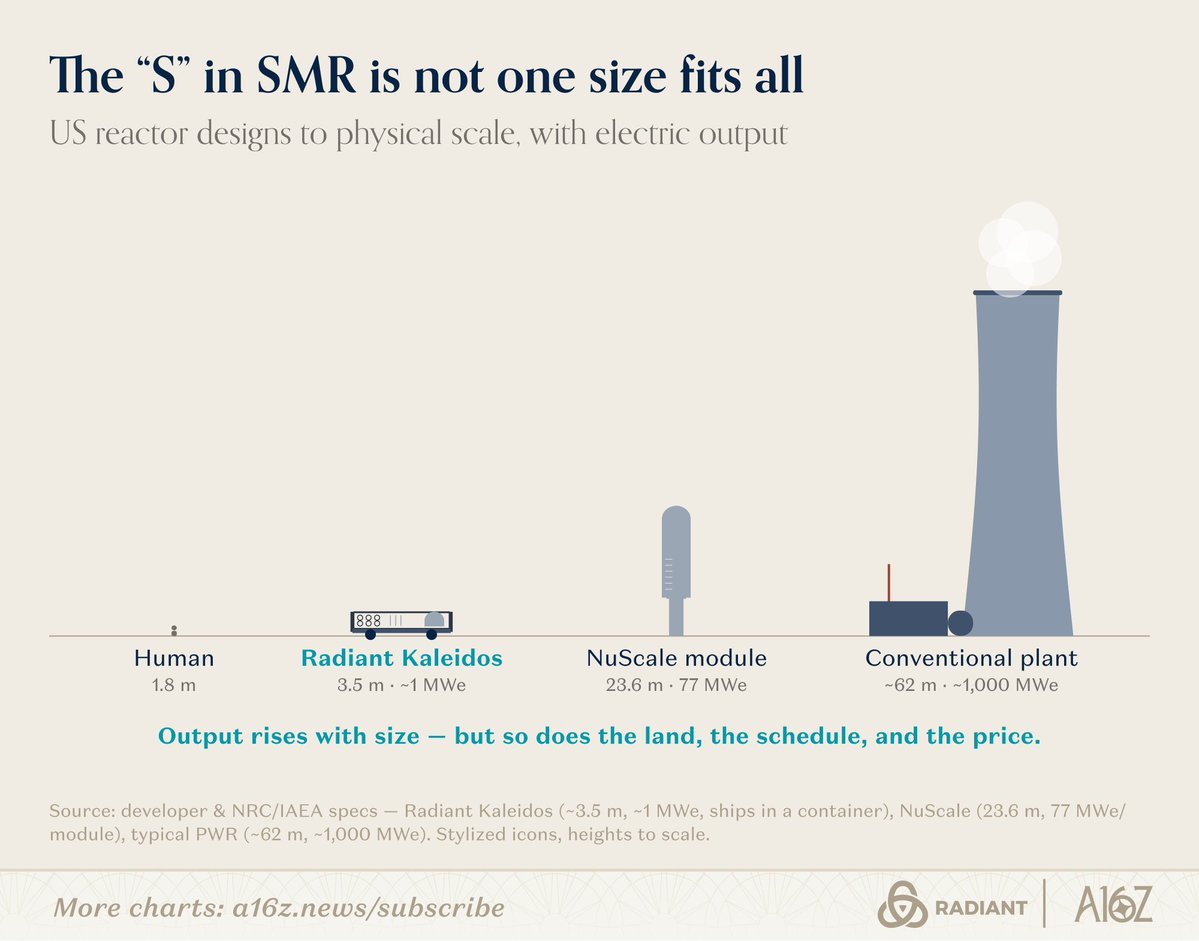
"Kaleidos is our 1-megawatt reactor that fits in a shipping container."
"Its fuel just arrived at Idaho National Laboratory for full-power testing, the first new US reactor design to run in the DOME test bed, and our factory in Oak Ridge is designed to build 50 units a year with customer deliveries in 2028."
"It's the scale that fits behind the supermarket, inside the fence line, next to the hospital that can't lose the ICU, and the town at the end of a hundred miles of wire."
"The grid is the biggest machine humans ever built, and it's struggling. I keep my house at the proper 74 degrees so as far as the grid's concerned, I'm a model citizen."
"But when the blackouts start, it doesn't matter, lights go out for model citizens and AC criminals alike. The grid doesn't need better manners from us. It needs a new machine."
Radiant President Tori Shivanandan writes on where our grid falls short, and how small modular reactors (SMRs) can help.




![0xLupenn's tweet photo. Ray Dalio. Paul Tudor Jones. Steve Cohen. The three most feared traders on Wall Street all survived Black Monday using the same document - and made sure the MIT professor who wrote it never had to work again.
A 2026 classified working note restored from MIT's restricted archive. "Probability & Risk." The framework that let $2B desks calculate exactly how much they could lose before they lost it. On Black Monday, the traders who had it walked away with portfolios intact. Some walked away up.
Their gratitude made him a fortune.
Here's what was inside.
Value at Risk. Expected Shortfall. The Efficient Frontier. Every risk desk at Goldman Sachs, Citadel, and Bridgewater runs these exact calculations on $100B+ in assets today. In 1987, when Black Monday wiped $500 billion off the market in a single day - the traders who had this framework knew their number before the bell rang. They sized positions accordingly. They survived.
The ones who didn't have it got margin-called into zero.
The core idea: VaR tells you how much you might lose. Expected Shortfall tells you how much you can really lose when markets break. The difference between those two numbers is what separates a fund that survives a crash from one that gets liquidated at the bottom.
Monte Carlo simulation. 10,000 paths modeled before a single dollar goes at risk. The document runs the exact calculation - 12% expected return, -2.8% VaR on worst days. Bridgewater uses the same method on $150B today. So does every quant desk paying analysts $600k+ to run it.
Watch the moment [Fig. 2]
The Efficient Frontier. One curve.
Every point below it: you're leaving money on the table. Every point above it: impossible. One point on the curve: the portfolio that survives anything.
The chart that told $2B traders exactly where to stand before the floor collapsed.
MIT Mathematical Methods for Financial Decisions - Restricted, 2026
Declassified from archive
bookmark this](https://pbs.twimg.com/media/HTAma82WgAAHuZR.jpg)