Training a model is one thing, but getting it into production is another.
In this article, @t_koded walks through some popular tools MLOps engineers use to package and deploy models.
You’ll learn about serialization formats, serving tools, and model registries so you can pick the right tools for your use cases.
https://t.co/j9hlGxpquG
So last week I got hit by a client with "sorry we took all the docs work your team did over the last 3 months which was great, fed it to Claude Code and we're good going forward". $5k+ MRR up in smoke.
I think that's when I might have finally gotten past the denial stage, that AI is coming for my business, @hackmamba, a technical content agency.
As an engineer and technical writer (now double-fked I guess) I'm a big purporter that AI is like electricity, making things better, but the last 2 weeks have been, shocking (pun intended). Maybe I'd just been slow, doing too much talking and less doing.
So what did I do after J hit me with the contract cancellation line, I started looking for ways to do more with AI without crossing the blurry line that is generating slop. As a former PM, the first culprits of my evaluation were anything we spent more than 10 hours per month doing. If you're looking for a way to start a similar evaluation, that's one way to go.
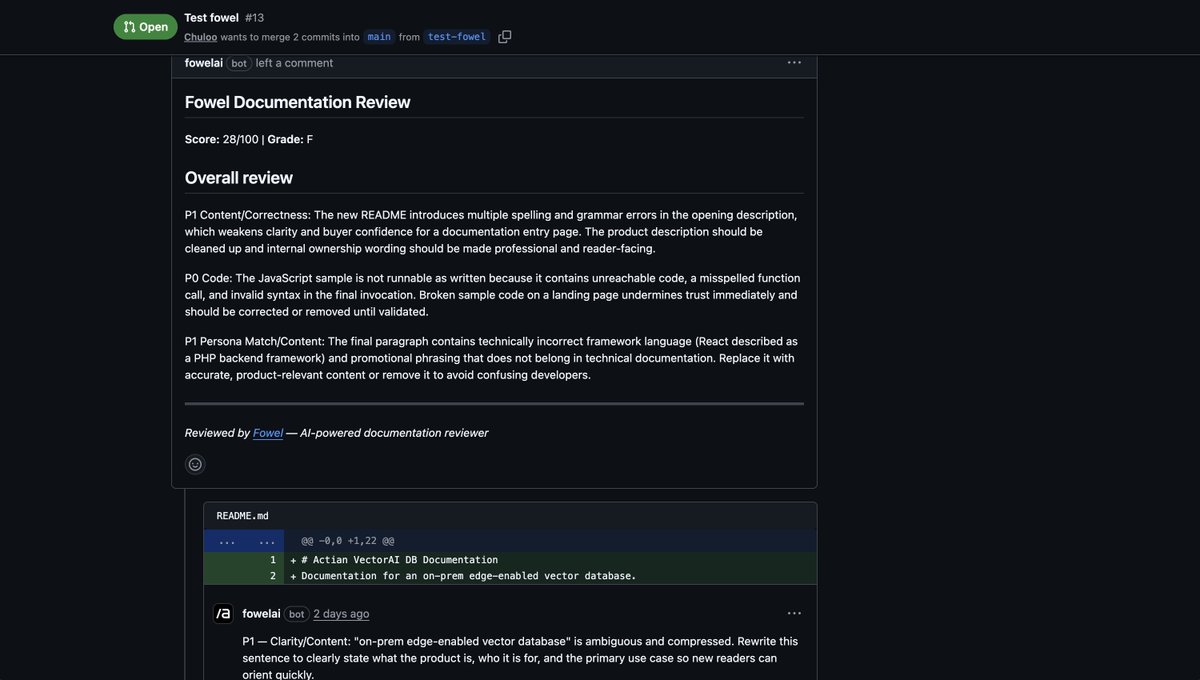
Technical reviews came up first. We work in teams shipping fast and need to get docs ready for developers and agents. Documentation is the ground truth before MCPs etc take over. So we spend a good amount of time reviewing docs PRs sent in by technical writers for accuracy, tone, shit code, typos, consistency with the overall style, persona match, clarity for sales and marketing usage etc.
So I did the next logical thing a software engineer (bless that job title) would do; I made a system prompt with everything we know and documented internally, plus everything I know about docs, individual frameworks, patterns etc. Then I built https://t.co/70W73dHKB0 (should sound like vowel, not foul) with it to handle deep GitHub PR reviews on documentation that was both written by a human or AI generated.
Frankly, I don't care at this point. If the end goal is to ship great docs for humans and agents, why care who wrote it. AI agents don't care. We likely won't need docs at all in the future.
Maybe I'm cooked for making such mental shift towards building the guardrails and quality enforcements. Time will tell.
We've seen a huge reduction in time to get PRs into production by about 80%, which I like. Do try Fowel if you're looking at the speed of getting great docs content out, and I appreciate any feedback shared. It's free to use too.
This project was heavily inspired by @coderabbitai (we use them internally and they're amazing). Thanks in advance and let me know if this is shit too. I don't mind brutal feedback.
Day 7 of 24: Our Head of Design, @_citydovee 🎄💜
Q: What’s one thing you’re grateful for, and one thing you want to improve in your craft as the year ends?
We’re kicking off the Pre-DevFest Lagos Series next month!
Attendance is free but you’ll need a valid DevFest Lagos 2025 ticket to get an invite.
Before we drop the speaker reveal 👀, can you guess who it is?
Here’s a hint: A Google Developer Expert 😉
I attended @oscafest yesterday and did a little guessing game with some of the attendees. Enjoy!
https://t.co/Id2yz9wgB7
#oscafest2025#oscafest#programming
You ever outgrow docker-compose so badly it starts gaslighting you?
It’s great when your stack is small. You can spin up a DB, an API, maybe Redis. But then your app starts needing things like:
IAM-tied identity providers
Shared message queues
Access-controlled APIs across teams
And suddenly, "run locally" isn’t local anymore.
You either start mocking everything (poorly) or push to staging to test basic behavior.
The truth is:
Local development has changed. The shape of what we build has outpaced the old tooling.
That’s why this guide by @metalbear explores something else entirely:
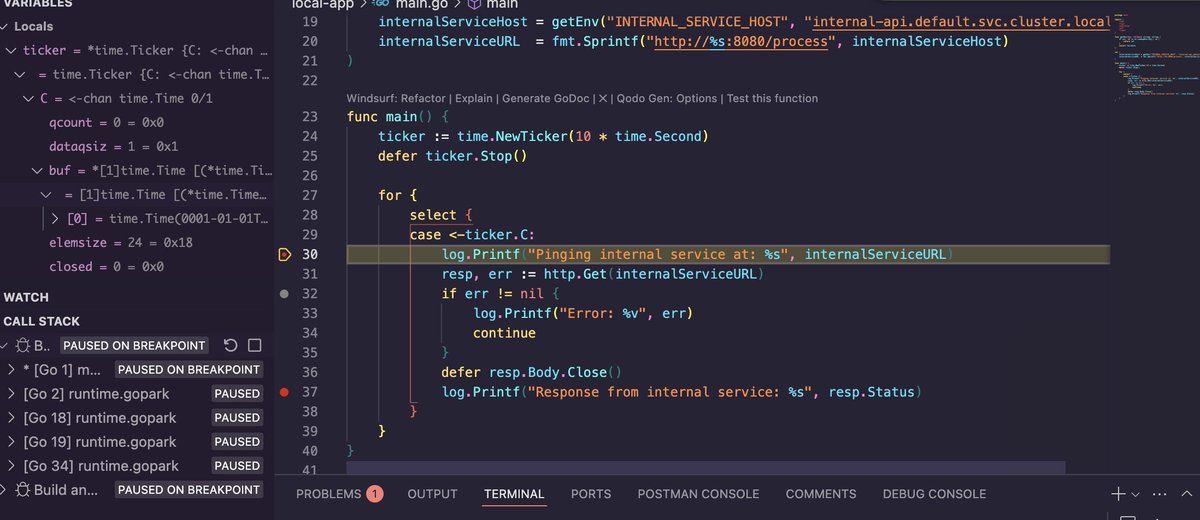
Running your local app with remote cluster access.
Let’s break it down. Link in the comments
If you're building anything fintech, you'll need a reliable way to verify your users' bank accounts. @theflutterwave makes that easy with their Bank Account Verification API. It's simple, fast, and gets the job done.
Try it out.
#Flutterwave#Fintech#API#BankVerification