🚨 BREAKING: NotebookLM can now act like a personal research assistant for free.
Upload any article, PDF, video, or document and use these 10 prompts to extract everything that matters in minutes:
🧠 Hypertonic Saline or Mannitol for Cerebral Edema?
Cerebral edema and intracranial hypertension remain among the most common life-threatening problems in neurocritical care. The Neurocritical Care Society guideline provides several practical bedside recommendations.
🔹 Hypertonic saline (HTS) is generally preferred over mannitol for acute ICP control in TBI and intracerebral hemorrhage due to more reliable and sustained ICP reduction.
🔹 Both HTS and mannitol effectively reduce ICP, but neither has consistently demonstrated improved long-term neurological outcomes.
🔹 In subarachnoid hemorrhage, symptom-triggered HTS boluses are favored over targeting a specific serum sodium concentration.
🔹 In acute ischemic stroke, either HTS or mannitol may be used, but routine prophylactic mannitol administration is discouraged.
🔹 Corticosteroids should not be used for intracerebral hemorrhage, as evidence suggests no benefit and potential harm.
🔹 The major exception is bacterial meningitis, where dexamethasone reduces neurological sequelae and should be administered before or with the first antibiotic dose.
⚠️ Safety matters. Severe hypernatremia (>155–160 mEq/L) and hyperchloremia (>110–115 mEq/L) are associated with increased risk of acute kidney injury and require close monitoring.
Take-home message: Hyperosmolar therapy remains a cornerstone of cerebral edema management, but treatment should be individualized according to the underlying neurological pathology rather than pursuing arbitrary sodium targets.
#NeurocriticalCare #ICU #CriticalCare #TBI #Stroke #SAH #ICH #CerebralEdema #HypertonicSaline #Mannitol #NeuroICU
Reference 📚
Cook AM, Jones GM, Hawryluk GWJ, et al. Guidelines for the Acute Treatment of Cerebral Edema in Neurocritical Care Patients. Neurocrit Care. 2020;32:647-666. DOI: 10.1007/s12028-020-00959-7.
Today's Paper of the Day is:
Protective nutrition strategy in the acute phase of critical illness: why, what and how to protect
https://t.co/JKgcYjlUQ5
Join us to read 1 paper per day and stay up-to-date as we cover the spectrum of critical care across 2026
🤓🫀We keep asking: “What’s the cardiac output?”
But maybe the better question is:
“How efficiently is the heart working?”
In septic shock, we often focus on:
Preload
Cardiac output
MAP
But we forget something fundamental:
👉 The heart doesn’t work alone.
👉 It works against the arterial system.
1. The missing concept: Ventriculo–arterial coupling (LVAC)
LVAC = interaction between:
Ees → contractility
Ea → arterial load
👉 Expressed as Ea / Ees
This ratio reflects:
How efficiently the heart converts energy into forward flow
2. What is “normal”?
LVAC ≈ 0.5 → optimal efficiency
LVAC ≈ 1 → maximal stroke work
LVAC > 1 → uncoupling (inefficient system)
But here’s the twist:
👉 In septic shock, LVAC is often >1
👉 Not just due to vasodilation—but also myocardial dysfunction
3. Why this matters clinically
Two patients can have:
Same MAP
Same CO
But completely different physiology:
✔ One → efficient coupling
❌ One → energy wasted, poor flow generation
4. The key insight
Septic shock is NOT just:
❌ “low preload”
❌ “vasodilation”
It is:
👉 A mismatch between heart and arterial system
5. Therapy changes the balance
Fluids → may improve coupling (↓ LVAC)
Norepinephrine → can improve OR worsen coupling
Inotropes → target Ees
Important:
👉 Increasing MAP ≠ improving flow
👉 Increasing pressure can worsen afterload
6. The most interesting part
From the data:
LVAC >1 can predict response to norepinephrine
But improving LVAC ≠ guaranteed tissue perfusion and outcomes follow a U-shaped curve
👉 Both too high AND too low LVAC can be harmful
7. The limitation we must respect
Even if you “optimize” LVAC:
👉 Microcirculation may still be impaired
👉 Lactate may still rise
👉 Shock may persist
Because: Macro ≠ micro
🤓Final message
We need to move from:
❌ “Fix the blood pressure”
To:
✅ “Optimize the interaction between heart and vessels”
LVAC doesn’t replace hemodynamics.
It completes it.
📃Reference
Caicedo Ruiz JD et al. Journal of Critical Care, 2026. https://t.co/1ZNMHqwBl4
High yield and compact lecture for neuroanatomic localization. Highly recommend for junior residents and interns interested in neurology
https://t.co/Es1csYUgan
🥊 TAP vs QL? Who wins this battle?
🥊 QL blocks outperformed TAP blocks in anesthetic spread after laparoscopic surgery, but pain & opioid use were similar at 24 hrs.
👉 Read more here: https://t.co/AS6ZNmsImd
@RenukaGeorge@SylviaHWilson@MUSC_Anesthesia@CUSOMAnesthesia
🎯The anatomy of brainwashing
@ScienceMagazine#MedEd#MedX
Glymphatic-lymphatic brain cleansing may reveal new therapeutic strategies
Read more
https://t.co/QdJFzcsNXH
At one point, fluid responsiveness was the best we had for “Goldilocks” resuscitation. Yet again, we continue to improve. 🎩 tip to @edu_kattan@AndromedaShock@ThinkingCC@RCastro_L@curromir for bringing the concept of fluid tolerance to the masses.
https://t.co/4Ise540F2X
Futur.e.s internes d’#ARMPO le @cnear sort sa mise à jour du livret Tour de France 🇫🇷 des villes !
🏙️ Villes
✍️ Maquette
👩🏫 Pédagogie
🪖FST
🍼 Option pédiatrie
Retrouvez toutes les infos utiles sur le site du @cnear_fr ⬇️⬇️⬇️
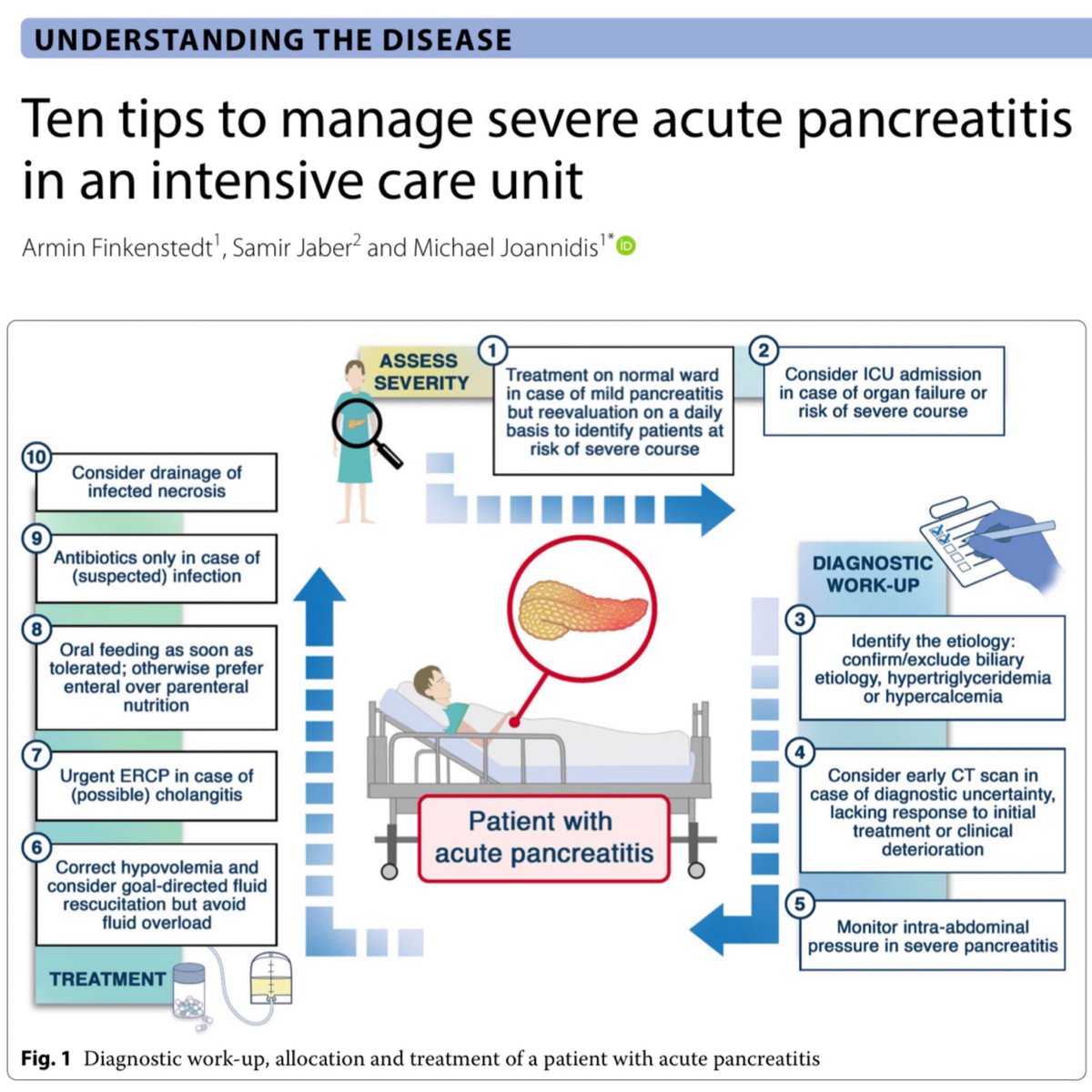
Manage severe acute pancreatitis like a pro! The days of just arbitrarily flooding patients with fluids and not feeding our patients are behind us. 🎩 tip to the authors.
https://t.co/4Ise540F2X