End poverty & promote sustainability: Charge high fees to industries that emit pollution, take natural resources or destroy wildlife habitat. Share fee proceeds
@mcgibax@JunkScience I think that he's paid to mislead people, not be accurate.
(Is this the same Steve Milloy who used to go on Fox and say that second-hand smoke isn't bad for you, even after studies showed elevated respiratory illness in spouses of smokers?)
@PabloGallet@JunkScience Each doubling has a similar effect of the previous doubling. What diminishes is the impact of each additional trillion tons. But we are still increasing the rate of extraction, so that is not as strong a point as you might imagine it to be.
@JunkScience Hydrocarbon fuels manufactured using energy from Molten Salt Reactors would serve just as well, but without the complication of vulnerable supply lines and costly military action as guarantor.
We don't have nice things, because we don't account for externalities.
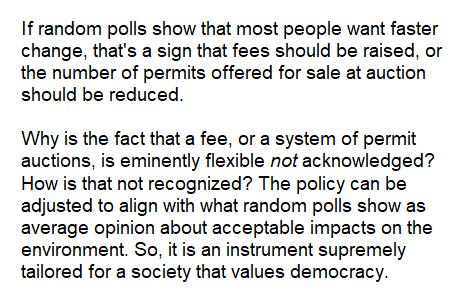
@MazzucatoM Google AI says that you dismiss a fee or tax, as climate policy, as being too slow. But that describes a fee that is too low, not every fee. If the result of a fee is insufficient, that is a sign that the fee should be raised.
@MazzucatoM If our goal is not to make prices honest (account for externalities) and share natural wealth (share proceeds from environmental impact fees), we will not arrive at a place where we want to be.
Dishonest prices ensure that harm brings profit. So, harm persists, and grows.
@bren_geo@PeterDClack The temp. has risen by abt 1°C in the past 45 yrs.
When climate impacts of human actions are trivialized or denied, not much is said about ocean pH or opportunity costs.
Fee-&-Dividend can reduce the rate of extraction in support of frivolity, while prolonging access for basics
@robinmonotti@_ClimateCraze What is your favorite argument against accounting for Time of Observation Bias? (I have never even seen an attempt at an explanation why TOB should be ignored.)
https://t.co/uLczSBDtMI
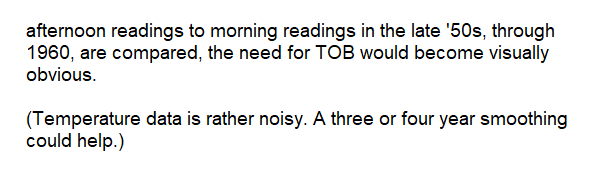
@_ClimateCraze@John_of_Bexley Have you ever said why you think it's better to present temperature information without correcting for Time of Observation Bias?
I predict that, if all temperature data from stations that had consistent practice of morning readings, and all data from stations that shifted from
@PanasonicDX4500 If news media do not want to discuss questions like, "Does natural wealth belong to all?", and, "What efficient and fair policy options would address the problem of economic externalities?", is it inevitable that the vacuum will be filled by nonsense?
Other neglected questions?
@jgmac1106 You COULD be sharing a proposal for how to promote sustainability and end dire poverty. But you are not.
Are the goals not particularly important, in your view? Or do you see a flaw in the proposal that you think makes it other that what I claim? Reason to think it cannot work?
@BjornLomborg People will make better decisions when (IF) we account for externalities.
Do you have a favorite policy for how to take account of economic externalities, so environmental impacts and depletion costs are reflected in pricse?
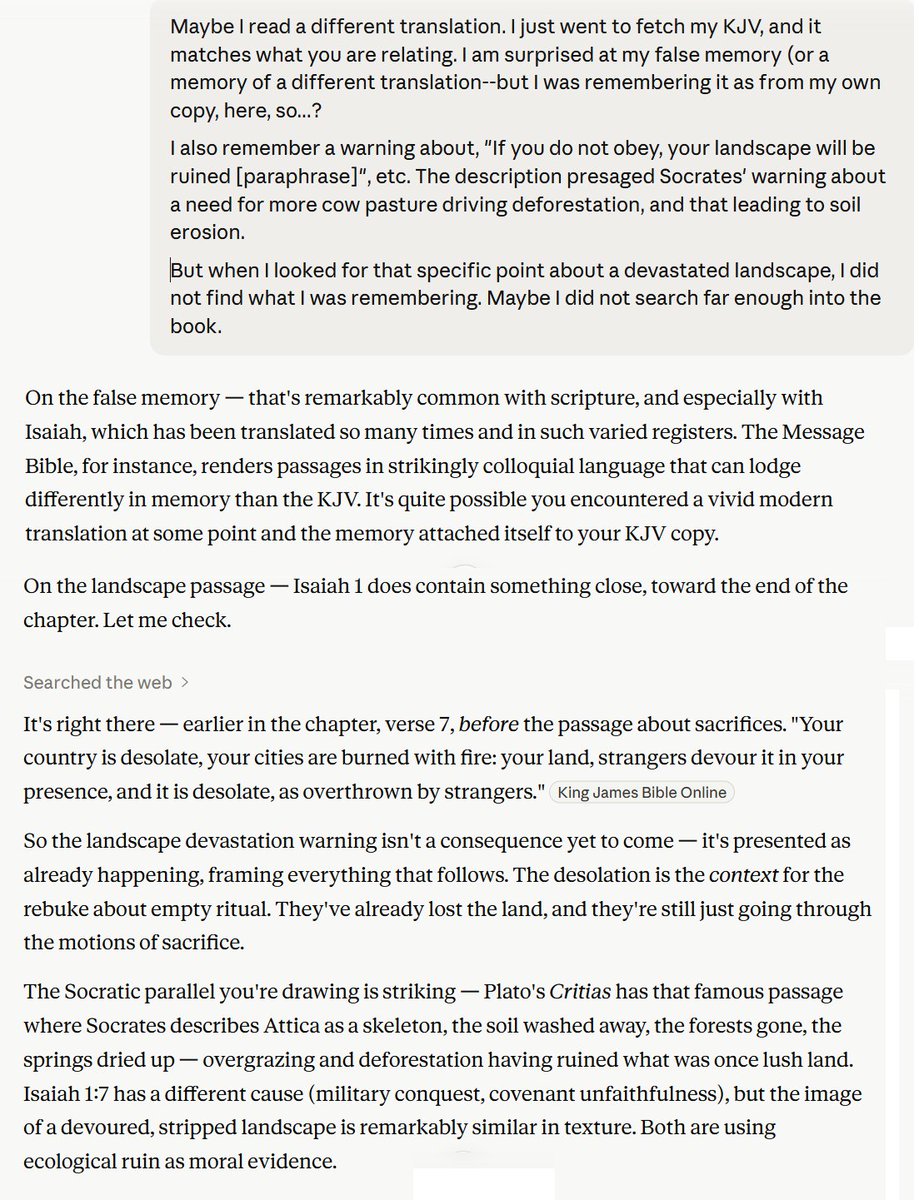
@phlegmatitron@skdh To experience things vicariously?
Imagine how the people must have experienced a visit to the Temple, more than 2500 years ago, after it had long since been transformed into a high-volume slaughterhouse.
I get your point.
@ChrisMartzWX Anyone who finds hypocrisy offensive can call for honest prices.
Those who use resources or otherwise impact the environment will pay the price.
Fees charged proportional to impacts will give a signal about true costs, without prohibitions. Without subsidies
Share fee proceeds
@_ClimateCraze@John_of_Bexley Have you ever said why you think it's better to present temperature information without correcting for Time of Observation Bias?
I predict that, if all temperature data from stations that had consistent practice of morning readings, and all data from stations that shifted from
@LLBiggers@jkpgamer Do you think it's OK to let industries privatize the profits derived from depletion and pollution, and socialize the costs?
An alternative: Fees charged proportional to extraction and emissions and habitat destruction; Fee proceeds shared equally to all.
https://t.co/wenrDwKewV
@LLBiggers Neither fossil fuel fans, nor detractors, want to attack the root of the problem of dishonest prices.
No need for subsidies to find the best solutions, if we account for externalities. The adamant refusal to address the root of the problem deserves the most emphatic protest.
@JonathanWiltsh7@BloombergNEF AI learns by our example.
That's why people are scared, maybe.
Look at what example we set for how to treat those less powerful than ourselves.
https://t.co/xZHTLpraJD
I've been working on farm animal protection for a while now, and I haven't seen anything quite like what's happening around the Save Our Bacon Act.
People who have never organized before, including some genuinely prominent voices, are hosting events, calling senators, and fundraising from friends. And those of us who have been here a while, across many ideological divides and every strategic disagreement, are showing up together.
We've always punched above our weight (out of necessity!), but this feels substantively very different. The political and social cost of supporting this barbarism is finally rising.