For transparency: we’ll be acquiring several NFTs from the first few collections via the marketplace or initial listing auctions to use in upcoming giveaways. Announcements will be made in the Alchemy Markets Discord and here on Twitter.
Would love to get these fragmented precious metals NFTs to as many @FlareNetworks participants as possible so a metals market can develop in a way that justifies the FTSO providing the first non crypto price data in its existence.
https://t.co/CjRpoGQAME
As far as application development is concerned we're at the crux of an inflection point where AI can leverage any users existing skillsets to create something useful.
Most seem to be chasing the robo trader meta but I'm taking a different route.
Blockchain is data and we can leverage that data in so many different ways.
Already I have a proof of concept collusion detection model where we scan block chain for every single registered provider address in history, pull funding addresses for all providers then cross reference every single transaction made by every single provider against all other providers and logged funders
Already some stand out like sore thumbs with critical high scores being automatically flagged as having a high chance of collusion.
Next steps will be to fire up an indexer that logs DA Layer for all providers and continually monitor for shared submissions, downtimes and up times.
Every single suspicious transaction will be automatically flagged and stored adding to a providers collusion score.
If you're a provider and you know you're running shady business you might as well just hang up your boots right now and shut down your systems instead of going through the whole rigmarole.
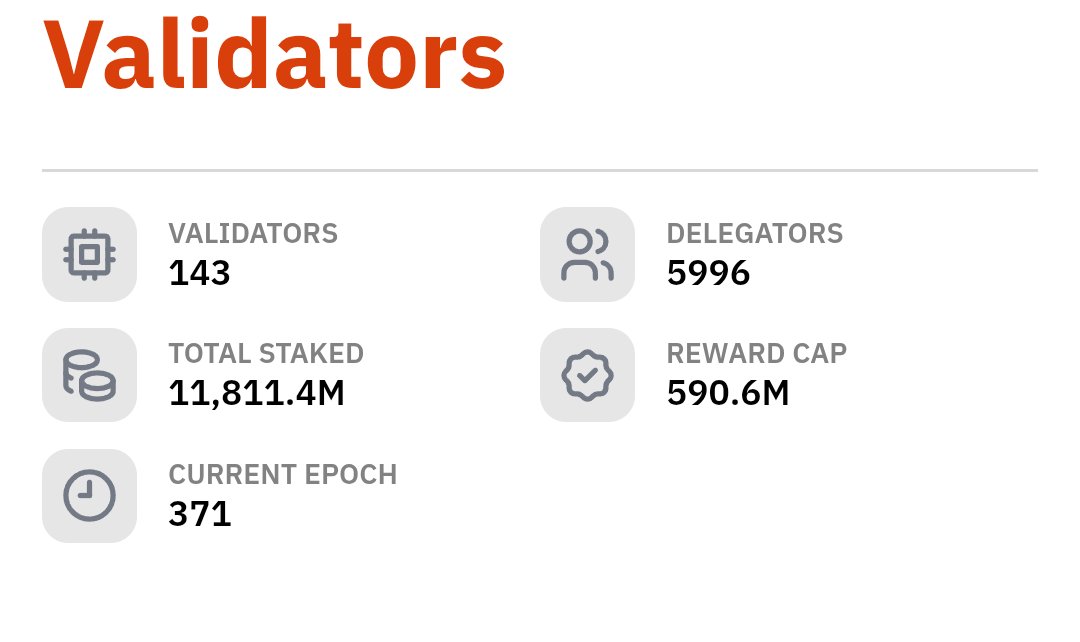
There are fewer than 6000 organic users actively staking on Flare.
These users tend to develop loyalties to the providers they stake to, which is great.
The area we're lacking in is onboarding new organic users and liquidity.
This number has effectively not changed since staking became active and it hovers inside a general median within this area while the majority of VP belongs to a few select private entities, as a result many providers get left trying to attract the few active organic stakers there actually are which is less than ideal for a healthy decentralized ecosystem.
🚨 HUGE BULLISH UPDATE FOR $FLR! ☀️
Institutional investors like @Vivo_Power and others are gearing up to deploy massive XRP into FXRP & stXRP via Firelight launching in April. This will SKYROCKET TVL on @FlareNetworks and spike demand for $FLR as collateral! 📈
$FLR is the ONLY crypto where institutions are pouring capital directly into a DeFi network – this is MASSIVELY bullish validation! 🚀
Plus, in just 6 days (Jan 30, 2026), the last FlareDrop ends, wrapping up the 36-month distribution! This drastically lowers $FLR’s effective inflation from current high rates (including drops) to a steady 5% annually – massive supply shock incoming, fueling price surges! 💥
Watch Flare’s market cap explode as adoption surges and tokenomics tighten. Don’t sleep on this! #FLR #XRP #DeFi
Every time a new provider joins the network, people immediately jump to:
“Wow, look at that insane rewards rate!”
Unfortunately, that reaction is pretty misleading.
In FTSO v2, the displayed rewards rate is heavily influenced by vote power (VP) weight — and VP is basically just the total WFLR delegated to you.
A brand-new provider with the bare minimum 150 WFLR delegation will show an eye-popping rewards rate that literally nobody will ever actually achieve once they get meaningful delegation.
It's a mathematical artifact of trying to normalize an inherently unbalanced system, not a realistic prediction.
FTSO v1 leaned much more on accuracy to the final price feed, which unfortunately opened the door to data poisoning and collusion.
V2 made a deliberate shift toward giving vote power much more influence — which is an improvement in some ways, but it also created new issues.
Right now the system is still far from ideal: the providers with the highest VP consistently show the lowest rewards rates, yet the massive delegations never really move.
This suggests either people don't fully understand how the rewards rate is calculated… or the incentives aren't effective enough to change behavior.
Some straightforward improvements that could help a lot:
Implement a hard cap on vote power per provider. Once you hit the threshold, additional delegations simply get rejected (or redirected).
Currently the top 10 providers control >10% of total VP, and the top 2 are chronically over-delegated (often >3% of total WFLR supply each).
When you look purely at performance stats, plenty of mid-tier providers deliver accuracy very close to (or occasionally better than) many of the top 10 — but with a tiny fraction of the VP.
This isn’t meant as a dig at the top providers themselves.
Most of them do solid work.
The real issue is that the current design + complexity makes it nearly impossible for the average delegator to understand what actually matters, so we end up with the same endless cycle: people chase shiny new high-RR providers → delegate tiny amounts → top-heavy VP distribution barely moves.
A cleaner VP cap + simpler reward mechanics could go a long way toward making delegation decisions more rational and merit-based.