Proud Indian. Father to a superstar artist. Passionate abt recruiting and inclusivity. Future bestselling author.
In pursuit of mindfulness. RTs != endorsement
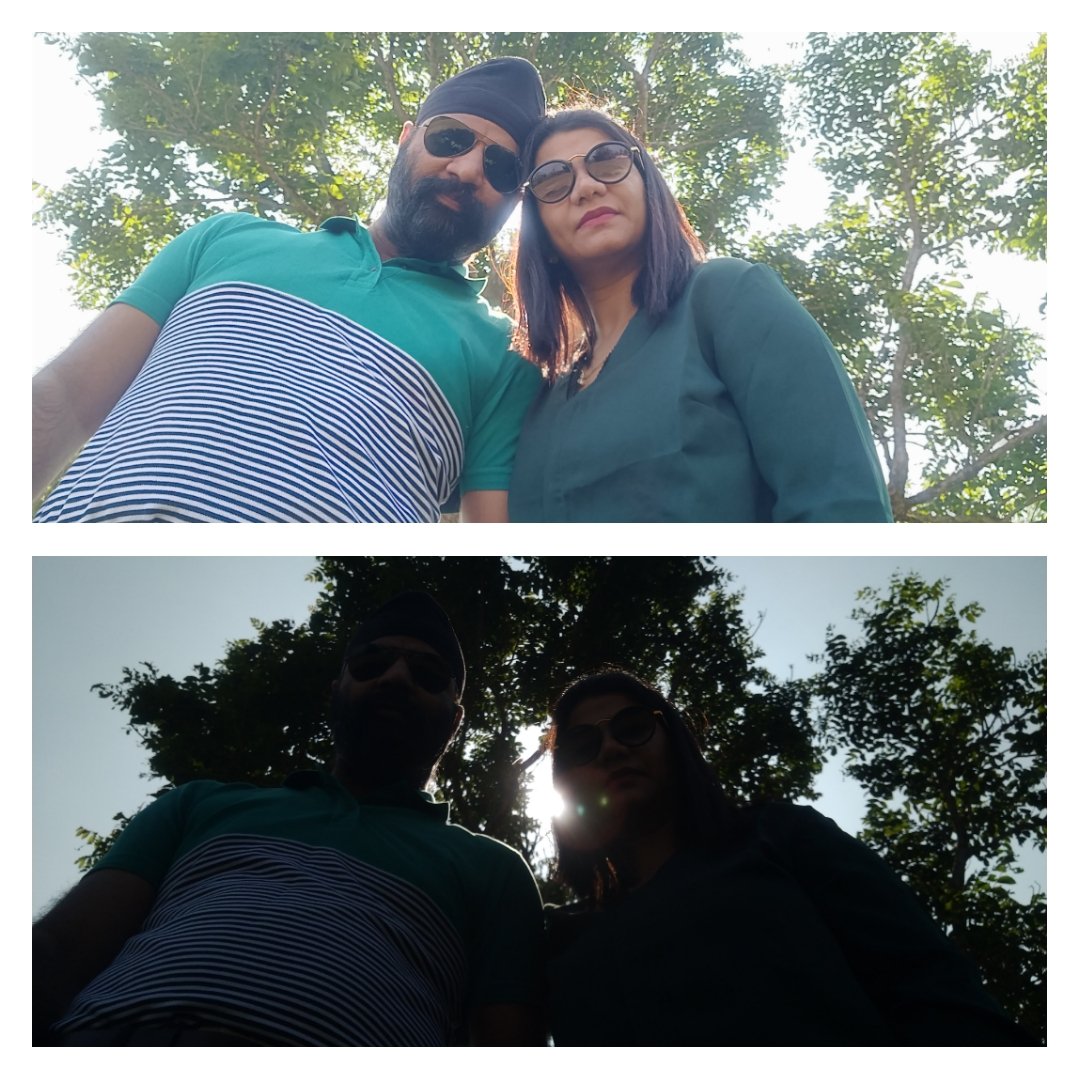
Took a little bit of experimental photography and a great location at #clubmahindra#madikeri#coorg to understand the real meaning of these lines from one of my fave Lata song.
Yeh patte yeh pedon se badal ghanere, Yeh pal-pal ujaale, yeh pal pal andhere!
If your PM doesn’t address the nation and offer condolences for the suicides of tens of NEET students caused by his government’s incompetence, but has all the time in the world to address us for some silly abuse by a teenager, he has no business being at the helm.
Boy, I’m just amazed by the level of narcissism of this man. Lest you forget, he’s yet to utter a word on the suicides. Decide for yourself, what’s more important!
A 24-year-old Polish tennis player arrived in Paris last week ranked 114th in the world, with no sponsors, no guaranteed income, and no certainty she could even pay for her hotel room.
She had to win three qualifying matches just to enter the French Open main draw. Prize money is only paid at the end of the tournament, so a Polish sports drink brand quietly stepped in and covered her hotel bill.
Her name is Maja Chwalinska. And today, she plays in the French Open final.
Before this tournament, she had won exactly one Grand Slam main draw match in her entire career. She had battled depression so severe that in 2021 she couldn't get out of bed. She underwent knee surgery in 2022. She spent years grinding through small tournaments across Europe just to stay afloat.
Then she arrived in Paris, won three qualifiers, and kept winning. Zheng Qinwen. Elise Mertens. Maria Sakkari. Diana Shnaider. Nine straight matches. One set dropped.
She is now the first qualifier in French Open history to reach the final. The last time a qualifier reached a Grand Slam final, it was Emma Raducanu at the 2021 US Open. Raducanu won.
By simply making the final, Chwalinska has earned more prize money than her entire career combined. The runner-up cheque alone is $1.6 million. If she wins today, she takes home $3.25 million.
One week ago she couldn't pay for her hotel room.
अभिनेत्री इला अरुण यांची मुलगी…
कलेचा किती नेमका वापर केला आहे बघा
अग्रवाल फॅमिली सेलिब्रेशन, राम रहीम बेल, बलात्काऱ्याचं जंगी स्वागत
समाजातील ढोंगीपणा, पैशाची ताकद आणि विकृत सेलिब्रेशन संस्कृतीवर एका फ्रेममध्ये इतका तीक्ष्ण कटाक्ष टाकणं…
हीच खरी कला.
Dharmendra Pradhan's son
is studying in America, so did Nirmala's and Jyotiraditya.
Piyush Goyal's son is studying in Singapore, Anurag Thakur's son is studying in Canada.
S. Jaishankar's son is studying in the UK & even Smriti Irani (who hardly studied) sent son to study there.
Nishikant Dubey's son studied in Scotland
So why would these people bother about NEET paper leak
or CBSE scam or communal distortion of history by NCERT?
Or care about your children getting pushed around in trains and buses or even committing suicide?
Government of Hypocrites from Top to Bottom!!
Odisha is witnessing a silent churn — and women are leading it.
Hundreds of Adivasi & Dalit women from CM Mohan Majhi’s own district are standing under the scorching sun, protesting the proposed Jindal-Posco mega steel plant in Keonjhar.
Their allegation is serious — that the government manipulated “consent” while pushing a project that could displace thousands of farming families from their ancestral lands.
Across Odisha, this is no longer an isolated protest. From bauxite-rich hills to fertile agricultural lands, women are emerging as the strongest voices against forced displacement, mining expansion and corporate land capture.
The irony is impossible to ignore. A government projecting a Tribal CM, a Tribal President and branding itself as “Jan Sarkar” is increasingly being accused of deceiving the very communities in whose name it seeks legitimacy.
For thousands of Adivasi and Dalit families, land is not just property — it is identity, livelihood, culture and survival. When consent itself becomes questionable, development starts looking less like progress and more like dispossession.
#Odisha #Keonjhar #Adivasi #Dalit #TribalRights #LandRights #Jindal #POSCO #MohanMajhi #JanSarkar #OdishaPolitics #SaveOurLand #Displacement #Mining #CorporatePolitics #Farmers #IndigenousRights #SteelPlant #OdishaNews
A man spends 50 years teaching at MIT.
He knows his time is running out.
So he records one last lecture — everything he knows, distilled into a single hour.
He died 5 months later.
This is that lecture.
The most important hour you'll watch this week. 👇
Bookmark it for later
Data discussed on The Verdict Live suggests SIR deletions were higher in constituencies where BJP’s vote share was lower in 2021, alongside a narrowing of TMC’s victory margins in current trends.
Watch the analysis live: https://t.co/tK0XXq4R7q
@PrannoyRoy7749@_YogendraYadav
#AssemblyElections #Elections2026
Last one on this topic, and I have been holding this in myself for a while.
For centuries, class divides kept the labor of the poor invisible to the rich. Factory workers toiled behind walls, farmers in distant fields, domestic help in backrooms. The wealthy consumed the fruits of that labor without ever seeing the faces or the fatigue behind it. No direct encounter, no personal guilt.
The gig economy shattered that invisibility, at unprecedented scale.
Suddenly, the poor aren't hidden away. They're at your doorstep: the delivery partner handing over your ₹1000+ biryani, late-night groceries, or quick-commerce essentials. You see them in the rain, heat, traffic, often on borrowed bikes, working 8–10 hours for earnings that give them sustenance. You see their exhaustion, their polite smile masking frustration with life in general.
This is the first time in history at this scale that the working class and consuming class interact face-to-face, transaction after transaction. And that discomfort with our own selves is why we are uncomfortable about the gig economy. We want these people to look our part, so that the guilt we feel while taking orders from them feels less.
We aren't just debating economics. We are confronting guilt. That ₹800 order might equal their entire day's earnings after fuel, bike rent, and app cuts. We tip awkwardly, or avoid eye contact, because the inequality is no longer abstract. It's personal.
Pre-gig era, the rich could enjoy luxury without moral discomfort. Labor was out of sight. Now, every doorbell ring is a reminder of systemic inequality. That's why debates explode. It's not just policy. It's emotional reckoning. Some defend the system (“they choose it”), others demand change (“this isn't progress, its exploitation”).
And here’s the uncomfortable twist: the unsaid ask of clumsy ‘solutions’ isn’t dignity. It is about returning to invisibility.
Ban gig work and you don’t solve inequality. You remove livelihoods. These jobs don’t magically reappear as formal, protected employment the next day. They disappear, or they get pushed back into the informal economy where there are even fewer protections and even less accountability. Over-regulate it until the model breaks, and you achieve the same outcome through paperwork instead of slogans: the work evaporates, prices rise, demand collapses, and the people we claim to protect are the first to lose income.
And then what happens?
The rich get their old comfort back. Convenience returns without faces. Guilt dissolves. We go back to clean abstractions and moral posturing from a distance. The poor don’t become safer, they become invisible again: back in cash economies, back in backrooms, back in shadows where regulation rarely reaches and dignity isn’t even debated.
The gig economy just exposed the reality of inequality to the people who previously had the luxury of not seeing it. The doorbell is not the problem. The question is what we do after opening the door.
Visibility is the price of progress. We can either use this discomfort to build something better (which we keep doing continuously as delivery partners are our backbone), or we can ban and over-regulate our way back into ignorance. One of those choices improves lives. The other simply helps the consuming class feel virtuous in the dark.
Tipu Sultan the only king of Indian subcontinent who martyred while fought against the Britishers.
- Historian Dr. Ram Puniyani Revealing Facts About Tipu Sultan and Burst the propaganda 🔥
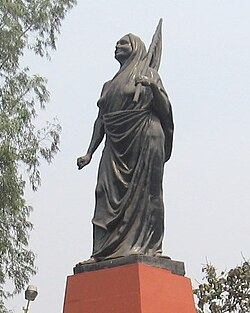
73yrs Bengali Matangini Hazra fell after three British bullets, but in her death too she didn't let the Tiranga touch the ground.
And today a BJP MP Dinesh Sharma, UP called her a Muslim in Par. Even if she were, nothing changes, but he mislabelled a martyr for petty politics!
'Gandhi Buri' we Bengalis used to call her. A devoted follower of MK Gandhi, Hazra took up the flag at Mahatma Gandhi’s call to fight against the British in 1942 Quit India movement.
Born in 1869, the same year as Gandhi, widowed at 18, she spent her entire life in social work and freedom struggle incarcerated several times.
1933: -
One blazing afternoon, during a freedom march toward the Governor’s palace, Matangini Hazra led the vanguard with the flag held high.
As the procession reached the Governor’s balcony, she suddenly broke through the bayoneted cordon and reached Governor's balcony and shouted, ‘Go back, lat sahib! GO BACK!' before the soldiers could seize her.
She was brutally beaten and assaulted, jailed for six months with hard labour. When released again returned to her social work immediately.
Courage!
1942: -
The British bullets tore through India that August to suppress the Quit India.
Despite knowing the danger she arranged a march of 6000 people, on 29 Sept, 1942 mostly woman in her Tamluk, Bengal.
As the march reached the police station, British Officials ordered them to disperse. There were Lathicharge first but zealous crowd full of Gandhi's fervour of non-violence refused to leave the ground.
Then the British opened fire. Amid the chaos and gunfire, Matangini Hazra continued to march forward, proudly holding the Indian flag high above her.
She was shot - she kept moving - Again shot - She is unstoppable - And the third and the last bullet put the heart into stop.
When her body was found, it was holding the Tiranga - didn't let it touch the ground.
This is who was Matangini Hazra, the Gandhi Buri. A liberated soul of Bengal, a woman.
In 2021, Amit Shah claimed no one could match Savarkar’s patriotism. I say a thousand Savarkars together do not equal one Matangini.
And today, another MP of his party chooses to disrespect her by misidentifying her to suit a political narrative - from a league that contributed nothing to the freedom movement and thinks nothing before insulting those who did.
The year is 1948. India has just become free and is trying to have a tryst with destiny. And in a country with endless possibilities, you are a 27-year-old man from an affluent family.
You have also studied in prestigious institutions like Loyola College and College of Engineering Guindy and have been given a scholarship from the Govt of India to go to the USA and study Dairy engineering.
You go to the USA and realize that studying metallurgy and nuclear engineering is more useful and interesting than studying techniques of extracting milk from cows. You follow your instinct and successfully complete your course.
You are now a nuclear engineer. And in a world that has just gone nuclear, the opportunities you have are limitless. The world is at your feet.
Then the Govt of India becomes a reverse Lannister calls in its debt. They want you to work for them for a limited period as an obligation to whatever they did for you.
You have no choice but to come back.
You hope you are sent to glamourous locations like Bombay or Madras where you can spend your obligatory time in comfort and luxury. You are an America Return Nuclear engineer after all.
But the Govt of India cares as much about your designations and qualifications as a Nokia 3310 cares about a drop. So, they play a cruel joke upon you.
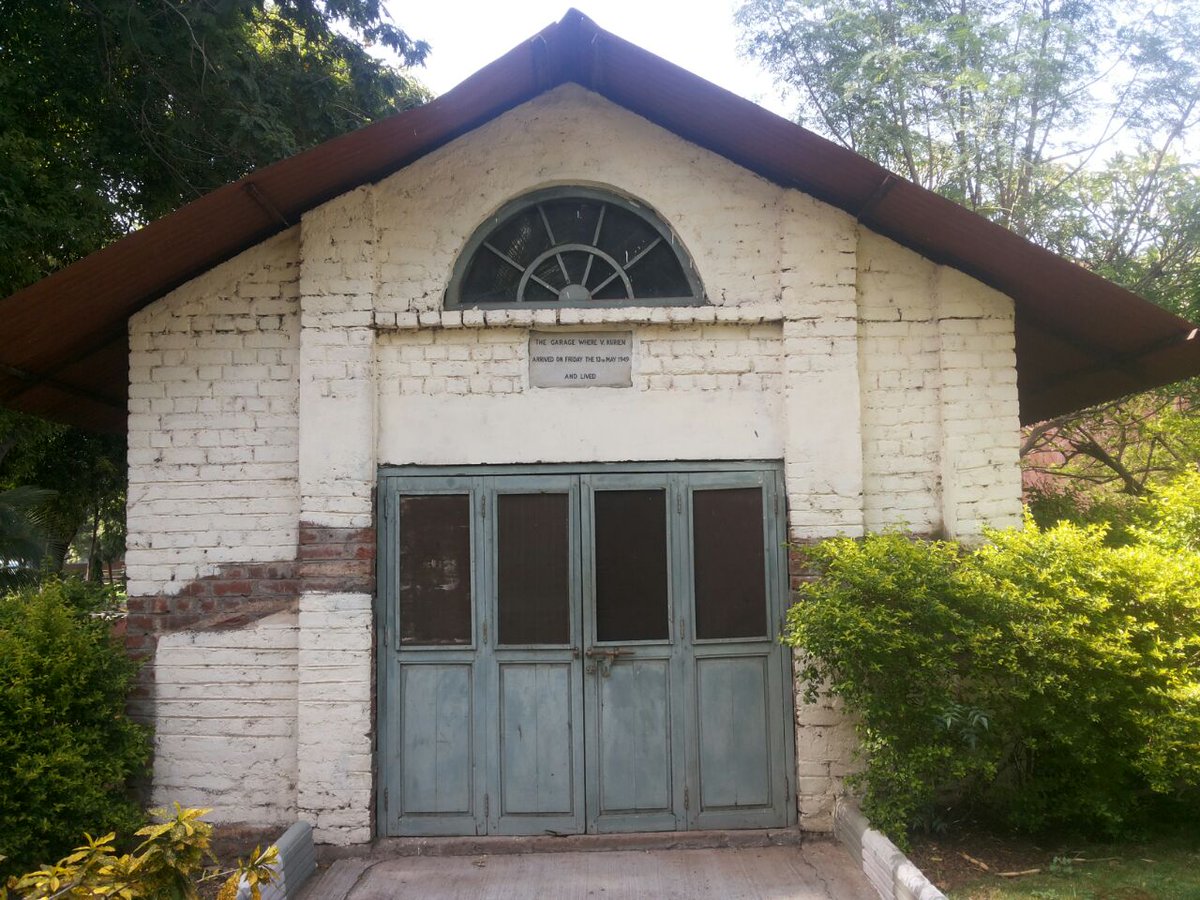
They send you to a small decrepit town in Gujarat which doesn't even have electricity. Your accommodation is a rundown Garage and the only sign of life around you are the mosquitos, who are trying to taste your blood.
The town is called Anand. And the only Anand you have there is its name. Else it is all despair.
You, an affluent gentleman from south India, who doesn't speak a word of Gujarati, who has never lived in a village, are now stuck in a god foresaken village in the middle of nowhere. And You want to get out of this god forsaken place on the first chance you get.
Then something happens.
You start going around the town. You start speaking to people. You understand their way of life. You understand what they want. Without you realizing you start falling in love with the place. You want to do something for them.
And then you create a revolution.
A revolution that has changed the face and fate of India.
A revolution whose gifts we are still reaping 65 years after it started.
And You are the one who started it all.
You are Dr Verghese Kurien.
Operation Flood was, is and will be one of the greatest movements India has ever had.
We went from a country that used to import milk powder from New Zealand and other countries to becoming the largest milk producing country in the world, in 30 years.
It gave livelihoods to close to more than 100 million farmers over the years and has lifted more than 50 million people out of poverty and starvation. If you count the people emancipated by Operation flood, it would be the 30th largest country in the world, ahead of Spain, South Korea and Argentina.
Today, we move the global dairy market and it is singularly because of Dr Kurien.
And he didn't stop at dairy.
He realized that India was heavily dependent on Southeast Asia for its edible oil needs. So he got all the oilseeds growers together and started Dhara, India's own edible oil brand.
He so thoroughly disrupted the edible oil industry that for a brief period of time, he significantly reduced our dependance on palm oil.
Unfortunately, our babus intervened and as they usually do, destroyed it all. But that's the story for another day.
When Karnataka's Cocoa farmers went to him to seek salvation from Cadbury's oppression, he created Amul Chocolates and created a big dent in their market share. He also ensured Cadbury treated the farmers with a lot more respect and fairness, now that the farmers had option.
When Indira Gandhi complained about farmers not getting fair price for their vegetables, he started Safal, a vegetable selling co-operative under the NDDB umbrella and made it a success.
Now most of this is known.
But what we don't know more about was Dr Kurien the innovator.
Dr Kurien and his friend JJ Dalaya were the first in the world to synthesize buffalo milk and convert it to powder. This allowed us to store and supply milk during times of deficiencies.
He was the first to create condensed milk or as you call it, Milkmaid / Mithai Mate, from buffalo milk and ended Nestle's monopoly in this segment for good.
He was also the first to pack a dense substance as oil in a Tetrapak, something that their own Swedish engineer's thought was impossible. He made it possible.
I can keep going on and on.
In today's world, words like Legend, GOAT, superstar are thrown around very very loosely.
People who hit balls with a stick, give useless expressions on a giant screen and make cringy unwatchable 30 sec videos on some apps or crack some vulgarly unfunny jokes are given these epithets today.
So, what would you call a guy who saved India from hunger and starvation? What would you call a guy who prevented India from malnutrition and stunted growth? What would you call a guy who made a basic commodity like milk, accessible to a billion people?
We don't have words for that. Maybe we need to invent some.
One more very commonly misplaced word today is disruption.
Anything and everything are disruption now. The development of an app, delivering grocery or food in 10 minutes or writing an additional line of code are all what passes off as disruption today.
That is not disruption.
Disruption is where you create something that changes the lives of people forever. Disruption happens when what you create, rewards people for Generations.
Disruption is where you help poor farmers break the vicious circle of poverty and throw them 354 steps up the economic ladder
Disruption is not how you change how people do certain things; Disruption is when you change the people themselves.
Dr Kurien was India's first and the greatest disruptor.
Dr Kurien is India's true GOAT.
So, Happy Birthday Dr Kurien. India is grateful that we had you walking on our soil. Thank you!!
P:S: The attached image is that of the recreated Garage that Dr Kurien first stayed. Garages have a unique connection to the world of tech, as a lot of tech companies started from there and are worth some bajillion dollars today.
This is a Garage that lifted 60 million Indians out of poverty.
With all due respect to HP and Google, this is the greatest Garage of them all.
To understand human nature, read the older books. To develop specific knowledge, stay on the bleeding edge, read newer (technical) books.
The best authors - Deutsch, Schopenhauer, Borges, Ted Chiang - write with very high density. The best authors respect the reader’s time.
Namaz and Namaskaram
"The Indo-European root word that gives us Persian Namaz and Sanskrit Namaskaram is *nem-, which means "to bend" or "to bow".
This root evolved into the Proto-Indo-Iranian word *námas, which meant "bowing" or "reverence". From there, it developed into its distinct forms in the Indo-Iranian language family:
In Sanskrit: The root nam (नम्) means "to bow". Namaskaram and Namaste are derived from namas (नमस्), meaning "reverence" or "salutation," and combine it with other linguistic elements.
In Persian: The root was adopted and evolved into Namāz, meaning "prayer" or "worship".Persian-speaking Muslims in regions like the Indian subcontinent used Namāz to refer to the formal Islamic prayer, called Salat in Arabic."
Source: https://t.co/VENg1V5TdD
Image source, Namaz: https://t.co/FJuqVDzMHG
Image source, Namaskaram: https://t.co/D021wVKZEt