A review by Sweden’s Defence Research Agency (FOI) identified 247 properties around the country with Russian owners, raising concerns among Swedish authorities and politicians that some of these properties could potentially be used for espionage, sabotage or other hostile activities.
The issue is that Sweden currently has no law that broadly allows the state to stop these purchases. The concern has been raised by Säpo, Sweden’s security service, which has highlighted Russian-owned properties as a potential security risk.
FOI researchers had to manually go through around 10,000 names of owners living abroad to identify the properties, and the real number could be higher because some foreign-owned properties are not captured in the registers in the same way.
There is already a concrete case on Muskö, where the Swedish Armed Forces are trying to take over a holiday home because of its proximity to a naval base. Defence Minister Pål Jonson says intelligence gathering in Sweden has increased.
Peter Hultqvist, the Social Democrats’ defence policy spokesperson, says the concern is not limited to properties near military facilities. He argues that Russia’s hybrid activities could involve properties being used for espionage, sabotage or attempts to undermine Swedish society.
Sweden has actually been dealing with this question for years. The first government investigation was launched in 2017, followed by another investigation, SOU 2024:84. Yet after nine years and two investigations, no bill has been introduced to give the state broader powers to prevent these purchases.
Hultqvist says the past years have not been used optimally. Jonson, meanwhile, says previous investigations did not cover enough situations and that creating robust legislation will take time.
After nine years and two government investigations, there is still no law that allows Sweden to broadly stop these purchases while the security concerns surrounding some Russian-owned properties remain ongoing.
Shame on Ireland for its double standards: it keeps saying it supports Ukraine, but 80% of its aluminum production goes to russia to fuel its death machine that is murdering Ukrainians on a daily basis.
The greed for profit is leading Europe to its own destruction.
A disgrace.
The Kremlin is trying to make this video, in which the goblin dictator fails to yell “hooray,” disappear.
Let’s make sure it gets the online amplification it deserves.
🇷🇺 Entertainment in Russia
In a park in one of Russia’s cities, actors dressed as NKVD secret police officers are “entertaining” locals by detaining passers-by, accusing them of running a private business, threatening to send them to the Solovki GULAG camp for hard labor, and taking their fingerprints.
When one woman said she had three children dying of hunger, the costumed NKVD officers replied that the children would also be sent to a labor camp, “but with ice cream.”
NEW: We reveal the Canadian and British funded "non-violent resistance" programme which encouraged Ukrainian civilians to engage in “suicidal” activities in the occupied territories of Ukraine despite multiple reports of the deaths, torture, and imprisonment of activists.
With @ChrisDYork and @mrsorokaa and the rest of the Kyiv Independent team.
https://t.co/NcCjodXlFo
In Dnipro, rescue workers recovered the bodies of two people from under the rubble of a four-story building, according to Suspilne.
Five more people are believed to be trapped beneath the debris.
Russia kills and destroys – Europe cowardly watches.
‼️Statement on the Orbán Government Accusing Me, an Investigative Journalist, of Espionage‼️
Today, the Hungarian government has filed a complaint against me for espionage. Accusing investigative journalists of espionage is virtually unprecedented in the 21st century for an EU member state. This is typical of Putin’s Russia, Belarus, and similar regimes.
I have spent over a decade documenting how Russian spies and interests have penetrated Hungarian politics, so I am probably the least surprised by this.
Despite growing signs that the Hungarian government acts as a Kremlin ally and copies the Russian model, I still trust that parts of the Hungarian state—and the judiciary—follow the Hungarian constitution, not that of the Russian Federation.
I have never engaged in espionage. I see my work as journalistic counterintelligence—from exposing the hacking of the Hungarian Foreign Ministry by Russian actors to revealing the activities of Hungarian pro-Kremlin propagandists.
Defending myself publicly would be easier if I were not bound by source protection. But that remains my top priority. I cannot reveal who provides me information or what I receive, including from within Hungarian state structures.
If I were not a journalist, I could list many facts proving it is impossible for the Hungarian state to genuinely believe I am spying. Certain meetings, contacts, and information gathering could never have happened otherwise.
This baseless accusation now forces me to share details of a specific investigation, including a conversation with a confidential source that appears to have been wiretapped. Normally, this would appear in a finished article or my upcoming book—not here. (It will appear there as well.)
Since 2023, I have investigated whether the relationship between Péter Szijjártó and Russian officials exceeds legal limits. The published audio, where I’m heard talking to a source, mentions that communication between Szijjártó and Sergey Lavrov is recorded by EU intelligence services. Less attention has gone to my point that this relationship raises strong suspicion of political intelligence activity and influence operations in Russia’s interest.
These are serious claims and hard to prove. As a journalist, I cannot force anyone to speak or hand over documents. That is why gathering this information has taken so long—and why I spoke to that sensitive source (while the conversation was secretly recorded).
Serious claims require serious evidence, and I believe I have gathered some. I have not engaged in espionage.
I have not cooperated with any foreign intelligence service in surveilling Szijjártó. Instead, I tried to verify earlier fragments of information about Szijjártó–Lavrov communication.
I sought to identify the channels and phone numbers used, and whether a secret channel—possibly used by Russian intelligence—exists. In other words, whether Szijjártó uses a hidden device or number unknown even within the Hungarian Foreign Ministry.
This was only one part of my research. The other, more serious topic is this:
Since at least 2016–2017, EU and NATO intelligence services have had indications that large amounts of cash and precious stones may have been transported from Russia on Hungarian government aircraft or private jets used by government figures. Officials from at least six countries made such claims to me.
These signals did not come from monitoring Hungarian targets, but, for example, from intercepting Russian officials discussing or preparing such shipments.
Alongside Szijjártó–Lavrov communication, I examined how baggage screening and handling works on such flights, which officials travel with what luggage, whether more packages arrive from Moscow than depart, and how such shipments could be handled discreetly.
I know how serious this is, and I would not have written even this much—but since I do not know what else may be taken from the edited recording, or what fabricated accusations (like, for example, that I was seeking such details to commit terrorism) may follow, I believe I must share this now.
Why do I investigate all this?
According to many sources familiar with the Hungarian state and counterintelligence, there is no independent body in the Orbán system able to investigate or act if a senior official is suspected of espionage.
Government members direct intelligence services and set expectations. The services lack both tools and authority to investigate a government member.
I knew this would be difficult when I chose to pursue it. But few people in Hungary can or dare to do this, so I felt it was my duty.
We have now reached the point where the Orbán government—of which Szijjártó is still a member—aware of my reporting plans and the risk they pose, has preemptively accused me of espionage.
I am a Hungarian patriot. I serve the public. As an investigative journalist, my job is to hold power accountable. Neither political theater nor legal threats will deter me.
Lukashenko has once again been invited to visit 🇺🇸.
Will the prosecutor at @SDNYnews@TheJusticeDept, who is leading the criminal investigation into the case in which senior Belarusian officials conspired in May 2021 to issue a false bomb threat in order to unlawfully divert a @Ryanair civilian aircraft carrying 4 🇺🇸 citizens, not want to meet the person who gave the order to commit an act of aircraft piracy, thereby jeopardizing U.S. national security and subjecting passengers from many countries, including the U.S., to the realities of terroristic threats?
Let us finally stop all these republican lies that the US has done more for Ukraine than Europe, &
that Putin's friend Trump has done anything for Ukraine.
Trump even votes in the UN with Putin!
Wake up to the truth!
Those hoping a ceasefire in Ukraine ends the Russia threat should read Finland’s security service annual report. SUPO is blunt: Russia’s imperial ambitions predate Putin and will outlast him. Peace process ≠ security dividend.
https://t.co/1Ie07MCm3Q
MORE: The US-Israeli combined strike campaign is targeting missile and drone production and storage facilities throughout Iran. The United States, however, has long denied Ukraine the weapons necessary to do the same to Russian facilities.
Ukrainian forces are able to conduct long-range drone strikes against a significant portion of Russia’s rear, but these drones’ payloads are limited and not suitable to destroy hardened objects or large facilities. Ukraine has therefore repeatedly requested US-produced Tomahawk missiles, a request that the United States ultimately denied in Fall 2025.
The US provision of a small number of Tomahawks to Ukraine would likely enable Ukrainian forces to significantly damage or even destroy key missile and drone production and storage facilities deep in the Russian rear, particularly highly concentrated production areas such as the Shahed drone factory at the Alabuga Special Economic Zone in the Republic of Tatarstan (roughly 1,100 kilometers from the Ukrainian border).
Ukraine would likely also be able to significantly damage Russian missile production sites in the rear with Tomahawks, such as the Votkinsk Machine Building Plant in Votkinsk, Udmurtia Republic (roughly 1,300 kilometers from the Ukrainian border) that manufactures a variety of ballistic missiles.
Ukrainian forces struck Alabuga with long-range drones in 2025 and struck the Votkinsk plant with Ukrainian-produced FP-5 Flamingo cruise missiles in February 2026. These previous Ukrainian strikes did not destroy or disable the Alabuga or Votkinsk plants, however.
US provisions of Tomahawks in Fall 2025 could have helped Ukraine to strike drone and missile production and storage sites in the Russian rear as Ukraine continued to develop and produce its own Flamingo missiles.
Such Tomahawk strikes may have been able to significantly degrade Russia’s Winter 2025-2026 long-range missile and drone strike campaign against Ukrainian energy and civilian infrastructure.
🇺🇦❗️Budanov: In general, the policy of the current Russian president does not differ significantly from the policy of the tsarist or Soviet eras.
Also, we should not expect that Russia will change again due to internal factors. Instead, we should create conditions under which Russia will disappear as an empire.
🚨 EXCLUSIVE: Our investigation finds that Trump's actions in Venezuela and Greenland are the product of a long-running Russian influence campaign that began during his first term. Read + share the complete report.
https://t.co/fMYnQCi7WF
Here is what Starmer and Macron have signed up to once a Ukrainian peace deal is struck. British troops on the ground in Ukraine. Military hubs set up in country. Promises to act if Russia attacks again.
This is by far the most detailed readout to date on what the 'coalition of the willing' means in reality.
I've decided to translate for you a post from the Russian Telegram channel "Nezygar" about the current state of Russian refineries and fuel market:
"Tensions in Russia's fuel market are rising: in Primorye, there are kilometer-long queues at gas stations, and wholesale prices for gasoline and diesel have hit record highs. Officially, the reasons are no longer hidden - refineries are shutting down after Ukrainian strikes. During peak summer days, up to 14% of processing capacity was idle.
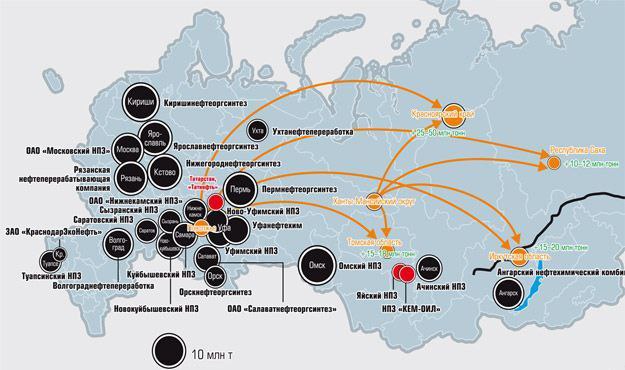
In 2025, the tactics of Ukrainian strikes have changed. Previously, they were one-time: a unit would be damaged, the plant would reduce output, but recover within a few weeks. Now, attacks are carried out in series and repeated on the same facilities - Ryazan, Novokuibyshevsk, Syzran, Volgograd, Afipsky refineries. This prevents the restoration of primary processing and hydrocracking and catalytic cracking units. For example, after a series of attacks, Ryazan Refinery (5% of Russia's capacity) has half its processing halted, while Novokuibyshevsk Refinery (3%) has its primary processing damaged. The largest refinery in southern Russia, Volgograd's Lukoil, as well as the Samara and Syzran refineries, have stopped receiving crude.
Ukraine is widely using drones with a range of 1,000-1,500 km (such as the AQ-400 produced by FirePoint), capable of reaching the Volga region. Simultaneously, drones and maritime drones are targeting export terminals - attacks on Ust-Luga and Novorossiysk have temporarily halted oil product shipments. 'Madyar' reported hitting the Druzhba pipeline, which supplies oil from Russia to its historical homeland.
...
The choice of refineries as targets is explained by their technological vulnerability. Modern Russian refineries were built using equipment from Shell, Axens, UOP, and Haldor Topsoe - hydrocracking, catalytic reforming, isomerization, and Euro-5 component production. After 2022, deliveries of equipment, software, and catalysts ceased. Catalysts are consumables, replaced every 1-3 years; without Western supplies, Russia relies on old stock or Chinese analogs with inferior performance. Hydroprocessing reactors and compressors are manufactured in only a few countries, with delivery times up to a year.
China can cover only part of the deficit: pumps, heat exchangers, and simple catalysts. However, for complex processes, its technology lags, and replacing Western components with Chinese ones requires restructuring the entire refinery unit. As a result, every Ukrainian strike on a hydrocracking or reforming unit leads to months of downtime.
The map of Russian refineries reveals a key strategic problem: the main processing capacities are concentrated in the European part of the country, while fuel consumption is rising in the Far East. Fuel logistics chains to eastern regions span thousands of kilometers, creating additional costs and risks. Kilometer-long queues in Primorye are a direct consequence of this imbalance between western production and eastern consumption. Large refineries - from Kirishi to Volgograd - are within reach of Ukrainian drones. The Flamingo missile, if its specifications are confirmed, can reach Russia's largest refinery in Omsk.
As the range increases, facilities previously considered out of reach are now threatened, creating a scale problem for air defense - protecting all refineries across the territory, from Kaliningrad to the Far East, is practically impossible.
Consequently, Russia's oil and gas industry, once a source of economic strength, has become a vulnerable spot."
💥ICYMI: “James Bond-like” Russian Duma MP Leonid Slutsky and his Russian Peace Foundation—closely tied to the GRU—helped organize the Moscow visit of David Lindtner, a personal lawyer and advisor to Slovak PM Robert Fico. https://t.co/xbzGFS3Ae1